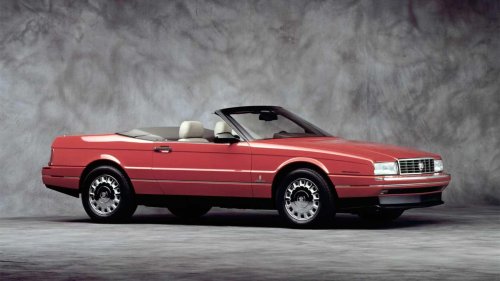
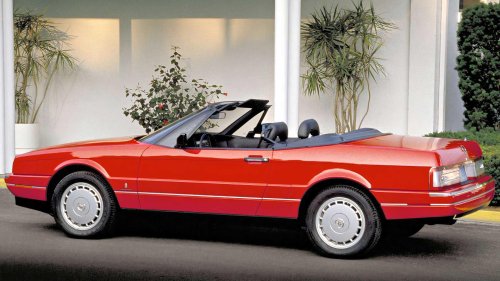
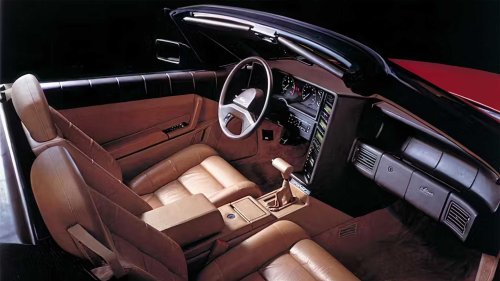
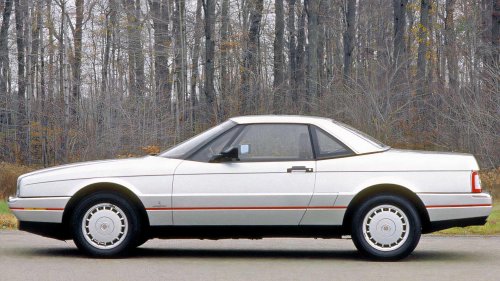
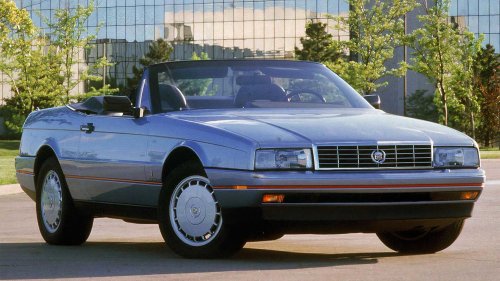
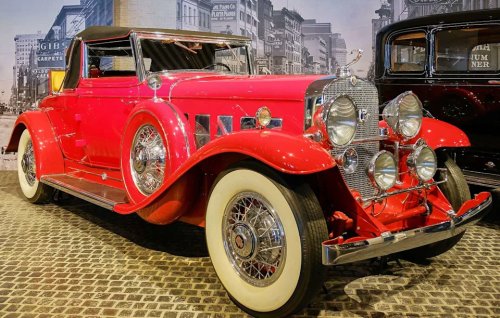
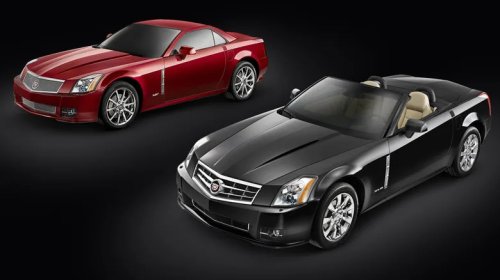
In the world of automotive design, few names command the kind of reverence that the famed Italian styling house Pininfarina does. From sculpting the silhouettes of Ferrari legends to influencing everything from Alfa Romeos, Bentleys, and the occasional trans-Atlantic project too. A forgotten piece of history, the prestigious European artisans collaborated with one of America’s most traditional luxury brands.What came out of this unlikely continental alliance was meant to redefine luxury, style, and performance in one sleek package. Lavishly funded and logistically complex, this collaboration promised to bring European finesse to the heart of Detroit while shaking up the status quo along the way. But instead of a revolution, it became a cautionary tale. The Cadillac Allante: Italy's Finest Meets One Of Detroit's Most Illustrious GM In the mid-1980s, General Motors made an audacious move to shake Cadillac free of its aging image and plant its flag in the rarified air of European grand touring. But instead of redesigning itself from within, Cadillac turned to an unexpected partner, all the way on the other side of the Atlantic, with Italy’s Pininfarina. Known for styling icons from Ferrari, Alfa Romeo, and Maserati, the Turinese design house was revered for its elegance, craftsmanship, and understanding of continental flair.Cadillac didn't need to be sold, but it desperately wanted that magic. Pininfarina, for its part, saw the collaboration as a new frontier of designing a sleek American luxury convertible that could stand shoulder to shoulder with Mercedes-Benz’s vaunted SL-Class. Thus, the Cadillac Allanté was born.Car and DriverTo make it happen, GM built an extraordinary logistics pipeline known as the “air bridge,” in which specially prepared Cadillac chassis were flown from Detroit to San Giorgio Canavese in Turin, bodied by Pininfarina, and then flown back for final assembly. Unlikely to resonate with any eco-conscious carbon footprint-fascinated critics, the elaborate partnership across continents was poised to redefine what an American luxury roadster could be. Ironically, while its name suggested motion and elegance (particularly in Romance languages), the model ended up stalling Cadillac’s momentum instead.The name “Allanté” itself wasn’t rooted in heritage or meaning but was instead the product of a computer-generated list of 1,700 possibilities. Cadillac ran an internal contest to choose from the options, ultimately settling on a name that sounded exotic, upscale, and vaguely European, even if it meant absolutely nothing. But despite all the jet-setting ambition and Italian craftsmanship, Cadillac’s high-flying dream was about to hit some serious turbulence. Allanté’s Ambition: The Car That Was Meant To Beat The Best GMThe Allanté was Cadillac's moonshot and a car meant to capture a younger, affluent buyer who typically bought from Stuttgart or Munich instead of Detroit. Debuting in 1987, it launched as a front-wheel-drive, two-seat luxury convertible aimed squarely at the Mercedes-Benz SL and Jaguar XJS. It boasted a stylish soft top, a relatively advanced hardtop option, and was loaded with tech-forward features for its time, like digital instrumentation, traction control, and Cadillac's first use of a fully electronic dashboard.Under the hood sat a 4.1-liter V8 producing just 170 horsepower, which is not exactly earth-shattering, but enough for a cushy cruiser. Now is a good time to remind you that this heavy lump sent power to the front wheels only, but Cadillac emphasized refinement and comfort over outright performance. Despite this, later models addressed the power shortfall with revised engines, including a 4.5-liter V8 and eventually, in the 1993 model year, the 295-hp Northstar V8. But by then, much of the momentum had already been lost.GMThe Allanté was a marketing centerpiece, and Cadillac hoped it would breathe youthful life into the brand and elevate its reputation beyond retirees and airport limousines. GM reportedly spent nearly half a billion dollars on the program, which is a massive figure, especially during that point in America's history. Unfortunately, it rolled onto showroom floors, and it became apparent that its image alone wouldn’t be enough. The Flaws That Doomed Cadillac’s Style Icon GMDespite its international pedigree and bespoke construction, the Allanté faced an uphill battle from the start. Its biggest problem was that it never nailed the fundamentals of what customers in the segment wanted. Firstly, the performance didn’t stack up. The early 4.1-liter V8 was underwhelming, especially compared to the smooth inline-sixes and powerful V8s in German rivals. Cadillac’s later attempt to inject performance with the Northstar engine came too late, and by then, the Allanté’s reputation had already solidified as style over substance.Then there was the price. At launch, the Allanté was priced around $55,000, more than a Corvette, and almost nose-to-nose with a Mercedes SL. For that kind of money, buyers expected not only prestige but also impeccable fit and finish. And while the Pininfarina bodywork was handsome, inconsistencies in final assembly and the quirks of shipping chassis across the Atlantic led to quality issues that frustrated early adopters.The infamous “air bridge” itself became something of a PR novelty rather than a functional strength. While it is generally accepted that each Allanté cost more to build than it was sold for, Cadillac had hoped that it could recoup the investment in brand equity. That didn't happen. The process, while fascinating, was ultimately inefficient and unsustainable, especially for a car that never sold in significant numbers. Finally, Cadillac was battling against a broader perception problem. Younger luxury buyers were increasingly aligning themselves with European brands that offered driving dynamics and brand cachet that Cadillac couldn’t replicate overnight. The Allanté, for all its ambition, was a product caught between identities... It was not quite an American luxury car and not quite a European grand tourer.In total, Cadillac sold an exact 21,430 units across seven model years. It never met its sales targets, and despite constant revisions and improvements, it was discontinued after the 1993 model year. Cadillac And Pininfarina's Short-Lived Affair Was A One-Miss Wonder GMIn hindsight, the Allanté stands as a curious footnote in both Cadillac and Pininfarina’s histories. It was the first and last time the two companies worked so closely on a production vehicle. While the Allanté had no direct successor, its lessons informed future Cadillac projects, especially those that aimed to compete on a global stage.GMPininfarina, meanwhile, continued to design cars for Ferrari, Peugeot, and other manufacturers, but never again ventured into a logistical odyssey like the Allanté program. The firm continued its relationship with the GM stables but never contributed on a scale as large as the Allanté ever again. On the other side of the Atlantic, Cadillac wouldn’t return to the two-seat roadster segment until 2004, with the XLR, which was a car that arguably delivered on the Allanté’s original promise, albeit using Corvette underpinnings and without any help from Italy. By then, Cadillac had shifted its design ethos toward edgy, angular American modernism, leaving behind the elegant lines of Pininfarina.Today, the Allanté enjoys a small cult following and some low-mileage, factory-condition examples upwards of $35,000, but realistic pricing remains in the teens. What remains today is a story of ambition, experimentation, and ultimately, miscalculation. It may not have been as awful as its sales numbers may have suggested, but it was just launched into a marketplace that didn’t know what to do with it.Sources: GM, Hagerty, Edmunds.