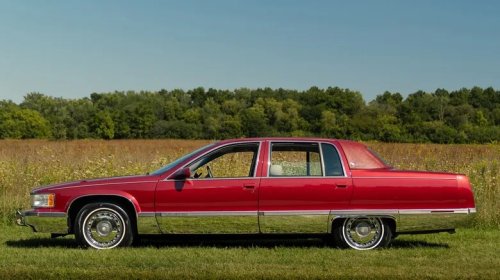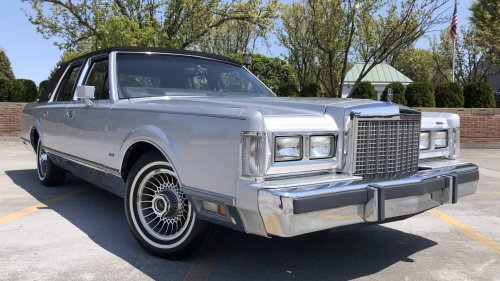
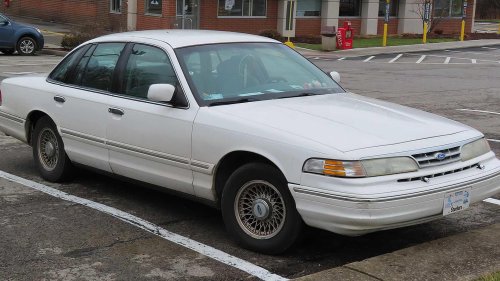
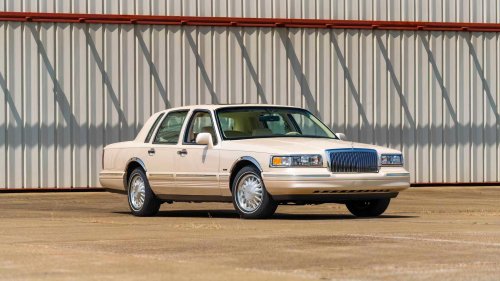
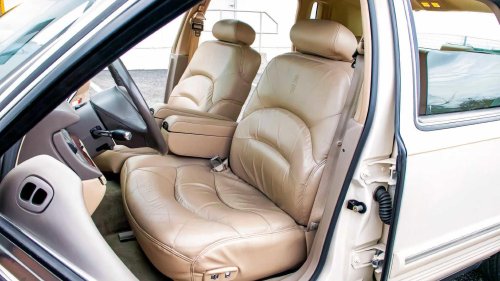
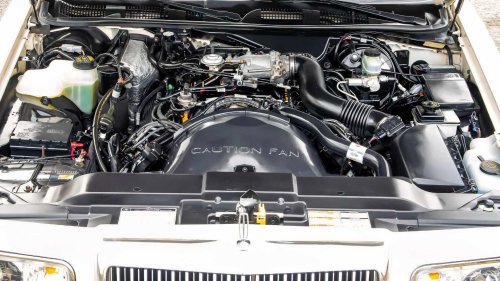



















Fans of Japanese luxury cars like to make fun of American cars for a number of reasons, but the biggest one is the perception that Lexus and Acura will always be more reliable than Cadillac or Lincoln. On the whole, they’re not wrong. But there’s at least a handful of American luxo-barges that buck the trend. Vehicles that will keep running day in and day out for as long as you’re willing to do the most basic maintenance. But there's one that stands above them all, a car that, for a brief period, humbled the Japanese imports and even made the Germans tip their hats. Lincoln: A Brand in Need Of A Refresh Gets Just That Bring a Trailer It’s often forgotten, but it was American luxury cars of days gone by that Japanese manufacturers were trying to replicate when they arrived on the continent in the late 1980s. There were, of course, a few differences. Japanese luxury cars were typically unibodies, often owing to their origins as normal Lexus, Honda, and Nissan passenger cars.Just as the JDM trio had to out-engineer and out-sell Mercedes and Audi in Europe, they’d need to do the same in the American market to capture an audience loyal to brands like Lincoln. To that effect, Lincoln was a brand that needed to evolve or perish at the turn of the ‘90s. Decades of building the biggest land yacht imaginable had long ended years prior, and offerings across the board found themselves drastically downsizing.Even so, in order to properly satiate what Americans would call the legit full-size luxury market, Ford needed a platform beyond what they could offer in the '80s. Not that FoMoCo had to go very far to find what they were looking for. They just had to update what they already had in the lineup. The Panther Platform: Less A Platform, More A Philosophy FordThe Ford Panther Platform wasn’t just an automotive underpinning, it was a statement against the established Euro and JDM philosophy for how to squeeze the most out of a single form factor. Its first generation launched in 1978, helping to downsize the iconic Ford LTD and Mercury Grand Marquis lineup to better compete against rivals, both foreign and domestic.With live rear axles, the Panther Platform was as simple in its design as it was stout in its construction. To the rest of the world, this was laughable, and it certainly didn’t help the notion that American cars used horse-drawn carriage technology for suspension. But while Japan and Europe had moved on to unibody luxury offerings with four-wheel independent suspension by the ‘90s, the Panther Platform’s rejection of the Asian and European notion of refinement was a feature, not a bug.While Japan called it laughable, Americans called it durable, they called it dependable, and they called it trustworthy. With such simple underpinnings, any American mechanic, even the crusty geezer that thinks OBD-II ports are witchcraft, could work on just about anything on a Panther platform with ease. While that’s great for police cars and taxis, it’s arguably even better for a floaty American luxury car. Gen-II Lincoln Town Car: Lexus Who?? MecumThe Town Car took some time to fully split from the Continental post-1980. But once it did, it was free to form its own lineage, complete with a 5.0-liter, 302-cubic-inch small-block V8 and acres of leather inside. It was markedly lighter than past Lincolns, and if you could believe it, even handled better. None of that helped the Grandpa-adjacent styling, but in 1990, spurred on by the introduction of Lexus and Acura, Lincoln unveiled a new body style on the same Panther Platform.Gone were the elderly styling lines of old. In its place was a sleek front grille with smoother curves, while maintaining that trademark stately appearance that made Lincoln an American icon. Initial offerings in 1990 kept the 5-liter small-block from the generation before, but in 1991, the Town Car would receive what’s generally agreed to be its trademark engine, the 4.6-liter Modular V8. Far from the high-strung, rev-happy V6 in the Taurus SHOthat was hoped to champion Ford and Lincoln’s upcoming flagships, the single overhead-cam Modular engine was a disappointment at first.But as the decades that followed proved, an engine as docile and eager to pull as few RPMs as possible has benefits all its own. Instead of being quick, the Town Car, and effectively every taxi cab, police interceptor, and general utility vehicle that rode the Gen-II Panther platform, was relentlessly, almost comically reliable. We're talking upward of 250,000-plus miles in brutal taxi service with little more than brake jobs and oil changes. With rear air suspension, over 42.8 inches of rear legroom, 22 cubic feet of trunk space, and enough leather to cover several cows, the Town Car was the anti LS400, and that’s why Lincoln’s faithful adored it. A Rear-Drive V8 Cruiser Disguised As A Compliance Car Bring a TrailerFar from pairing a Panther chassis to a new body, the Gen-II Town Car was nothing short of a Herculean undertaking. Five years of hard R&D took place under the code name FN36 to downsize the underlying architecture to meet emerging CAFE fuel efficiency regulations. Elsewhere, the new Town Car was considerably safer than those of old, thanks to automatic seat belts, dual airbags, and improved crumple zones.In truth, Ford/Lincoln contracted a Japanese firm to manufacture the new Town Car’s body panels and delegated a British Group, International Automotive Design, to handle the engineering. But the American public didn’t need to know that, and that was evident in the way the new Town Car melded modern refinements into something that didn’t feel like an import.Before full-size SUVs began sapping market share in the late-90s, Gen-II Panther Town Cars were among the highest-selling luxury cars in North America. Sales figures exceeded 100,000 units a year during these golden years. Compared to the objectively more advanced Mercedes S-Classand BMW 7-Series, the Germans would’ve killed for those kinds of sales figures. As far as profit margins go, the Town Car was every bit the success for Lincoln as the LS400 was for Lexus. A Real American Luxury Hero Bring a TrailerMany sing the praises of the third-generation Town Car made from 1998 to 2011. Of course, being a more modern platform, you tend to see far more of them than you do of the older, boxier Gen-IIs. Obviously, the reason why is because the more modern Town Car is less a luxury car and more of a glorified airport shuttle. By comparison, older Town Cars look almost distinguished, even downright comforting.That’s why throwing down five grand, or even a little more, for a nice example that hasn’t been beat up for years isn’t the worst decision you can make. Sure, modern gas prices will be a pain. But compared to a toaster on wheels hatchback that breaks down all the time, you’ll at least save money staying away from the mechanic. There might never be an American car this reliable built in a Detroit factory again, and that’s something that no amount of JDM snobbery can detract from. That fact’s as constant as change itself, and it’s easy on your wallet too.Sources: Hemmings