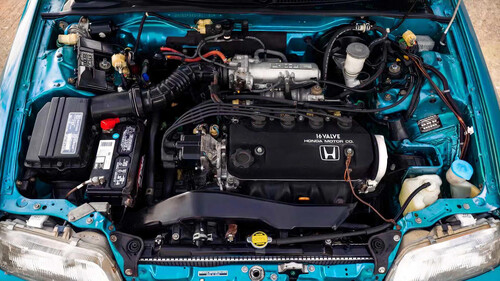
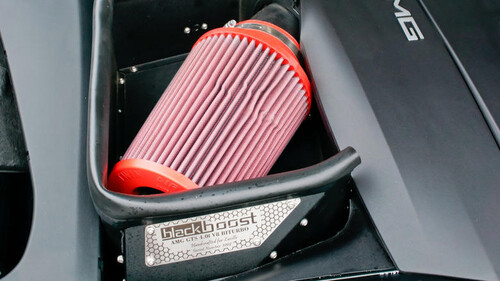
Cold Air Intakes (CAIs) are among the most popular modifications enthusiasts make to their cars. Of course, like anything popular, there’s a fair bit of discourse surrounding them. Claims range from big horsepower gains on some cars to cool noises and improved underhood aesthetics.So, do they really work?The idea behind them is relatively simple—altering one of the three main ingredients needed for combustion (air, fuel, and spark).Colder air is more efficient for combustion because the air is denser and contains more oxygen compared to warm air. This lends itself to a more complete combustion cycle within the cylinder, which could potentially increase horsepower and fuel efficiency.If an engine is able to fully combust all the available fuel, the more power an engine is theoretically capable of making. The bigger bang in turn pushes down on the piston and crankshaft with more velocity, which helps move the car along faster—in very basic terms.Promoted Product: Flashark Cold Air Intake KitCold Air Intakes (CAIs) are among the most popular modifications enthusiasts make to their cars. Of course, like anythinAdding a cold air intake to your vehicle has never been easier. Flashark offers cold air intakes for a wide array of vehicles. We’ll focus on 1999-2006 GM LS Vortec V8 engines here, which will cover the Sierra, Silverado, Yukon, Tahoe, Suburban, Avalanche, and Escalade.This add-on cold air intake system moves the filter outside the engine bay, where it has access to cooler, oxygen-rich air, which translates to sharper throttle response, more horsepower and torque, and improved combustion. Flashark boasts you’ll see increases of 7-10% in horsepower and 6-8% in torque.This particular kit is optimized for 4.8L, 5.3L, and 6.0L Vortec V8 engines and it designed for hassle-free installation you can do yourself with a few simple tools. Everything you need comes in the kit, so you won’t be running to the store for additional parts. Not only that, but it’s also incredibly affordable. You can opt just for the four-inch cold air intake kit, or go all out and get a kit with a new exhaust header.No matter what you choose, Flashark built each one with premium materials pro long-lasting performance.Photo credit: Susan Law Cain / Shutterstock.comPhoto credit: Susan Law Cain / Shutterstock.comThankfully, modern car ECUs are certainly smart enough to figure out that they’ve got more air to work with. For this simple reason alone, a CAI really does work.Of course, it’s important to keep in mind that how well they work will vary drastically based on your car, its engine, and whether you’ve got any other modifications. In fact, manufacturers of aftermarket intakes, like Cobb, often design their software upgrades to work best with a CAI. The bonus here is that A new intake will hopefully earn its name by moving the source of your car’s air supply away from hot engine bits. Again, this largely depends on what kind of car you have and where your factory intake track runs. For example, I owned a VW GTI for a while that routed the intake directly over the turbocharger, meaning the heat from the turbo directly heated the intake pipe like a barbecue.The solution was new intake routing provided by another manufacturer. K&N is another extremely prolific name in the industry that makes intakes for any variety of car or truck. Generally, manufacturers have taken on a more hybridized approach in recent years, utilizing the best parts of the factory intake path and making alterations where gains can be made.Photo credit: BLKstudio / Shutterstock.comPhoto credit: BLKstudio / Shutterstock.comAnother potential positive of a CAI is maintenance. K&N, for example, makes lifetime washable filters that will need to be treated with some kind of air filter oil—although some people swear air filter oil can mess with your Mass Air Flow sensor.With a modified intake, you’re able to save yourself this expense later by paying a bit more up front. Both Cobb and K&N make replacement filters that integrate with the factory airbox for a number of different models.There’s also weight to consider. Depending on your budget, you can find exotic materials like carbon fiber in aftermarket intakes. While the majority of intake systems are made of plastic, a lighter and simplified intake track can result in a bit of weight off the nose of the car. Though the majority of drivers won’t notice a 3-4 pound change to sprung weight.At a superficial level, it’s almost arguable that improvement to induction sound is a benefit worth its own CAI. The simple fact is that most buyers (even of enthusiast cars) don’t want to hear every bit of the machine working in front of them. But for those that do, a CAI is usually noticeably louder than your stock intake.On some turbocharged cars, you might even get more mechanical sounds from the turbine and blow-off valve. Regardless of the reason, a cold air intake is certainly worth a look if you’re trying to find a way to get just a little bit more oomph out of your car.Photo credit: kaninw / Shutterstock.comPhoto credit: kaninw / Shutterstock.com