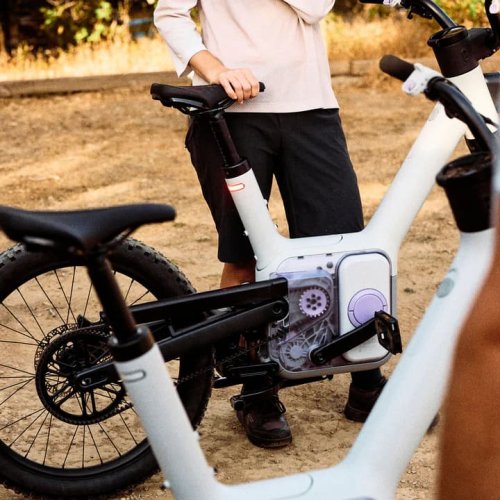
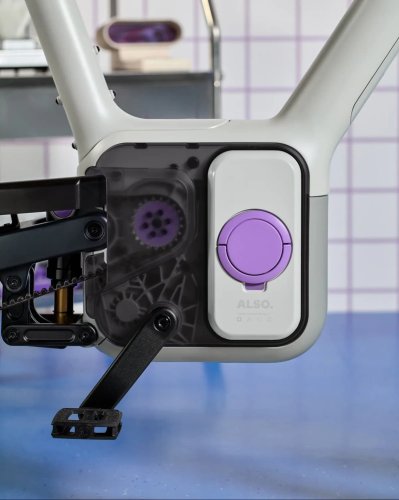
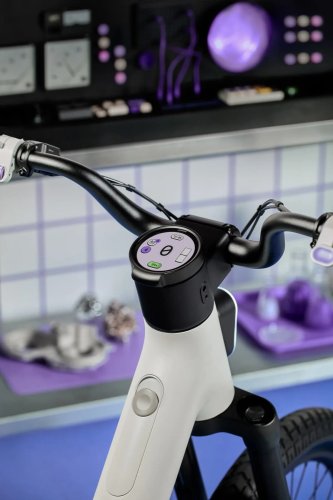
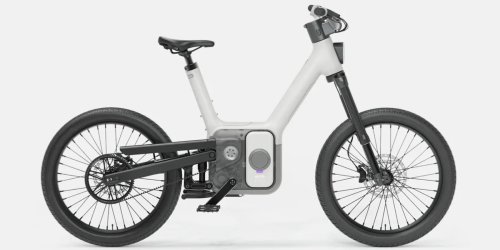
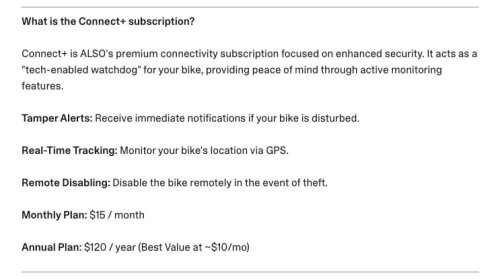




















A billion-dollar valuation is a headline that’s hard to ignore. And when it’s attached to a new e-bike brand spun out of a company like Rivian, it’s even harder not to get swept up in the excitement. But zoom out for a moment, and a more complicated picture starts to emerge. Because while the headlines celebrate a flashy new entrant into the micromobility space from Rivian’s e-bike brand ALSO, there’s an uncomfortable reality lurking underneath – one that the e-bike industry has seen play out more than once over the last few years. And it hasn’t always ended well. Advertisement - scroll for more content To be clear, there’s a lot to like about what Rivian’s ALSO e-bike startup is attempting here. The company has real engineering talent, deep experience in both bicycle design and electrification, and a strong track record of building desirable products. If anyone is going to push forward a more software-integrated, high-tech vision of the humble e-bike, Rivian is certainly a credible contender. But credibility alone doesn’t guarantee success in a category that has already proven to be far less forgiving than many investors once believed. One of the most striking aspects of this new venture is its valuation. The startup has been attributed a billion-dollar price tag, which, coming before a single bike has even been delivered to customers, is a bold bet. It assumes not just that the company will build a compelling bike, but that it will also find a large enough audience willing to pay for a premium, tech-forward experience. And that’s where things start to look eerily familiar, and not in a good way. Over the last decade, we’ve seen a wave of micromobility startups chase a similar vision: sleek design, heavy software integration, and a belief that consumers would pay a premium for a more connected, elevated riding experience. Companies like VanMoof and Cake built strong brands and generated significant buzz, often backed by substantial venture funding. But in many cases, the fundamentals didn’t quite line up, as evidenced by the string of bankruptcies those companies left in their wake. High costs, complex designs, and ambitious scaling plans collided with a market that, at its core, still tends to value reliability, serviceability, and price-to-performance above all else. That doesn’t mean premium e-bikes can’t succeed. They absolutely can. But history suggests that “premium” needs to translate into something tangible for riders – better range, more power, improved durability, or a clearly superior ownership experience. And this is where the conversation around Rivian’s new brand becomes more nuanced. From what we’ve seen so far, much of the differentiation appears to lean heavily on software, integration, and user experience. ALSO has developed real, impressive innovation that rockets e-bike technology years into the future. From ride-by-wire, where the pedals aren’t mechanically connected to the rear wheel, to swappable subframes and more, there are impressive engineering leaps throughout the bike. Those are important factors, no doubt. But when you strip an e-bike down to its fundamentals – motor power, battery capacity, range, and overall performance – those are still the metrics almost all e-bike buyers use to make decisions. And when ALSO’s $4,500 high-tech e-bike travels the same distance at the same speed as a $1,000 e-bike, it becomes a hard sell to anyone who isn’t 100% sold on owning the most innovative bike on the block. If a high-tech bike ends up offering similar core performance to models that cost a fraction of the price, it raises a fair question: what exactly is the customer paying for? There’s a precedent here that goes beyond micromobility. It’s the classic case of overengineering a product in ways that don’t always align with what the market values most. The infamous Juicero is an extreme example, but the underlying lesson applies more broadly. Technology for the sake of technology doesn’t always translate into a better product in the eyes of consumers. A swappable subframe is impressive, but if it turns into an adjustable standing desk that is always left in the seated position, then it’s just innovation for innovation’s sake. If pedal-by-wire proves to be less efficient and more problematic than a bicycle chain, then is it worth the extra thousands of dollars? There’s also another layer to the “high-tech” pitch that deserves a closer look – and it’s one that isn’t immediately obvious unless you go digging. ALSO highlights a number of connectivity and security features as part of its tech-forward appeal, including GPS tracking, tamper alerts, and remote disabling. But buried deeper in the company’s customer resources is the fine print: many of these features are tied to a paid Connect+ subscription priced at US $15 per month or $120 per year. In other words, some of the most compelling “smart” capabilities being used to sell the bike aren’t fully included in the purchase price. Subscription models aren’t new in micromobility, and there’s an argument for ongoing costs when cellular connectivity and cloud services are involved. But the way it’s presented here – or effectively hidden – could raise eyebrows. The flashy marketing leans heavily on these advanced features, while the fact that they require a recurring fee is much less prominent. For a product already expected to sit at the premium end of the market, adding another monthly cost on top of the purchase price could further narrow the pool of willing buyers – especially in a segment where simplicity and low cost of ownership have traditionally been part of the appeal. Hmmm, the paywall conveniently wasn’t in the flashy product brochure… At the same time, the broader market conditions today are very different from the boom years that fueled many of those earlier startups. To its much-deserved credit, ALSO just announced an impressive $200M funding round. But that makes them the exception right now, not the rule, in a time when micromobility investments are harder to come by, and the e-bike industry is still reeling from a years-long winter after the pandemic boom. Funding is now tighter, and consumers are more cautious with discretionary spending. The e-bike market itself has cooled from the rapid growth we saw only a few years ago. Inventory gluts, discounting, and increased competition have made it a tougher environment for new entrants, especially those targeting the premium end of the spectrum. That context matters because many of the companies that struggled or failed in recent years did so during a period when capital was easier to access, and demand was significantly higher than it is today. Those companies drowned back then while swimming comfortably in the shallow end, and now someone has just turned on the wave machine for everyone left keeping their heads above water in the pool. Launching a high-valuation, premium-focused micromobility brand in this environment is a very different challenge than a few years ago. With ALSO taking on significant investment and eventually needing to show those investors returns, the pressure will only grow. There are also subtle signals suggesting the company is pushing hard to build early awareness. A noticeably high spending on social media advertising can be interpreted in different ways – it could simply reflect a well-funded marketing push. But it can also, at times, hint at the need to generate demand in a market that isn’t automatically lining up at the door for an e-bike that costs several times what the best-selling models in the industry charge. Again, none of this is to say that Rivian’s new e-bike brand is destined to follow the same path as those high-tech companies that struggled before it. In fact, there are reasons to be optimistic. A company with Rivian’s resources and experience could very well find ways to execute where others fell short. But it would be a mistake to ignore the patterns. A highly valued micromobility startup. A strong emphasis on eye-catching design, proprietary software, and custom hardware. Premium pricing in a market that often prioritizes practicality. And a broader economic backdrop that is less forgiving than it once was. Those ingredients have been combined before. And the results were often unfortunate. Electrek’s Take Here’s the thing: I genuinely hope this works. As an engineer, I appreciate and deeply value the kind of innovation that ALSO has brought to the industry. We complained for years about stagnating design in the e-bike industry, and now ALSO has finally given us something fresh and new. The problem is that while the engineer in me is impressed, the MBA in me knows that fresh and new isn’t enough to make a sustainable business. Yes, the e-bike industry benefits from innovation, and there’s plenty of room for companies willing to push boundaries and rethink what these vehicles can be. A more integrated, thoughtfully designed, and software-enhanced riding experience could absolutely move the category forward. But the fundamentals still matter. Price, performance, reliability, and serviceability remain the backbone of what most riders care about. ALSO doesn’t need to sell to most riders, but it definitely still needs to sell to enough of them. If Rivian’s new brand can deliver on both sides of that equation – not just the high-tech vision, but also the real-world value – then it has a shot at breaking the pattern. But if not, we may be watching a very familiar story unfold all over again. Stay up to date with the latest content by subscribing to Electrek on Google News. You’re reading Electrek— experts who break news about Tesla, electric vehicles, and green energy, day after day. Be sure to check out our homepage for all the latest news, and follow Electrek on Twitter, Facebook, and LinkedIn to stay in the loop. Don’t know where to start? Check out our YouTube channel for the latest reviews.