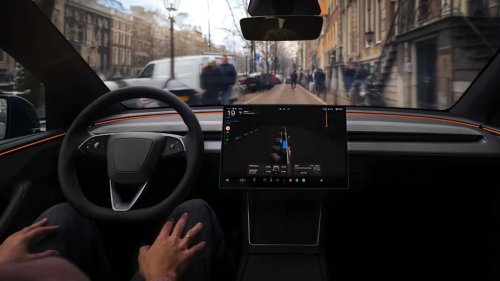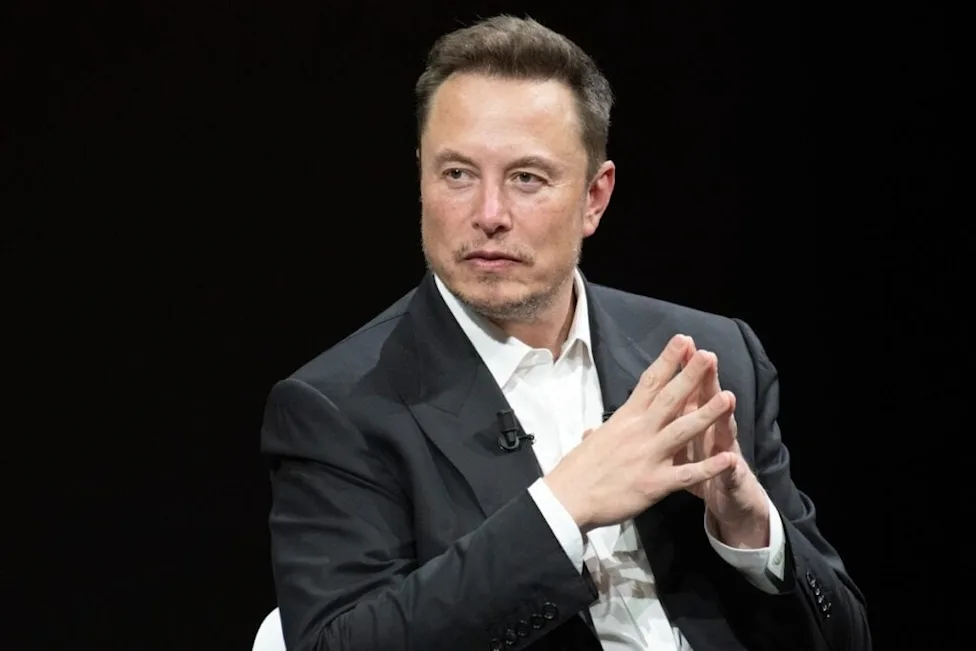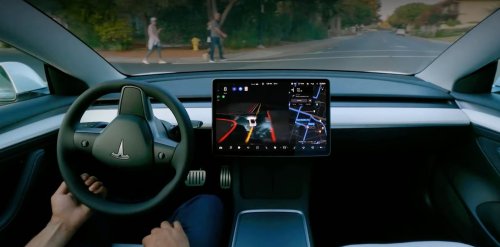









Tesla’s Full Self-Driving suite is one of the most significant technological developments in terms of passenger travel in decades, but it is not all sunshine and rainbows, even with major strides in safety, CEO Elon Musk revealed. In a candid reply to a dramatic video of Tesla’s Full Self-Driving (FSD) system averting disaster, Elon Musk laid bare a harsh reality facing autonomous vehicle technology. The clip shows a Model 3 traveling at over 65 mph on a foggy, rain-soaked highway when a pedestrian suddenly steps into traffic. Full Self-Driving instantly detects the threat and swerves safely, preventing what could have been a fatal collision for both the pedestrian and the driver’s cousin. Musk’s response was unequivocal: “Tesla self-driving saves a lot of lives – the statistics are unequivocal. That doesn’t mean it’s perfect, of course.” Even with a projected 10x safety improvement over human drivers, FSD would still prevent roughly 90% of the world’s approximately one million annual auto fatalities. The remaining 10%—roughly 100,000 deaths—would expose Tesla to relentless lawsuits. Meanwhile, the vast majority of lives saved would go unnoticed. “The 90% who are still alive mostly won’t even know that Tesla saved them. Nonetheless, it is the right thing to do.” This “unfortunate truth,” as Musk implicitly framed it, highlights a fundamental asymmetry in how society perceives safety technology. Human drivers cause the overwhelming majority of crashes through distraction, fatigue, or error. Tesla self-driving saves a lot of lives – the statistics are unequivocal. That doesn’t mean it’s perfect, of course. Even when we improve safety 10X, saving 90% of the million lives lost in auto accidents every year, Tesla will still get sued for the 10% who did die. The 90%… https://t.co/OrNB1mO5eF — Elon Musk (@elonmusk) April 6, 2026 Yet when FSD errs, the incident becomes headline news and a courtroom target. Prevented tragedies, by contrast, leave no trace. Survivors simply continue their journeys, unaware of the split-second intervention that kept them alive. The result is a distorted public narrative that amplifies failures while rendering successes invisible. We have seen this through various headlines throughout the years, including the mainstream media’s obsession with only mentioning the manufacturer’s name in the instance of an accident when it is “Tesla.” Opinion: Tesla Autopilot NHTSA investigation headlines are out of control The video’s real-world example underscores FSD’s current capabilities. In near-zero visibility, the system’s cameras and neural network reacted faster than any human could, demonstrating the life-saving potential Musk cites. Tesla’s latest safety data already shows FSD (Supervised) performing significantly better than the U.S. average, with crashes occurring far less frequently per mile driven. Still, regulatory scrutiny, liability concerns, and media focus on edge-case failures continue to slow widespread adoption. Musk’s frank admission suggests Tesla is prepared to push forward despite the legal and perceptual headwinds. As FSD edges closer to unsupervised autonomy, Musk’s post serves as both a progress report and a reality check. The technology is already saving lives today. The unfortunate truth is that proving it and scaling it responsibly will require society to value statistical lives saved as much as dramatic stories of those lost. In the race toward safer roads, perception may prove as formidable an obstacle as the fog and rain in that viral video.