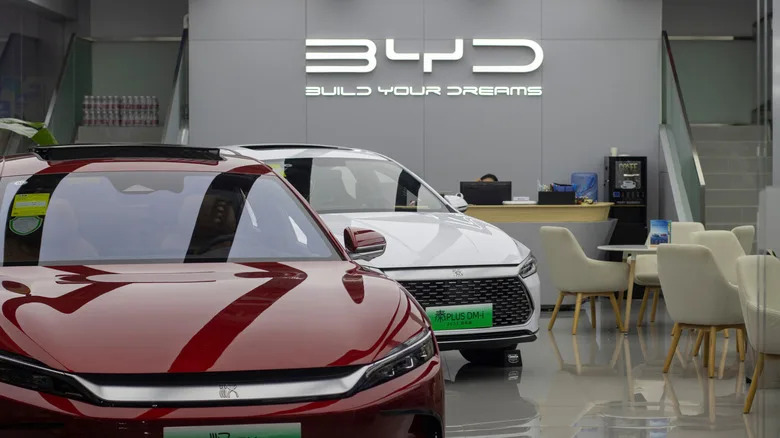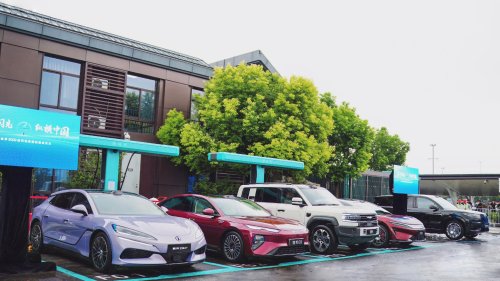

















We’ve had a few articles this week about BYD’s breakthrough decision to take on liability in the event of a crash when a BYD driver is using God’s Eye. A few of the comments under my article earlier this week were superb additions, though, and they seemed to deserve their own article. First of all, “Matthew2312” provided the following extensive argument for why such a thing is probably not going to happen in the United States (including from Tesla) for a while: This is great and sets an important precedent. That said, it won’t work in the US. Here is why:Under Chinese civil law, personal injury and wrongful death compensations are calculated using strict, state-defined formulas. This establishes a highly predictable legal ceiling for liability. Wrongful Death Payouts Formula-Based Compensation:Wrongful death payouts are standardly calculated as 20 times the annual per capita disposable income of the residents in the province where the court is located (for victims under 60). Catastrophic Injury Formula-Based Compensation:Disability compensation is formulaic (graded 10–100% of the same 20× figure), but ongoing nursing care, rehabilitation, and follow-up medical are actual-cost, not formula-bounded. Itemized Economic Damages:Additional liabilities, such as medical expenses, funeral costs, and lost wages, are strictly calculated based on actual receipts and standardized provincial rates. Absence of Punitive Damages:US-style subjective, multimillion-dollar awards for “pain and suffering” or punitive damages are practically non-existent in Chinese traffic accident litigation. So BYD’s “uncapped” liability means it will pay the full extent of the legally assessed damages. However, because the underlying Chinese legal system defines and limits most of those damages via formula, BYD’s actuaries can accurately model the maximum possible financial exposure per crash. The US tort system’s reliance on unpredictable jury awards makes this kind of actuarial modeling mathematically unworkable for domestic automakers. China is not uniqueThe approach is China is basically the normal world standard approach. In Europe, civil compensation for traffic accidents prioritizes structural consistency and predictable economic recovery over punitive action against the manufacturer.Standardized Injury Tables:Most European nations use mandatory or highly standardized statutory grids to calculate non-economic damages (pain and suffering, loss of life).• Spain utilizes the Baremo system, a statutory point-based grid that calculates exact payouts based on the victim’s age, income, and the medical severity of the injury.• Italy relies on standardized court tables (predominantly the Milan Court Tables) assigning point values to permanent invalidity.• The UK enforces a strict statutory cap on non-economic bereavement damages under the Fatal Accidents Act (currently fixed at £15,120), leaving the rest of the compensation strictly tied to calculable lost income. Basically, the only place on earth where a company could be found liable for $330 million (Florida jury award against Tesla) for autopilot failures is America. And that makes this nearly impossible and it is why American consumer-versions of L3/L4 systems will likely get delayed here (unless there is a tort policy to solve this). (Random anecdote, many years ago, when I was crossing a busy intersection in Tokyo and came very close to being hit, my Japanese host said You must be careful and “you would be very expensive.” I was a highly compensated young professional at the time. The comment struck me as odd until my host explained the compensation system was timed to an age and income formula.) All great points. I was not aware that China had such a clear, systematic way of dealing with such issues, but it also completely makes sense and is unsurprising. That said, Waymo is operating robotaxis in the United States, Zoox is doing so to an extent, and Tesla is doing so to an extent. GM was operating Cruise, but then decided to bail on the idea when things got tricky after a pedestrian accident. Anyway, though, the points made by Matthew2312 are salient and quite huge. There were a couple of superb followup comments that expanded on the point. Longtime reader “neroden” made the following excellent point: “This doesn’t really make the slightest bit of difference for why the US won’t have the companies taking liability. Let me explain what REALLY makes a difference. “In the United States of America, we have no national medical insurance. And our medical prices are 10 to 100 times higher than prices in other countries. Therefore actual medical costs, which the driver in car crashes must pay, is of essentially unlimited amounts: millions upon millions upon millions. This is what actually raises the insurance costs. “In China, most medical stuff is covered by national health insurance, and the prices are reasonable anyway, so the potential medical costs are manageable. In the US, they are not actuarially manageable. “Jury rulings like the $330 million payout in Florida are essentially fines for criminal behavior — punitive damages are basically fines — and the equivalent exists in every country. BYD would have to pay out that much if it was found to have committed intentional fraud resulting in deaths; actually, in China, someone at BYD would probably be executed for that, by firing squad. These payouts are irrelevant to the actuarial calculations as they do not happen except in cases of moral turpitude; they are rare. “However, the skyrocketing, out of control US medical costs, combined with absolutely no national medical insurance in the US, is a routine liability cost in car insurance in the US. One crash can be $20 million in real medical costs, easily. The medical costs just don’t cost that much in other countries. “So I will make a prediction: if the US gets universal health care and controls medical costs, the US car companies will start taking on liability like they do in China. They won’t do it until the US gets universal health care and controls medical costs. It’s nothing to do with juries.” Superb point. Many Americans still don’t understand how absurd, broken, and abnormal the US healthcare system is. It certainly does make the self-driving vehicle idea more complicated and difficult. “Midori Mayari” makes one more interesting series of points on lawsuits and lawyers in China: “AFAIK one of China’s many directives is to minimize the money wasted with lawyers and legal fights, as they see that as a pure drain on the economy, lowering GDP; heck, I believe they don’t even count lawyer fees as part of the GDP, differently from most other countries. Standardized damages compensation using objective criteria helps a lot with that. “The not counting lawyer fees in the GDP part is important because their equivalent to mayors or governors aren’t elected, but rather career politicians that get promoted based on performance, with GDP growth usually being the most important performance metric; thanks to this, reducing both the number and the complexity of court cases in the region they manage indirectly helps get the ‘mayor’ or ‘governor’ promoted. “Incidentally, I believe they are right — and that this might be one of the many factors, albeit a less important one, for why China can make just about everything cheaper.” The BYD “God’s Eye” news is a milestone and perhaps the biggest EV story of the year, but as we can see, each layer we dig deeper, there’s more to the story. Let’s see what happens with BYD, “God’s Eye,” and other self-driving systems in China and around the world. Of course, back to the topic in the headline, Tesla does have cars in China. In fact, China is the company’s second biggest market, if not its biggest now — 112,000 Teslas were sold in China in the first quarter, versus 117,000 in the US. However, the company just had to change the name of “Full Self Driving” to “Tesla Assisted Driving” in China, so who knows how long until Tesla is comfortable taking on liability in China like BYD is now doing? When it comes to the headline topic, that also makes the points made above by readers a bit moot. They all apply to Tesla in China as well as BYD. So, some potential reasons why BYD is taking on liability while Tesla is not: BYD’s God’s Eye system is better than Tesla’s system — the former is ready, and the latter is not. BYD has more political capital and trust in China, and is thus more comfortable making this leap forward. BYD felt a need to get ahead of the competition and launched this new policy despite not having a better system. BYD simply crunched the numbers and felt ready to deploy this, whereas Tesla doesn’t yet have enough data or experience in the country to do the same. Tesla wasn’t able to broadly launch “FSD”/”Tesla Assisted Driving” in China until a couple of weeks ago after building a data center there to keep all vehicle telemetry processing local. We’ll see what happens. Check back in a year and we should have some significant updates.