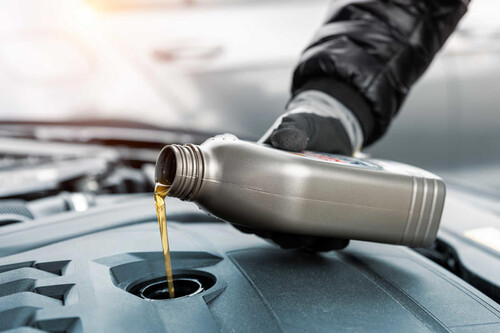
the truth about oil changesHow often should you change engine oil in your car?These are the facts about oil changes, including the best oil viscosity, optimum oil change intervals, and what mechanics say to do. This is how to maintain your car and make it last for as long as possible.These maintenance tips will show you how to maintain your car without spending a ton of money but still keep your car in great shape. To find out how to maintain your car, make sure to watch this video.AdvertisementAdvertisementRemember, oil is cheap; engines are expensive.How often should you really be changing your engine oil? While car manufacturers push for increasingly long service windows, what do the people who actually fix these cars think?To find out, a survey was conducted among a dozen reputable master mechanics to get their consensus on modern engine oil, oil weights, additives, and where you should have your vehicle serviced for maximum longevity.1. The Ideal Oil Change IntervalThere is a major disconnect between what a car's owner's manual says and what independent mechanics recommend. Many manufacturers suggest intervals of 10,000 to 12,000 miles (15,000 to 20,000 km).AdvertisementAdvertisementThe master mechanics surveyed, however, unanimously agreed on a tighter timeline to ensure long engine life:Vehicle / Oil TypeRecommended Mileage IntervalRecommended Time IntervalModern Cars (Synthetic Oil)5,000 to 6,000 milesOnce per year (if mileage isn't reached)Older Cars (Conventional Mineral Oil)~3,000 milesN/AWhy Are Manufacturers Pushing Longer Oil Change Intervals?If shorter intervals are better for the engine, why do manufacturers recommend stretching them out? It boils down to three distinct factors:Environmental Pressure: Governments heavily pressure automakers to reduce their chemical pollution and environmental footprint. Extending oil change windows sharply cuts down on overall oil waste.Technological Advances: Both modern engine manufacturing tolerances and synthetic oil chemistry have genuinely improved, allowing oil to safely last longer than it did decades ago.Perceived Cost of Ownership: Car buyers look closely at maintenance costs. By eliminating or delaying service intervals on paper, a manufacturer can market the vehicle as being cheaper and easier to maintain.The Reality: Once a car passes its warranty period, engine longevity is no longer the manufacturer's financial problem. If you plan to keep your vehicle long-term, sticking to the mechanics' 5k–6k mile rule is your best insurance policy.2. Does the Brand or Weight of Oil Matter?Oil Weight (Viscosity)Many modern vehicles now call for incredibly thin oils-such as 0W-20, 0W-16, or even 0W-8. Manufacturers specify these ultra-low viscosities to minimize internal engine drag, maximizing fuel efficiency and lowering emissions.AdvertisementAdvertisementWhile car enthusiasts frequently worry that these water-thin oils sacrifice long-term engine protection, the mechanics surveyed explicitly advised against taking matters into your own hands. You should always stick to the manufacturer-recommended oil weight, as modern engines are structurally designed with tighter clearances specifically meant for those thin fluids.Oil BrandThe consensus on oil brands was remarkably simple: It doesn't make a meaningful difference. Do not waste energy stressing over premium marketing or flashy brand names. As long as the oil meets the correct specifications for your vehicle, the physical act of changing it on time is infinitely more important than the logo on the bottle.3. The Truth About Oil Additives and Fuel CleanersThe mechanics expressed very little faith in aftermarket oil additives or fuel system cleaners for extending engine life. This is especially true for modern vehicles due to a shift in automotive technology: Direct Fuel Injection (GDI).Traditional Port Injection: Fuel is sprayed before the intake valves, coating them. If you add a fuel system cleaner, it washes over the valves and helps dissolve carbon buildup.Direct Injection: Fuel is sprayed directly into the combustion cylinder, completely bypassing the intake valves.AdvertisementAdvertisementBecause the fuel never touches the intake valves in a GDI engine, pouring a cleaner into your gas tank will do absolutely nothing to prevent or cure carbon crusting on the valves. If your direct-injected car is suffering from rough idling or drivability issues due to carbon buildup, the mechanics agree that the only proper fix is a professional intake valve cleaning procedure (typically involving opening the intake and utilizing a walnut shell blasting tool).4. Dealership vs. Independent Repair ShopWhere should you get your oil changed? The choice depends entirely on whether your vehicle is still covered by its factory warranty.While Under Warranty: Go to the DealershipThe mechanics heavily advise taking a brand-new car to the dealership for the first few years. Doing so establishes a service relationship and creates a flawless, undeniable paper trail.If your engine suffers a catastrophic mechanical failure under warranty, the manufacturer cannot look for an excuse to deny your multi-thousand-dollar claim.AdvertisementAdvertisementA Warning for Canadian Owners: In Canada, performing your own DIY oil changes or maintenance at home is generally not recognized as documented service for warranty validation. If you cannot prove the service was done by a licensed professional to exact specifications, a major warranty claim will likely be rejected. (Note: While laws like the Magnuson-Moss Warranty Act protect DIYers in the U.S. if they keep strict receipts, it is still a riskier path.)Out of Warranty: Go IndependentOnce your vehicle clears its warranty period, the mechanics agree that transitioning to a trusted, independent repair shop makes the most financial sense. You will save a substantial amount of money on labor fees. As long as the shop utilizes correct factory-spec fluids and proper diagnostic tools, the quality of care will be identical to-or better than-the dealership.Become an AutoGuide insider. Get the latest from the automotive world first by subscribing to our newsletter here.