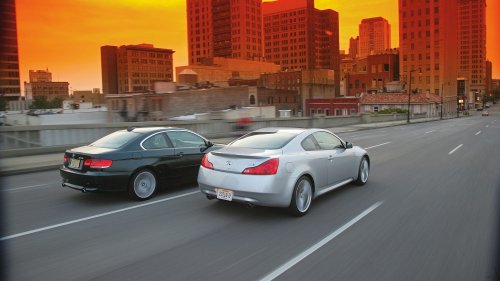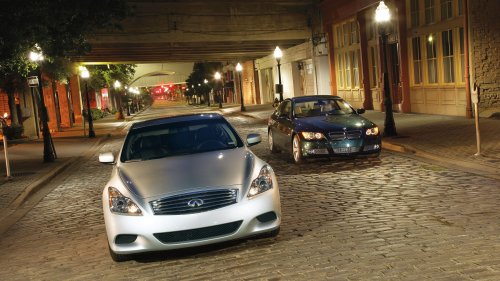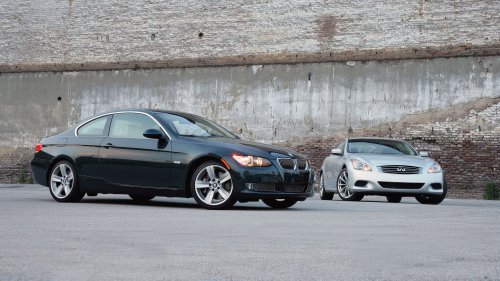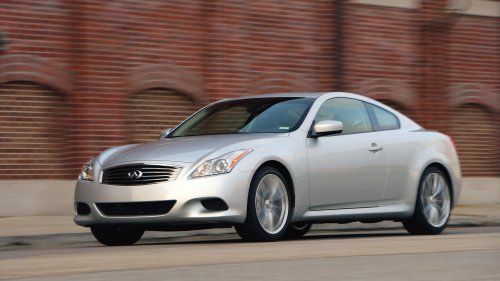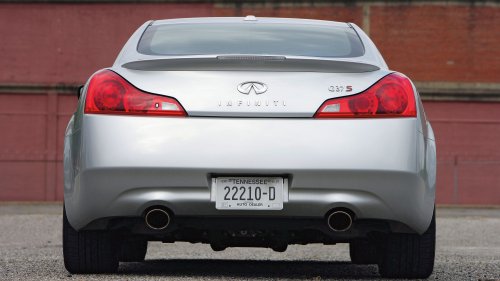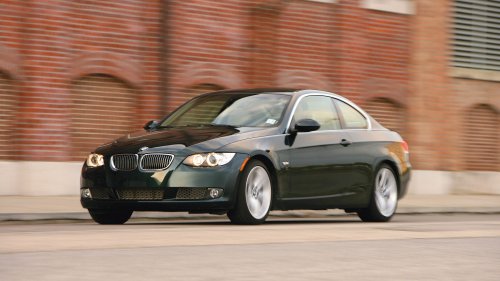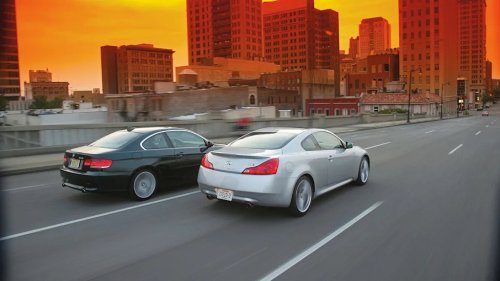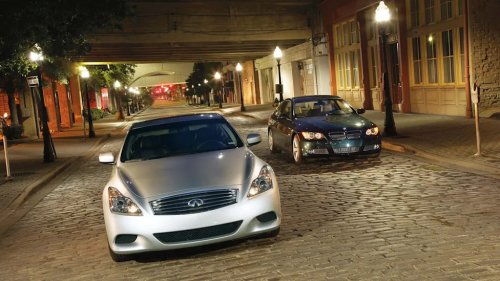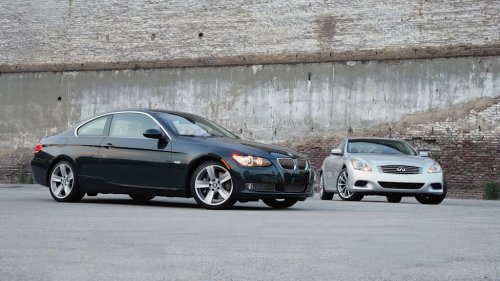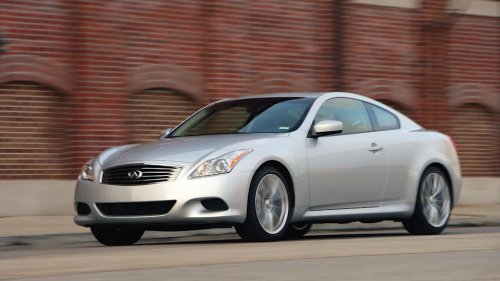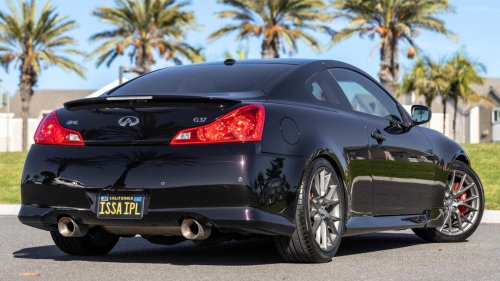
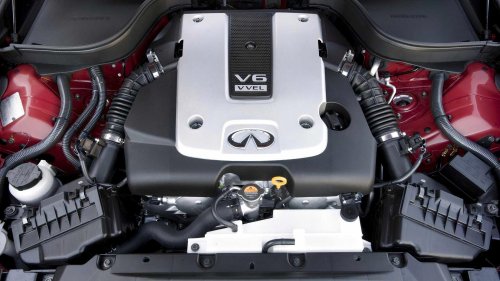
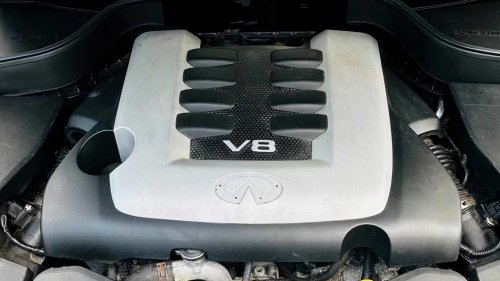
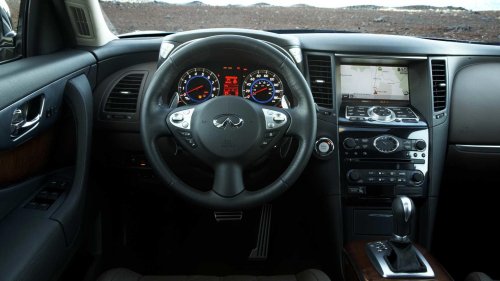
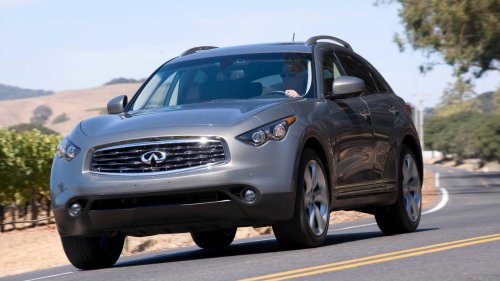
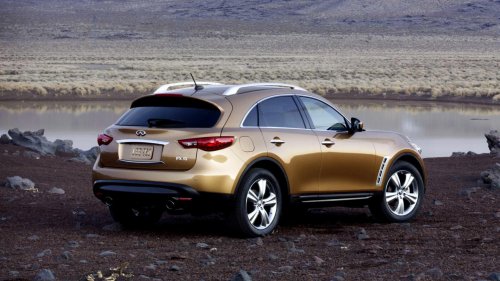
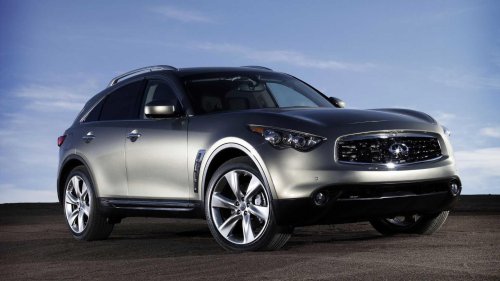
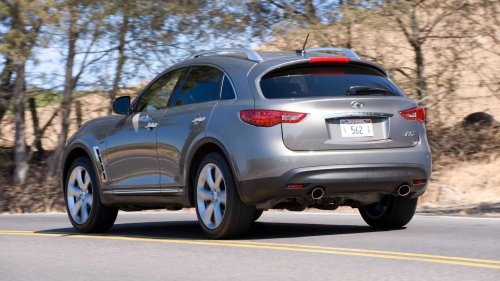
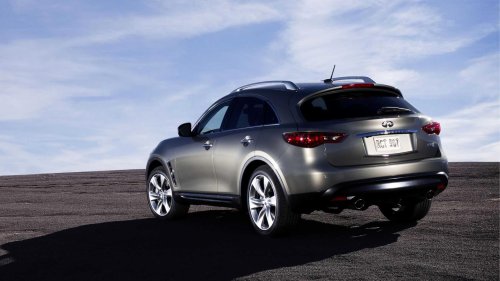



















Sports cars are supposed to carry the fast-guy card. They sit lower, weigh less, and look like they have somewhere questionable to be. SUVs, meanwhile, usually show up taller, heavier, softer, and slower. They haul friends, groceries, golf bags, and excuses. Nobody expects the high-riding luxury machine to beat the tidy two-door that wears the sporty badge and makes the dealership brochure look like a track-day flyer.For a brief, wonderful moment, Infiniti had a problem with that tidy rule book. One vehicle in its lineup looked like a luxury crossover, weighed well over two tons, seated five, and still managed to outrun the brand’s own sleek performance coupe. Infiniti Was Trying To Prove It Could Build More Than Luxury Sedans Cars & Bids By the late 2000s, Infiniti had carved out a clear role for itself. It wanted to sell Japanese luxury with a rear-drive feel, strong engines, and enough attitude to make BMW owners look twice. That was not a small ask, though. Luxury buyers liked smooth rides and quiet cabins, while gearheads wanted steering feel, balance, and engines that did not sound like blenders full of bolts. Infiniti tried to satisfy both groups without turning every car into a rolling hotel lobby.The G lineup carried most of that message. The G sedan gave Infiniti a real sport-sedan backbone, while the G coupe gave the showroom a low, pretty shape with real pace. The G37 coupe used a 3.7-liter V6 with 330 horsepower, a high redline, and either an automatic with paddle shifters or a six-speed manual. The G was the car that made people say, “Wait, this Nissan luxury brand has jokes?”Infiniti The M sedan backed up the same theme in a bigger suit. The 2009 M35 used a 303-horsepower V6, while the M45 brought a 325-horsepower V8. Both sat on Infiniti’s FM platform, a layout that placed the engine behind the front axle to help balance the car. Simply put, the brand built that car like a serious sedan that happened to have nice seats, real wood, and enough buttons to make a pilot nod politely.That made Infiniti’s lineup oddly performance-heavy for a luxury brand. The company still had soft-touch plastics, analog clocks, and dealer coffee, sure. But underneath all that polite stuff, the company kept sneaking in Nissan’s sports-car habits. The brand had big V6s, muscular V8s, rear-drive platforms, available rear steering, and a habit of tuning transmissions as the driver might actually be in a hurry. It had the ingredients and just needed one strange recipe. Hardware That Was Unusual For An SUV Mecum The wildest part of this story starts with the hardware. Infiniti took the kind of parts that normally make sense in a sport sedan and shoved them into a taller body. A big V8 gave that machine muscle, and not polite muscle, either. It made 390 horsepower and 369 lb-ft of torque, which put it well above the V8 that came before it. That engine also used Infiniti’s VVEL valve-control tech, because apparently “large engine” alone did not sound nerdy enough. It revved higher than many people expected from a luxury crossover, too. It also sounded like Infiniti wanted the driver to hear every expensive gulp of air and fuel.Then came the all-wheel-drive system. Infiniti’s so-called ATTESA E-TS system could send power fully rearward in normal driving, then move torque to the front wheels when grip demanded it. From a stop, it could use a 50/50 split to help the vehicle leave the line hard. While a rear-drive coupe can turn tire smoke into drama, this thing turned traction into a prank. It used the front tires like a bouncer uses a clipboard – only when the situation called for backup.Infiniti The transmission joined the plot. Infiniti gave that SUV a seven-speed automatic, the first seven-speed the brand had offered. The gearbox used downshift rev-matching and adaptive shift logic, and Infiniti enlarged the rear differential to deal with the V8’s extra output. That’s a pretty sophisticated setup, but the goal was simple. Keep the engine in the fat part of its powerband, then let all four tires dig in before the stopwatch could ask questions.The chassis also refused to play the usual SUV game. Infiniti built the vehicle on the FM platform, the same basic philosophy behind its best-driving cars, and claimed a 54/46 front-to-rear weight distribution for the V8 all-wheel-drive version. It also added double-wishbone front suspension, a multi-link rear setup, big stabilizer bars, and available adaptive damping. Even the side vents reduced front-end lift by five percent. The FX50 Was Infiniti's First Super-SUV InfinitiThat SUV was the 2009 Infiniti FX50S AWD. That name does not sound like a villain, but the vehicle acted like one. The 2009 model launched the second generation of Infiniti’s FX crossover, and the FX50 replaced the earlier V8-powered FX45 at the top of the range. It still looked like a luxury crossover, though “crossover” did a lot of heavy lifting. The shape sat low, wide, and angry, like someone parked a sports wagon too close to a weight bench. Infiniti called it a performance luxury crossover, and for once, that phrase did not need a laugh track. It had five doors, but its personality knocked before opening any of them.Now comes the number that makes the whole story worth telling. In Car and Driver testing, the 2009 FX50S AWD ran from 0 to 60 mph in 5.0 seconds and covered the quarter-mile in 13.6 seconds at 104 mph. The same magazine’s test of the Infiniti G37 Sport coupe recorded 0 to 60 mph in 5.3 seconds and the quarter-mile in 13.9 seconds at 103 mph.Infiniti That result gets even funnier with the scale in mind. The 2009 FX50 carried a curb weight of 4,575 pounds, seated five, and offered all-wheel drive. The G37 Sport coupe, in turn, carried less weight, a lower roofline, and the image advantage. Yet the FX50 had 60 more horsepower, 99 more lb-ft of torque, a harder launch, and that seven-speed automatic. The coupe still handled like the more natural performance car. It had the lower center of gravity, the lighter feel, and the purer mission, after all. But in a straight line, the tall one got the last laugh.The FX50 also landed in rare company for the time. Car and Driver noted that only a few SUVs beat it, including the Jeep Grand Cherokee SRT8, Mercedes-Benz ML63 AMG, and Porsche Cayenne Turbo. That list matters because two of those wore expensive German badges, and the Jeep carried a muscle-truck mission from birth. The Infiniti, by comparison, came from a brand better known for sport sedans and coupes. It felt like a side quest that somehow unlocked the boss level early. It also proved that speed could sneak out of the showroom wearing a hatch and five seatbelts. That is the fun part. It looked like a niche luxury crossover, then ran numbers that belonged in a much louder conversation. The FX50 Felt Like A Product From A Different Infiniti Infiniti The FX50 is cool in so many ways, but most of all, it captured a version of Infiniti that feels almost strange now. It came from a time when the brand seemed willing to make products with edges. Not every decision had to help cargo volume, lease math, or focus-group comfort. Sometimes, the brand built something because the engineers had the parts, the designers had a sketch, and nobody in the meeting wanted to be the adult. That can lead to bad ideas, but it can also lead to memorable ones. The FX50 lived right on that line.The styling helped. The second-generation FX had a long hood, pinched glass, swollen fenders, and a roofline that traded some practicality for drama. The nose looked a little like it had smelled something rude. The rear haunches looked ready to pounce. Love it or hate it, nobody mistook it for a refrigerator. A lot of luxury SUVs age into background noise, but the FX still looks like it wants attention.Infiniti Infiniti also filled it with tech that fit the mission. The FX50 Sport Package added Continuous Damping Control and Rear Active Steer, and Infiniti called that rear-steering setup the first of its kind available on an SUV. The system could turn the rear wheels up to one degree to help low-speed response and high-speed stability. The FX50 could also get 21-inch Enkei wheels, large brakes with opposed-piston calipers, lane and distance assist systems, Around View Monitor, and Scratch Shield paint. That SUV was wonderfully over-caffeinated. It Wasn’t Just Fast, It Was Infiniti At Its Boldest Infiniti The FX50 did not embarrass Infiniti’s coupe because the coupe was weak. The G37 Sport was quick, balanced, and genuinely fun. But the FX50 beat it because Infiniti gave the SUV a wonderfully unreasonable tool kit. More displacement, more torque, all-wheel-drive launch grip, and close gearing can make a heavy machine act much lighter than it is. That was the trick.Of course, the FX50 still had trade-offs. Its EPA rating sat at 14 mpg city and 20 mpg highway, which meant premium fuel left the tank with enthusiasm. Cargo space also trailed many more sensible rivals, with 24.8 cubic feet behind the rear seats and 62.0 cubic feet with them folded. The ride could feel firm, especially with big wheels. In other words, it worked best for someone who wanted an SUV but secretly wished the SUV would stop acting so responsible. It could carry a family, but it would rather carry speed. Groceries might arrive slightly rearranged, but that’s fine.That is why we still remember it. Fast luxury SUVs feel normal now. Buyers can find crossovers with absurd horsepower, launch control, and badges that look expensive enough to require a co-signer, but the FX50 came from an earlier, stranger moment. It was so different from what modern super-SUVs look like. No giant grille war, no hybrid boost button, no lap-timer theater, and no angry exhaust mode named after a weather event. It just had a big naturally aspirated V8, a rear-biased chassis, and the confidence to look a little unhinged. In an age before every SUV tried to cosplay as a supercar, that felt fresh.Source: Infiniti, Car and Driver