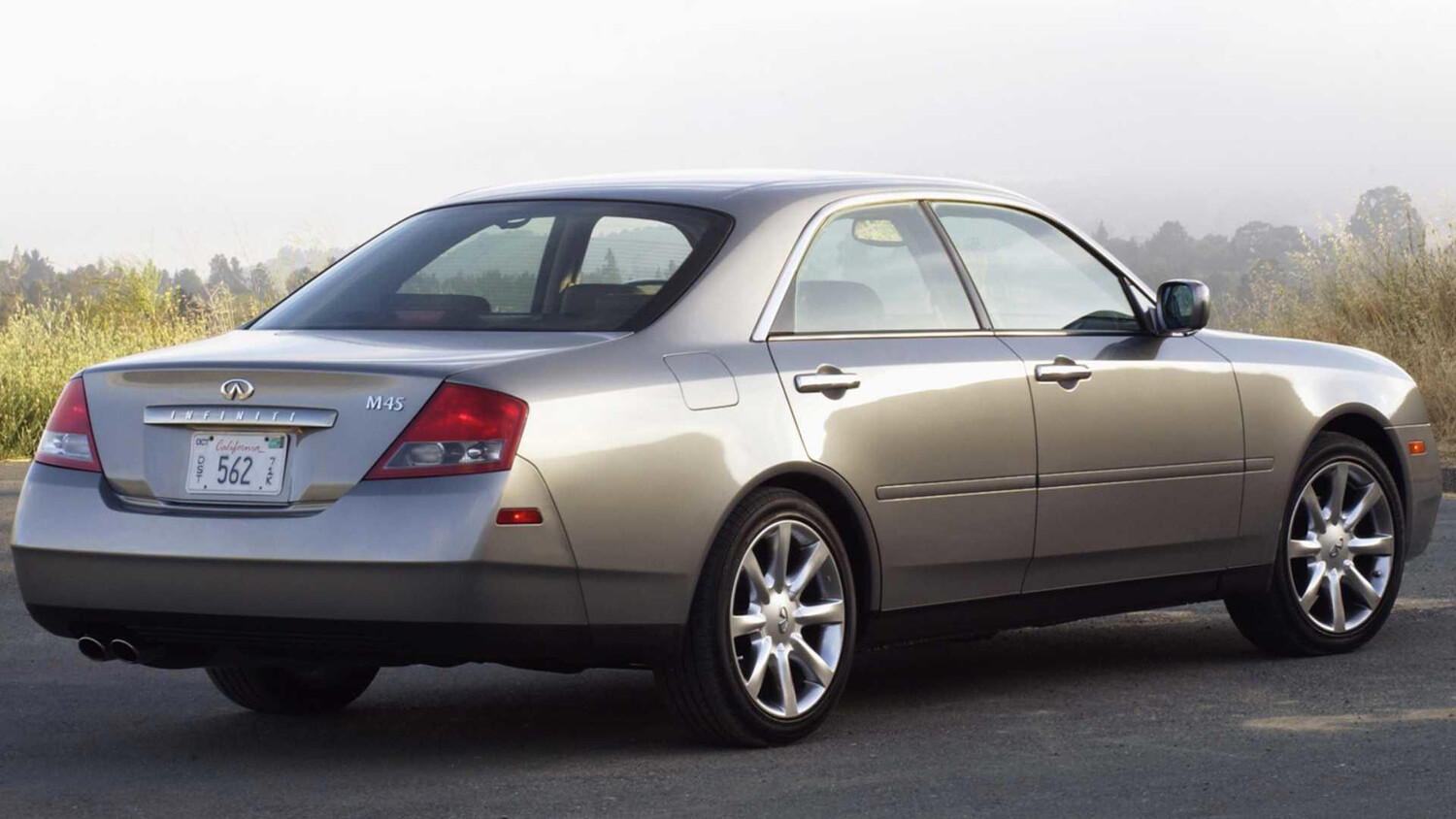
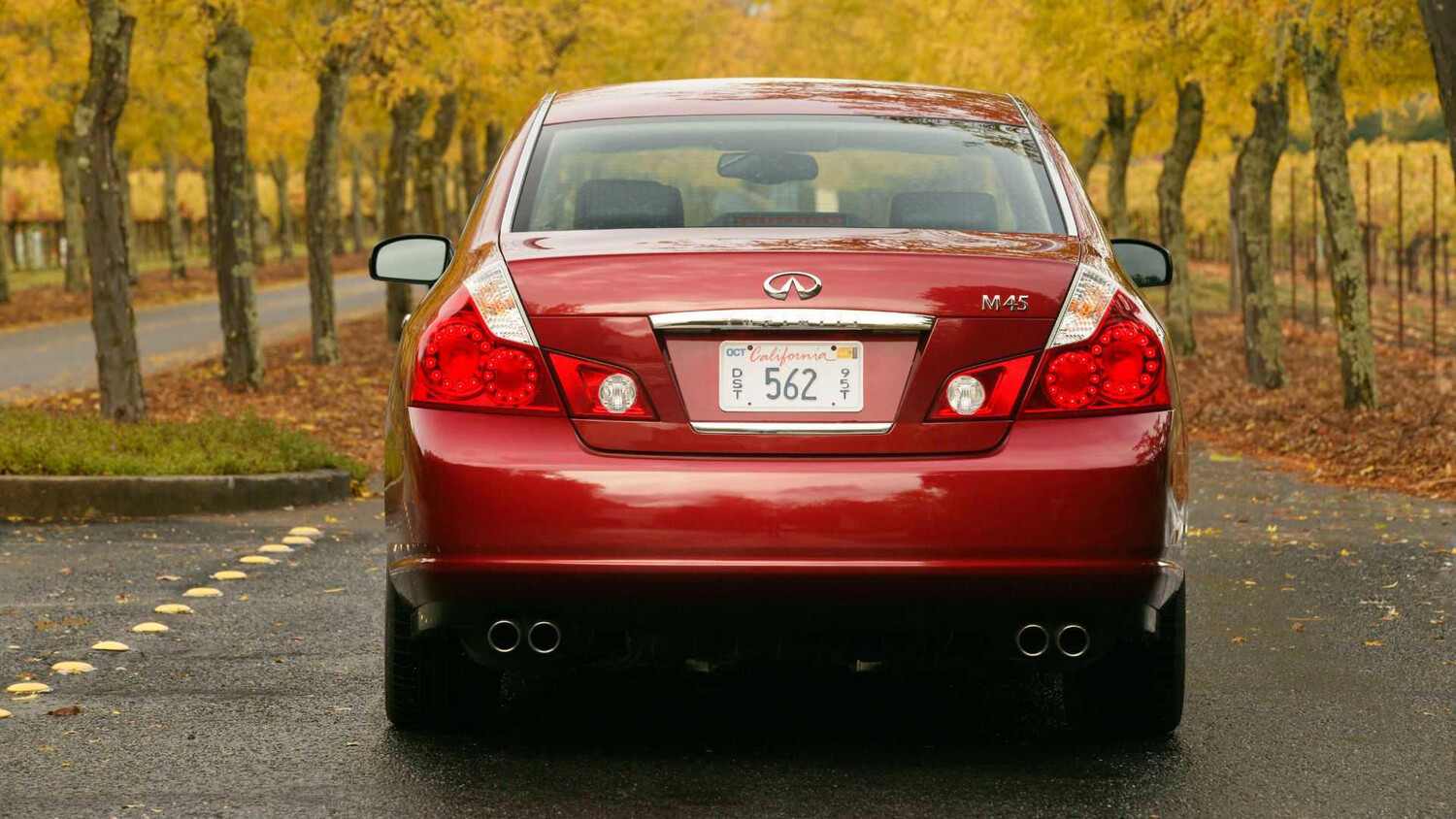
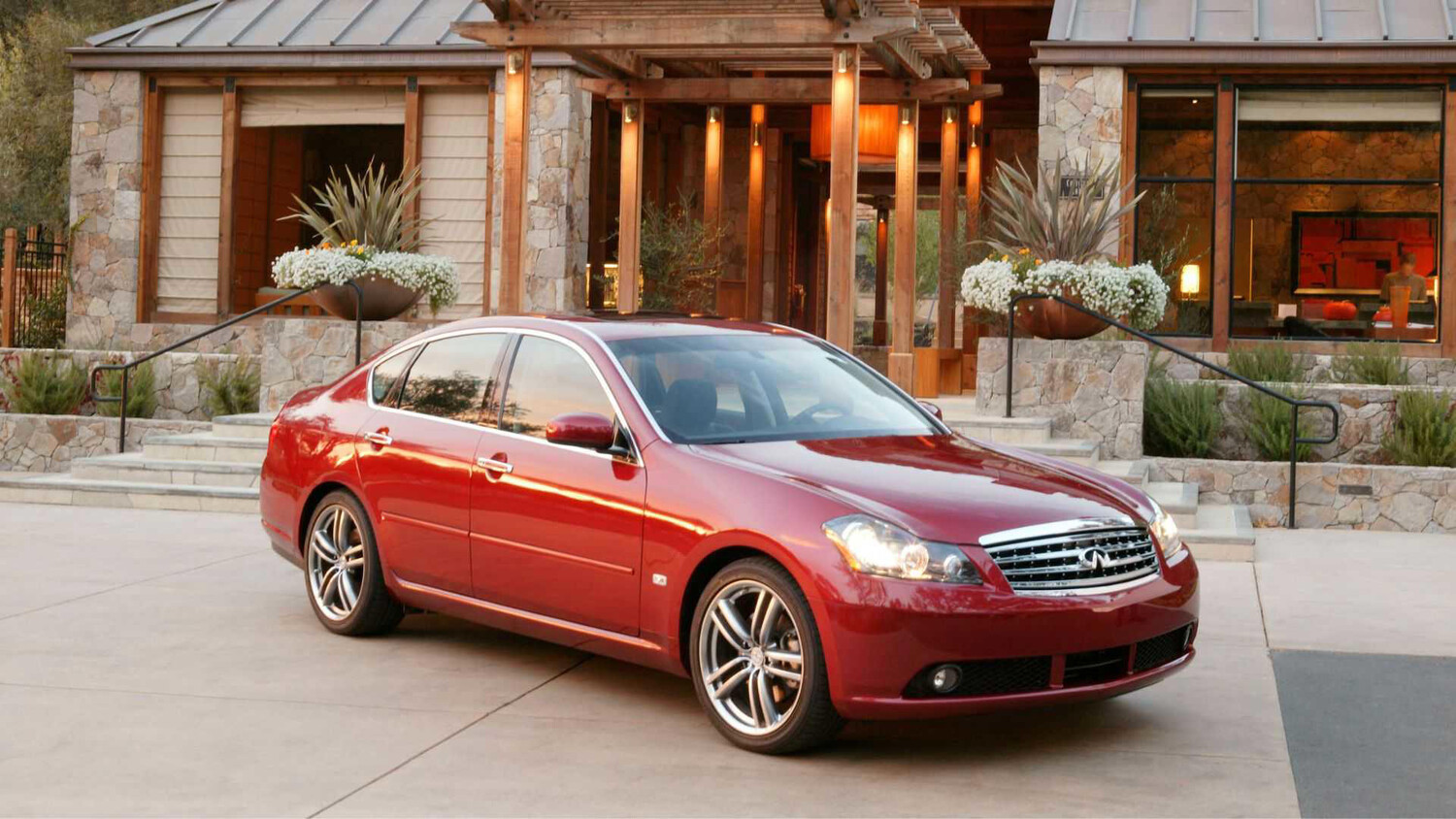
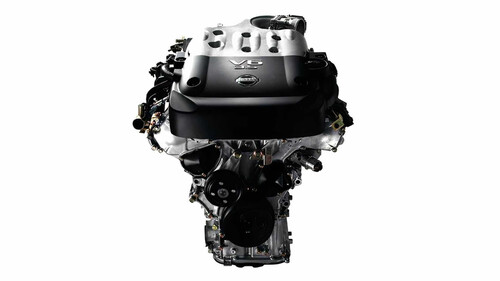
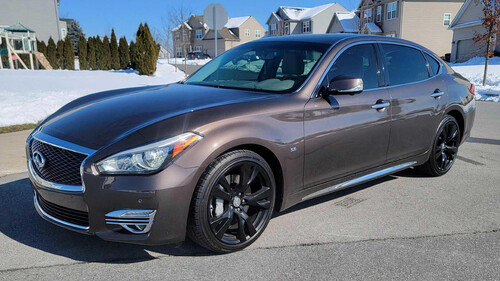
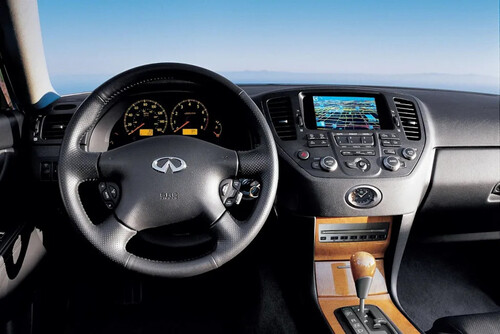
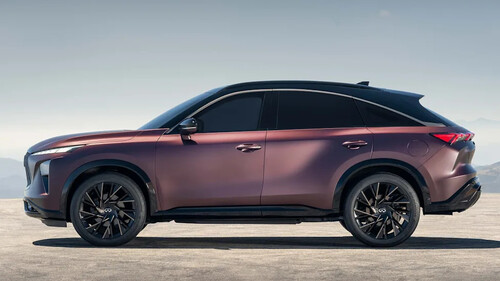
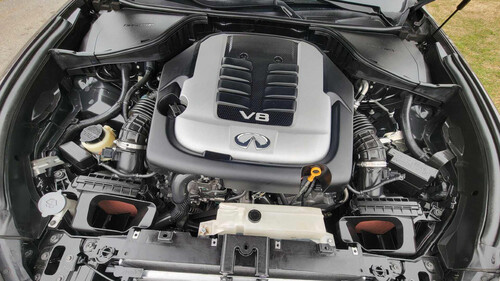
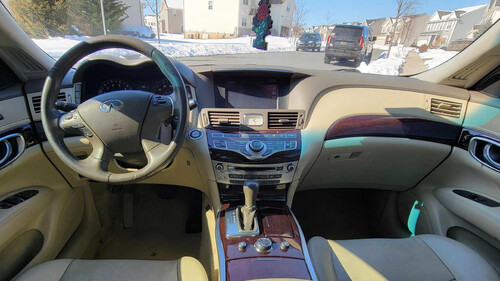
They don’t make them like they used to, at least not at Infiniti. Long before today’s watered-down lineup, the Japanese luxury marque was building legitimate sports sedans that could trade punches with the Germans, and few embodied that era better than the V8-powered Infiniti M45.Infiniti The nameplate spanned two generations in the 2000s. Infiniti’s still-nascent prestige, especially in performance circles, coupled with a relatively steep price tag and grandpa car styling, meant few were sold, particularly the first-generation car. The rarity has made clean examples increasingly difficult to find today. As more buyers begin to appreciate the analog charm of a naturally aspirated V8 paired with a properly sorted rear-wheel-drive chassis, values are starting to climb and drawing the attention of collectors. Rare Today, Revered Tomorrow Infiniti Key Facts To Know Shared a V8 with the Infiniti Q45 flagship Sold outside the US, wearing a Nissan badge Replaced by the M56, which was later renamed a Q70 Infiniti first launched the Infiniti M45 in the US for the 2003 model year, positioning it as a new V8 entry between the compact G35 and the full-size Q45. It was essentially a rebadged version of the Nissan Gloria (also known as the Nissan Cedric) sedan sold in Japan. At the time of the M45's launch, the foreign-market variants were already a few years old and nearing the end of their life cycle. As a result, the first-generation M45 only survived through the 2004 model year. Around 8,000 were sold in the United States, making the car extremely rare.InfinitiPart of the reason for the low sales is that Infiniti didn’t import many in the first place. The brand was still establishing itself in the luxury segment after roughly a decade of availability in the US, and Infiniti had relatively modest expectations for the new sedan. Being based on a sedan originally developed for the Japanese market, the M45's styling, with its tall and narrow greenhouse, plus a cabin with understated luxury, wasn’t exactly what Americans pictured as a luxury performance sedan. Plus, the starting price approached $45,000 once destination and a few options were added, which was close to what the more-established BMW 5 Series and Mercedes-Benz E-Class sedans were selling for.A lot of the issues with the original M45 were addressed when the second generation launched for the 2006 model year. It was once again based on a Nissan sedan, the Fuga, which directly replaced the Gloria. This time, there were new technologies and features aimed at broadening the car’s appeal, including a V6-powered M35 variant and all-wheel drive. The options included advanced features, such as rear-wheel steering, an automatic transmission with manual shift mode and downshift rev-matching, and adaptive cruise control.Sales boomed, though exact numbers are hard to come by as Infiniti grouped M35 and M45 sales together. The combined number crested 25,000 units in 2006, the first full year of sales.InfinitiThe second-generation M45 lasted through the 2010 model year, eventually being succeeded by the M56 the following year. While horsepower was up, the M56 skewed more toward luxury than performance, and its bigger V8 engine, a 5.6-liter unit instead of the M45’s 4.5-liter mill, added weight over the front axle. These changes meant the earlier cars felt lighter and more nimble to handle. Power, Poise, And Japanese Reliability InfinitiThe first-generation M45 was the kind of gloriously oddball sports sedan Infiniti probably wouldn’t have the nerve to build today. Underneath its slightly awkward, at-home-at-a-retirement-village styling was a genuinely entertaining rear-drive bruiser packing a powerful V8 engine.It didn’t chase European rivals with cutting-edge tech or ultra-sharp handling. Instead, the original M45 won people over with old-school muscle-car energy wrapped in a Japanese luxury package. The steering felt alive, the V8 delivered effortless thrust once it got going.InfinitiThe second-generation M45 delivered a similar experience, with added luxury. Infiniti gave the car more conventional styling, a far nicer interior, and the kind of refinement buyers in this segment expected. But crucially, it didn’t completely sand away the M45’s personality. The second-gen car still felt distinctly rear-driven and surprisingly athletic for a midsize luxury sedan. All-wheel drive was available, too. The performance character was paired with better ride quality, improved cabin isolation, and a much more cohesive overall driving experience.One of the biggest improvements came from the transmission. Like the original, the newer M45 used a five-speed automatic, but Infiniti fixed many of the complaints owners had about the first-gen gearbox. The earlier transmission could feel frustratingly slow to react, often hunting for gears or refusing to deliver the downshift the driver actually wanted. The second-generation car behaved far more intuitively, responding quicker and making better decisions when pushed hard.Impressively, it managed to be quicker overall despite producing less power. The original M45’s V8 made 340 horsepower, while the newer car dropped to 325 horsepower, yet the improved drivetrain calibration and overall refinement helped the second-gen car deliver quicker acceleration.InfinitiThe V8 in question is Nissan's VK45, a masterpiece on its own. The engine has built a strong reputation for durability over the years, particularly compared to some of the far more temperamental European engines it competed against. Because the engine was used across a broad range of Nissan and Infiniti models, parts availability remains relatively healthy, and there’s no shortage of aftermarket knowledge surrounding it. That means owners today can still find solid support for maintenance, repairs, and tuning upgrades alike, which makes the M45 far easier to live with than many forgotten luxury sedans from the same era. Prices Slowly Trending Up InfinitiThese days, decent M45 examples typically trade somewhere in the $7,000 to $12,000 range, with especially clean, low-mileage cars pushing higher. That still makes the M45 feel like a bargain considering the performance and rarity on offer. Most cars on the market now sit comfortably in six-digit mileage territory.Prices have started creeping upward as enthusiasts slowly rediscover just how distinctive the M45 really was. Recent sales suggest collector interest is beginning to form around clean, unmodified examples. Looking at Bring a Trailer, a 2009 example with 24,000 miles sold for $22,000 last year. A 2003 example with just 15,000 miles also sold in 2024 for $21,000. Even so, values remain surprisingly attainable overall, meaning there’s still time to buy in before the broader market catches on.Of course, no early-2000s luxury sedan is completely trouble-free. Reliability on the M45 is generally solid, especially the V8 engine, but the first-generation car in particular can become expensive if previous owners skipped maintenance or deferred repairs. According to CarComplaints, common trouble spots across both generations include increased oil consumption, aging engine sensors, and various electronic gremlins that naturally appear as these cars age. Rust can also become a serious concern on vehicles that have spent their lives in snowbelt states where salted winter roads were the norm. Buy One Before Collectors Do InfinitiThe Infiniti M45 remains one of the great modern sleeper sedans: fast, rare, V8-powered, and still overlooked enough to feel like a bargain. But that window may not stay open for long. As collectors continue hunting down clean examples, expect the cars to hold their value over time and possibly appreciate as the early-2000s Japanese performance era becomes increasingly coveted.