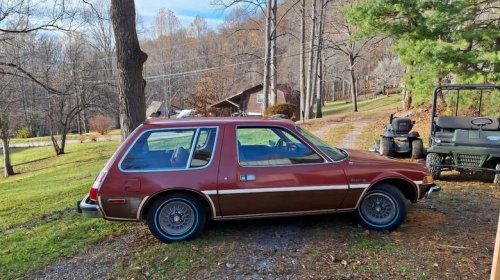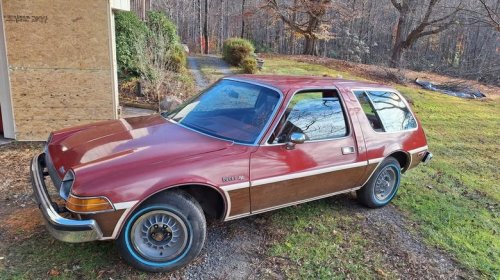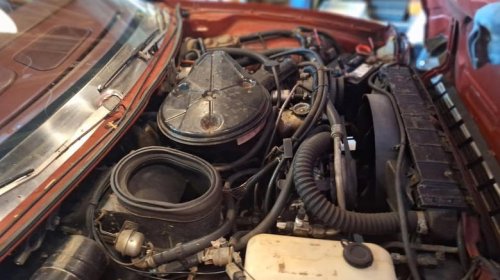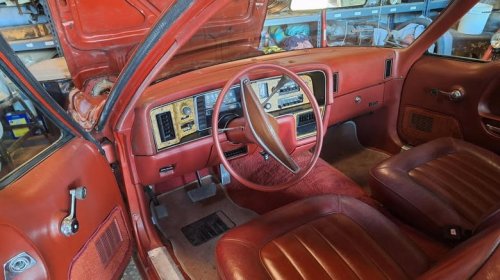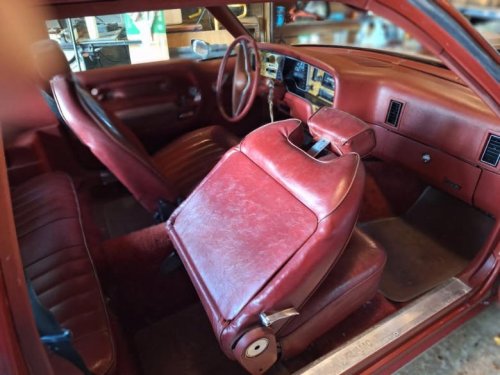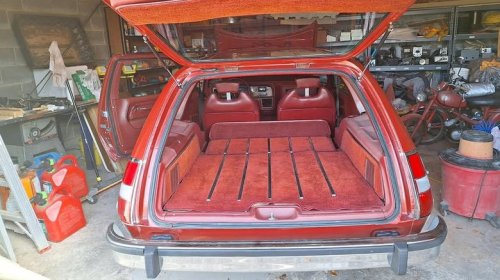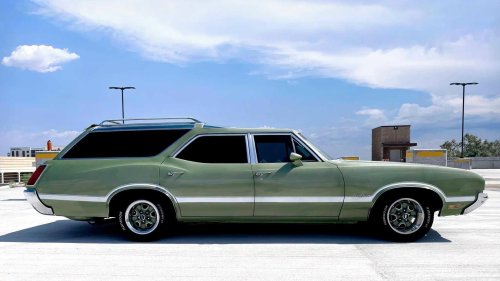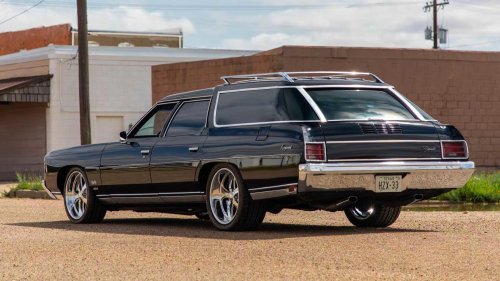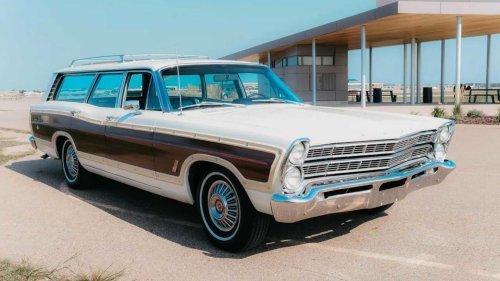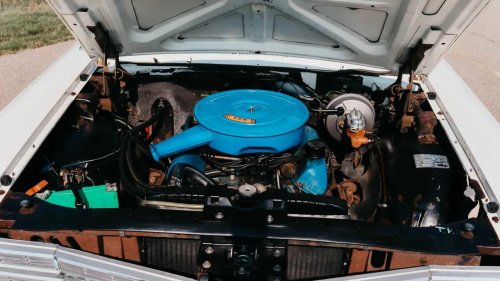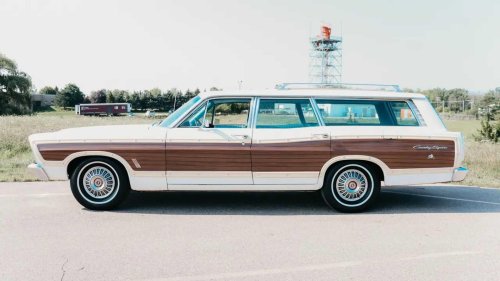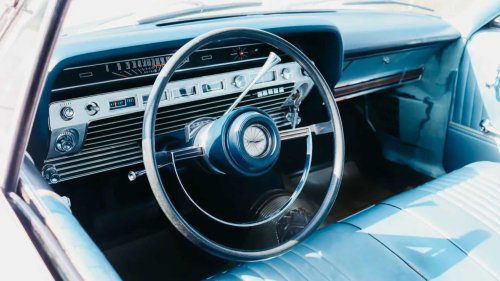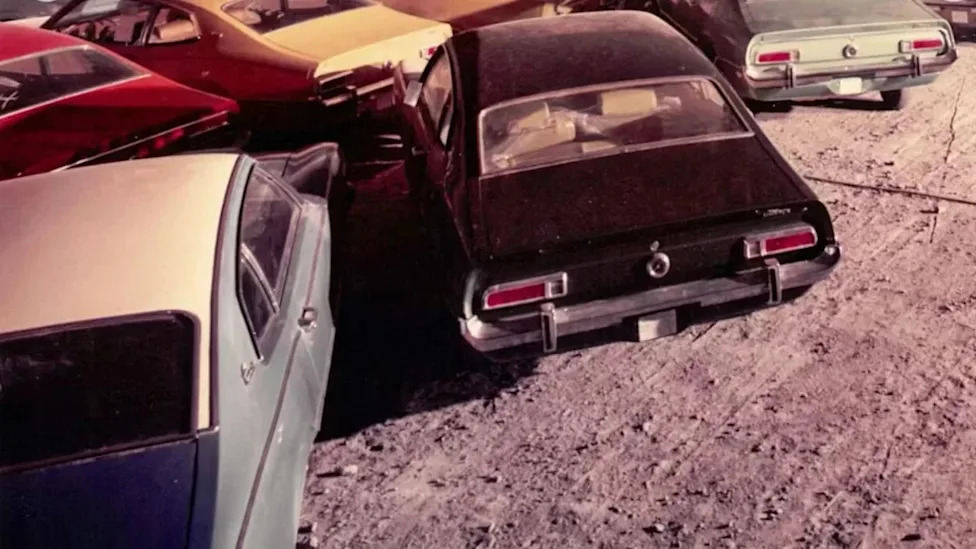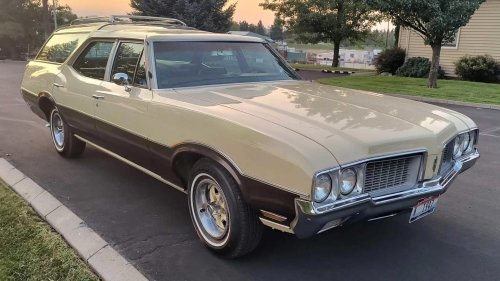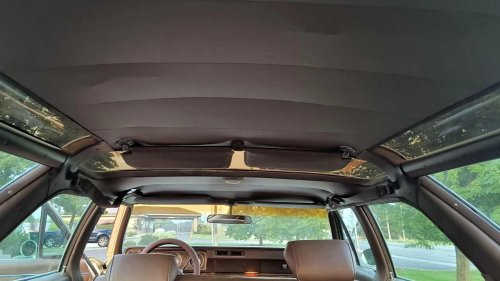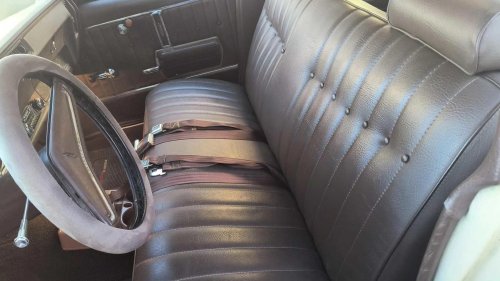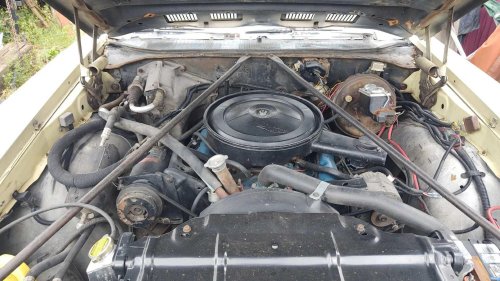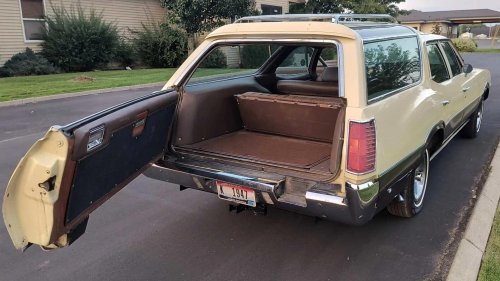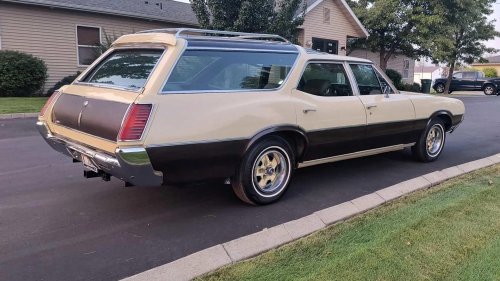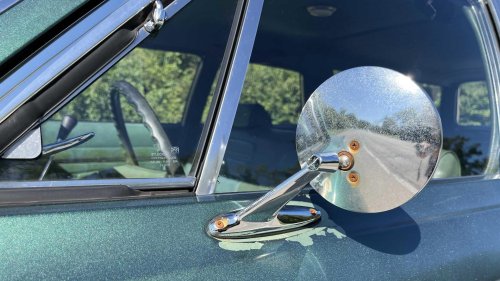
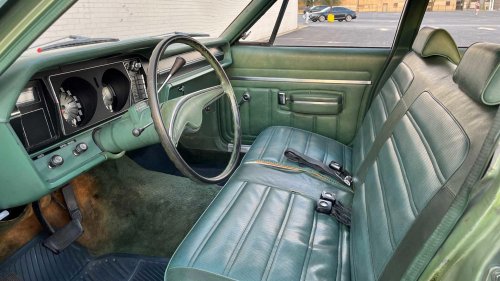
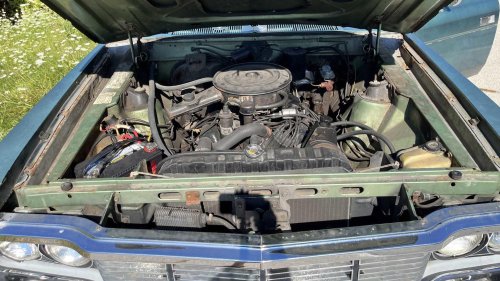
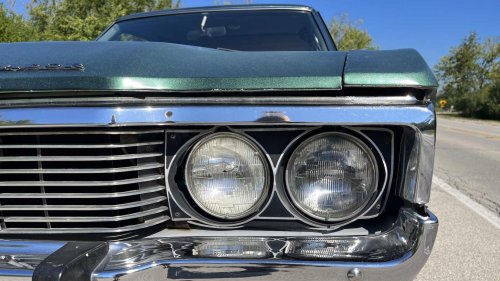
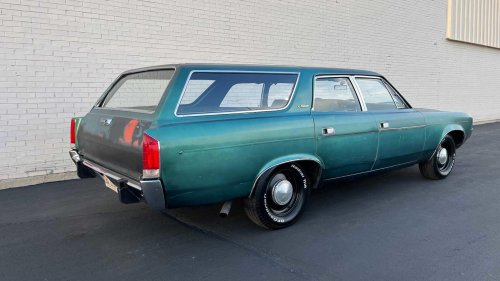
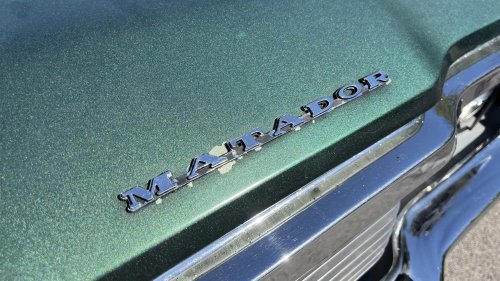
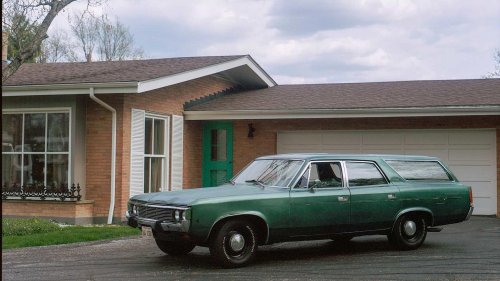
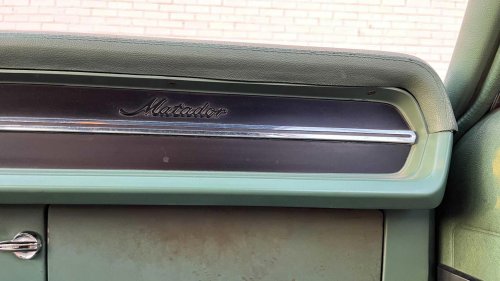
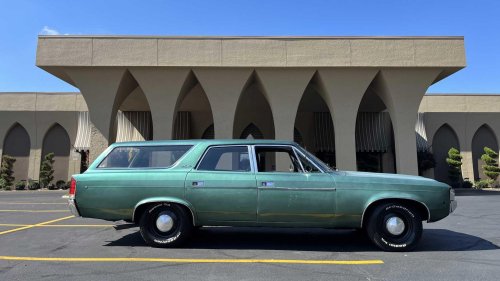



















Ask a room full of enthusiasts what 1970s Muscle Cars era wagon was the best, and their opinions might be evenly divided between the Detroit Three. But most will forget that there was once a fourth major automaker in the Motor City. And it was a racing powerhouse. After the company won a Trans-Am championship, it celebrated in the most ‘merica way possible: slapping the winning V8 in a mid-size wagon. This thing was an absolute performer.It’s downright unfair how many modern enthusiasts discount the fourth major Detroit automaker. But it is also a glaring omission from the muscle wagon discussion. No debate is complete without this relatively lightweight yet bonkers contender. The Wagon Wars Of The 1970s Bring a TrailerMuscle wagons are the mullets of the classic car world. Sure, they may look like big, serious muscle cars up front. But when you see the other end, you’ll realize the driver doesn’t care what you think. Wagons are dad-core cool. They are so unconventional that they are irresistible.There’s a historical reason wagons were considered fast. Optioning your full-size V8 drag racer as a wagon added more weight over the rear wheels and often improved 1/4 mile times. Today, stock 1970s wagons may no longer be competitive in drag races. But it is still thrilling to stomp the accelerator and drift around a corner in a vehicle with a third row of seats. What’s the coolest family-hauler 1970s wagon hiding a huge V8? Opinions differ.Fans of the Blue Oval might insist it’s the 1969-72 Ford Country Squire. That wagon was available with the 429 cubic-inch "Cobra Jet" V8, which was rated at 360 horsepower. The Mercury Colony Park version dialed up the luxury amenities, and from 1973–78 it offered 220 hpr from a 460 V8.Bring a TrailerFans of Mopar muscle cars will argue the 440 "Magnum" V8 was superior because it was rated at 375 hp. And you could option that engine in either the 1969-73 Dodge Polara wagon or the 1970-74 Plymouth Sport Suburban.GM fans will be quick to say that the LS5 V8, a 454 cubic-inch monster, outdid them both with 390 horsepower. And that was available in the 1969–72 Chevrolet Kingswood Estate. Fast-forward to 1973 and your best Chevrolet option might have been the Chevelle Malibu SS, which offered a 454 "LS4" V8 rated at 245 hp. Not to be outdone, Pontiac offered its 455 big block (originally rated at 325 hp) in its Catalina Safari wagon from 1971–76. But the most famous GM wagon of the era may have been the Oldsmobile Vista Cruiser with its raised roof and tinted skylights, and its available 455 "L75" V8 rated at 365 hp(1970–72). But this list leaves out one major player. The 4th Detroit Automaker’s Trans-Am Winning V8 Bring a TrailerThe American Motors Corporation was formed by the 1954 merger of Nash-Kelvinator and Hudson Motor Car Company. AMC even bought Jeep in 1970 before Chrysler acquired the entire company in 1987. Through the golden era of muscle cars, AMC was the fourth major player in Detroit. And AMC certainly had some muscle.In 1971, the AMC Javelin AMX beat Ford, Chevy, and Chrysler to win the Trans-American Sedan Championship. Mark Donohue of Team Penske won seven of the series’ 10 road course races, clinching the title. AMC would actually score a repeat during the 1972 season and then do it again in 1976.This was no forgotten racing series. This was the road course series that inspired multiple legendary, lightweight, high-revving homologation muscle cars. These include the Camaro Z/28, the Boss Mustang 302, and the Dodge Challenger T/A. But the 1971 AMC Javelin AMX bested them all.Bring a TrailerAt the heart of the AMX was a small block V8 bored out to 6.6 liters. The street-legal version of this 401 mill produced 335 hp (gross) and 430 lb-ft. Once emissions equipment and accessories were removed from the race cars, they may have produced 350 hp.The engine was built for torque and pulled strongly across the power band. In the AMX, it could rocket to 60 mph in about 6.4 seconds. It ran the 1/4 mile in about 14.4 seconds at 98 mph.If you’re a fan of that long-roof life, have no fear. AMC also offered this engine in a wagon. The AMC Matador Is The 70s Muscle Wagon The World Forgot Bring a TrailerFor the 1971 model year, AMC tried to be more respectable. It started by rebranding its midsize Rebel. The name carried obvious counterculture connotations. It decided on a refined-sounding foreign word instead: Matador. But under this glossy new image it was up to its old tricks, namely offering its bonkers small block 401 V8 in any Matador trim you wanted. Yes, buyers could get a 350 hp V8 and 4-speed manual in AMC's midsize station wagon.Sure, the wagon was 205 inches long and 56.4 inches tall. But it was a true midsize, with a 118-inch wheelbase. It also had a factory shipping weight of 3,437 pounds. Compared to the full-size V8 wagons listed above, such as the 4,700-pound Mercury Colony Park, it was decidedly petite.Bring a TrailerJust because the wagon was a midsize doesn’t mean it didn’t have high-end features. You could order a rear-facing third row of seats. Upper trim versions even featured wood paneling running down the sides. A genuinely upscale touch.AMC dealerships weren’t exactly stocking rows of Matador wagons equipped with the 401 V8. But it was available as a special order. And considering just how popular Matadors were with fleet operators such as police forces, there may have been more than a handful of these 350-hp wagons assembled. Departments such as the LAPD prized the Matador for its high-speed stability.If you did check the 401 V8 box, you got a dual exhaust system and could even add a limited-slip differential. But that's not all. Between engineering a police interceptor Matador, building Matador NASCAR vehicles for drivers such as Bobby and Donnie Allison, and drawing on its Trans-Am technology, AMC had developed considerable handling expertise. And you could order them all by checking one box.Another option you could tag on to a 401 V8 Matador was the “Machine Go” package. It included improved handling suspension, front disc brakes, and 15x7-inch wheels wrapped in E60-15 Goodyear Polyglas tires. It was a fantastic performance package for the era, but some sources say as few as 50 Machine Go Matadors were built for 1971. There's no confirmation anyone had the foresight to order a Machine Go wagon. The V8 Matador Wagon Was Overlooked From The Beginning Bring a TrailerThe full-strength Matador hot rod with the “Machine Go” package didn’t stay around for long. AMC did offer the 401 V8 to civilians until 1974, though it had to detune the engine to meet tightening emissions standards. The official output suffered a massive 75-hp drop. Much of this was because AMC changed from gross horsepower (as measured with the engine isolated on a test bench) to the SAE net horsepower standard (testing the engine with all factory accessories and the exhaust system intact).Bring a TrailerThe result was not favorable for the 401's marketing. And to be fair, AMC did lower the V8’s compression ratio from 9.5:1 to 8.5:1 to meet emissions regulations.Sadly, this sleeper wagon wasn’t popular enough with buyers for the automaker to continue offering it. But AMC continued to install the 401 V8 in police interceptor Matadors until 1976. The Muscle Wagon Is Dead, Long Live The Muscle Wagon! Bring a TrailerAs you may recall, AMC bought Jeep in 1970. So what does one do with an SUV company if one is AMC? The answer, naturally, was to build more muscle wagons. By 1974, AMC was installing the 401 V8 in the Jeep Wagoneer.Sure, the Jeep Wagoneer was a luxury SUV that could weigh 4,500 pounds. But in most respects, it had more in common with a full-size 1970s station wagon than a modern, full-size SUV. And it carried the AMC muscle wagon torch until 1978.Sources: AMC, Chevrolet, Ford, Dodge, Pontiac