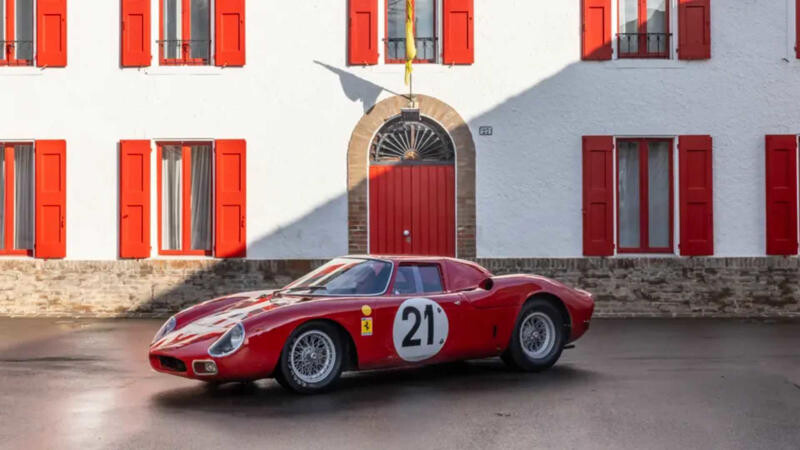
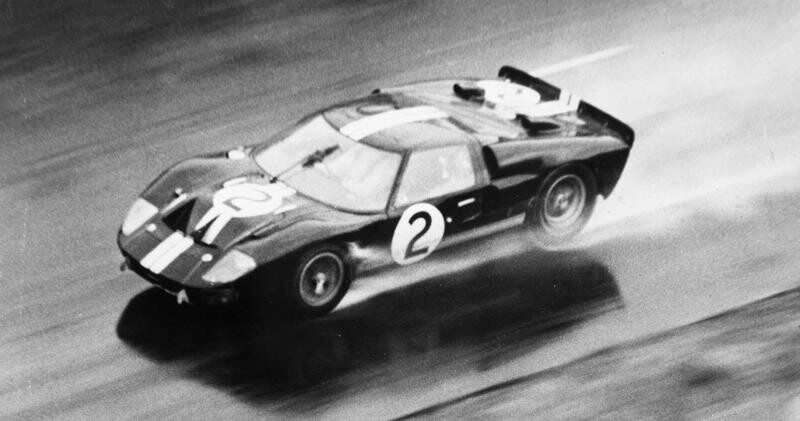
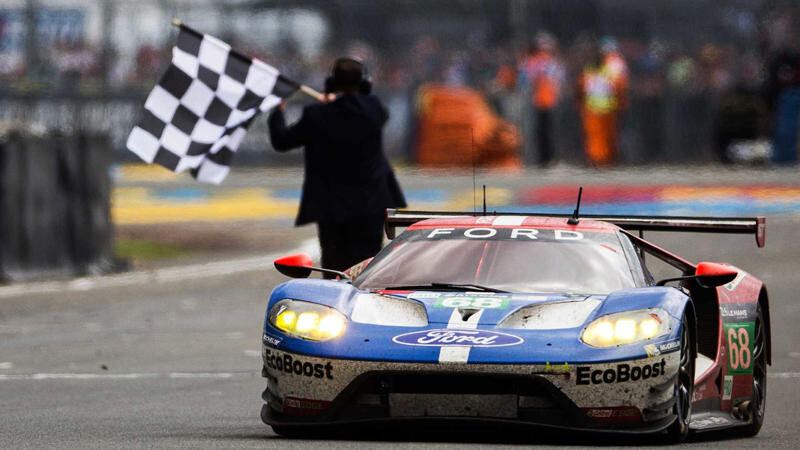
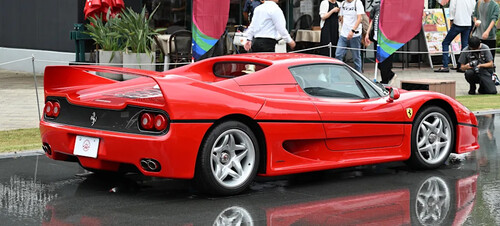
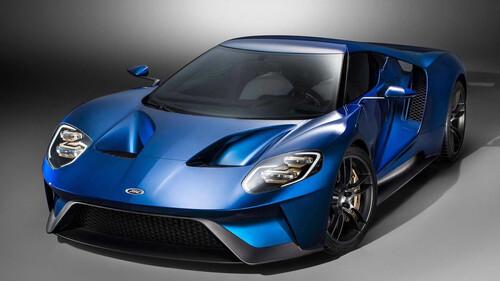
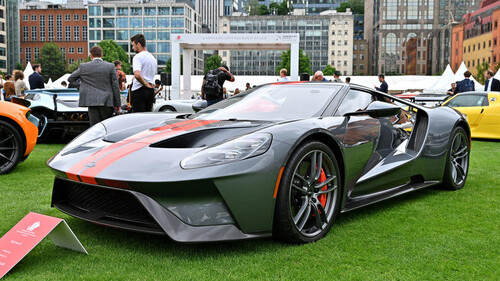
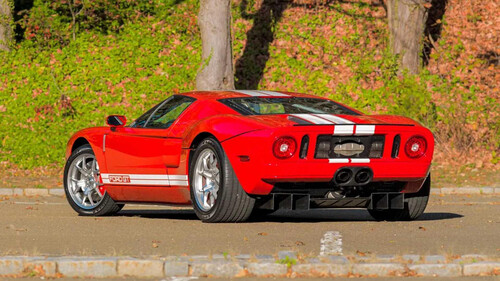
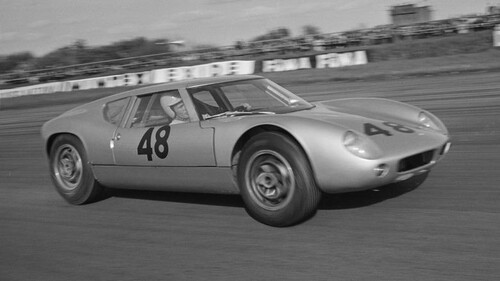
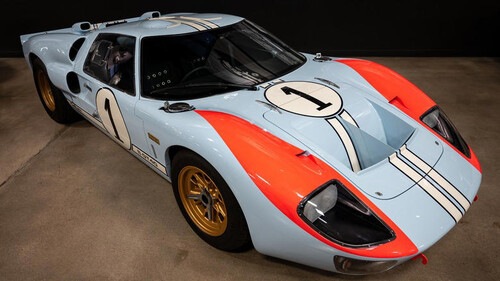
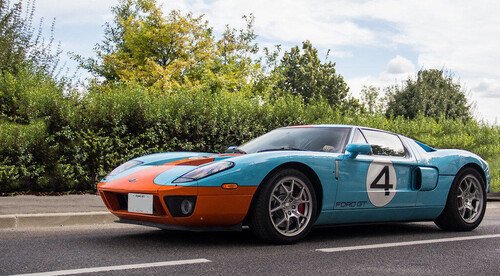
The 24 Hours of Le Mans is the ultimate test of endurance, requiring drivers to push their machines to the limit for a full day and night. Held annually in France since 1923, this grueling marathon favors mechanical reliability and driver fitness just as much as raw speed. By the early 1960s, one name stood above all others at the Circuit de la Sarthe: Ferrari.The Italian manufacturer cultivated a reputation for unmatched excellence, combining artistic design with ruthless performance. Their sleek red prototypes dominated the podium year after year, turning the world’s most prestigious race into a private showcase of European engineering and racing pedigree. Until 1966, when an American sports car arrived to settle a score from an off-track ego battle. The Era Of The Prancing Horse: Dominance And Defiance RM Sotheby'sDuring the early 1960s, Ferrari did more than just compete at Le Mans; they owned it. From 1960 to 1965, the Italian manufacturer achieved an incredible six consecutive victories, a feat that cemented their status as the kings of endurance racing. This dynasty was built on the backs of legendary machines like the 250 P and the 250 LM.The Ferrari 250 LM defined the mid-engine revolution in sports cars, placing the engine behind the driver to achieve superior balance and aerodynamics. These were masterpieces of engineering that combined staggering speed with reliability that seemed impossible for such high-strung Italian thoroughbreds. To the racing world, Ferrari was an invincible force of nature, led by the enigmatic and fierce Enzo Ferrari. The Failed Merger Ferrari However, behind the scenes, the financial reality of running a premier racing team was taking its toll. By 1963, Enzo Ferrari began looking for a buyer to secure the future of his company. This led to high-stakes negotiations with Henry Ford II, the head of the American automotive giant. Ford spent millions on audits and legal fees, believing a deal was imminent.But at the final hour, Enzo balked. He realized the contract would strip him of his absolute control over the Ferrari racing program. In a moment of legendary defiance, he walked away from the table, reportedly insulting Ford in the process. This rejection was more than a failed business deal; it was a personal affront to Henry Ford II. The resulting vendetta transformed a corporate disagreement into an international war of spite, as Ford vowed to build a car that would crush Ferrari on the very track where they felt most secure and where defeat would hurt most: Le Mans. Enter The Giant: The Ford GT40 Mk.II That Took It To Ferrari Mecum Auctions Ford’s initial attempts to humble Ferrari were disastrous. In 1964 and 1965, the early versions of the GT40, known as the Mk.I, were plagued by instability and mechanical failures. Despite massive investment and high-profile teams, every single Ford entry failed to finish the race in those two years. It was a humiliating lesson showing that money and ambition alone could not conquer the 24 Hours of Le Mans. The Birth Of The GT40 Mark.II MecumTo turn the tide, Ford underwent a radical engineering shift. They moved away from the smaller, high-revving engines and embraced American muscle. The result was the highly-adored Ford GT40 Mk.II, a powerhouse built around a massive 7.0L 427 cubic inch V8 engine. This brute-force approach was designed to provide the torque and durability needed to survive the Mulsanne Straight at speeds exceeding 200 mph.For the 1966 season, Ford launched an unprecedented offensive known as the "Total Performance Program". They didn't just bring one or a few cars; they brought an armada. Ford entered eight factory-supported Mk.IIs, backed by a small army of technicians, spare parts, and the tactical brilliance of Carroll Shelby. The Ferrari 330 P3 That It Was Up Against Ferrari Facing them was Ferrari’s newest weapon, the 330 P3. The Ferrari, powered by the 4.0-liter V12 was a technical marvel—lighter, more fuel-efficient, and arguably more agile than the heavy American Fords. While Ferrari relied on elegance and finesse, Ford leaned into overwhelming force and redundancy.It was a clash of philosophies: the refined, specialized Italian prototypes against the sheer industrial might and displacement of Detroit. As the 1966 race approached, it was clear that the battle would be one of the most intense showdowns in the history of motorsport. 24 Hours to Immortality: How Ford Achieved The Iconic 1-2-3 Photo Finish The spectacle began with immense pressure as Henry Ford II stood at the start line, as the honorary starter for the most expensive grudge match in history. As the flag dropped, the field of fifty-five cars roared toward the first turn, beginning a grueling war of attrition. The early hours were a high-speed chess match, with the Ford GT40s and Ferrari 330 P3s trading the lead as they eclipsed 200 mph on the Mulsanne Straight. While the Ferraris were more fuel-efficient and required fewer pit stops, the sheer displacement of the American 7.0L V8s allowed the Fords to recover time effortlessly during the high-speed sections of the circuit. Racing Into The Night In The Rain Via: Ford As night fell over the French countryside, the rain began to slick the track, turning the race into a survival exercise. It was during these dark hours that the Ford teams, led by the relentless pace of driver Ken Miles in the GT40 Mark.II #1, began to break the Italian opposition. By maintaining a brutal, qualifying-lap intensity throughout the night, Ford forced the Ferrari drivers to overextend their equipment just to stay within striking distance.The strategy worked perfectly as by dawn, the Ferrari challenge had crumbled. The factory-backed 330 P3s, once thought to be the most sophisticated prototypes in the world, were forced into retirement one by one due to catastrophic gearbox failures and overheating engines caused by the relentless pursuit. Ford Executives Orchestrate A Photo Finish 24 Hours of LeMans With the Ferraris out of the running, the final hours became a victory lap for the Ford Motor Company. However, the finish brought its own drama. Seeking the ultimate marketing image, Ford executives orchestrated a staged photo finish, instructing their leading cars to slow down so they could cross the line in a dead-heat formation. This decision was a heartbreak for Ken Miles. Despite leading for much of the race and being the primary development driver for the GT40, a technicality regarding the distance covered from the starting grid handed the official win to the car that had started further back.The final results saw Bruce McLaren and Chris Amon in car number two taking first place, while Ken Miles and Denny Hulme in car number one were relegated to a controversial second. Ronnie Bucknum and Dick Hutcherson followed in car number five, completing the 1-2-3 sweep. While the finish remained a point of contention for racing purists, the mission was accomplished. Ford had not only beaten Ferrari; they had erased them from the podium entirely, proving that American might could dominate the most prestigious race in the world. The Final Results 1st Place: Bruce McLaren and Chris Amon (Car #2). 2nd Place: Ken Miles and Denny Hulme (Car #1). 3rd Place: Ronnie Bucknum and Dick Hutcherson (Car #5). Echoes of Greatness: 1966 to 2016 Ford The legend of 1966 was so powerful that Ford could not resist the urge to return for the 50th anniversary. In 2016, the company entered the 24 Hours of Le Mans with the new second-gen Ford GT GTE, a high-tech marvel powered by a twin-turbo EcoBoost V6.History repeated itself in spectacular fashion within the LMGTE Pro category. In a digital-age echo of the original rivalry, the Ford GT found itself locked in a fierce battle with the Ferrari 488 GTE. Once again, the blue oval prevailed, taking the class victory exactly half a century after their first overall win. This modern triumph reaffirmed the legacy of the GT40 and proved that the competitive spirit ignited by the Ford-Ferrari feud was still very much alive in the twenty-first century. Immortalized By Hollywood: Ford v Ferrari 20th Century FoxBeyond the trophies, the 1966 victory fundamentally transformed American performance culture. It proved that American cars were capable of more than just straight-line speed; they could compete and win on the world’s most sophisticated stage. This story of grit and corporate warfare eventually captured the imagination of a new generation through the 2019 film Ford v Ferrari.Starring Hollywood legends, the film showcased the raw determination of driver Ken Miles (portrayed by Christian Bale) and the visionary leadership of Carroll Shelby (played by Matt Damon), the movie brought the sounds and smells of the 1966 Circuit de la Sarthe to a global audience. The film served as a fitting tribute to a time when a personal vendetta pushed the limits of what was humanly and mechanically possible, forever changing the landscape of international racing.Sources: Ford, Ferrari, 24 Hours of LeMans, Shelby American