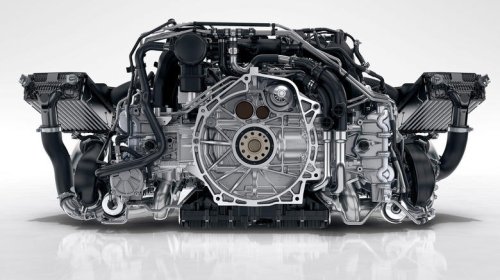
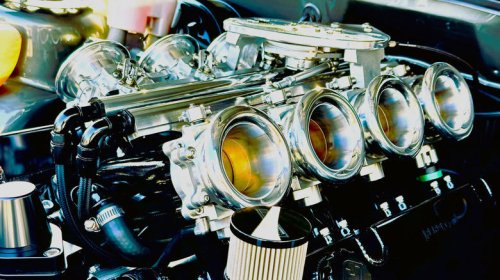
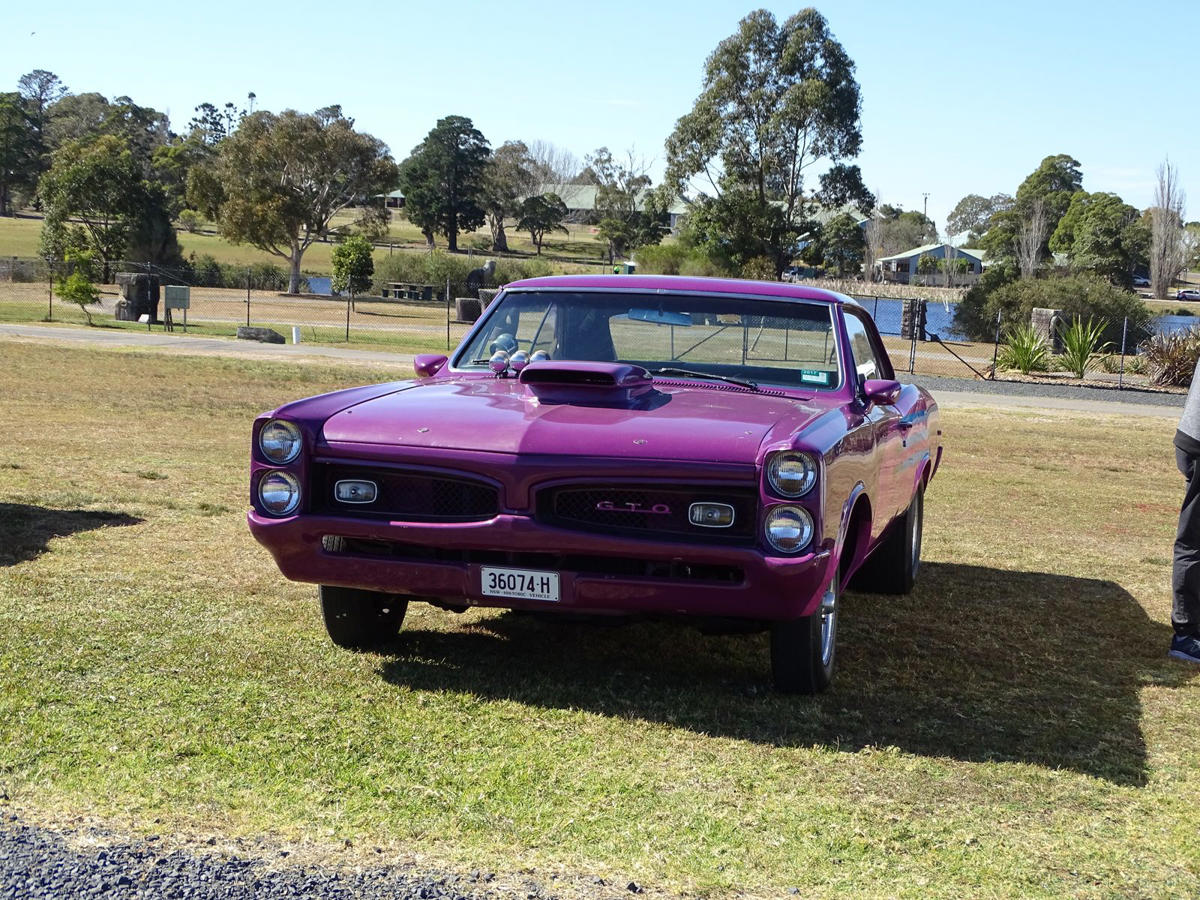
For decades, American-made enginesearned their reputations the hard way. They survived heat, cold, heavy loads, missed maintenance, and real-world abuse because they were designed with margin in mind. These engines featured wide tolerances, simple lubrication systems, and predictable operating behavior, making them forgiving by nature. When something went wrong, the cause was usually mechanical, visible, and localized.While these engines built the American automotive industry, and were loved by local mechanics and gearheads alike, they could never keep up with the evolving emissions regulations of the modern world. Sure, change was needed. However, the ways in which engineers went about these changes actually resulted in millions of engines being recalled – from Toyotas to Fords and everything in between.You see, in recent years, a familiar pattern has emerged across multiple manufacturers. Engines with very different designs, displacements, and badge names have begun failing in eerily similar ways. Lifter noise, oil consumption, premature wear, and internal damage show up long before mileage alone should explain them, and these aren't isolated cases.The question is no longer why engines are breaking. It’s whether the balance between efficiency and durability has quietly tipped too far in one direction, and what was lost in the process. Let’s dive in. Fuel Economy Rules And The Push Toward 0W-20 Oil via Bring A TrailerSo, why have millions of engines been recalled in the modern era? Well, the easy explanation is to blame modern engineering itself, but that misses the point. Today’s engines are not crude or rushed. They are built to meet increasingly narrow efficiency targets while delivering the same performance buyers expect. To do that, tolerances tightened, systems became interconnected, and operating margins shrank. And, the discussion really needs to start with the industry’s standard, moving away from the use of thicker oil, like 0W-40, to thinner oil, like 0W-20 oil.The widespread move to 0W-20 oil did not start with durability concerns or long-term wear. It started with fuel economy math. Over the past two decades, tightening EPA and CAFE standards pushed automakers to chase efficiency gains wherever they could find them. Once the big gains from aerodynamics, transmissions, and engine management began to level off, internal friction became the next target. Oil viscosity was an easy lever to pull.Thinner oil reduces hydrodynamic drag inside the engine. Bearings spin with less resistance, pumps work less to circulate oil, and rotating assemblies lose a measurable amount of parasitic loss. On a single engine, the difference is small. Across millions of vehicles in a manufacturer’s fleet, it’s significant. You see, it helps automakers meet corporate averages and stay within governmental regulations without redesigning entire powertrains.via Bring A TrailerBy the mid-2010s, 0W-20 became the default recommendation for multiple engines, including those that were used to thicker oil only a generation earlier. Some manufacturers pushed even further, approving 0W-16 and lower-viscosity formulations in select markets. The oil itself was not experimental. Modern base stocks and additive packages can protect extremely well under ideal conditions. As you might suspect, the root of the issue here is margin.As gearheads might remember, older engines were designed with wider clearances and heavier oils that could tolerate small amounts of debris, surface imperfections, or assembly variance. As oils got thinner, clearances tightened to maintain oil pressure and film strength. That combination works, but only when manufacturing quality is exceptionally clean and uniform.Shifting from thicker to thinner oil was not driven by a belief that thinner oil was better for engine longevity. It was driven by regulatory pressure and efficiency targets. And yes, top engineers understood the trade-off. Sure, reduced viscosity improves fuel economy, but it also narrows the buffer that once protected engines from minor weaknesses. While the change happened gradually, by 2010, the industry accepted that trade because the regulations demanded it.Now, what wasn’t necessarily expected is the aftermath of the decision to use thinner oil. This shift reduced tolerance for design and manufacturing errors, making modern engines far less forgiving when something goes wrong, resulting in an uptick in modern engines being recalled. Thinner oil did not cause these failures by itself, but it removed the margin that once masked small flaws. Why Today’s Engines Are Less Forgiving Of Contamination via Bring A TrailerIn older engines, wider bearing clearances and thicker oil created a buffer where small amounts of casting sand, machining debris, or residual metal particles could circulate briefly without immediately causing damage. Thicker oil films and larger clearances provided more separation and tolerance, but that margin has largely disappeared.Today’s engines depend on extremely thin oil films to function as intended. With oils like 0W-20, the protective layer between bearings and crank journals is thinner by design. When debris enters the system, it has fewer places to go and less tolerance before it begins scoring surfaces or restricting oil flow.Manufacturing processes have also become more complex as the modern architecture uses intricate oil passages and tighter machining specs. Debris from casting, drilling, or assembly is more likely to result in localized deterioration rather than simply passing through the system. Once bearing surfaces are compromised, failure can occur rapidly.via Bring A TrailerThis is why recall documents increasingly reference contamination rather than outright component defects. Common debris that might have been survivable in older designs can now lead to premature bearing wear or oil starvation. The engine is doing exactly what it was designed to do, but the design expects precise manufacturing cleanliness.Engineers have been open about this reality. However, the result is an engine with less forgiveness than it once had, as modern engines operate closer to the edge of their design envelope than ever before. When manufacturing quality slips, even slightly, the consequences are no longer gradual. They are immediate, measurable, and expensive. The Common Thread Linking Multiple Manufacturer Recalls via Bring A TrailerOn paper, the recent wave of engine recalls looks scattered. Different manufacturers, different engine families, and different vehicle segments. However, even when zooming out to the industry as a whole, the failures trace back to the same combination of factors across brands: manufacturing contamination, tight tolerances, and low-viscosity oil.Recall filings from Hyundai, Kia, Honda, and GM repeatedly cite metal debris, machining residue, or contamination left behind during engine production. Despite the symptoms varying slightly, the underlying causes do not. That’s because in every instance that wreaked havoc for a gearhead out on the road, debris had entered an oiling system that had very little margin to absorb it.These recalls are not isolated quality lapses. Multiple major companies, all with different suppliers and production facilities, have been impacted by this change in one capacity or another. So, is this the result of a single defective component? Well, the evidence actually points toward a larger issue. You see, the industry adopted similar efficiency strategies, including low-viscosity oils. Unfortunately, that doesn’t mean that the actual manufacturing has reached suitable levels of consistency.via Bring A TrailerYou see, that’s because automakers are looking at a simple fix to the problem at hand, not reevaluating industry-wide design philosophy. Still, the repetition matters. When multiple companies encounter the same failure mechanism under similar operating conditions, it is a strong indication that there is a common denominator at work.While GM is the major automaker to issue a full-blown recall over this issue, nearly every major company has been impacted in recent years. In contrast, Chrysler and Honda simply handled the matter in a quieter fashion through warranty extensions and swift revisions. Sure, modern engines can be extremely durable when built perfectly clean. But recalls show what happens when reality intrudes. How GM’s Oil Change Quietly Reframes The Problem via Bring A Trailer When GM began approving 0W-40 oil for certain engines originally specified for 0W-20, the change was presented as a service update, not a philosophical shift. While on paper it looked like a simple shift in oil recommendation, the practical application of this meant so much more. You see, a higher-viscosity oil creates a thicker protective film, and that added film strength improves resistance to minor surface damage. In turn, this small oil change shift helps maintain oil pressure in worn or imperfect systems.This is important for gearheads to understand because GM never changed its language regarding recalls, as contamination was still cited as the failure trigger, because GM never wanted to say that their engine was the problem. Instead, by approving 0W-40, GM effectively acknowledged that the original operating window was too narrow for real-world manufacturing variation, and that the engine could survive contamination only if the lubrication margin increased.via Bring A TrailerFrom the automakers' standpoint, the 0W-20 specification did meet its goal. Simply put, it improved efficiency and complied with governmental regulations. So, the issue was not whether the oil could protect a perfectly clean engine. It was whether the entire production ecosystem could consistently deliver that level of cleanliness at scale.GM’s update makes gearheads look at the whole situation from a new perspective, which spans from isolated contamination events to system tolerance. Instead of asking why debris existed at all, it raises a more uncomfortable question: how much margin modern engines truly have. The answer, suggested by the oil change itself, is that the margin had become too thin to rely on.Sources: General Motors, GM Authority, HeavyVehicleInspection.com, Hemmings, Hyundai, NHTSA