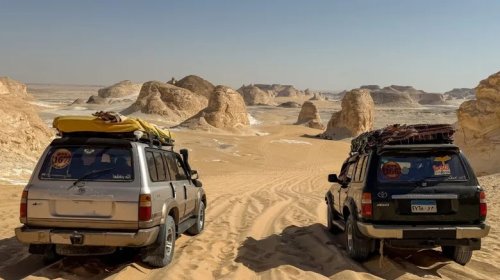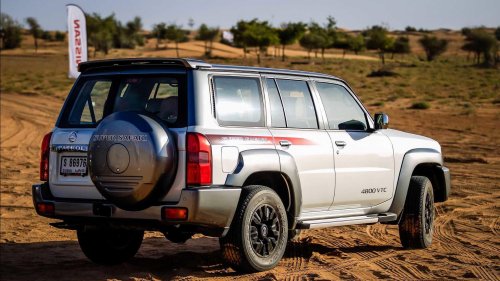
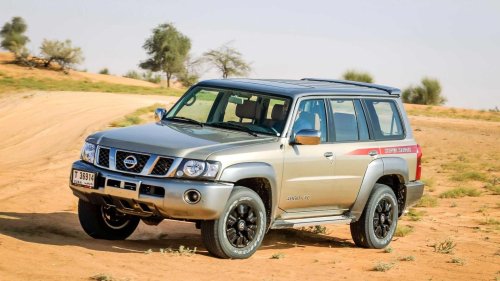
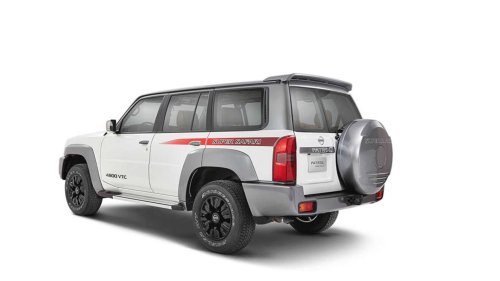
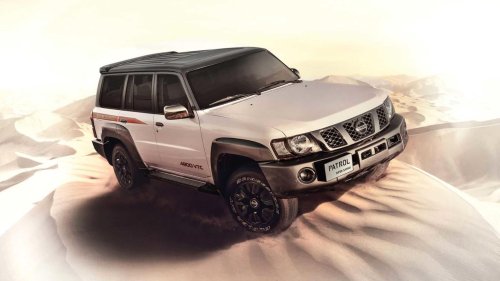
















Jump LinksThe harsh, unforgiving deserts of the Middle East are no place for hesitation. If you want your off-road SUV to crest that tall sandy ridge ahead, you must trust its performance and keep your foot planted firmly on the throttle. Many desert residents who face that challenge every day rely on powerful, enduring engines where durability is the name of the game, and often in some of the harshest conditions on Earth.And for many of those residents, their answer came in the form of a potent Japanese six-cylinder engine that somehow dealt with the heat, the load, and all those brutal inclines while still continuing to pull. It’s the type of performance that has endeared the Nissan TB48DE engine to enthusiasts and tuners alike, and users have unofficially crowned it one of the toughest high-horsepower engines in the business. The TB48DE Was Never Supposed To Become A Performance Icon NissanNissan introduced the Y61-generation Patrol in 1997 as a tough-as-nails SUV that could work without complaint in the remotest of environments. The rig was durable and dependable over long distances, with good towing capability. When it first appeared, the Y61 featured a TB45E 4.5-liter gasoline inline-six or the more famous TD42 4.2-liter diesel. In 2001, Nissan introduced the TB48DE 4.8-liter engine, and it made an immediate impression. The powerplant certainly stood apart from most mainstream SUV engines of that era by what it achieved, rather than by the stock output numbers.The TB48DE is a 4.8-liter naturally aspirated inline-six with a cast-iron block and an aluminum cylinder head. It has dual overhead cams and electronic fuel injection, producing somewhere in the region of 250 hp and about 310 lb-ft of torque. This engine was massively over-engineered and under-stressed in factory form. It also had plenty of low-end torque and tolerated heat very well, making it the perfect solution for those who drive them in the Middle East.The engine became an excellent long-range touring icon in Australia's Outback and, in the Gulf region, synonymous with dune-driving culture. It could sustain periods under heavy load while the environment beneath changed constantly. It routinely survived where other engines would fail, leading some enthusiasts to question just how much more an engine like this could handle. This Engine's Massive Iron Structure Changed Everything When tuners started to pick apart the TB48DE, they saw why it was such a redoubtable motor. There is a thick cast-iron block that can handle high cylinder pressures even with an added turbocharger. It also has a significant advantage over some other renowned Japanese performance engines thanks to its large displacement. The inline-six can already deliver substantial torque before forced induction, so adding a large turbo produces massive low-end and mid-range power figures which the engine can take in its stride.Modest street builds quickly became far more ambitious across the Gulf region. Tuners were regularly quoting horsepower figures north of 600 hp, eventually cresting 1,000 hp. They added upgraded fuel systems, standalone engine management systems, and forged aftermarket internals, and continued to increase boost pressure. It's even possible to find extreme TB48DE builds that exceed 2,000 hp, especially in drag-oriented or competitive desert racing scenarios.The Australian builder Joe Ordon came up with his “Evil GQ” Patrol version, which allegedly produced more than 2,400 rear-wheel horsepower from its heavily modified 5.2-liter version of the TB48DE. Of course, such engines are not routine builds by any stretch of the imagination. These highly tuned units rely on substantial aftermarket engineering, including billet cranks, upgraded rods, strengthened pistons, stroker kits, and specialized fuel delivery systems. But that performance still comes out of a TB48DE donor engine and shows just how far you can push the basic structure. Desert Racing Turned The Patrol Into Something Completely Different NissanAcross the US, you'd normally expect to find a high-horsepower performance icon in a super sedan, sports coupe, or even a dedicated drag car. But over in the Middle East, they often do things differently, and the Y61 Nissan Patrol evolved into the centerpiece of dune-climbing and desert-racing culture.Competitive dune driving typically involves repeated high-pressure runs through deep sand environments. The events usually take place in extreme temperatures, and vehicles are routinely subjected to violent impacts and constant drivetrain shock. If a competitor loses momentum while negotiating a steep dune face, the vehicle bogs down and comes to a halt almost instantly. But the Patrol, with its rugged ladder-frame chassis and torque-heavy inline six, is particularly effective in such conditions.The Y61 Patrol quickly transformed from just being a durable utility vehicle into a very respectable desert racer. Turbocharged Patrols were able to attack massive dunes at full boost, displaying astonishing acceleration and agility while leaving towering sand plumes in their wake.The very nature of the engine played a perfect role in that environment, as this large-displacement, turbocharged inline-six had huge torque that worked very well on loose surfaces. The engine didn't rely on high RPMs but could generate a perfectly sufficient amount of pulling power from lower in the rev range. The setup allowed the driver to keep momentum across a variety of unstable surfaces.The mechanical simplicity of the Patrol also became one of its biggest assets as tuners continued to pursue their craft. After all, the Y61 Patrol didn't have any overcomplicated electronic systems that might not take too kindly to heavy modification work. Builders could just swap out the turbo systems, standalone ECUs, and fuel setups without too much hassle. Slowly but surely, the Nissan Patrol, fitted with this special TB48 engine, became a performance legend and far more than the simple, rugged SUV that Nissan originally envisioned. The TB48DE Is The Kind Of Engine The Industry No Longer Builds NissanNissan's TB48DE comes from an era of automotive engineering that's largely in the rear-view mirror today. Modern manufacturers have to build engines with efficiency targets, emissions regulations, uniform platforms, and increasingly complex electrified systems in mind. As they do so, their highest-performing engines often have to operate within tight margins and may not have much excess for tuners to take advantage of.When Nissan engineered the TB48DE, it took a conservative approach, knowing the engine would be bound for very demanding global markets. Remote operation could be a major concern, as could heat, heavy loads, or poor fuel quality. The engine that appeared from the factory was never running anywhere near its ultimate limits to give it as much longevity as possible. But today, it's very hard for a modern automaker to create such an engine, as the weight alone would work against those emissions goals and any efficiency aspirations.Sadly, it's unusual to find large-displacement, naturally aspirated six-cylinder engines anywhere, even in heavy-duty applications or enthusiast-oriented vehicles. So, in many respects, it's easy to see why the TB48DE gained mythical status among a certain enthusiast set, even if it did so in an unexpected way. After all, this wasn't an engine like Toyota's Supra 2JZ that became famous in high-powered street-tuner cars. Off-Road Desert Patrols Explain Why The TB48DE Matters Nissan A highly modified Nissan Patrol charging up a desert dune is a different concept of a performance vehicle than most people think of. After all, that Patrol is huge, heavy, and boxy, and doesn't look anything like a 1,000+ horsepower machine from the outside. But the engine beneath plays the biggest role in this story and explains why the Y61 Patrol has been so successful in these harsh environments.This engine also explains why the Patrol became a status symbol in the Gulf region and occupies such a very special place in the enthusiast culture there. While the engine may have started as a workhorse inline-six for owners who demanded the most from their SUVs, it has gradually grown into one of the world's most respected high-power platforms.Sources: Nissan, Street Machine, YouTube.