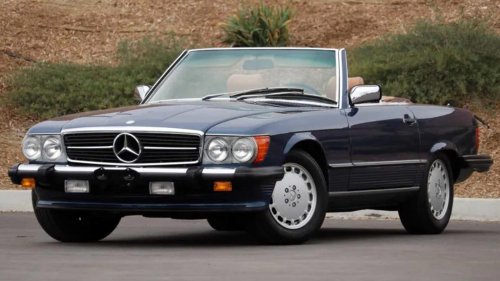
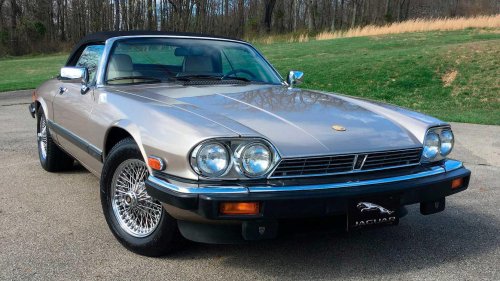
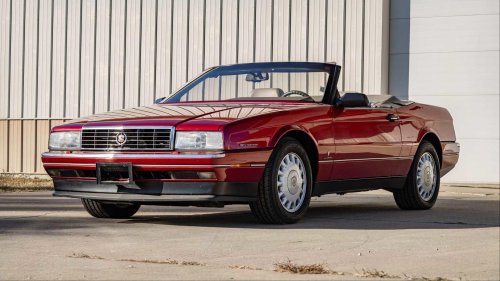
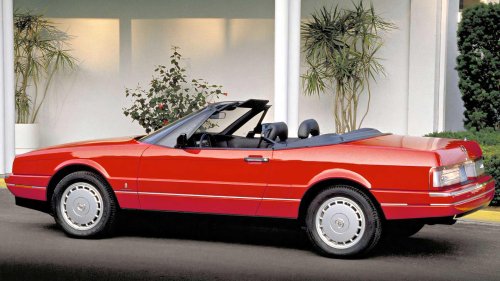
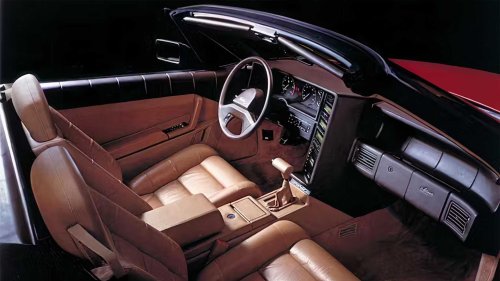
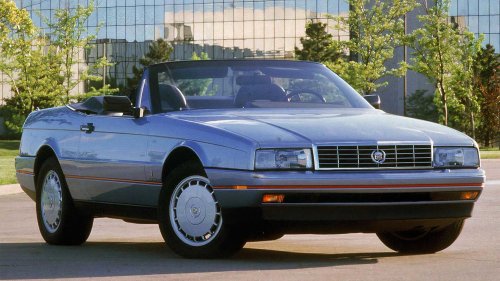
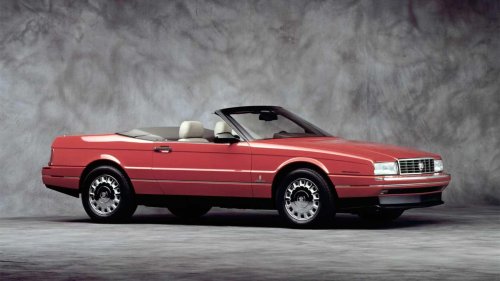
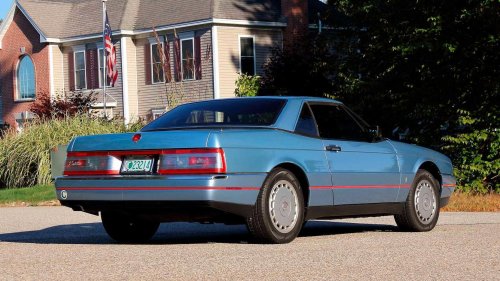
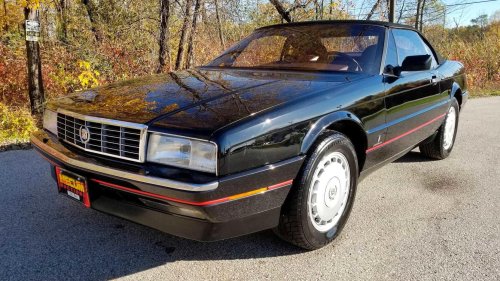
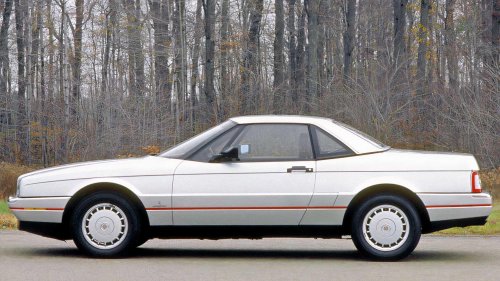



















Some ideas sound smart only until someone tries to build them. In the late 1980s, Detroit still believed money, nerve, and engineering could solve any problem, even the one sitting in luxury showrooms across America. Brands like Mercedes-Benz had the prestige, so one American brand wanted to conquer that stigma with Italian craftsmanship, transatlantic logistics, and enough corporate confidence to make a procurement manager sweat through a sports coat.That ambition also hid a real problem. This was a pricey flagship with a foreign accent, a machine shaped by panic, pride, and a belief that every weakness could be engineered away if enough people, planes, and parts got thrown at it. The result became one of the strangest luxury-car stories of its era, and one of the most fascinating. Detroit Was Outclassed By Mercedes And Jaguar Bring A Trailer By the middle of the 1980s, Cadillac had a real image problem. Wealthier younger buyers kept drifting toward imported luxury brands, and the whole luxury market had started to grow fast. Mercedes-Benz and Jaguar, for example, sold much more than just cars – status, taste, and the idea that the driver had graduated from old American softness to something sharper and more worldly.Those brands also owned the roadster fantasy. The Mercedes-Benz 560SL carried a serious reputation for build quality and engineering depth. Jaguar’s XJ-S convertible brought a softer, more romantic kind of appeal, but it still looked expensive and important parked outside a restaurant. Both sat right in the lane Cadillac wanted, and neither came with the baggage of grandpa’s land yacht.Via: Mecum Auctions Detroit knew the problem. The old formula of velour, chrome, and pillow-top comfort no longer felt enough – affluent buyers wanted something lower, tighter, cleaner, and more continental. When the market starts shopping with its eyes first, the old tricks stop landing.That set the stage for a bold move. Cadillac needed something different than just another coupe with opera lamps and polite V8 rumble – it needed a halo car. The answer was aimed against some of Europe’s finest with the subtlety of a marching band. Nobody could accuse Cadillac of thinking small here. The Allante Was Cadillac's Halo Car Aimed Against The Mercedes SL Mecum The car that was born from that ambition was the Cadillac Allante. The automaker started the project in 1982, asked Pininfarina to style and build the outer shell, and launched the car for 1987 at $54,700. At the time, it was the most expensive production car GM had ever made. The model existed to reset the brand’s image and land a direct punch at the Mercedes SL and Jaguar XJ-S.The sales plan sounded healthy on paper. Cadillac expected something like 6,000 to 7,000 cars a year, but reality laughed. The brand built only 21,430 Allantes across the full seven-year run, and 1992 fell to just 1,931 units before the final-year rebound. Sure, a halo car does not need huge volume, but it still needs momentum. The Allante never really found it.GM Part of the problem sat right in the core of the vehicle. Cadillac gave the car front-wheel drive and an automatic only, then packed it with a standard aluminum hardtop, a cloth folding top, four-wheel ABS, a digital dash, and a Bose audio system. It felt advanced, but it also felt like several ideas stacked on top of each other. Was it a sports car, a luxury cruiser, or a rolling tech demo with Italian tailoring? Cadillac seemed to answer yes. Overengineered From A To Z GMThe early car showed both the promise and the problem. For 1987, the Allante used a transverse 4.1-liter aluminum V8 with 170 horsepower, a four-speed automatic transaxle, four-wheel disc brakes with ABS, MacPherson struts, a digital instrument cluster, and that Bose stereo. The manufacturer also made the aluminum hardtop standard. That looked rich on the brochure, but less impressive once 170 horsepower had to move roughly 3,720 pounds.Thankfully, Cadillac did not stop tuning. For 1989, the Allante got a 4.5-liter V8 with 200 horsepower and 270 lb-ft of torque, plus speed-dependent damping control, variable-assist steering, and 16-inch wheels. In 1990, it became the first front-wheel-drive car with standard traction control. The built-in cellular phone cost extra, because of course it did. Nothing says late-1980s ambition quite like trying to out-tech Germany with a dashboard that looked ready to fax someone.GM Some of the details could be wonderfully nerdy, too. In Car and Driver’s 1989 test, the Allante’s removable hardtop weighed just 58 pounds, far less than the Mercedes SL’s 96-pound piece, and its top-down wind control came off as clearly better.Then came the version enthusiasts still consider the best of all model years. For 1993, Cadillac finally gave the Allante the 4.6-liter Northstar V8, rated at 295 horsepower and 290 lb-ft, along with the heavy-duty 4T80-E automatic. The chassis got reworked too, with unequal-length control arms in the rear and variable damping that reacted to wheel movement. The new powertrain made the Allante worth taking seriously at last, and magazine tests clocked 0-60 mph in 6.2 seconds, which was finally decent. Cadillac also kept trimming cost where it could, resulting in 1993 cars dropping the earlier Recaro seats for cheaper Lear-designed units. Production Process Unlike Any Other In The Industry The Allante’s engineering story gets most of the attention, and deservedly so, but the build story feels even stranger. Pininfarina built the body in Italy, then Cadillac flew those bodies to Detroit for final assembly. In 1985, GM signed a $100 million deal with Alitalia and Lufthansa to move 56 bodies at a time on specially outfitted Boeing 747s three times a week. That was a logistics flex so dramatic it almost sounds made up, but it wasn’t.The whole thing stretched across roughly 3,300 miles, which is why insiders called it the world’s longest assembly line. The bodies traveled from Italy in those special jets, 56 at a time, before workers in Hamtramck mated them to Cadillac chassis and drivetrains. Planners sourced electronics from Japan and the aluminum hood and deck lid from Switzerland. The car had an American badge, an Italian suit, Japanese electronics, Swiss metal panels, and a travel schedule that would make a sales rep tired.There was a reason for all this madness. American plants excelled at building huge volumes. Italy, in turn, still had shops built for low-volume specialty work, often only 5,000 to 10,000 cars a year. Cadillac bought that capability instead of recreating it from scratch, but that same choice stacked cost onto every Allante before paint, trim, and taxes finished the job. Buyers never see that whole chain when they stand in a showroom, but they see the sticker. And that sticker was fat. Early Impressions Hit Hard, And Improvements Were Overshadowed GM Indeed, the first punch landed on price. In 1987, the Allante asked $54,700. A 1988 Jaguar XJ-S convertible listed at $49,000, and period descriptions put the Mercedes 560SL at around $48,000. Cadillac therefore charged import money while offering 170 horsepower, front-wheel drive, and a badge many luxury buyers still linked to a softer, older kind of car. That made the sales pitch hard before anyone even turned the key.Reviews did not bury the car, but they never gave it an easy ride either. Car and Driver’s 1989 comparison with the 560SL actually handed the win to the Cadillac and praised its quick responses, low-speed punch, and much better wind control with the top down. In that test, the magazine figured the Allante’s windiness at 60 mph felt about like the Mercedes at 47.Via MecumAuctions In 1993, Car and Driver ranked the updated Allante ahead of the Jaguar XJS and Mercedes 300SL, then praised the new Northstar V8 and the friendlier chassis. Yet the magazine still called out a shaky structure, a bland interior, and a fussy top. That sums up the whole car in one annoying, lovable sentence. Cadillac kept fixing the important stuff, but smaller flaws kept waving their arms in the background.By the time Cadillac got the formula mostly right, most buyers had already moved on. The 1993 car started at $59,975 before taxes, and Car and Driver tested one at $64,843 with the mandatory luxury and gas-guzzler hits included. In context, the Mercedes 300SL had climbed past $90,000, while the Jaguar XJS test car sat above $71,000. So the final Allante finally looked like a decent value, but that was right before it vanished. Sales never reached the original goal, and production ended in 1993 after only 21,430 cars. A Risky Bargain In 2026 Via MecumAuctions That odd history shapes the Allante market in 2026. Hagerty’s January 2026 guide puts a good-condition 1987 at about $5,700 and a good-condition 1993 at about $7,900. Classics on Autotrader shows a current low of $5,995, an average of around $17,611, and a high of $55,000. The market still cannot decide whether the Allante is a cheap curiosity, a niche collectible, or a weird little masterpiece.If we are looking at current listings, ClassicCars.com lists 1993 examples at $6,800, $8,895, $8,990, $13,900, $14,000, $15,900, $18,995, and nearly $30,000. Classics on Autotrader shows more of the same, from a $7,900 driver up to a 140-mile 1993 with a $55,000 ask. So yes, someone can still buy an Allante for used-Civic money, and someone else can spend modern-CT5 money chasing the dream of a shrink-wrapped Northstar car.GM However, maintenance is where the bargain gets risky. Hagerty points out that high-mileage Northstar cars can bring expensive trouble, and early cars have their own headaches. Allante Source still offers new, used, rebuilt, and reproduction parts, plus ABS troubleshooting, electronics repair, and technical help, but it also says more parts keep getting discontinued and many trained technicians have moved on.Source: Cadillac, Car and Driver, Hagerty