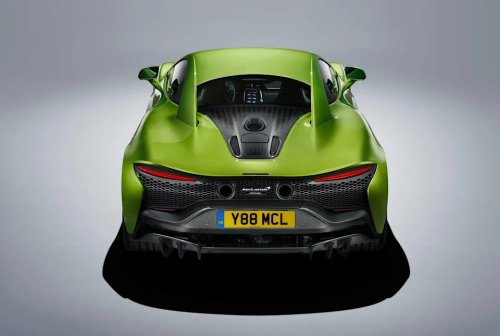
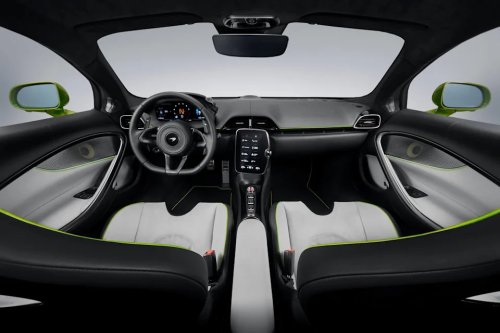
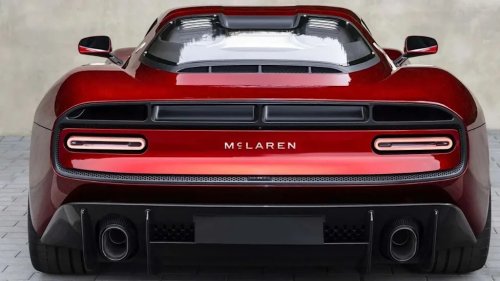
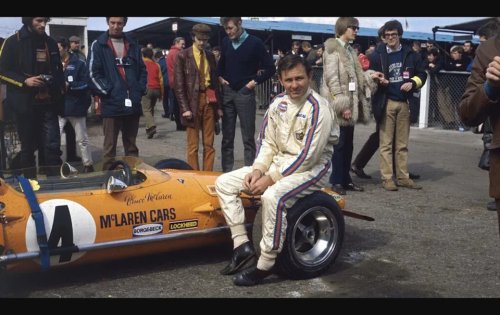
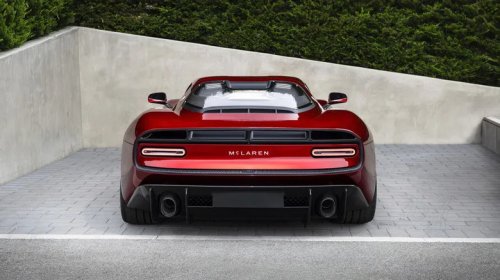
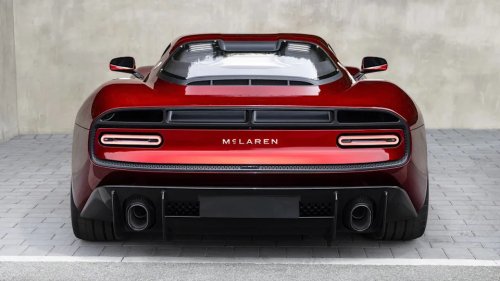
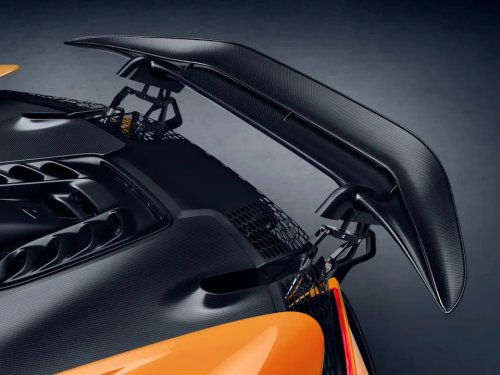
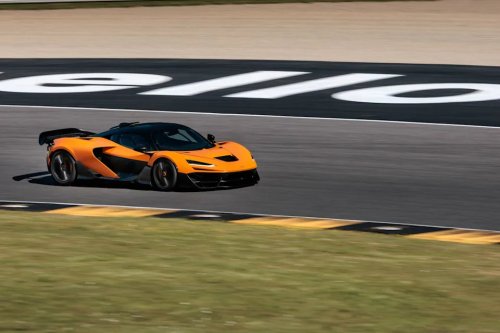
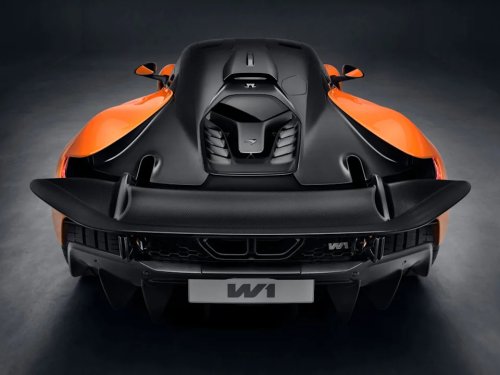
McLaren W1 Ground-Effect Aero: Changing the GameMcLarenWhen you examine the McLaren W1 from a numbers perspective, it doesn't really look like it's pushing any special hypercar boundaries. It has plenty of horsepower (1258 hp) from a fancy hybrid powertrain, is super-lightweight (3084 pounds), and has the "1" suffix to denote it as the top-dog McLaren of current times. But for the most part, what makes this hypercar special is what you don't see, and it all lies in the wizardry world of aerodynamics.The W1 is a ground-effect car. Not in the sense that it makes a menial amount of its downforce through the mysterious world of ground-effect, but that the whole car is designed around this aerodynamic concept. This isn't Formula 1-inspired stuff. It is actual Formula 1 technology, and it was engineered and designed by Robin Algoo—a man who used to work as an aerodynamicist in F1 before he became an advanced aerodynamics architect for McLaren road cars."I was sitting there looking at a blank ceiling, and I thought, well, how do we push a boundary of automotive aerodynamics," Algoo tells me. "We've designed a very big wing on Senna. Now the question is, how much bigger could it be? And the answer is, not much bigger."McLarenMcLaren and Algoo knew the W1 had to push the hypercar world forward in a similar way as past hypercars. The F1's mark on automotive history is forever, and the P1 changed the way we think about hybrid performance vehicles. Now, the W1 is here to change the way we think about road car aerodynamics. Obviously, the concept of using a ground effect aero strategy is old when couched in racing terms— the Lotus 78 F1 car paved the way in F1 1977, years after efforts from Chaparral and others built their ground-effect cars—but making ground effect work in a road car as the primary source of downforce simply hasn't been done."I kind of understood the sort of aerodynamic ceiling that we had reached with such a big wing concept," Algoo starts. "And dwelling on my experience in F1 where we produced a lot of the downforce through using the underbody, diffuser, etc. It was clear to me... a clear opportunity there to change the paradigm from producing that downforce on a high wing, what is deployed on P1, or whether it's fixed, to leveraging the rear diffuser a lot more than we were."The diffuser, and deployable rear wing that serves as an extension of the diffuser, are indeed the party pieces. Algoo says the diffuser measures about 67 inches front-to-rear in overall length, and it can only be this large because McLaren tilted the engine about three degrees on an angle to move it out of the way. Plus, it serves as a structural load path, bridging across from one side of the rear suspension to the other and eliminating the need to have a metal crossbeam under the transaxle.Depending on whether you skew above or below average when it comes to height, there's a good chance you could comfortably sleep on the diffuser were it removed from the car. It's just that huge. Most sports cars and supercars have functional diffusers, though, so what's so special about this one? As you might suspect in a ground-effect concept, the diffuser might be huge and in your face, but it takes an enormous effort everywhere in and under the car to actually make it effective."People tend to look at the diffuser, and they go, 'Oh, it's a big diffuser,'" Algoo says. "It must be working hard. And actually, it's not. Not necessarily. There's a sort of geometry diffusion, pure geometrical diffusion, which is the size of it, but then there's the effective aerodynamic diffusion."What Algoo is getting at here is how effective the diffuser actually is at producing downforce. In most cars, diffusers are quite efficient at producing downforce down the center, but not on the sides. The blame for this can largely be directed at the front tires creating "tire wake," trapping the air under the car and not doing anything useful with it. This problem is simply left alone for most production vehicles, and it's why we use giant wings on the rear deck to produce downforce instead. It's just easier. Algoo isn't exactly a fan of giant rear wings, as they come with drag penalties and are much less efficient than a ground effect concept. While you're producing downforce, you're also creating a negative pressure between the rear deck and the wing, effectively injecting lift.McLaren"And I know for a fact that producing downforce on top of the deck is not the most efficient way, but it's the most legal way," Algoo jokes. "It makes life a lot easier to homologate the car. But on this car, we wanted to be a lot more ambitious."So, Algoo and his team went to work solving the problem of eliminating front tire wake. This, plus creating a negative space underneath the car, are the two most important elements that needed solutions to make a ground-effect production car function. It starts with the completely bespoke Aerocell monocoque.No existing McLaren carbon-fiber monocoque would work with a ground-effect concept, so the team started from scratch. The footbox is about four inches higher, and the waist (gap between the front tires and the tub) is about six inches narrower than McLaren's typical Monocage design. It required fixing the driver in place, then making the pedals and steering wheel highly adjustable. This moves the monocoque out of the way when it comes to achieving clean airflow to the rear of the vehicle, helping to create the negative space Algoo wants under the car.McLarenAt the front of the car sits a funky-looking active wing and F1-style T-tray and keel that work together to reduce front tire wash, and Algoo says the solution dreamt up here is an automotive-first design."I think the front active aero... this is where it gets very geeky," Algoo starts. "It's called anti-elliptical loading. But if you look at your airplane wings, they're sort of loaded. Imagine the fuselage doesn't exist, and you bridge the two wings together. So if you look at the suction it produced, it would be maximum at the center line. That's called an elliptical. To manage all the front tire wake, you have to actually do the opposite. Create a thing called anti-elliptical, where you load the tip a lot more than you load the center."The suspension itself was designed with the intention of cleaning up the air moving past the wheel and toward the rear. McLaren intentionally chose an inboard suspension design, not just because of race car reasons, but because you can move the damper out of the typical upright space in the wheel well, helping clean up the wheel area for aero. The suspension links themselves are 3D-printed out of aluminum and sculpted with an aero-friendly wing profile. Even the suspension members themselves are shaved and sculpted to let air pass by as uninterrupted as possible. Beyond the suspension, you'll notice the floor is largely flat aside from some Venturi tunnels sculpted into the leading edge of the door that lead back to the diffuser. No, the W1 doesn't rely on the F1-like Venturi ground effect to accomplish its job, but there's still some targeted sculpting in the floor to make this concept come to life.McLarenAnother term you may know from F1: bargeboard. The W1 has what is effectively a bargeboard integrated into the door. This directs the air moving off the rear face of the tire outboard of the car, and because McLaren was just so perfectionist in this area, it even designed unique doors that hinge from the roof to ensure clean airflow between the bottom of the A-pillar and the wheel. Also found on the roof is the "airflow diverter," which optimizes airflow over the top of the car and directs air where it needs to go: the adjustable rear wing.Remember, all of these painstaking efforts are designed in an effort to move air back to that diffuser and rear wing. Obviously, the "Active Long Tail" (as McLaren calls it) is nothing like any other wing the company has used before. Don't let the low height deceive you, though, because in Race mode, the W1 manages to produce more downforce—2205 pounds "in high-speed corners"—than the Senna. The only caveat here is that Race mode is geofenced to non-public roads, and your ride height practically drops to the ground (down 1.46 inches in front and 0.7 inches in rear) to truly light up the ground effect capabilities.There are four motors that control the rear wing's range of motion. It's fully stowed in Road mode, but then it swivels out and behind the car when put into Race mode, which allows it to function as an extension of the diffuser. Algoo says it moves out by just under a foot. There's even an intermediate mode designed for road driving that only extends it by about four inches.McLaren"So aerodynamically it behaves like a diffuser flap," Algoo says matter-of-factly. "And then once we are in that race mode position, we have 30 degrees of range of angle."Algoo likens the thought process of how it angles the wing to achieving peak stability, citing the unpredictability of wings in Formula 1 today as something McLaren would like to avoid."So we've got 30 degrees of range on the wing, and at no point in that range do we put the wing at a different flow regime," Algoo says. "So it's always attached. All we're doing is unloading. And then we reload. So it's very predictable, stable."In other words, yes, there's a DRS mode of sorts where the wing prioritizes maximum speed, and an airbrake configuration that helps stability under braking, but the degree of motion never changes the balance of the car.McLaren"As you know, the stability that you've perceived, the wheel is more linked to the aero balance, so how much downforce you have on the front axle versus how much you have on the rear, Algoo says. "A bit how you feel the center of gravity and the mass around the car. Rather than feeling the full downforce. You can't really quantify downforce. What you feel more is the change of downforce, so the change of aero balance. So we've designed this car to have a flatter sort of behavior in aero balance. Whether we are braking or turning, the aero balance will hardly move."Has McLaren effectively created yet another science experiment of a hypercar? One could argue it has. But for anyone who can find the joy in sweating the details, the W1 is a definitive example of engineers, designers and aerodynamicists dedicating themselves to a singular goal. I'll readily admit that the W1 didn't feel like a gamechanger to me when it was initially revealed, but I'm fully aboard the ground-effect train now.If You Can Only Own One Car, Make It One of TheseThese Are the Most Popular Cars by State























 +69 others