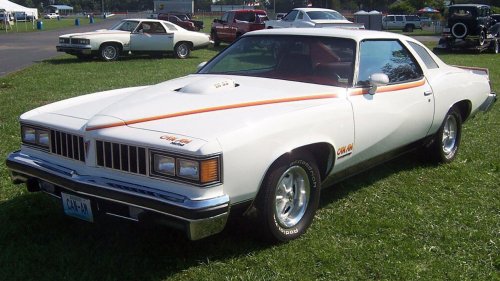
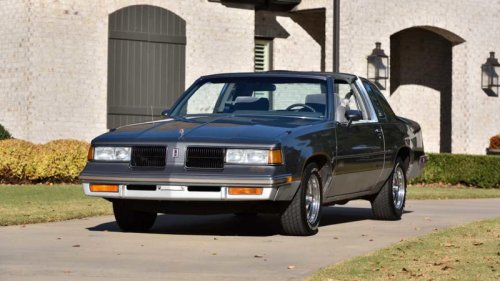
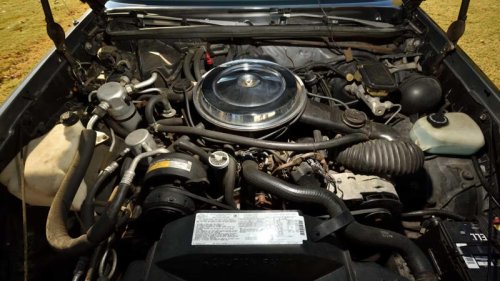
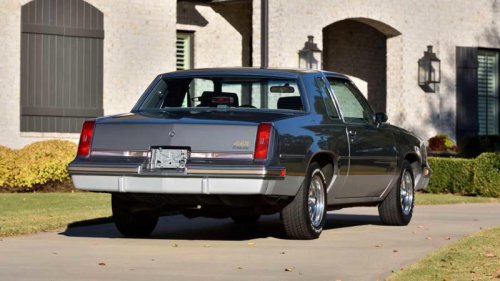
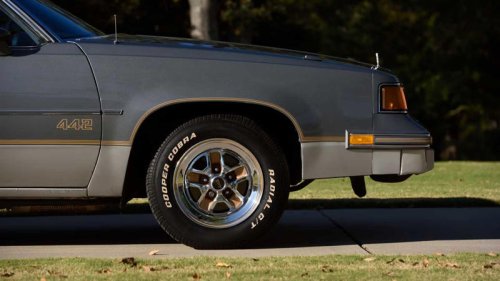
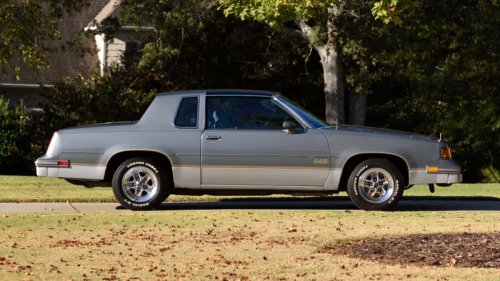
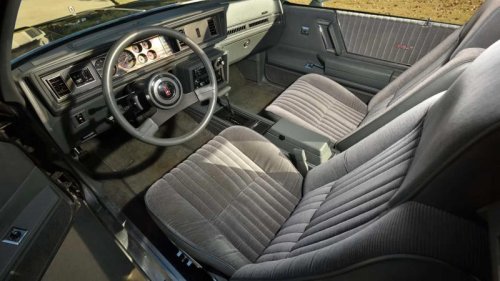
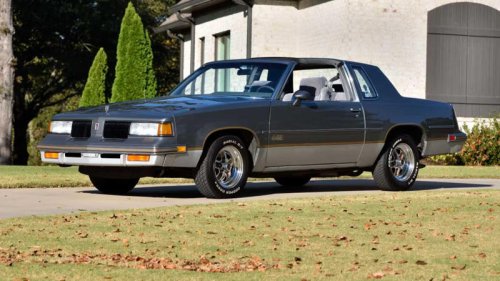
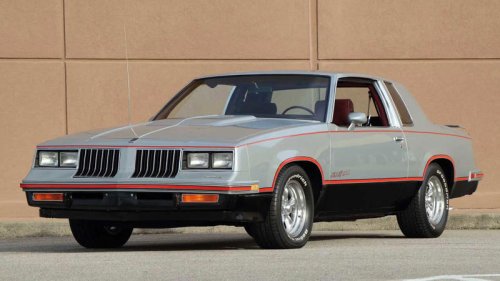
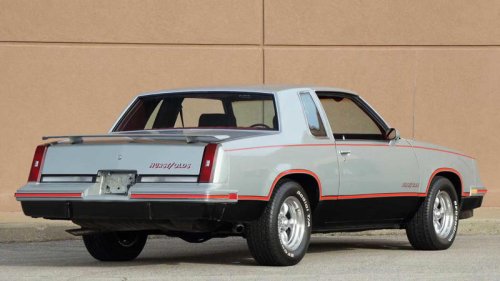
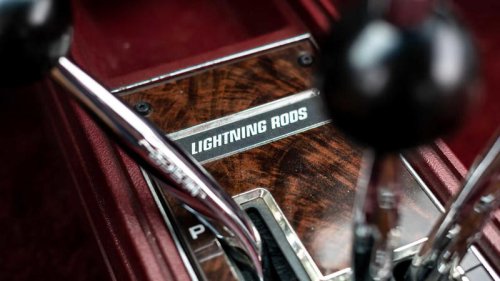
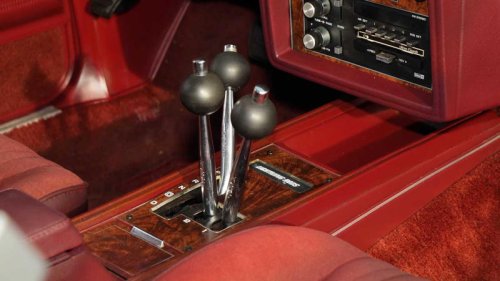

















Oldsmobile never really got the same spotlight as its other General Motors cousins did during the muscle car era in the '60s and early '70s. Chevy and Pontiac were selling their muscle cars like hotcakes back then, and even Buick carved out a niche with its Gran Sport, leaving Oldsmobile's less flashy alternatives overlooked by comparison. Still, the brand was making high-torque muscle cars that proved that performance didn't have to come at the cost of refinement.Then came the 1970s. Emissions regulations tightened, fuel prices climbed, and insurance companies made owning high-performance cars expensive enough to scare off buyers. The muscle car as we knew it was practically extinct. And yet, Oldsmobile refused to let go. Through clever engineering and a bit of nostalgia play, one model managed to survive and carry the spirit of muscle cars further into the 1980s than almost anything else wearing a GM badge. The cool part? Despite it being surprisingly rare, you can probably easily swing the cash to buy Oldsmobile's last-ever muscle car today. Muscle Cars Were Completely Cooked In The ’80s Mecum By the early 1980s, the glory days of 400-horsepower big blocks seemed like a fever dream. The muscle car landscape had been reduced to a handful of survivors, and even those came with compromises. Pontiac and Buick had already been resorting to turbocharging and smaller displacements to keep emissions down since the late '70s, while Mustangs and Camaros drove like classic economy cars, for the first time ever.The closest thing to old-school muscle in the early '80s was a painfully slow Pontiac Firebird. The Mustang and Camaro were smaller and lighter, but they took years to even break 200 hp. Meanwhile, the Pontiac Trans Am was doing high 16-second quarter miles, and the Buick Regal had two of its cylinders sawed off in exchange for a turbo.Oldsmobile felt this shift just as much as anyone. When the 4-4-2 name returned in the late ’70s, it was more of an appearance package than a true performance car. The brand had built the reputation of its performance cars on massive displacements and high torque, and the decade was having none of that. In order to stay relevant, Olds needed to offer a refined muscle coupe with the kind of performance buyers expected from the segment. So that's exactly what it did.Oldsmobile decided to play the nostalgia card and stick to the traditional muscle car formula, shunning tiny V6 engines and turbocharging. Between 1983 and 1984, the brand sold the Hurst/Olds – a nostalgic revival of the 1968 classic with aggressive looks and decent performance for the '80s. In 1985, though, Oldsmobile needed a new muscle car to carry the V8 torch. Olds based it on the fanciest coupe it had on sale – the Cutlass Salon – and it would become the last proper V8-powered muscle car the brand would ever build. The 1987 Oldsmobile 4-4-2 Is The Brand's Last Proper Muscle Car Mecum Within GM, the G-body platform became the last stronghold of traditional rear-wheel-drive performance coupes in the '80s, shared between the Monte Carlo, Grand Prix, Regal, and Cutlass. Still, most versions were tuned for comfort and daily usability, not outright performance. That's where the new (and last) Oldsmobile 4-4-2 came in.For context, the Oldsmobile 4-4-2 was once one of the highest-torque muscle cars of the '60s, known for obliterating other big-blocks over the quarter mile. By the late '70s, though, it was merely a performance package for the 1979-80 Calais, which pushed just 170 horsepower. It wasn't until 1985 that Olds used the name again.To bring the legendary nameplate back to life in the '80s, Oldsmobile combined the plush Cutlass coupe with a new W42 performance package, which included a four-speed THM-200-4R automatic, dual exhausts, F41 performance suspension with stiffer springs and sway bars, and Goodyear Eagle GT tires.MecumUnder the hood, the 307 cubic-inch V8 engine with an iron block and heads received a Rochester four-barrel carburetor and a hotter camshaft for an extra 10 horsepower. The combination yielded... wait for it...180 hp and 245 lb-ft of torque! Now, that's not exactly terrible power for the time, but what's more surprising is that Olds sold these for $12,435 in 1985 (almost $38k in today's dollars) – and quite successfully, if we may add. See, by 1983, baby boomers were in their late 30s and already nostalgic about the "good old days" of the horsepower wars in the late '60s and early '70s when they had just gotten their licenses. As a result, Olds had no problem moving these cars off the lots.MecumExactly 3000 examples left the factory in '85, and another 4,273 in '86. 1987 marked the final year of the 4-4-2's production, and the end of an era for Oldsmobile. 4,208 of these final model year examples were built, now based on the Cutlass Supreme coupe, featuring revised grilles and new 120 mph speedometers. By 1988, every Oldsmobile was a front-wheel-drive car. Not The 4-4-2 We Want To Remember While the 4-4-2 nameplate did make a return in the '90s, these are not the 4-4-2 you're looking for. Heck, if you ask us, Olds should have just kept the 4-4-2 name dead and buried. Not only were they now based on the Cutlass Calais coupes, but they featured a 2.3-liter four-cylinder that pushed power to the front wheels only. It's almost impossible to stray further away from the muscle car formula than that. This not only leaves the '87 Olds 4-4-2 as the brand's last real muscle car, but also makes it that much cooler considering what came after it. How The Oldsmobile 4-4-2 Stacked Up To Other Muscle Cars In 1987 MecumPeriod tests put its 1/4 mile time at 16.6 seconds at 83 mph in 1985. Compared to its equally sedate muscle car rivals, the 4-4-2 was one of the slowest, but it still held its own. For example, a Monte Carlo SS covered the distance in 15.9 seconds, and a 200-hp '85 Buick Grand National needed just 15.7 seconds. A 1985 Mustang GT was faster than all of them, though, covering the 1/4 mile in 14.9 seconds. By 1987, the 4-4-2 was outmatched by pretty much every muscle car on the market. Camaros were running 14.5-second quarters, Mustang GTs were in the high-13s, the Buick Grand National had a solid 65 horsepower on the 442, and the GNX beat them all with 13.4-second runs.Mecum Perhaps more importantly, though, the 4-4-2 looked the part, with its aggressive two-tone color scheme separated by a golden stripe, large golden 442 badging, and fat Goodyear Eagle GT tires. Oldsmobile even offered a tiny rear wing that seemed to serve no purpose besides making the car look sporty. Looking back, we think that had always been Oldsmobile's goal. Why push the needle with performance when you can make the car that's more refined and interesting than the competition instead?Mecum What made the last V8 4-4-2 so different was its identity. It wasn’t just a performance car. It was a luxury muscle coupe. Inside, you got a quiet cabin, plush seating, and a sense of solidity that many smaller performance cars lacked. Olds got away with charging more for these than Buick asked for the Regal T-Type ($11,657). Today, the situation on the used market is a bit different. The 1987 Oldsmobile 4-4-2 Is A Collector Bargain Today Mecum Speaking of values, the 1987 Olds 4-4-2 simply doesn't have much today. J.D. Power puts the average retail price for these at an astonishingly low $4,000. In reality, nice 4-4-2s fetch around $20,000 on average, with regular examples trading hands in the low teens. Here's one in original condition that sold for just $9,000 with 77k miles on the clock in 2024. What's interesting is how rarely these pop up for auction.Each year, values of '80s muscle cars keep rising courtesy of Gen X nostalgia and shifting market demands. For example, the Monte Carlo SS crossed $30,000 for the first time in history. And looking at recent value trends on online marketplaces, it's clear that 1985-87 Olds 4-4-2 prices have been steadily going up. With fewer than 12,000 examples ever built, finding one for cheap could be a great way to secure a rare and unique classic before prices get out of hand. Another '80s Oldsmobile Muscle Car Could Be An Even Bigger Collector's Gem MecumWhile the last of the '87 Cutlass is definitely the last of the real Oldsmobile muscle and a bargain for collectors, it's not the coolest Oldsmobile muscle car built in the '80s. That title arguably goes to the '83/84 Oldsmobile Hurst/Olds, which preceded it.The '83-'84 Hurst/Olds was a pure nostalgia play. Oldsmobile brought the model back as a celebration of the 15th anniversary of the partnership that started with the iconic 1968 Hurst/Olds, and it was only supposed to sell 2,500 units (Hemmings). The bid worked, and the demand was there. Olds ended up having to bump the production up to 500 for 1983 and sold the car for another year in 1984, when it moved 3,500 units.MecumThe Hurst/Olds used the same HO 307 as the later 442 model, also pushing 180 hp and 245 lb-ft. It was decently quick for the time, but by no means the fastest muscle car around, covering the 1/4 mile in 15.8 seconds in period testing.When it hit the market in 1983, it had a price tag of $12,259 (almost 40 grand in today's dollars). One way to tell an '83 Hurst/Olds from an '84 is the color scheme. These cars were primarily black in 1983, with the lower portion of the body painted in grey. For 1984, the paint scheme was flipped, and Oldsmobile charged an extra $500 for the car that year. The Feature That Made The Hurst/Olds Unforgettable MecumIf there’s one thing that guarantees the Hurst/Olds a permanent place in automotive history, it’s the Lightning Rods shifter. Not only is it a massive conversation starter, but it looks ridiculous enough to scare off even the most confident car thieves. There's not just one or two levers, but three – each with a button on the top. It looks like the kind of thing you'd expect to find in an industrial crane. But in reality, it's just a regular automatic with extra steps.Mecum So how does it work? The main lever controls the automatic transmission in the usual way. The two additional “rods” allow the driver to manually control upshifts between gears. There’s an internal gating system that prevents incorrect shifts, so you can’t accidentally damage anything by using them out of order. What this means for the driver is you could hold gears longer, control shift timing, and feel more connected to the drivetrain. Is it perfect? Heck no. In fact, it makes the car slower than a regular automatic, but it's also a way to make the driver feel more involved in the process, and at least we can appreciate that.On average, these go for about $24,300 today, with more average or higher-mile examples available in the mid-teens. Here's a really nice, original one with just 39k miles on the clock that sold for $19,800 last year. Sure, if you're only buying performance, that's not a good deal. However, if you're buying a seriously rare piece of muscle car history with a unique feature and a very impressive cabin, then the '84 Hurst/Olds starts to look like a serious bargain with huge upside potential.Today, these cars are very rare (just 6,000 were produced in 1983 and '84 combined), and who knows, in a decade or two, that ridiculous shifter may be the reason why '83/'84 Hurst/Olds values shoot to the moon.Sources: J.D. Power, Classic.com, The Classic Valuer, Car and Driver, Hemmings, Motor Trend, Hot Rod, Bring a Trailer, Road and Track.