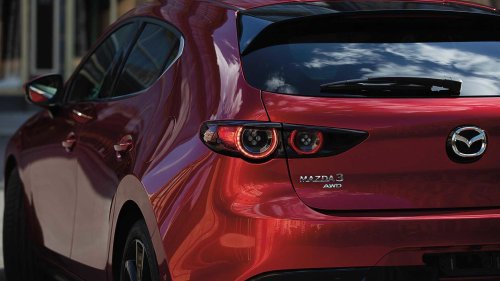
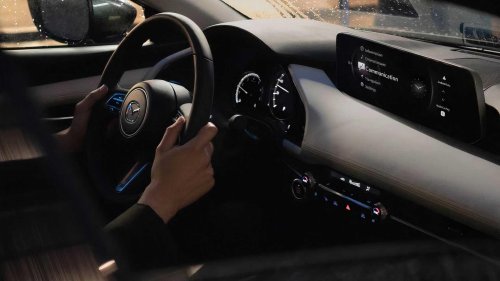
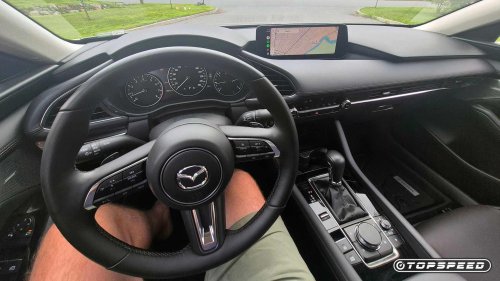
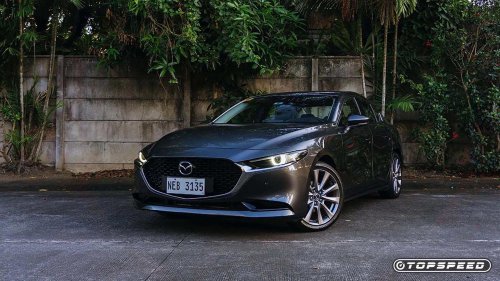

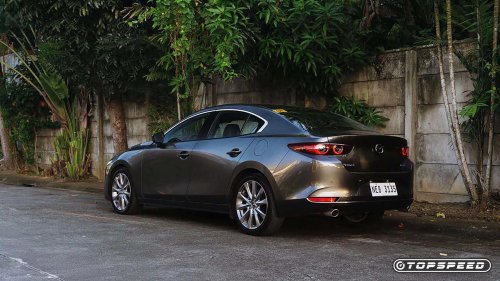
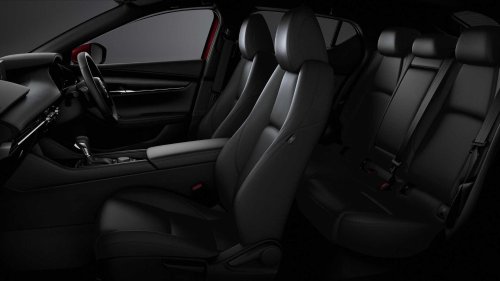
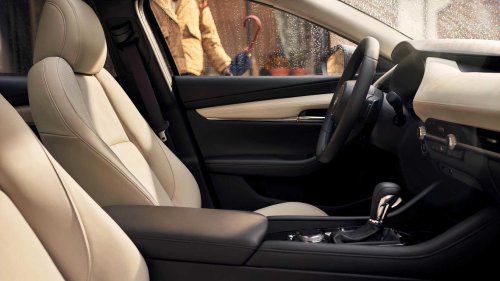



















Cars are getting a bit more expensive these days, but there's one other factor why cars are slightly increasing in price—their more premium interiors and features. Of course, making the interior feel more premium is a surefire way to improve a vehicle's user experience, but that, of course, also leads to a slightly higher price.As such, there are mainstream cars these days that aren't from a premium brand, but feature an interior that wouldn't look out of place if it wore a badge from a luxury car brand. The Japanese car that's the topic of today's article is one such example, and the best part is that its price is relatively affordable, too. Mazda 3 - Premium Among The Mainstream Mazda The Japanese car that redefines what premium should mean is the 2026 Mazda 3. This compact sedan, which has a base price of under $25,000, features plenty of small details that make even a supposedly premium 2026 Acura Integra feel a little less special. Evolved Kodo Design Mazda Regardless of the variant you choose, the 2026 Mazda 3's premium experience begins with its exterior design. Granted, the smaller 16-inch wheels of the base 2.5 S models may look dinky relative to the svelte body lines of the Mazda 3, but fundamentally, the Evolved Kodo design language that was imbued in this compact sedan makes it stand out. Sure, there's a subtle character line running from the LED headlights to the front doors, but that's about it in terms of visual noise. Mazda chose to sculpt the sides of the vehicle in a way that it displays a curved C-shaped reflection, and this has become the hallmark of Evolved Kodo ever since.Mazda As a result, though the Mazda 3 lacks character lines, this signature sculpting easily makes this compact car possess a unique visual identity. The cleanliness of the aesthetic is seen in every facet of the Mazda 3's design, from the sculpted rear end to the signature five-point grille. Though this is now a six-year-old passenger car, the Mazda 3 is still one of the most beautiful mainstream cars you can buy, and with a base price of under $25,000, you'd have to wonder what brands like Acura are doing with the Integra. This Is A Sub-$30,000 Interior? CarBuzz Yes, absolutely. For a passenger car where half of its variants retail for under $30,000, you'll have to ask why even go for a supposedly premium Acura Integra? Now, I'm using the Integra as a main comparison point here, because this is a vehicle that's supposed to sit above the Honda Civic. Yet, in terms of the interior quality, you'll be forgiven for thinking that the Mazda 3 is the more premium sedan. Even the base 2.5 S features leatherette surfacing on the dash, along with plenty of stitching details. Climb up the trim ladder, and you get leatherette or genuine leather seating, a power-adjustable driver's seat, a sunroof, and a Bose sound system that's covered in a gorgeous satin silver housing.William Clavey | TopSpeed There's so much attention to detail in the interior of the Mazda 3 that it's worth an article of its own, but I'll give you a summary of what to expect in this vehicle's interior. Mazda made thoughtful calibrations on every white light source. One of those is picking the right color temperature for the LED interior lights to not only make it easy to sit inside, but also to make the interior more pleasing to the eye. Even the buttons, switches, knobs, and seven-inch partly-digital gauge cluster have uniform lighting levels and color temperatures, so that the mix of digital and analog is as seamless as possible. That's Lexus' level of thoughtfulness, which is even absent in a car like the Acura Integra. A Thoughtful Drive Isaac Atienza The current-generation Mazda 3 was developed holistically with premium intentions in mind. As such, when you start driving this car, you'll experience a vehicle that punches above its weight class. Emotional With Just-Right Sportiness Isaac Atienza Though Mazda is known for developing sporty cars, it knows that the Mazda 3 isn't a track car. That's why its sportiness level is just right for the segment. It all begins with the torsion beam rear suspension, which wasn't necessarily a cost-cutting decision. After all, the new torsion beam rear isn't as rudimentary as you think. Versus a multi-link rear suspension, Mazda says the simpler torsion beam means fewer points of calibration for them to achieve their ride and handling goals. They did concede that the torsion beam rear is less dynamic on the track, but a track car wasn't what the company intended the Mazda 3 to be. 2026 Mazda 3 Specs Instead, with natural and precise steering, linear power delivery, whatever the engine choice, minimal body roll, and a chassis whose movements through the corners are felt in your butt, the Mazda 3 is dynamic and fun where it matters the most—out on a public road or on mountain passes. The steering isn't as agile on center as the previous generation, but the result is fewer steering corrections when going through corners. Indeed, when driving in a straight line, the Mazda 3 is more relaxing, which aligns with their premium direction. Firm But Refined Isaac Atienza However, to still retain a degree of sportiness, the Mazda 3's ride remains on the firm side. Firm, but not punishing, is the word, and that also has a slight upside over a soft suspension—minimal oscillations and secondary motions. As a result, when hitting a bump, you have less head toss when driving over uneven roads, and when cornering, the body movements are predictable and linear as well. These sensations result in a very neutral car.Refinement is also excellent, as Mazda developed the chassis with minimal holes. Even the placement of the Bose sound system is part of the refinement equation. With the bass speakers located at the vehicle's cowl, there are no more door rattles to ruin the ambiance when playing loud, bass-heavy music. Thicker glass all around, together with thicker carpeting and a more rigid chassis, results in a Mazda 3 whose driving feel is nearly as refined as a German entry-level premium car. Where The Mazda 3 Falls Short Mazda But, of course, nothing in life is perfect, and the 2026 Mazda 3 is no exception. Sales-wise, the Mazda 3 isn't selling as much as a Toyota Corolla or Honda Civic. Though Mazda never chased the sales numbers of Honda and Toyota, addressing these issues could make the Mazda 3 become even more competitive. Small Rear Seat Space Mazda Whether you go for the sedan or the hatchback, the Mazda 3's rear seat space isn't stellar. The class leaders for rear seat space are either the Honda Civic or Kia K4, whether in sedan or hatchback form as well. 2026 Sedan Interior Dimension Comparison Go for the Mazda 3 hatch, and you will also experience the worst rear visibility of any car in its segment. Thankfully, a reverse camera should ease things up, but that's the price you pay for the hatchback's distinct design. 2026 Hatchback Interior Dimension Comparison No Hybrid Option Mazda Sales of hybrid vehicles continue to grow, especially as electric vehicle (EV) sales crashed following last year's discontinuation of the $7,500 Federal Tax Credit. Unfortunately, while Toyota and Honda were riding the wave of growing hybrid vehicle sales, the Mazda 3 isn't part of that. Without a hybrid, the Mazda 3's appeal is limited, and its 2.5-liter non-turbo and turbo engines, though efficient, aren't efficiency leaders versus other non-hybrid models.Mazda For now, Mazda's hybrids are limited to the CX-50's RAV4-based hybrid system, along with their plug-in hybrid CX-70 and CX-90, which, let's be honest, aren't known for their smooth power delivery. The newly-unveiled CX-5 is set to receive a hybrid drivetrain in 2027, and so here's to hoping that the new, in-house hybrid system fares better than the one in the CX-70 and CX-90.