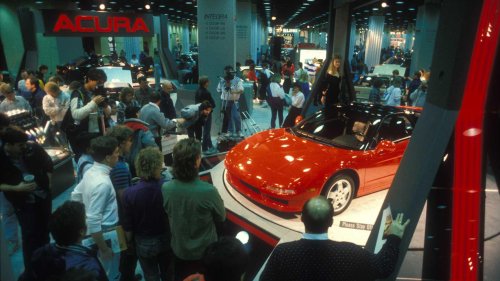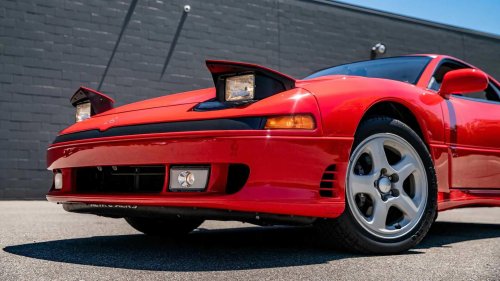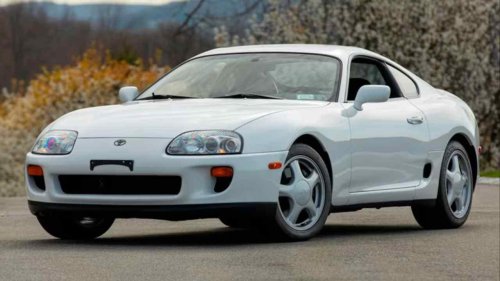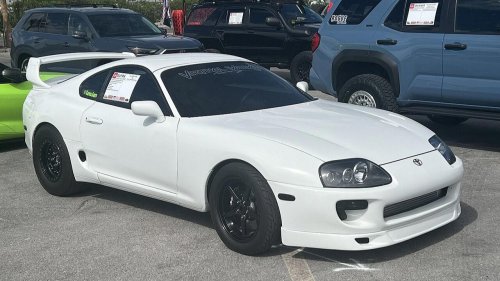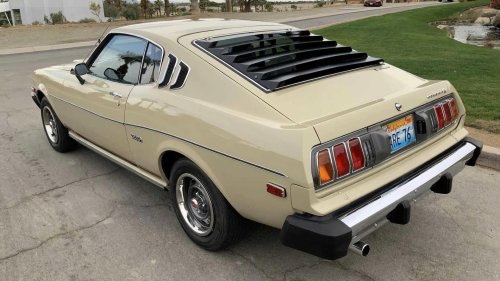
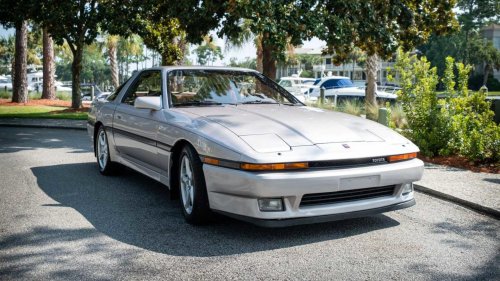
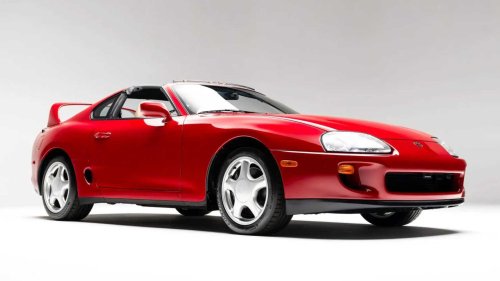
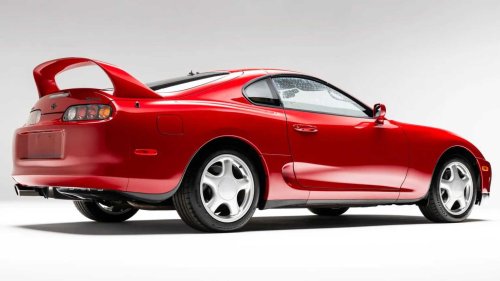
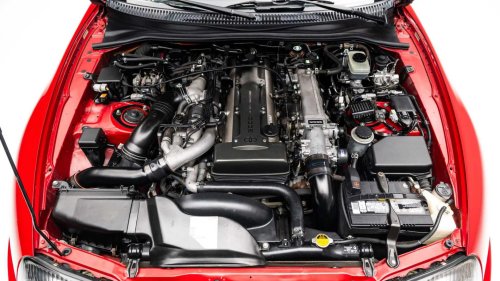
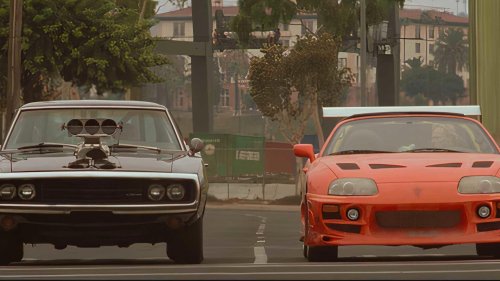
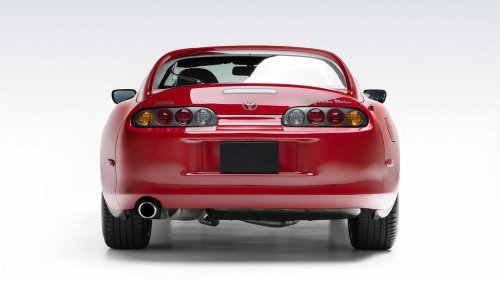


















In the '90s, Japanese carmakers were on a high, with reliable and high-tech machines that were starting to dominate almost every genre. But while the Japanese had their eye on everything from the small hatchback class with the Corolla to the Mercedes S-Class with the Lexus LS400, what really made the cars from the Far East popular was that they did a lot of things better while remaining more affordable.In the '90s, one Japanese brand decided to take on the two-door sports car market that was dominated by the likes of Porsche and BMW. The model in question would be incredibly fast, comfortable, reliable, and attainable. But while it may have been the everyman Porsche alternative of its day, this Japanese icon is now worth more than Ferraris on today's market. Japanese Sports Cars Evolved Quickly In The '70s and '80s Bring A Trailer The Japanese sports car domination in the USA could be traced to a lot of models, but one stands out. The Toyota Celica of the '70s was a curious machine that matched the looks of a Mustang to a reliable four-pot drivetrain. When you say it like that, the Celica doesn't sound that great, but the timing was impeccable.In the early '70s, no one wanted gas-guzzling muscle cars anyway, and the blend of sharp American-style looks (particularly in the RA25 Celica) and reliable and frugal engines was a winner. Then there were cars like the Datsun 240Z (S30) which had the shape of a Ferrari 250 GTO if you squinted after a couple of beers, matched to a trusty 2.4-liter inline-six. By the time the Nissan Skyline GT-R arrived in the late '80s with tech that was allegedly borrowed from a dismantled Porsche 959 supercar, Japan was going full mic drop. Toyota Brought Reliable Sedan Thinking To Fast Cars Bring a Trailer What made Toyota, Nissan, and most other Japanese carmakers so successful during this era was the fact that they brought the trademark reliability of a small hatchback and sedan and applied it to any other product they fancied making. This way, you suddenly had specialist supercars like the Acura NSX, but with the sort of sensible ease of ownership you would get from an Accord. Suddenly, the idea of a temperamental exotic that you used only on the weekend after fettling with it for three hours seemed a bit archaic. This is when Toyota created a car that would go on to be way more exotic, sought-after and legendary than the sum of its parts. This is when an icon was born. The Toyota Supra MKIV Changed The World Bring a TrailerSource: Toyota/ Independent testsReally, did it? Well, yes, the Toyota Supra MKIV is probably that important. The Supra name had started off as a souped-up (or is that supra'd up?) version of the Celica, with a silky smooth six-cylinder engine instead of a four-pot. From 1985, the Supra became its own standalone model, breaking away from the Celica for the third iteration. The thing was with the A70 Supra, while it's a great and slightly underrated car, it was always seen more as a large GT tourer than an all-out sports car. The MKIV would change all that.The boosted 1993 Toyota Supra came with a 320-horsepower twin-turbo inline-6, a 6-speed manual, and could hit 60 mph in 5.2 seconds covering a quarter mile in 13.8 seconds at 106 mph. The base price was $40,890. When you consider that a 1993 Porsche 968, probably the most obvious European rival, had a 236-horsepower inline-4 and cost $1,000 more, then you realize how much of a game changer the Supra was. The Supra Had Crazy Power From An Iconic Engine Bring a Trailer The fourth-generation (A80) Supra was officially unveiled at the 1993 Chicago Motor Show after four years in development. Toyota said the design referenced the iconic 2000GT of the sixties, but there was no mistaking that the Supra was more a brute than a dainty sports car. The car was a handy 220 lbs less than its predecessor, with even hollow carpet fibers to help save weight.The engine line-up was simple; Buyers could choose from either a naturally aspirated or twin-turbocharged 3.0-liter JZ-series straight six offering between 220 horsepower and 320 horsepower, linked to Toyota's first six-speed gearbox (or a four-speed auto). While the top speed of the turbo version was governed at 155 mph, the true top speed was more like 175 mph. The Supra Could Outgun Serious Sports Cars Via: Bring A Trailer This was a car that was faster in acceleration than a Ferrari 348, and possibly top speed too. A 1991 Porsche 911 Carrera 2 Tiptronic would take 6.1 seconds to get to 60 mph. A Dodge Viper would hit 60 mph in 0.7 seconds quicker than a Supra, but that was fitted with an 8.0-liter V10 and had no windows. But the Supra's new 2JZ-GTE engine was flexible and easy to live with, offering 90% of peak torque all the way from 1,300 to 4,500rpm, while that legendary Toyota reliability came as standard. The Supra was comfy too, with luxury options and a T-bar roof available too. The Supra Became A Cultural Icon YouTube All this showroom spec stuff was just the beginning. It soon became apparent that the Supra's JZ motor was seriously understressed in standard form. Tuners rejoiced in releasing ever more nuclear power figures out of the six. Even Toyota says that heavily modified units can reach up to 2,013 horsepower.With Supras always selling well (from April 1978 to July 2002, production stood at 593,337 units) by the end of the '90s, the MKIV was an easily attainable car that was simple to tune. The car was immortalized in The Fast and the Furious, of 2001. Brian O'Conner famously owes Dominic Toretto a "10-second car" and brings him a beat-up MKIV Supra that they revive. The movie's OTT aesthetic and portrayal of West Coast car culture at the turn of the millennium cemented the Supra into the minds of car fans for the rest of time. The Supra MKIV Is Ferrari Money These Days Bring A Trailer Remember when we said the Supra Turbo was cheaper than a Porsche 968 when new? Well it's more expensive than Italian supercars now. Even in 2018, Supra Turbos were changing hands on Bringatrailer for a little over $20,000, but those days seem to be long gone. A 1995 Toyota Supra Mk IV Turbo will cost you $88,000 in good condition these days, says Hagerty, but that's just the beginning. Recently, an original-owner, 41k-mile 1994 Toyota Supra Turbo 6-speed sold for $144,000 on Bringatrailer.A 2000 Ferrari 360 Modena — a very, very good supercar — has a good condition price of just $82,100, says Hagerty, and that has a V8 and 400 horsepower. Ultimately, the Supra now lives in a realm of its own. Prices are up 10% in just the last year, says Hagerty, which makes you think that demand is probably starting to outweigh supply. Who knows where prices will go next, but it's unlikely they are going to get cheaper any time soon.Sources: Bringatrailer.com; Hagerty.com