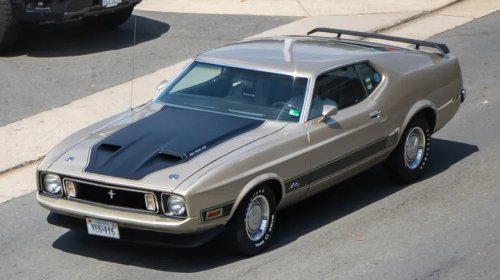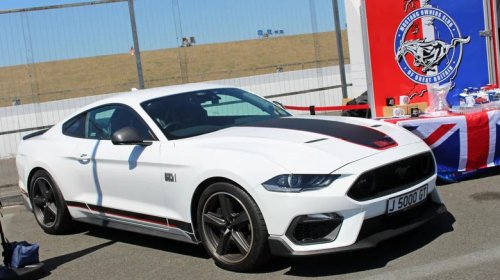

























For nearly 60 years, the Ford Mustang has symbolized power, freedom, and American muscle. It's a car known for delivering performance without breaking the bank. But for car enthusiasts, the real question isn't just how fast a Mustang can go – it’s how long it can last.Built tough and supported by one of the largest aftermarket and OEM parts networks in the automotive world, the Mustang has quietly developed a reputation for surprising reliability. It’s a muscle car, sure – but it’s also a workhorse for those who need it to be. Daily drivers rack up hundreds of thousands of miles on these cars, and with basic maintenance, many keep going strong.So what happens when a Mustang owner never lets go, never stops driving, and never gives up on the original engine? Somewhere out there, one Mustang has crossed a threshold that most owners only dream of.To identify the true highest mileage Mustang, we searched across Facebook groups, Reddit threads, YouTube channels, Mustang forums, and online automotive news archives. From hundreds of claims and stories, we narrowed it down to this one, which, to our knowledge, is the highest-mileage Mustang in the world. The Highest-Mileage Ford Mustang In the World Is A 1966 V8 Hardtop Victor Anderson’s 1966 Mustang hardtop, finished in Wimbledon White with red accent stripes, holds the record for the highest mileage Mustang in the world. It runs on its original C‑code 289‑cubic‑inch V8 engine and factory transmission – no swaps or major rebuilds to the core drivetrain, as far as we know. MotorTrend told the story of the million-mile Mustang in an article from 2017.The story began with Victor’s father, Allan Anderson, who purchased the car used as a dealer trade-in for $900 in 1972, despite its already high mileage. Initially hesitating due to the odometer reading, he later returned to negotiate the deal. The Mustang became his daily driver for sixteen years until he handed it off to Victor in 1988.Screenshot from HOT ROD Network's YouTube Channel Victor continued the tradition. “I drive a lowly 1966 Mustang with a 289 V8. I’ve been driving this classic car daily to work in San Francisco and all around California since 1988. I drive 25,000 miles a year,” he said. At that pace, the car crossed 1,000,000 miles in early 2017 and continued to accumulate mileage thereafter.Under the hood, the Mustang remains remarkably original. The engine block, heads, and cam are all factory-installed components. The bad news is that, while it has been overhauled every 250,000 miles, the engine is currently at .060-inch overbore sizing, which is the maximum bore a small block Ford can take. The transmission and rear axle also remain original, though routine maintenance parts – like the clutch and seals – have been replaced over time.“My father passed in 2006. He knew I still drove and worked on the Mustang he had purchased all those years ago. My father was the one who taught my brother and I how to work on cars. I was always working on my first car, a 1975 AMC Gremlin X,” Victor says.Screenshot from HOT ROD Network's YouTube ChannelMotorTrend paints a vivid scene: the Autolite starter cranks up in a Belmont, California garage, followed by the rumble of “a throaty pair of Cadillac‑spec mufflers.” The car is described as having “just begun its next million miles” despite half a century of daily use.Victor notes that most miles came from highway driving – commuting between Belmont and San Francisco – never abusing the engine or pushing it to its limits. Consistent oil changes, timely tune-ups, and early replacement of wear parts kept the powertrain intact. 289 V8 Engine, Dealer-Installed AC, And 3-Speed Auto Screenshot from HOT ROD Network's YouTube Channel Under the hood sits Ford’s legendary 289-cubic-inch V8 – factory rated at 200 horsepower. This engine came standard with a two-barrel carburetor and a cast iron block that has stood the test of time. The 289 was known for its durability and was a staple in Ford’s lineup during the 1960s.The Anderson Mustang is a C-code model, which indicates a two-barrel carburetor V8. Interestingly, the car has a dealer-installed OEM air conditioning, which has the compressor located on the right-hand side of the engine compartment. There’s also a model-specific cruise control fitted in the 1970s.Screenshot from HOT ROD Network's YouTube Channel The transmission is the original 3-speed automatic – simple, mechanical, and built to last. While clutches and universal joints have been replaced, the transmission casing and gearset remain untouched since the car left the factory. The Mustang retains its original suspension architecture and braking system, though parts like bushings, shocks, and brake pads have seen several replacements over the decades. Still, the core mechanical identity of the car hasn’t changed.One major advantage: parts availability. Thanks to the immense popularity of first-generation Mustangs, replacement parts are cheap and plentiful. This allowed the Andersons to keep the car on the road with ease. Most fixes were performed at home or by local mechanics familiar with vintage Fords. How Reliable Are Ford Mustangs? Ford Mustangs may be known for performance, but they’ve also earned solid marks in reliability – especially first-generation models equipped with legendary small block V8s such as the 1966 and more recent versions like the coveted 302 and 351 Windsor V8s and the Coyote-powered S197 and S550 models.According to RepairPal, modern Ford Mustangs currently show a reliability rating of 3.5 out of 5.0. That’s considered average. The average annual repair cost for a Mustang is currently about $709. Unscheduled repair frequency is about 0.2 times per year, and the probability of a severe issue is around 14%. That may not sound remarkable, but for a performance-focused car, those are good numbers.Across Mustang forums and Reddit, owners consistently report hitting high mileage with few problems. Here are a few real-world examples: “This guy has a 2008 Mustang with 700k km (435,000 miles). It runs; the only issue is that the ball joints and control arms are worn.” – Reddit user “I drove my 4.0 to 357,000 miles before the timing guide went.” – Reddit user “My ‘97 Steeda GT is at 440,000 miles. One of only 2,462 made.” – Reddit userFoxbodyFX via Youtube Most reliability problems arise from heavy abuse – racing, tuning beyond limits, or neglecting maintenance. But stock Mustangs driven sensibly often exceed 200,000 miles with ease. From the pushrod 5.0 in the Fox body to the modular 4.6 and the modern 5.0 Coyote, Ford has produced some long-lasting V8s. The key is consistent care and not beating the engine to death. How Much Does A First-Gen V8 Mustang Cost Today? Via: Ford The 1966 Mustang hardtop, like the Anderson car, is one of the most affordable classic American muscle cars on the market. According to Classic.com, daily-driver condition models range from $20,000 to $40,000 with an average sale price of about $37,000. Well-preserved examples with lower mileage can fetch $50,000 to $70,000 or more. Of course, a million-mile car doesn’t fit standard price models. While the Anderson Mustang wouldn’t win awards at a concours, it could command collector interest because of its record-breaking mileage and documented history.Mecum Modern Coyote-powered Mustangs, such as the 2015–2020 GT models, sell on the used market for about $25,000 to $40,000, depending on mileage and condition. On average, 2015 models sell for $36,000. Of course, Ecoboost four-cylinder variants (albeit also reliable) go for less – often around $25,000.It’s worth noting that Ford continues to build Mustangs with enthusiast value in mind. The V8-powered GT remains one of the few rear-wheel-drive sports cars available around the $50,000 mark, depending on the equipment. That makes it one of the best bang-for-buck performance cars on the road today. And as the Anderson family proved – if you take care of it, it’ll take care of you.Source: Ford, RepairPal, Classic.com.