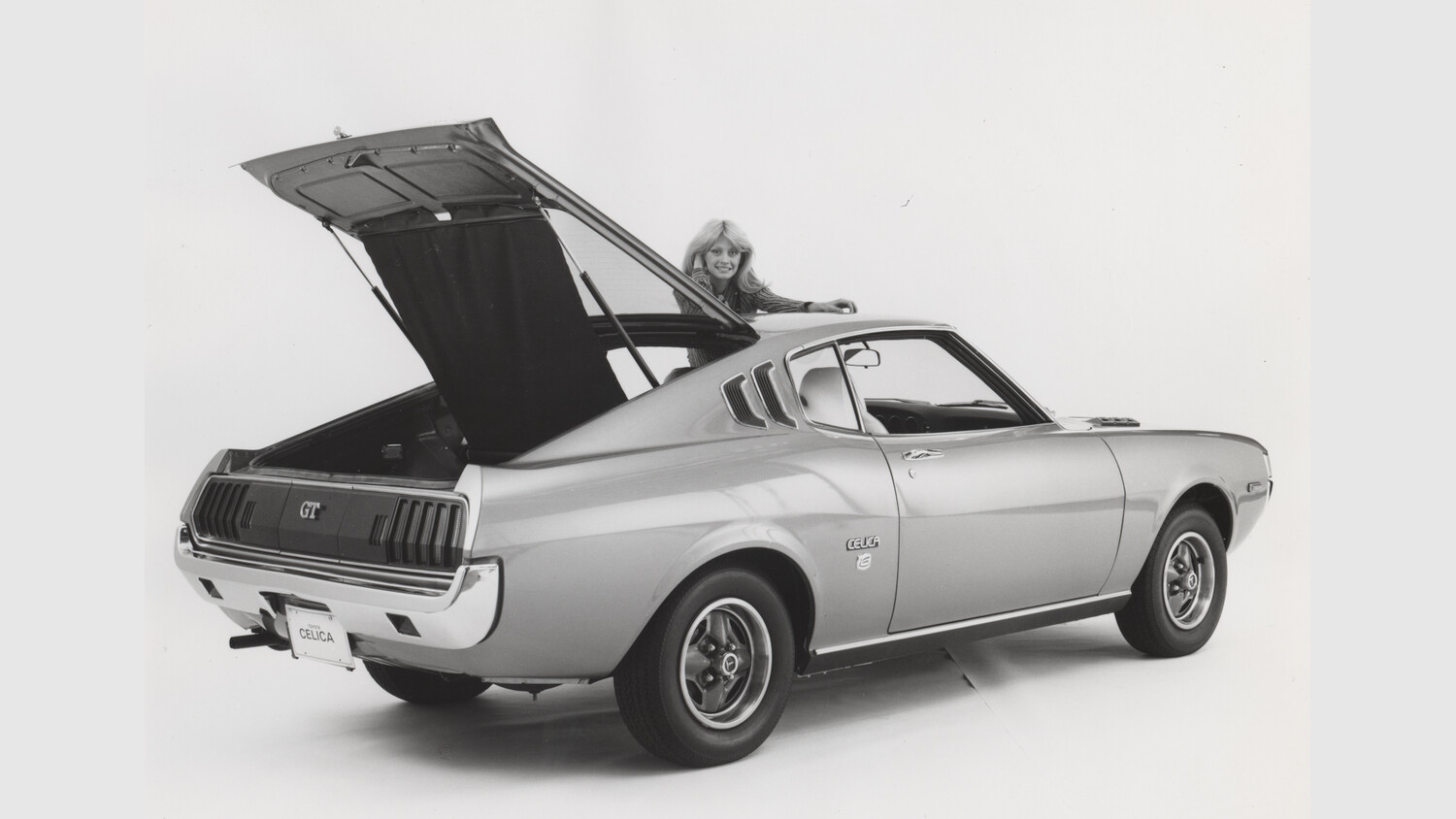
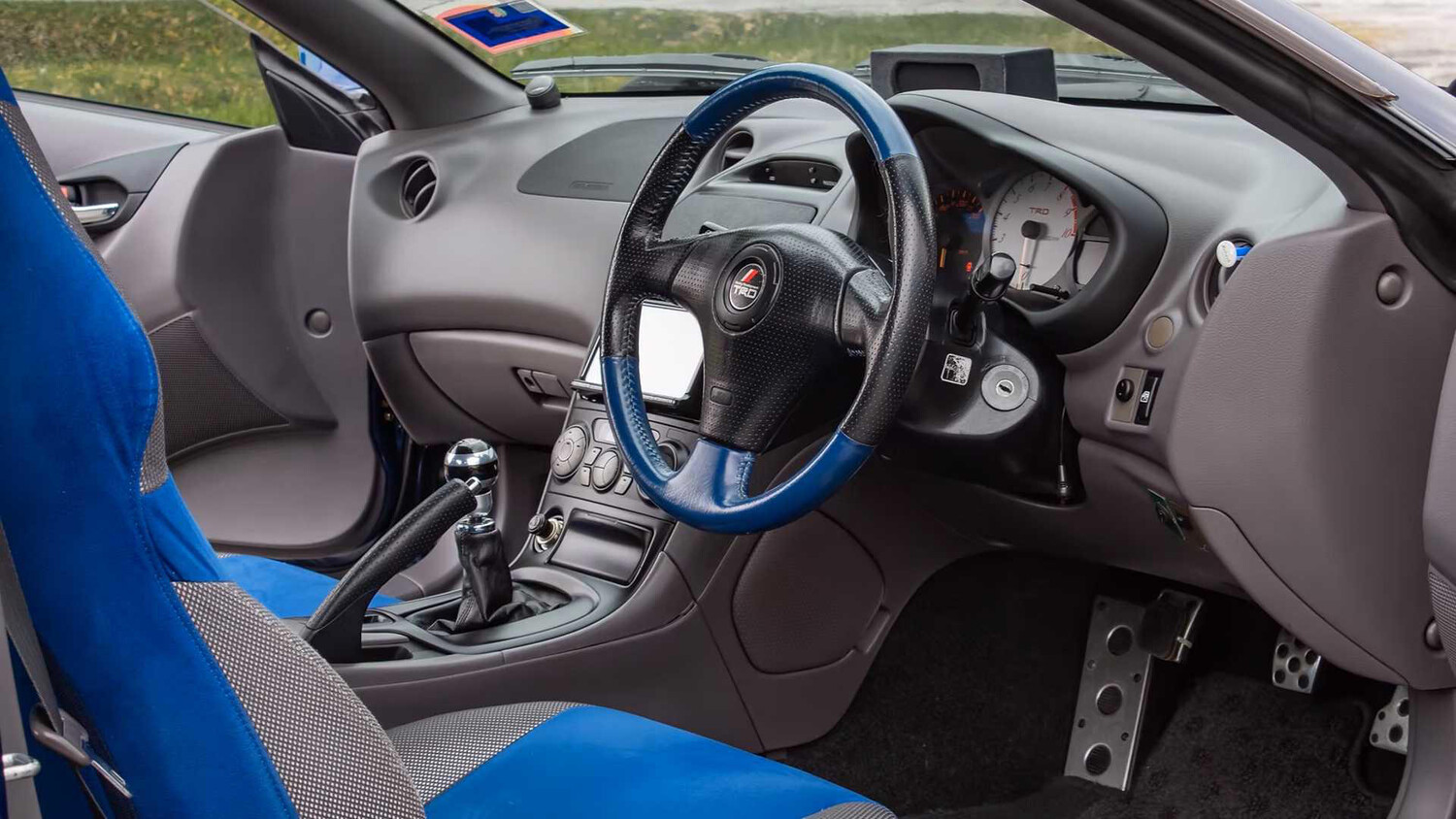
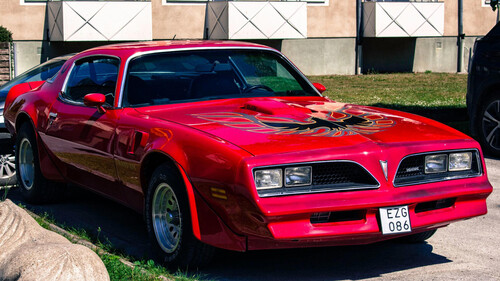
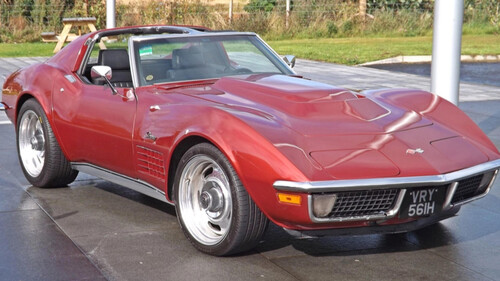
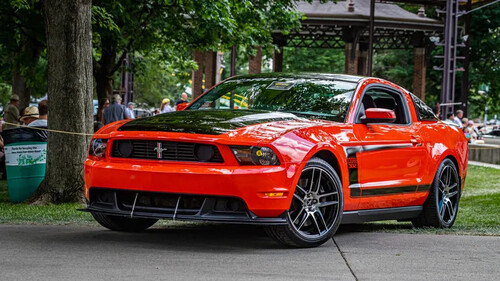
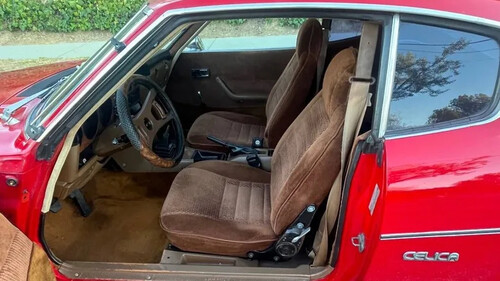
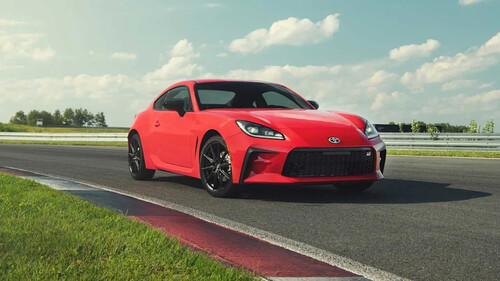
While Toyota tends to get labeled with the buzzwords "reliable" and "dependable" constantly, which don't generally register high in the interests of dedicated gearheads, the Japanese brand has a rich history of developing cars people actually want. Company chairman Akio Toyoda adores motorsport, and the marque has developed cars such as the GR Yaris and Corolla in recent years that borrow technology developed from its racing programs.It also builds the absurdly fun GR86 sports car, while it is also soon set to start building the V8-powered GR GT. The marque is also looking to bring back some of its legendary sporting nameplates, such as the Celica and MR2. The former enjoyed a long production run, though it hasn't graced us with its presence for two decades now. This is a shame, as it was a special little machine. The Celica Was Partially Developed To Take On The Mustang Toyota The Celica nameplate was first seen in 1970, when it was unveiled at that year's Tokyo Motor Show. The new model took the shape of a slick two-door coupe, with the car designed to team good and purposeful looks with a fun driving experience, but at an affordable price. Toyota had the US market firmly in its sights with the new car, with the machine partly designed to take on the Ford Mustang. The blue oval's coupe had proven to be a sales revelation when it launched in 1964, and Toyota felt that there was room for a more efficient alternative. What Makes The Celica Great Sharp styling Engaging and fun handling Versatile enough to work as a daily driver Reliable Affordable Rather than use six or eight-cylinder engines like the Mustang, the first-gen Celica (for North America) was shipped with a 1.9-liter inline-four that produced 108 hp. Later, in 1974, the car was graced with an enlarged and more reliable 2.2-liter unit. The Celica didn't use a bespoke chassis, with Toyota instead starting with the foundations of its Carina sedan, before mating it to the more attractive Celica body. It failed to achieve the same level of success as the Mustang, but it performed well enough for Toyota to greenlight a second generation. Toyota's Affordable Coupe Remained A Constant Until The Mid-2000s Toyota The second-gen car retained its US focus, as it was designed in Toyota's California Calty Research Center. Having initially retained the same 2.2-liter unit found in later versions of the first-gen Celica, it was later graced with a 2.4-liter engine. Toyota continually developed the Celica name over the following decades, even if it slowly deviated from the path of the Mustang. Its American challenger continually got more powerful, while the Celica's total power output remained squarely below the 200-hp mark for the most part, aside from special models like the GT-Four.The final seventh-gen version arrived in 1999 with a flowing and modern design, though sales soon fell through the floor. Having barely shifted 14,000 by 2003, Toyota ultimately pulled the plug on the Celica in the US at the end of 2005. It remained in production for a further year in other markets like the United Kingdom, but was culled for good by the end of 2006. It's likely that the rise of the drop-top sports car in the 1990s and 2000s led to the drop in interest towards coupes like the Celica, considering rivals like the Honda Prelude and the Nissan Silvia also suffered the same fate at a similar time. The Celica Embodied Straightforward Performance Toyota From the outset of the Celica's design phase, Toyota wanted it to be as simple and affordable as possible, while also being good-looking enough to catch the eye of onlookers and excellent to drive. In other words, the exact copybook of the Mustang. While early Celicas suffered a little in the reliability stakes, later ones added this element to the potent cocktail, too. The compact four-pot engines afforded the machine balanced weight distribution, while their rear-wheel drive format meant a bit of tail-out action could also be had.This changed for the fourth-gen variant that arrived in 1985, which incorporated front-wheel drive, as the format had started to rise in popularity during the decade. Building in this arrangement meant cars were less complex and expensive to make, allowing Toyota to keep the MSRP of the offering nice and low. That said, versions like the All-Trac Turbo and the GT-Four model – which was based on the examples that Toyota campaigned in the World Rally Championship – came with four-wheel drive and a turbocharged engine. Whatever format you specced your Celica in, it combined engaging handling and striking looks in a reasonably priced package. It Was Also A Usable Everyday Proposition Jags Classic Another reason the Celica was such a special machine was how usable it was on a daily basis. It came with four seats and a decently large trunk, as well as refinements like a radio and supportive bucket seats. Its reliability and minimal maintenance costs meant owners didn't have to worry about taking it out, no matter the time of year. It was ideal for those who could only afford one car and needed it to be a versatile daily, but also provide a ton of fun when the time came to let their hair down. Used Examples Can Be Picked Up For Not Much Money These Days Toyota Happily, most standard versions of the Celica can still be found on the used market at bargain prices. Limited-run variants like the GT-Four can fetch around $15,000 even with high mileage, while lesser-used cars can easily attract north of $30k. Finding low-mileage examples of any version is tough considering how often they were used as dailies, but this at least opens up the door for a great deal. The most affordable is the sixth-gen, with Classic.com reporting that these cars have an average value of $9,346. A 1995 ST Celica was sold through Hagerty with just 70,000 miles on the clock for $6,750, illustrating how cheap they currently are.The final seventh-gen cars are also cheap, and they'll look after you the best, given they're the most modern examples you can currently buy. Great deals can be had, as evidenced by a white 2000 GT version that managed to sell for only $7,500 through Cars and Bids. This is despite the car coming with 48,400 miles on the odometer, as well as a clean title. If you're after a sharply designed and engaging coupe on a small budget, a cheap Celica is a great way of getting one. The Celica Could Be About To Make A Return Collecting Cars While Toyota eventually released a spiritual successor to the Celica called the GT86, which is now known as the GR86 and is aimed at an even cheaper end of the market than the Celica, the nameplate has remained dormant since the seventh-gen car left us in 2006. This looks set to change soon though, as Toyota has been busy behind the scenes. In early 2025, Toyota vice president of Product and Planning, Cooper Eriksen, told Motortrend that "a car that could go by the name Celica is being worked on." On top of that, images recently surfaced of Toyota testing its new WRC-spec rally car in Portugal.The brand currently uses its Yaris hatchback in the WRC, but the vehicle pictured is clearly more of a coupe. The machine could well be the silhouette of a new GR Celica, especially given this isn't the first time Toyota has unveiled a new sporting model this way. The modern GR Supra was out racing around a year before the production model was shown off, while the upcoming GR GT supercar was seen testing as a GT3-spec racer before the road car broke cover. Given the previous timelines Toyota has worked towards, we could perhaps get confirmation of a return for the mighty Celica in a year's time. Exciting times.