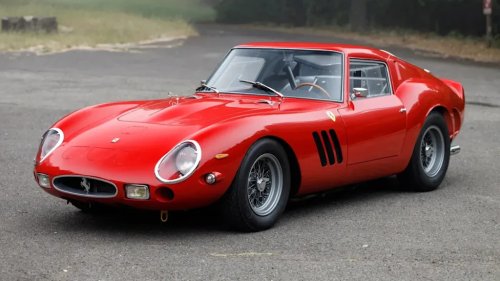
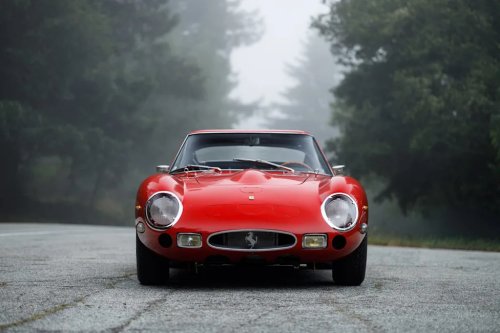
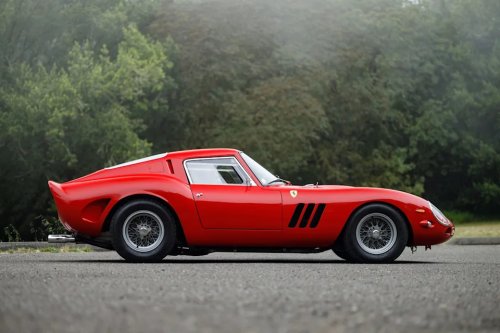
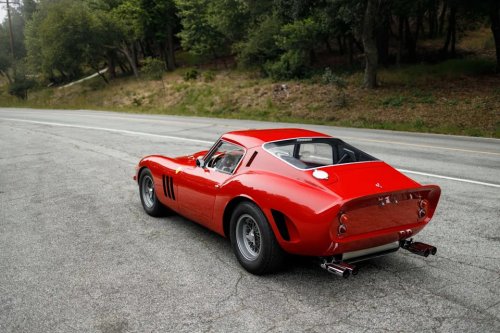
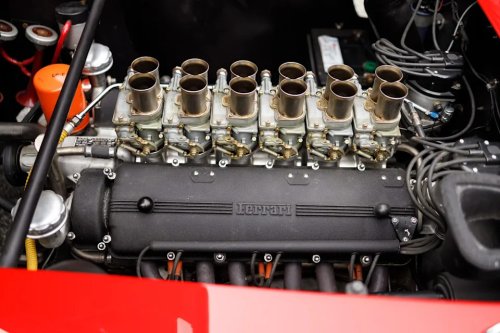
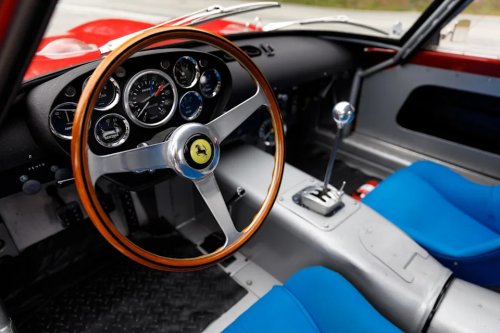
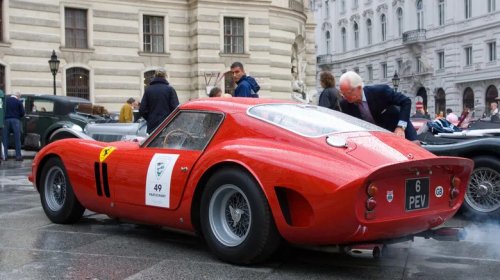
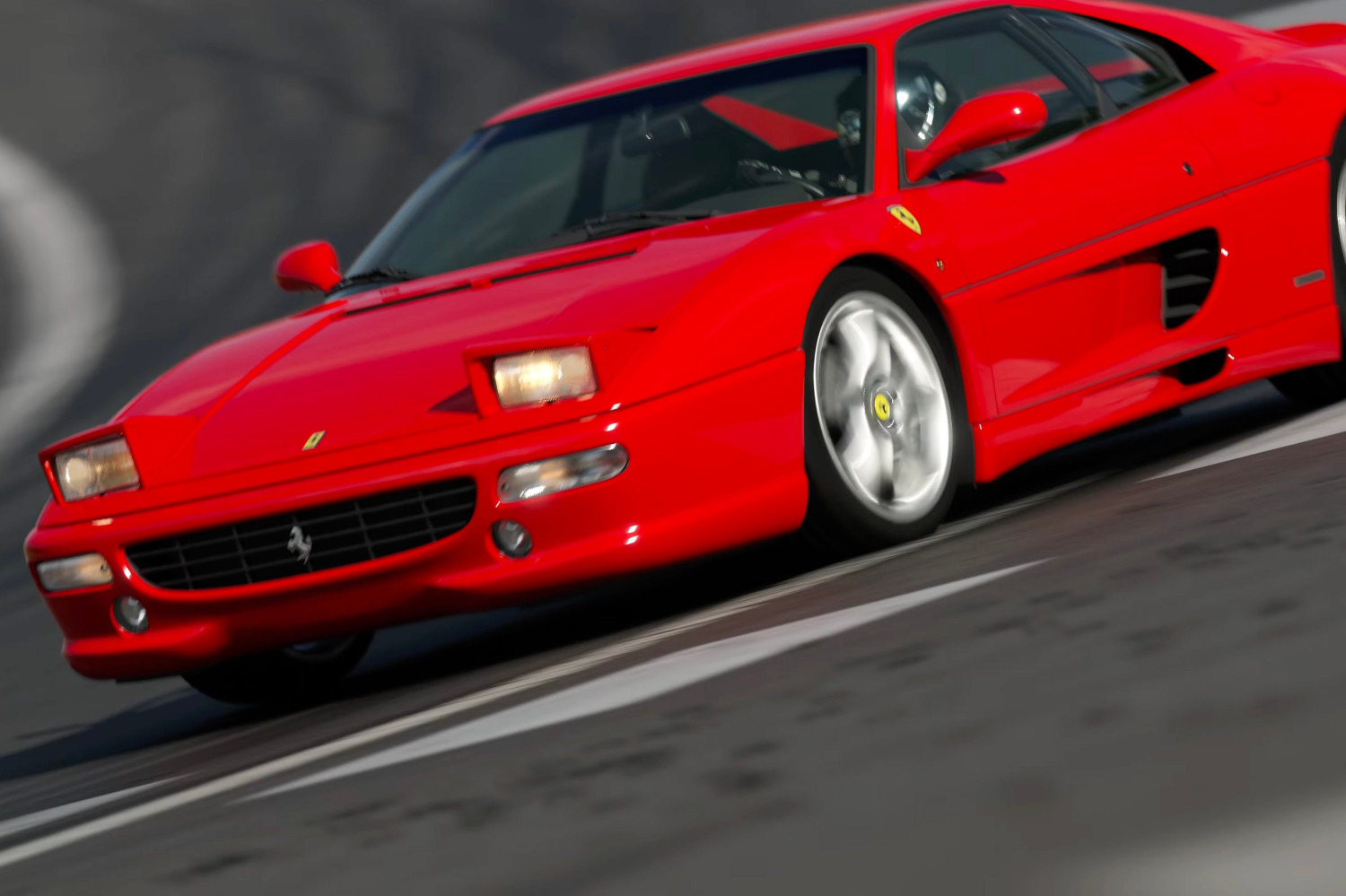
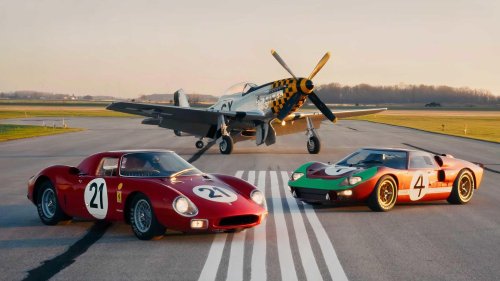
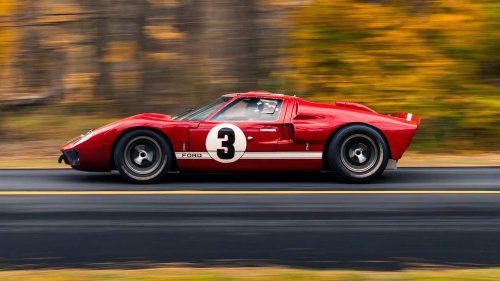
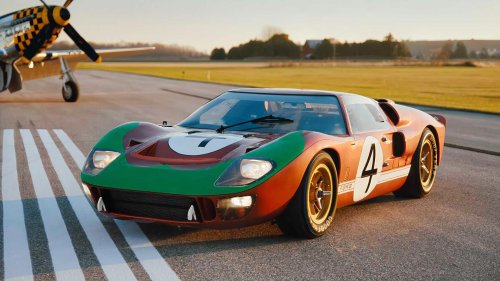
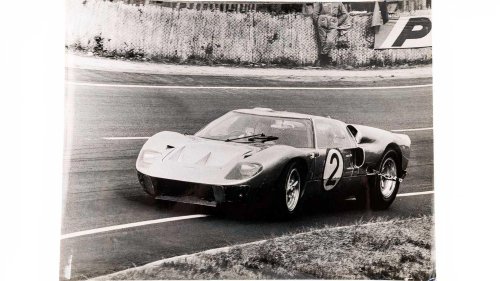
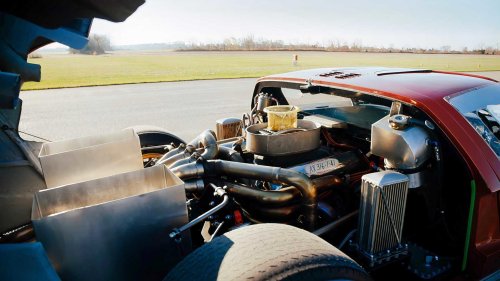
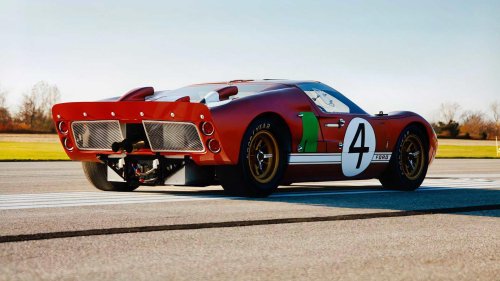
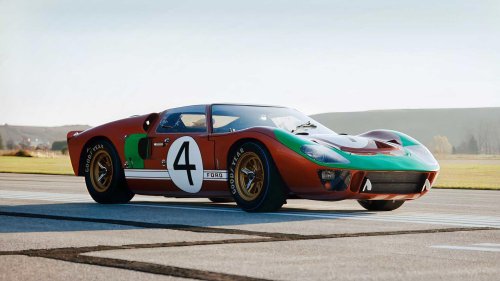
Endurance racing in the early 1960s operated with a very clear hierarchy. European manufacturers dominated not only the results, but also the broader perception of what serious performance engineering looked like. Le Mans, more than any other race, functioned as the ultimate proving ground, where durability, efficiency, stability, and mechanical resilience determined which automakers truly understood how to build supercars capable of surviving twenty-four hours of relentless punishment. Ferrari sat comfortably at the center of that world, stacking victories and reinforcing the idea that elite motorsport excellence belonged firmly to Europe. That's just how it went at the time.American manufacturers, despite their undeniable success in other forms of racing, were rarely viewed through the same lens. Detroit had mastered the art of building powerful, brutally fast cars, yet endurance racing demanded something far more complex than raw output. Sustained high-speed stability, thermal management, aerodynamic efficiency, and mechanical longevity required an entirely different engineering mindset. Many observers assumed that the gap between American power and European endurance expertise would remain largely untouched. Ford, however, had no intention of accepting that narrative, and it remains one of the best stories to come out of that time period. Ferrari’s Dominance Made The Rivalry Personal By the mid-1960s, Ferrari’s dominance at Le Mans had evolved into something approaching inevitability. The brand represented precision engineering, racing heritage, and technical authority, with each victory reinforcing decades of accumulated motorsport credibility. Winning Le Mans did not simply secure a trophy; it validated an entire philosophy of performance engineering under some of the harshest mechanical conditions imaginable.Ford’s initial involvement in this story did not begin as a rivalry. Henry Ford II originally pursued acquisition rather than confrontation, believing Ferrari’s racing pedigree could accelerate Ford’s global performance image almost overnight. Negotiations progressed extensively and reportedly reached a point where the agreement appeared nearly complete. Then Enzo Ferrari walked away, unwilling to surrender control of his racing operations, a decision that fundamentally reshaped the trajectory of motorsport history.Via thesportsman.comThe rejection transformed Ford’s strategy in dramatic fashion. What began as a business transaction evolved into something far more personal, prompting Ford to commit extraordinary engineering resources to defeat Ferrari on its most prestigious stage. Participation was no longer the objective. Ford intended to win, and more importantly, to dismantle the perception that American manufacturers lacked the sophistication required to succeed at the highest levels of international endurance racing. Nothing like a heated American automaker to spice things up. Ford's GT40 Changed Everything In 1966 When the 1966 24 Hours of Le Mans began, the tension surrounding the event extended far beyond typical competitive stakes. Ferrari remained the established benchmark, carrying years of dominance and the weight of European motorsport authority. Ford arrived with a fleet of GT40 Mk II race cars shaped by relentless development cycles and immense corporate expectations. The narrative framing the race felt unavoidable, European dominance facing an American challenger determined to rewrite the script. It was the perfect setup for what was about to happen next.Legends_of_Le_Mans_-_1965_Le_Mans_Winning_250LM_&_1966_Ford_GT40_Mkii_1-41_screenshotBy the end of the race, Ford had delivered one of the most emphatic statements in endurance racing history. The GT40 Mk II secured a commanding sweep of the podium, capturing first, second, and third positions in a result that shattered Ferrari’s dominance. Although the staged photo finish generated controversy, and Bruce McLaren and Chris Amon were officially declared winners under starting-position rules, the broader outcome remained undeniable. Ferrari’s multi-year authority at Le Mans had been decisively broken.Mecum 1966 Le Mans Race Outcome Fun Fact: The GT40 got its name from its height. The car stood just 40 inches tall, which was dramatically lower than most race cars at the time and helped reduce aerodynamic drag on Le Mans’ long straights.The GT40’s immense straight-line speed, combined with its dramatically improved durability, proved devastating over twenty-four punishing hours. Ferrari’s finely balanced machines, masters of precision and efficiency, struggled to keep pace with Ford’s relentless pace once reliability tipped in Ford’s favor. For the first time, American engineering was not simply competitive at Le Mans, it was dominant. How Ford Engineered A Car Built To Win Le Mans Youtube via PROJECT1One of the most exciting aspects of the GT40 story lies in how imperfect the early program actually was, like you might expect. Ford’s initial attempts revealed instability, overheating, and mechanical failures, exposing the unforgiving realities of endurance racing. Le Mans demanded refinement at a level far beyond conventional road-car development, where aerodynamic stability, cooling efficiency, drivetrain resilience, and mechanical longevity became inseparable from outright speed.MecumFord responded through relentless iteration. Engineers reworked aerodynamics to stabilize the car at sustained speeds exceeding 200 MPH along the Mulsanne Straight. Cooling systems were redesigned to manage the extreme thermal loads generated by the larger-displacement V8. Mechanical components underwent reinforcement to withstand endurance stresses. Every failure became actionable data rather than discouragement, driving continuous refinement across the vehicle’s architecture.Youtube via PROJECT1Carroll Shelby’s involvement accelerated this transformation in ways that remain difficult to overstate. Shelby’s racing instincts and pragmatic performance mindset helped align Ford’s engineering capacity with real-world motorsport demands. The larger 7.0-liter V8 delivered extraordinary straight-line performance, yet Shelby’s refinements ensured that power could be deployed consistently without catastrophic reliability setbacks. Stability, durability, and serviceability became equal priorities alongside outright speed, shaping the GT40 Mk II into a machine capable of surviving the brutal demands of endurance competition.Fun Fact: Ken Miles actually crossed the finish line first in 1966, but due to the staged photo finish and starting grid rules, the official win went to Bruce McLaren and Chris Amon. If Miles had been awarded the victory, he would have completed the rare endurance racing triple crown that year. Why Ford's Victory Still Matters Today Ford’s Le Mans triumph represented far more than a race result. It dismantled a deeply ingrained hierarchy within global motorsport culture. European manufacturers had long defined endurance racing excellence, with Ferrari symbolizing precision, heritage, and technical authority. Ford’s victory proved that American manufacturers could not only compete at that level but also dominate against the most respected opponent imaginable.Youtube via PROJECT1Ford’s success at Le Mans extended beyond 1966, reinforcing that the breakthrough represented sustained capability rather than an anomaly. The GT40 evolved into an enduring icon, symbolizing engineering persistence, competitive defiance, and one of the most consequential rivalry victories in motorsport history.Modern Ford GT models continue to reflect the GT40’s influence, drawing direct inspiration from its proportions, aerodynamic philosophy, and endurance-driven performance DNA. Low-slung architecture, stability-focused design, and durability-oriented engineering trace unmistakably back to that original mission.Youtube via PROJECT1 The Ford GT40’s 1966 Le Mans victory remains one of the most consequential moments in motorsport history. Ferrari’s dominance defined an era, and Ford’s response reshaped it through persistence, refinement, and engineering discipline. The GT40 demonstrated that endurance racing excellence was not bound by geography or heritage. Far from it, actually. It could be engineered, validated, and executed through relentless problem-solving. If you haven't watched the Ford v. Ferrari movie with Christian Bale and Matt Damon, now would be a good time to do so.Decades later, that lesson continues to resonate with both casual and hardcore observers of the industry. Performance numbers and dramatic innovation cycles may dominate modern automotive conversations, yet durability, refinement, and disciplined engineering still determine what ultimately endures. The GT40’s triumph was not about spectacle or novelty. It was about building a machine capable of surviving long enough for its advantages to matter, and that's exactly why the story still feels legendary.Sources: Ford Motor Company, Ford Performance, Ford Archives, 24 Heures du Mans Official Records, Automobile Club de l’Ouest (ACO), Shelby American, Hagerty, Mecum



















 +32 others