
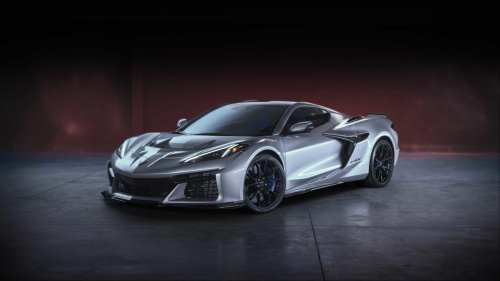
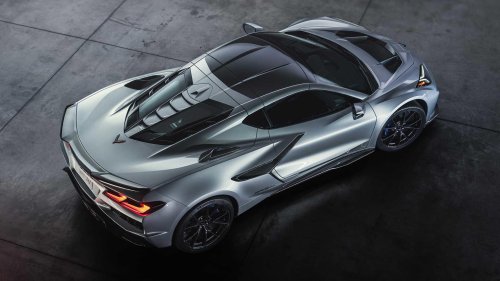

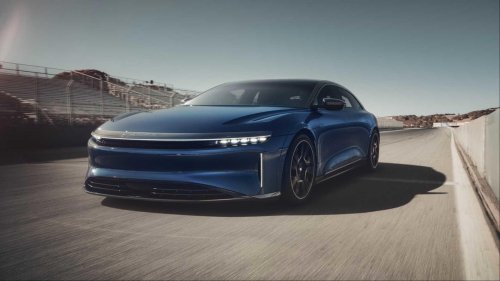



















When Chevrolet unveiled the new Corvette ZR1X, it sent a message loud and clear: American performance engineering had just reached another level. According to GM’s official press release, the ZR1X produces 1,250 hp and rockets from 0 to 60 mph in under 2 seconds. That puts it squarely in the territory once reserved for elite electric supercars and hypercars, many of which carry price tags deep into the seven figures.What makes the ZR1X even more astonishing is its projected base price. Early estimates suggest it will start around $240,000. For reference, that's less than a third of what many legacy automakers charge for cars with similar acceleration and horsepower figures. In effect, Chevrolet has created a new benchmark for performance per dollar. Sub-2-second 0–60 times and four-figure horsepower are no longer the exclusive domain of multimillion-dollar garage queens.The numbers are difficult to argue with, as only a handful of road-legal production cars have achieved a 0–60 time under 2 seconds. Even fewer can do so while delivering over 1,000 hp. Most rely on all-wheel drive, advanced traction control systems, and electric torque delivery to break that barrier. They are typically limited-run, carbon-intensive machines built for collectors, not commuters.So, how much does it really cost to beat the ZR1X at its own game? If you’re looking for a car that can out-accelerate it while matching its all-electric roots and eye-watering performance stats, you’ll need to dig deeper into your wallet than you might expect. For $2.2 Million, The Rimac Nevera Will Outpace The Corvette ZR1X RimacThe Rimac Nevera holds a place in automotive history as one of the fastest electric hypercars ever built. Until recently, it claimed the Nürburgring lap record for electric vehicles, clocking an astonishing 7:05.298. While the record has since been surpassed, the Nevera still dominates in straight-line performance. It holds production car records for the quarter mile and 0–60 mph times, the latter measured at just 1.74 seconds under controlled conditions.The Corvette ZR1X claims a 0–60 mph time of under 2 seconds, matching the Nevera’s performance in a sprint few cars in the world can replicate. The Nevera, however, pairs that acceleration with a verified 8.25-second quarter mile at 167.5 mph, achieved during testing. Chevrolet claims the ZR1X will reach the quarter under 9 seconds, the numbers suggest it will fall just short of the Rimac’s benchmark.Rimac Rimac achieves these numbers through extreme engineering, using a 120 kWh lithium-manganese-nickel battery pack integrated into a carbon monocoque chassis. Each of the four wheels has its own motor, combining to produce 1,914 hp and 1,740 lb-ft of torque. Despite weighing around 5,070 pounds, the torque-vectoring system and low center of gravity give it precise handling and brutal off-the-line traction. Every major system in the car, including the inverter, powertrain control, and even the software, was developed in-house.At $2.2 million, the Rimac Nevera offers unmatched electric performance, but it comes at a price few can justify. The Corvette ZR1X promises similar acceleration and more than 1,200 hp for around $250,000. That kind of performance-per-dollar makes it one of the most disruptive performance cars on the market. If you want to beat it, you’ll need to spend nearly ten times more. The ZR1X might not be as exotic, but it delivers a hypercar-level experience at a fraction of the cost. The C8 Corvette ZR1X Is A True Hypercar Killer Chevrolet The C8 Corvette ZR1X builds on Chevrolet’s track-focused legacy with specs that push it deep into hypercar territory. While the standard C8 ZR1 makes 1,064 hp (which it turns out they lied about) and a 0–60 mph time of 2.3 seconds, the ZR1X raises the bar with a claimed 1,250 hp and a 0–60 mph in under 2 seconds. Though official quarter-mile figures are still pending, early projections suggest the ZR1X could complete it in the high 8-second range, which would put it ahead of several exotic European rivals.In terms of pricing, the base C8 ZR1 starts around $175,195, while the higher-output ZR1X is expected to launch closer to $240,000. Both models offer extreme performance for a fraction of what similarly quick cars cost. For context, the Ferrari SF90 XX Stradale starts at over $840,000 and the Lamborghini Revuelto commands around $600,000. Both deliver four-figure horsepower, yet neither is expected to match the ZR1X’s sub-2-second sprint.Chevrolet The ZR1X doesn’t just offer straight-line speed. Its hybrid powertrain mixes a twin-turbo 5.5-liter V8 from the ZR1 with an upgraded version of the electric motors and battery from the E-Ray. With an all-wheel-drive system allowing for torque vectoring, the Corvette ZR1X offers a combined power output of 1,250 hp. As a result, the ZR1X will rival or outperform hypercars in performance benchmarks without the seven-figure price tag.Even in the electric world, beating the ZR1X requires serious money. The Rimac Nevera and its twin, the Pininfarina Battista, both surpass the ZR1X on paper, but cost upward of $2 million. The ZR1X’s combination of extreme performance and relatively attainable pricing redefines what buyers can expect in the modern supercar space. It proves that American engineering can compete against the giants, all the while staying accessible to more than just collectors. Tesla, Lucid Are The Only Electric Alternatives That Match The Performance Tesla If you're looking for a fully electric alternative that can match or outpace the Corvette ZR1X’s claimed sub-2-second 0–60 mph sprint, only two production cars come close: the Tesla Model S Plaid with Track Pack and the Lucid Air Sapphire. Both are four-door electric sedans, not two-door supercars, but they deliver performance that doesn't cost north of a million dollars. How The Tesla Model S Stacks Up The Tesla Model S Plaid with Track Pack, priced at around $109,990, offers 1,020 hp and up to 1,050 lb-ft of torque. With the Track Pack’s upgraded carbon-ceramic brakes and software enhancements, Tesla claims a top speed of 200 mph and a 0–60 mph time of 1.99 seconds. It weighs about 4,766 pounds and uses a tri-motor all-wheel-drive setup. Despite its sedan layout and mass-market roots, the Track Pack gives it the braking and handling needed to survive on track, not just drag strips. How The Lucid Air Sapphire Stacks Up Lucid The Lucid Air Sapphire, starting around $249,000, is another electric powerhouse. It delivers 1,234 hp and over 1,430 lb-ft of torque from three motors, with torque vectoring and a dedicated performance suspension setup. Lucid claims a 0–60 mph time of 1.89 seconds, which is quicker than what Chevy claims for the ZR1X. The Sapphire weighs roughly 5,336 pounds, but its active dampers and high-performance tires keep it composed even under hard cornering.Both electric sedans offer ZR1X-level acceleration, but they approach performance differently. The Tesla focuses on brute force and accessibility, while the Lucid emphasizes high-speed stability and premium engineering. Neither delivers the mid-engine balance, two-door layout, or supercar presence of the ZR1X. However, to access this level of EV performance, you still need to spend well into six figures.