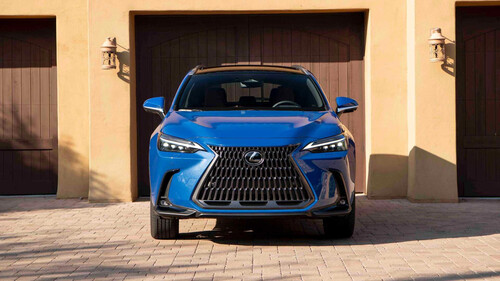
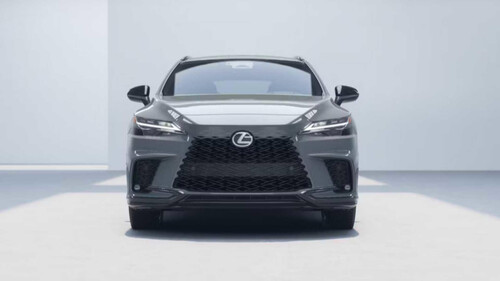
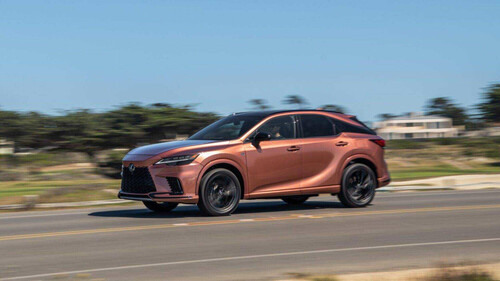
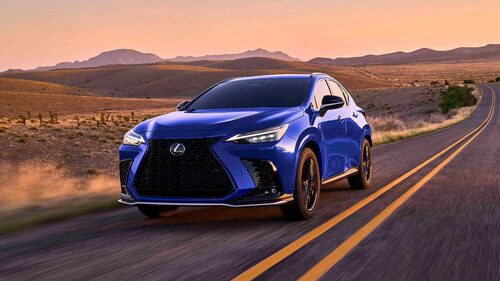
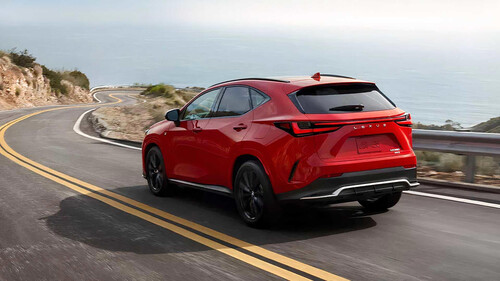
Do Plug-In Hybrid Owners Actually Plug In?Do Plug-In Hybrid Owners Actually Plug In?Plug-in hybrid cars don't actually save much fuel in the real world because of one major flaw: the driver. That, at least, has been the prevailing theory based on mostly anecdotal evidence, namely, that PHEV owners don't ever see the benefits of their purchase because they actually don't plug their cars in. But is it true?According to a peer-reviewed white paper published by SAE International and based on a study by Karim Hamza and Ken Laberteaux of Toyota Research Institute North America (TRINA), it might be time to re-think those old assumptions.Origin StoryBut first, let's look back to where this alleged myth started. AdvertisementAdvertisementIt has been touted as the major flaw of PHEVs, often by proponents of fully electric vehicles, seeing PHEVs as a half-measure towards a more sustainable, fully-electric future. Critics, lawmakers, and EV purists have often dismissed them as compliance cars or tax-loophole vehicles, arguing that buyers simply treat them as standard hybrids, carrying around the dead weight of a heavy battery pack while never bothering to plug them in.This was backed up earlier this year when GM CEO Mary Barra, speaking at the Automotive Press Association conference in Detroit commented: "What we also know today with plug-in hybrids is that most people don't plug them in," she said. "So that's why we're trying to be very thoughtful about what we do from a hybrid and a plug-in hybrid perspective." The Data Doesn't LieTRINA researchers Karim Hamza and Ken Laberteaux set out to discover how often drivers actually utilize their vehicle's plug. Analyzing anonymized data from a sample size of more than 6,000 PHEVs across the United States and Canada, specifically focusing on the Toyota RAV4 PHEV (formerly RAV4 Prime) and its premium sibling, the Lexus NX 450h+, the team found that the vast majority of owners are in fact maximizing their electric capabilities.The study revealed that Toyota PHEV owners plug in their vehicles an average of seven out of every 10 driving days. Lexus owners are even more fastidious, hooking up to the grid between eight and nine times per 10 driving days.AdvertisementAdvertisementWhat about the cohort that never plugs in? They represent a tiny minority. The data shows that only 9% of Toyota drivers and a microscopic 4% of Lexus drivers in the sample rarely plug in their vehicles.The other possibility, of course, is that Toyota drivers don't behave like other PHEV owners.the big lie about plug in hybrids has just been bustedThe Economics and Logistics of the OutliersNaturally, the study observed regional variations in charging habits, which TRINA attributes to local energy economics. With the U.S. average cost of home electricity sitting around 18 cents per kilowatt-hour, covering a typical 40-mile daily commute on electrons is significantly cheaper than paying for gasoline. However, in a tiny handful of regions, hyper-expensive electricity rates or cheap local fuel mean the financial pendulum swings away from plugging in.TRINA is currently investigating two core hypotheses regarding the small percentage of owners who rarely charge. First are the infrastructure barriers. Drivers who lack access to convenient home charging, such as apartment dwellers or those living in multi-unit housing without accessible outdoor outlets. Second, economic disincentive. Those living in the small sliver of North America where high electric rates make running on gasoline more cost-effective than using electricity.Having Your Cake and Eating It, TooThe vehicles examined in the TRINA study (model years 2021–2024) boast highly usable EPA-estimated electric ranges (42 miles for the RAV4 and 37 miles for the Lexus NX) and crucially, they feature powerful enough electric motors to handle highway speeds and hard acceleration without needing to wake up the internal combustion engine.AdvertisementAdvertisementLooking forward into the 2026 model year, Toyota and Lexus have expanded their PHEV lineup to five distinct vehicles. Manufacturer-estimated electric ranges now span from a respectable 33 miles in the three-row Lexus TX 550h+ up to a robust 54 miles for the 2026 Toyota RAV4 PHEV SE.For the average commuter, that means daily driving can be entirely gas-free, while the gasoline engine remains ready to provide infinite range for weekend road trips without a shred of public charging anxiety.The TRINA study shows what pragmatists have suspected all along: given a vehicle with a meaningful, usable electric range and affordable operating costs, consumers will inherently do the math and plug it in. The "lazy PHEV owner" myth is officially busted.