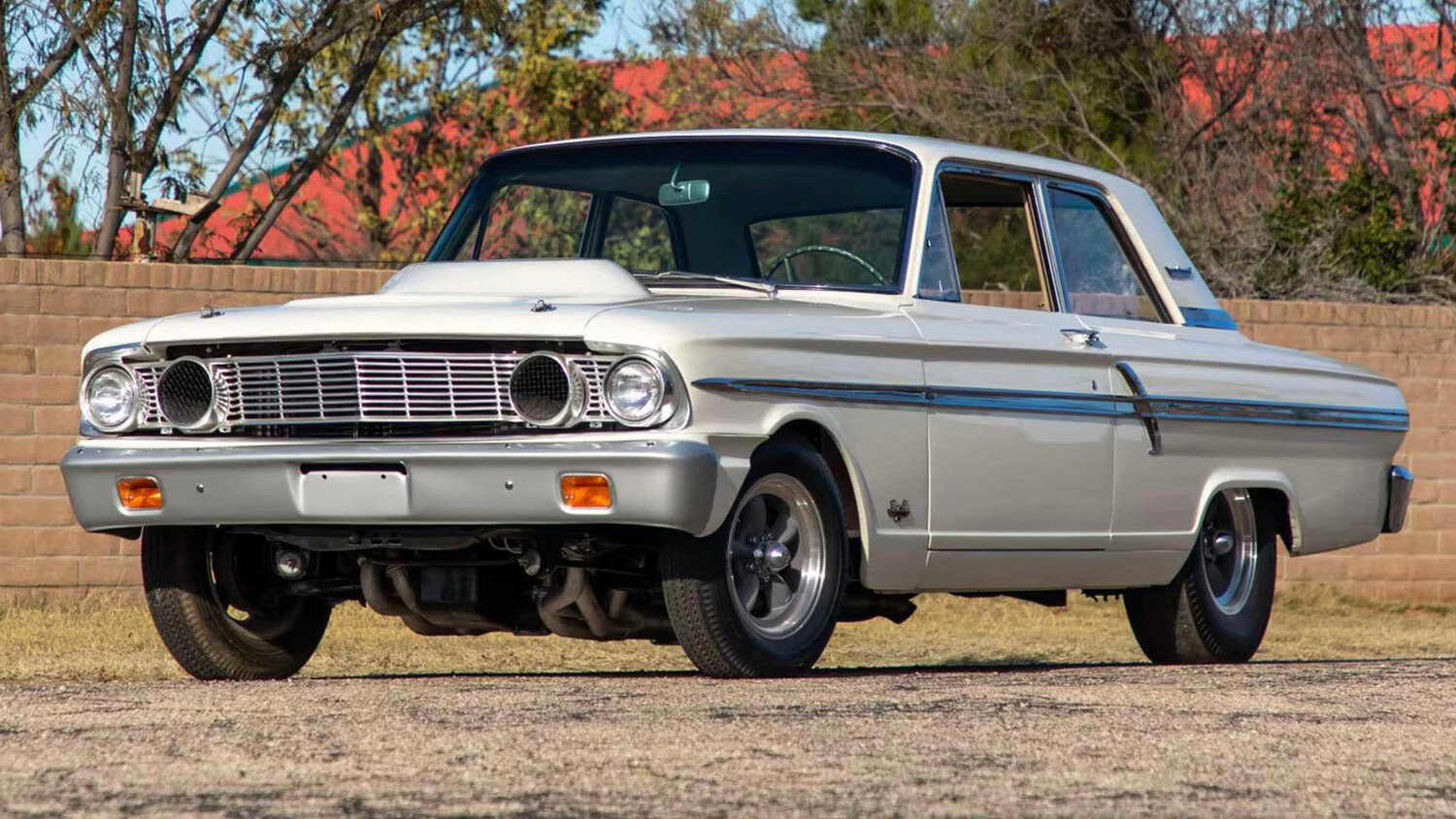
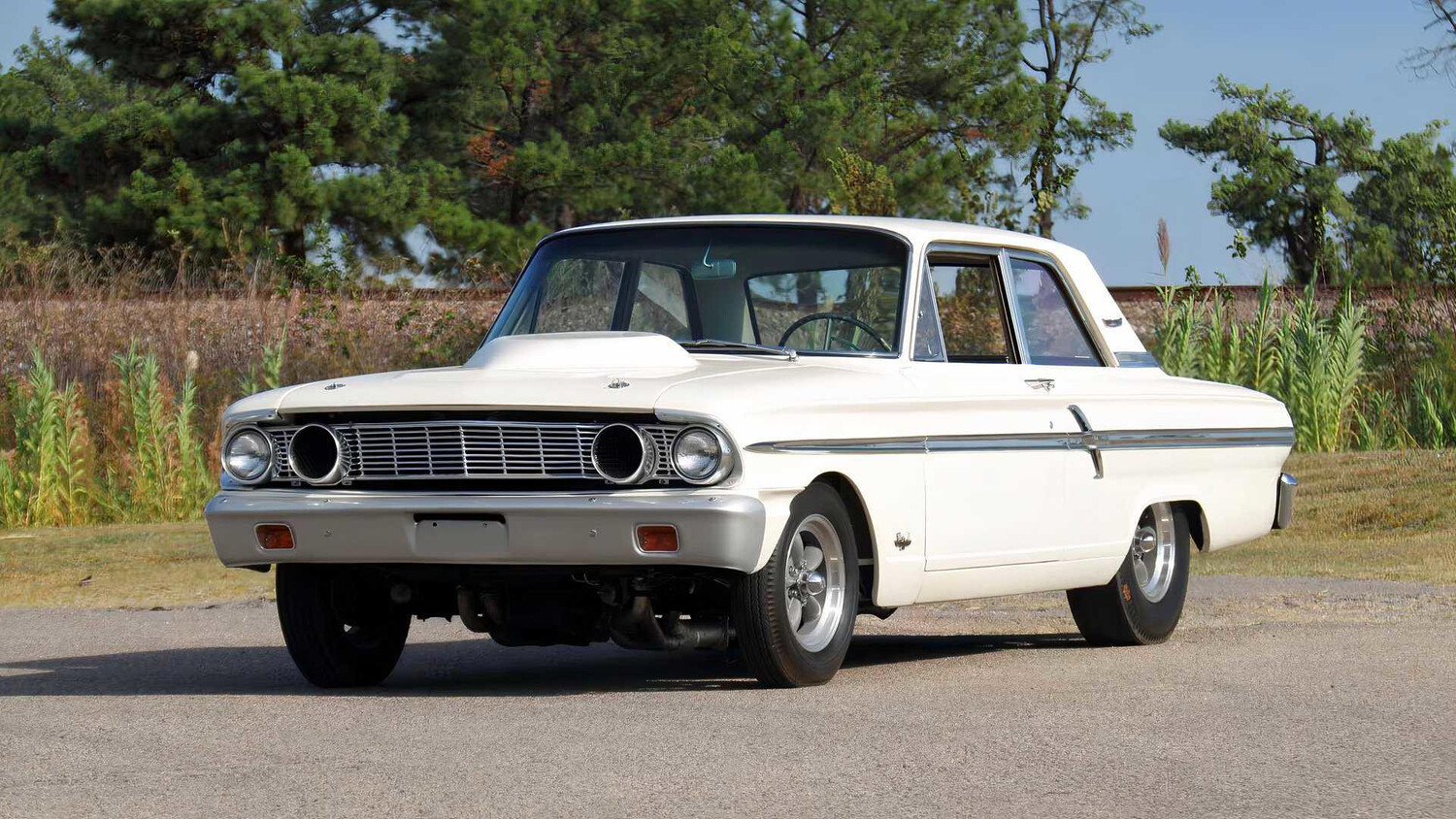
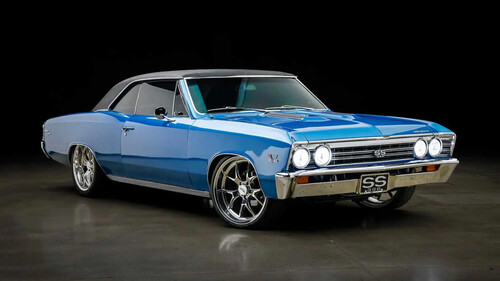
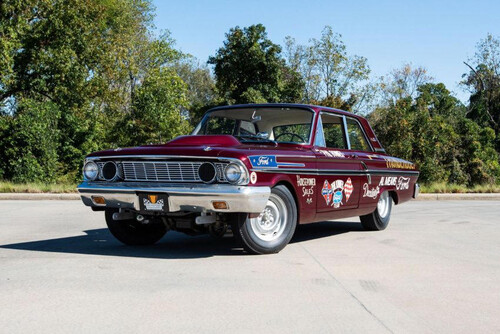
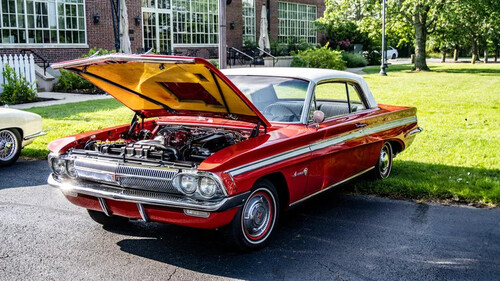
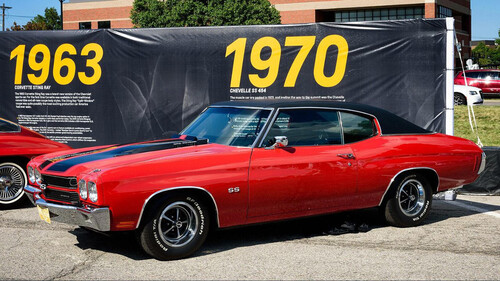
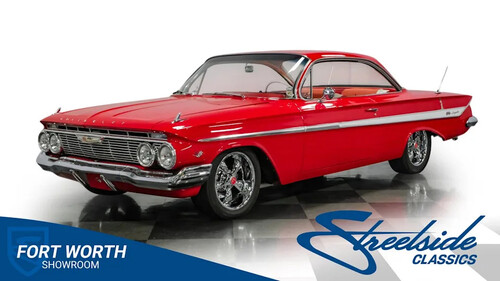
In American automotive history, few names carry as much weight as the big block Chevy. Known affectionately as the "Rat motor," this legendary V8 family defined an entire generation of street dominance and drag strip glory. To this day, many enthusiasts perceive the big-block Chevy (BBC) as the ultimate muscle car engine.Whether found in a sleek Chevelle or a wicked Nova, big-block Chevy engines are cultural icons of raw muscle. Cars powered by them remain the gold standard for many collectors, symbolizing a time when roar and torque ruled the open road without compromise. But there was a Ford that could leave any BBC-powered muscle car in its dust that was built right as the horsepower wars started. The Heavy Hitters: Chevrolet’s Big-Block Dynasty Mecum The story of Chevrolet’s performance dominance is inseparable from the evolution of its big-block engines. The journey began with the 1961 Chevy Impala powered by a 409 cubic-inch V8—the famous W-series big-block engine. While this power plant was an earlier design, it became a cultural phenomenon, immortalized in song and feared at every stoplight. The 409 delivered massive torque and helped transition Chevrolet from a brand focused on family cruisers to a legitimate contender in the horsepower wars of the sixties. It proved that a full-size car could be a high-performance machine if it had the right engine under the hood.As the decade progressed, Chevrolet introduced the Mark IV engine. This is the big-block Chevy everyone thinks of, often called "the porcupine" due to its unique valve angles, or "the rat" because it was bigger than the small-block Chevy that was known as "the mouse." This platform is host to legendary variants like the 396 and 427, which found their way into everything from Corvettes to Camaros. The BBC was a technical masterpiece for its time, offering high-revving capabilities combined with brutal low-end pull.Mecum The absolute pinnacle of GM street performance in this era arrived in 1970 with the Chevelle SS 454 LS6. Rated at a staggering 450 horsepower, the LS6 had the highest official power output for any muscle car engine of the time. It featured high-compression pistons and a solid-lifter camshaft, helping the Chevelle achieve violent acceleration. Even today, the1970 LS6 Chevelle is viewed as the benchmark for muscle car performance. Its presence at a red light is enough to make most competitors reconsider their options, solidifying the Chevy big-block as a symbol of unyielding American power. The 1964 Ford Fairlane Thunderbolt: The Factory Assassin MecumFord had already built a monster that would put the LS6 Chevelle in its place in the first half of the 1960s. The 1964 Ford Fairlane Thunderbolt was never intended for a casual Sunday drive—it was a factory-built race car designed specifically for NHRA Super Stock competition. Ford only produced 100 of these drag racers to satisfy racing regulations, making it an incredibly rare and purposeful piece of automotive history. By taking the modest, mid-size Fairlane chassis and stuffing it with a 427 cubic-inch V8, Ford created a factory experimental legend that changed the face of professional drag racing.Mecum The Thunderbolt’s racing pedigree is exceptional, most notably securing the 1964 NHRA Top Stock Eliminator title. Its capability on the track was nearly unbelievable for the time. In an era when most fast cars were struggling to break into the thirteen-second range, the Thunderbolt was consistently clocking standing quarter-mile times between 11.6 and 12.0 seconds. It achieved these numbers using the primitive tire technology of the day, proving that its engineering was years ahead of its rivals.Mecum When comparing these performance figures to Chevrolet’s finest big-block street cars, the gap is significant. A 1964 Impala 409 typically required about 15 seconds to finish a quarter-mile run due to its immense weight. Even the mighty 1970 Chevelle SS 454 LS6, which arrived six years after the Thunderbolt, usually posted quarter-mile times in the 13.1 to 13.8-second range on factory tires. While the big-block Chevys were formidable street machines, the Thunderbolt operated in a completely different tier of performance, crossing the finish line nearly two full seconds ahead of the fastest showroom-spec Bowties of the era. 1964 Ford Fairlane Thunderbolt Racing Achievements 1964 NHRA Super Stock Eliminator Champion: The Thunderbolt secured its place in history by winning the prestigious Super Stock title during its debut year. Elite Quarter-Mile Performance: These factory-built racers were capable of mid-11-second passes, an extraordinary feat for a production-based car in the early sixties. Manufacturers' Cup Victory: The Thunderbolt’s consistent wins across the country were instrumental in Ford capturing the 1964 NHRA Manufacturers' Cup. Forced Reclassification: Its overwhelming superiority on the track led the NHRA to reclassify the car mid-season in an attempt to maintain competitive balance. Legendary Driver Roster: The car was piloted to victory by drag racing icons such as Gas Ronda, Butch Leal, and Mickey Thompson. Turn-Key Dominance: It proved that a factory-engineered package could deliver elite, record-breaking results with almost no additional modifications required by the owner. Engineered For The Drag Strip: Power And Weight Reduction MecumThe incredible performance of the Thunderbolt was no accident; it was the result of a radical engineering philosophy that prioritized speed above all else. At the heart of this machine was the 427 "High-Riser" V8, featuring a dual-quad induction system comprised of two massive Holley four-barrel carburetors sitting atop a specialized intake manifold. While conservatively rated at 425 horsepower to appease racing officials, the real-world output was widely known to exceed 500 to 600 horsepower.Mecum To ensure the engine received a constant supply of cool, dense air, Ford engineers implemented several airflow innovations. They removed the inner high-beam headlights and replaced them with mesh-covered intakes. These were connected to the carburetors by large, flexible snake hoses, creating a functional ram-air system that gave the car a distinct, aggressive look. This direct path of cold air was crucial for maintaining peak power during high-speed runs down the drag strip.Mecum Weight management was the final piece of the puzzle. Ford knew that even the best engine could be held back by a heavy chassis. To combat this, engineers replaced the steel hood, front fenders, and trunk lid with lightweight fiberglass counterparts. The side windows were swapped for thin Plexiglass, and the interior was stripped of every unnecessary luxury, including the radio, heater, and sound deadening. The Thunderbolt weighs roughly 3,200 pounds, creating a power-to-weight ratio that allows it to outrun almost anything on the road. The Collector’s Ledger: Market Value Of The Fairlane Thunderbolt Mecum In the modern collectors market, the value of these machines reflects their status as automotive legends. The 1970 LS6 Chevelle remains a high-volume icon compared to the Ford, but its prices are nonetheless impressive. Hagerty says that a 1970 Chevelle SS 454 LS6 hardtop in good condition currently carries an average value of approximately $102,000. However, the true outliers are the ultra-rare soft tops. Because so few were produced, an LS6 convertible in similar condition commands a massive premium, often selling for as much as $234,000 or more.The Thunderbolt occupies a different niche, relying on extreme scarcity rather than mass-market fame. With only 100 ever produced, it is a holy grail for Ford collectors. A 1964 Ford Fairlane Thunderbolt in good condition fetches an average of $201,000, while a pristine concours example can fetch $288,000 or better.The market for original Thunderbolts is remarkably stable due to their rarity, with the highest recorded sale reaching $253,000 and the lowest recently holding firm at $225,500. Unlike the Chevelle, which has a wide range of prices based on specific trims, every authentic Thunderbolt is a top-tier investment.Mecum When comparing these two as investments, it comes down to a choice between popularity and rarity. The Chevelle is the more recognizable symbol of the muscle car era, meaning it is easier to sell but also more common at major auctions. The Thunderbolt, however, is a piece of specialized racing history. While it may not have the same household recognition as the Chevelle, its 1-of-100 status ensures it will always be a centerpiece of the world's finest car collections. Both these muscle cars have proven to be blue-chip assets that continue to outrun inflation just as easily as they outrun their competition.