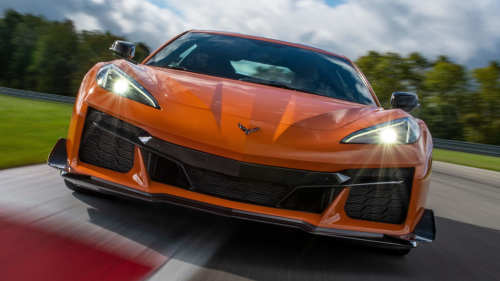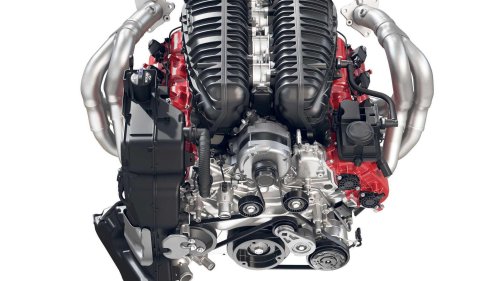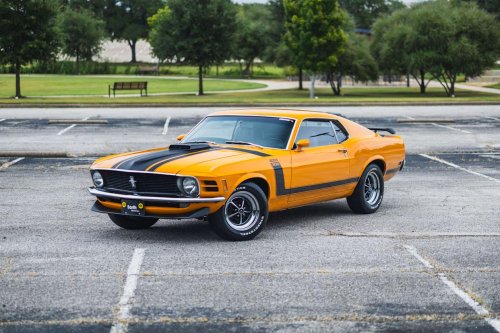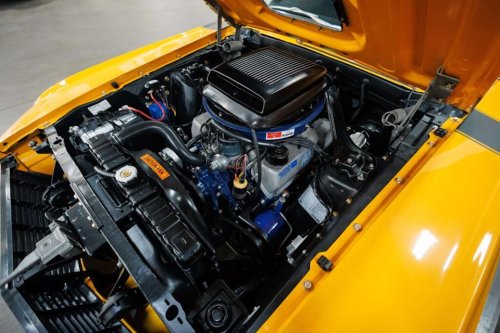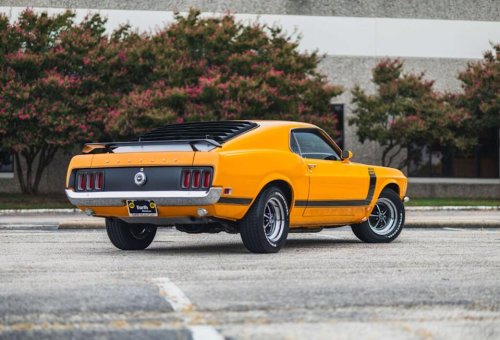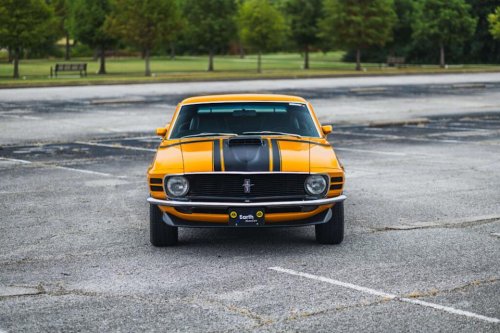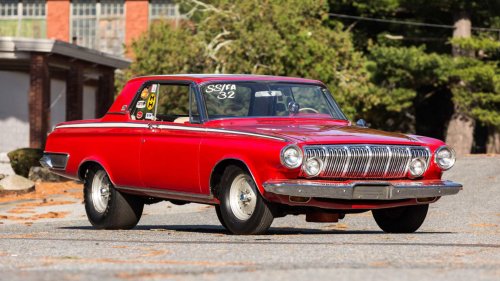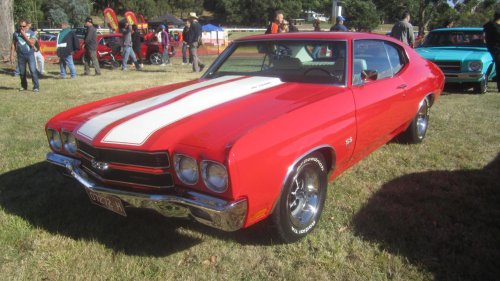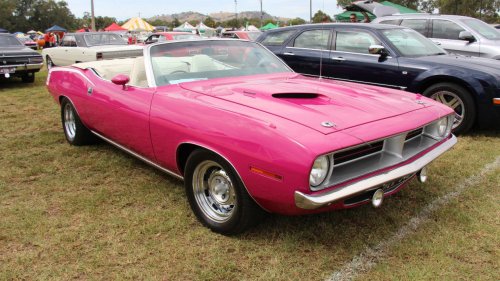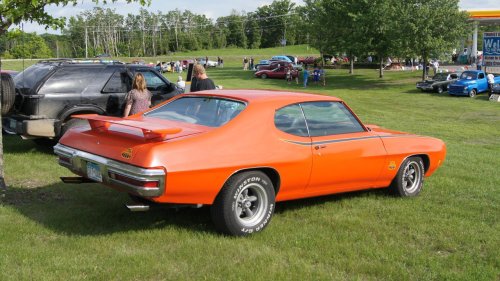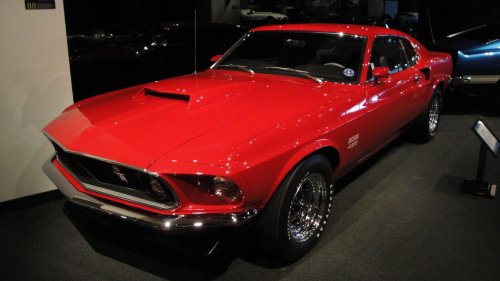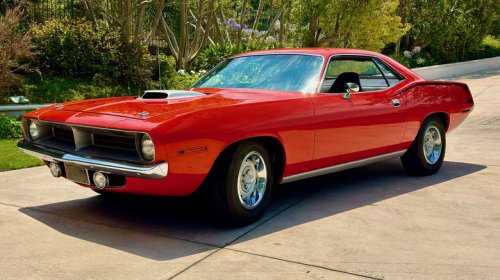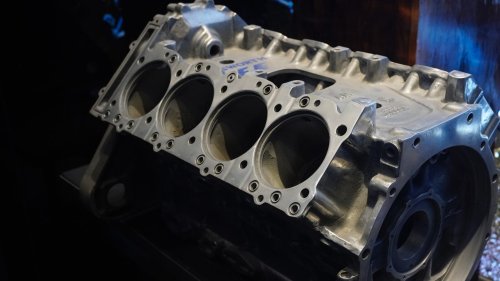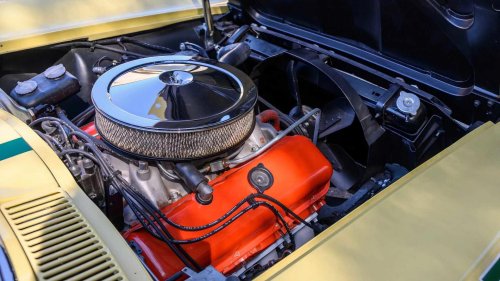
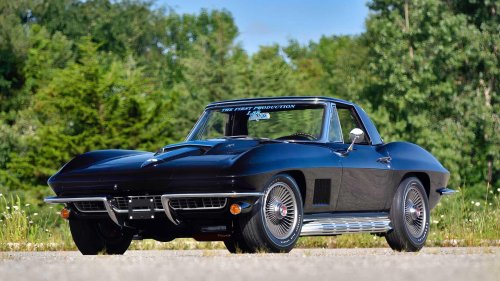
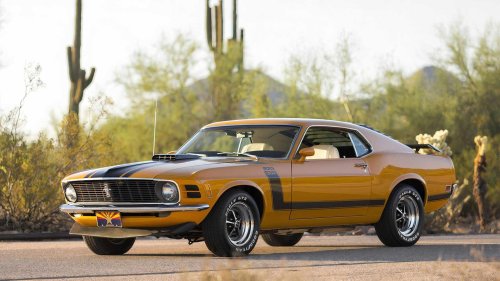
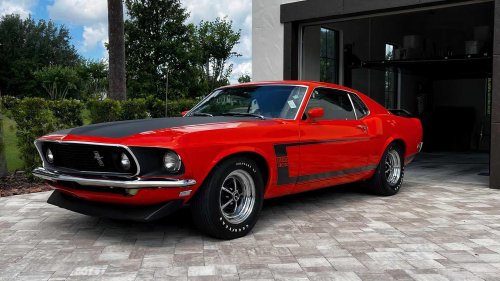
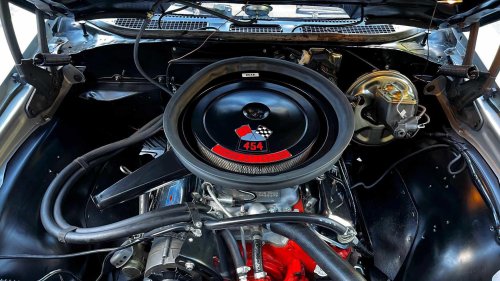
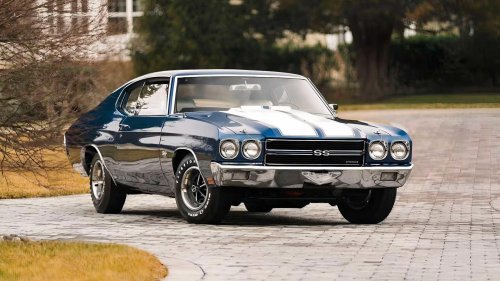
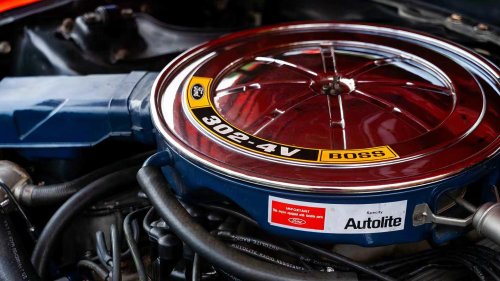

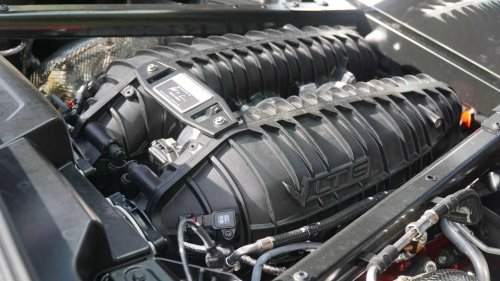
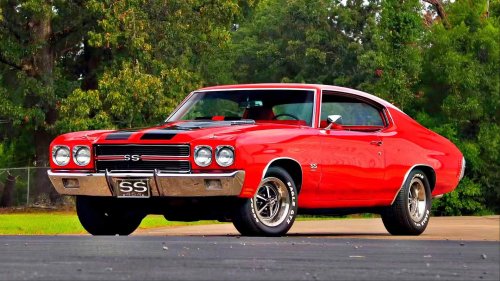



















One horsepower for every cubic inch of displacement. In 1970, at the height of the golden era of muscle cars and horsepower wars in America, that number represented the outer limit of what a production American V8 could achieve. It was the engineering benchmark that separated serious performance machinery from the merely fast, a threshold that insurance actuaries tracked, rival engineers obsessed over, and factory press releases carefully avoided confirming. A handful of engines reached it that year. Several exceeded it, though their window stickers would never admit it. Understanding which engines crossed the line, and how, tells you almost everything about what made 1970 the peak of the American muscle car era. Why One Horsepower Per Cubic Inch Was the Benchmark That Defined an Era Bring a Trailer The figure had mythological weight long before 1970. Ferrari proved a road engine could reach 1 hp/ci in the 1950s, and Chrysler's 300C touched the threshold on the street in 1957. For the better part of a decade it remained a European or racing benchmark, something American production engines chased but rarely caught. By the late 1960s that had changed, and with it came a problem Detroit had not fully anticipated: insurance companies began using factory power ratings as the primary basis for premium calculations, and anything approaching that ratio in a car aimed at young buyers triggered rate increases that could make ownership genuinely unaffordable.The response from manufacturers was pragmatic. Power figures were managed downward. Advertised output was measured using a favourable gross test standard, with no accessories, no exhaust back pressure, and ignition timing optimised for maximum output, but the published numbers were often further softened to keep insurance exposure in check. The result was a generation of production engines whose official ratings and actual capabilities were frequently far apart. The pattern of deliberate underrating was industry-wide and well understood at the time by anyone paying close attention. Reading a factory horsepower figure in 1970 as a literal statement of output was, in many cases, a mistake. The Engines That Hit 1 HP Per Cubic Inch in 1970 and What They Actually Made MecumSeveral 1970 production engines officially reached or closely approached 1 hp/ci on the factory specification sheet. Others exceeded it comfortably when measured independently, regardless of what the brochure claimed. The table below covers the key engines, their official figures, and the estimated real-world output supported by period dyno testing and independent analysis.The L88 427 is arguably the most extreme case in the table. Chevrolet privately acknowledged the engine produced well over 500 hp, yet the official rating was held at 430 hp to discourage casual buyers and sidestep racing eligibility implications. Its final production year was 1969, replaced by the 454 in 1970, but it belongs in any honest accounting of the era.The 426 Hemi's official 425 hp from 426 ci placed it fractionally below 1 hp/ci on paper, but independent dyno tests consistently placed real output well above that. Then there's the LS6 454, which was rated at 450 hp from 454 ci sat at 0.99:1 officially – again a figure that understated actual capability. All three crossed 1 hp/ci in practice, regardless of what their badges claimed, but none of them achieved it from the smallest displacement in the group. The Ford Boss 302: The Smallest V8 To Hit The Mark, And How It Got There Hagerty From 302 cubic inches, hitting 1 hp/ci requires a fundamentally different approach than simply building a large engine. There is no displacement to fall back on. Every unit of output has to be earned through breathing efficiency, compression, and engine speed, and the Ford Mustang Boss 302 was engineered with exactly that logic. Built to qualify the Mustang for SCCA Trans-Am racing, where regulations capped displacement at 305 cubic inches, it used cylinder heads developed for the upcoming 351 Cleveland, grafted onto a fortified Windsor 302 small-block. The Cleveland heads brought substantially larger ports and superior high-rpm airflow than anything the standard Windsor could offer, producing a hybrid with small-block dimensions and big-block breathing.The rest of the specification followed the same logic. A 10.5:1 compression ratio, solid-lifter valvetrain, 780-cfm Holley four-barrel, forged steel crankshaft, four-bolt main bearings, and connecting rods rated for 8,000 rpm were not the components of a casual street engine. Ford's official rating of 290 hp gross was, by all available evidence, a significant understatement. Period dyno figures and independent road tests placed actual output consistently around 340 hp, with some estimates reaching 360 hp. From 302 cubic inches, 340 hp represents 1.13 hp/ci. At 360 hp the ratio reaches 1.19. No other production V8 of comparable or smaller displacement came close to those numbers in 1970. The Trans Am Connection Via Mecum Auctions The Boss 302's existence was dictated entirely by racing homologation. SCCA Trans-Am rules required that competing engines be available in production road cars built in sufficient volume, with displacement staying within 305 cubic inches. Chevrolet built its DZ 302 for the Camaro Z/28 for identical reasons, and both engines carried the same 290 hp official rating, a coincidence that has fuelled decades of speculation about whether the figure was coordinated rather than independently calculated. Ford's Boss 302 Mustangs claimed the 1970 Trans Am manufacturers' championship with essentially the production engine specification, a result that reinforced the gap between the factory rating and the engine's genuine capability. The LS6 454: The Most Powerful Engine To Reach The Threshold In 1970 via Bring A TrailerWhere the Boss 302 achieved its ratio through engineering intensity in a small package, the LS6 454 arrived at the same threshold through displacement and an exceptional state of tune. The LS6 was the highest-output version of Chevrolet's new 454-cubic-inch big-block, available in the 1970 Chevelle SS and listed briefly for the Corvette. With solid lifters, an 11.25:1 compression ratio, rectangular-port heads, and a 780-cfm Holley four-barrel, it was built to a standard that observers recognised as beyond what the factory would publicly admit. The official 450 hp from 454 ci placed it at 0.99:1, but independent testing consistently placed actual output above 500 hp, pushing the real ratio past 1.10:1.Mecum In period testing, the LS6 Chevelle was the fastest production car in America by most measures. Car and Driver recorded a quarter-mile of 13.8 seconds at over 103 mph, a figure that subsequent dyno analysis has only reinforced. What made the LS6 particularly significant beyond its outright performance was timing. The 1971 model year brought lower compression ratios industry-wide in response to emissions regulations and the shift to unleaded fuel. The LS6 in its 1970 specification was never offered again. It was, in effect, the absolute ceiling of the displacement-based performance era, produced at the precise moment that ceiling began to close. What These Engines Are Worth On The Market Today Via Mecum AuctionsThe market has assigned values that reflect the rarity and historical significance of each engine. The Hemi 'Cuda sits at the extreme end: with only around 650 Hemi-powered examples built across all body styles in 1970, and convertibles numbering in the dozens, the combination of scarcity, cultural status, and genuine performance has placed top examples beyond most collectors. Numbers-matching documentation is everything here. An LS6 Chevelle without a clear paper trail to the original engine option is worth meaningfully less than one with a full build sheet and broadcast sheet confirming the LS6 specification from the factory.The Boss 302 market has softened from its 2021 to 2022 peak, creating opportunity. Hagerty reported a 1970 example selling for $50,400 at Bonhams, 49 percent below condition-appropriate value. Good examples in the mid-$60,000s represent the most accessible entry into the 1 hp/ci club among surviving 1970 performance cars. Grabber Blue, Grabber Orange, and Grabber Green cars attract stronger bids, and the optional shaker hood scoop adds desirability when correctly coded to the car. For all three models, a specialist pre-purchase inspection is essential before bidding, as the difference between a correct and an incorrect example runs to tens of thousands of dollars. How Modern Engineering Made 1 HP Per Cubic Inch Look Weak Boost District | YouTube channel The 1 hp/ci benchmark that defined the outer edge of American performance in 1970 is now routine. Forced induction changed the equation permanently: a turbocharged or supercharged engine can produce output that bears no rational relationship to its displacement, which is why comparing modern boosted engines to naturally aspirated classics on a hp/ci basis tells you very little. The more meaningful comparison is among naturally aspirated engines, and there the progress over five decades is still remarkable.Mecum Auctions The Chevrolet LT6, fitted to the C8 Corvette Z06 from 2023 onwards, is the clearest modern reference point. It produces 670 hp from 333 cubic inches, a ratio of exactly 2.01 hp/ci, making it the most powerful naturally aspirated production V8 ever built. It achieves this through a flat-plane crankshaft, dual overhead cams, four valves per cylinder, a 12.5:1 compression ratio, and an 8,600-rpm redline. Every one of those technologies would have been unrecognisable under the hood of a 1970 Chevelle. The LT6 reaches an operating ceiling in rpm that the LS6's solid-lifter valvetrain could not sustain, and it does so from a package displacing 121 cubic inches less. Why The 1970 Muscle Car V8s Still Matter Mecum What the 1970 engines achieved was remarkable precisely because they did it without any of those advantages. No variable valve timing, no DOHC architecture, no CNC-machined combustion chambers, no flat-plane crank. Just cast iron, high compression, large carburettors, and mechanical ingenuity applied under severe commercial and regulatory pressure.The Boss 302, the LS6, and the Hemi reached 1 hp/ci the hard way, and the window stickers understated every one of them. That gap between official rating and real output is, in its own way, the most honest record of what those engines were. The LT6 makes no such concession: its 670 hp is stated plainly, because there is no longer any reason not to.Source: Hagerty.