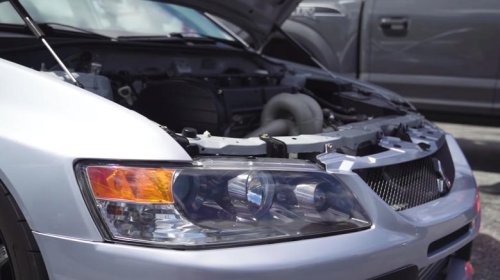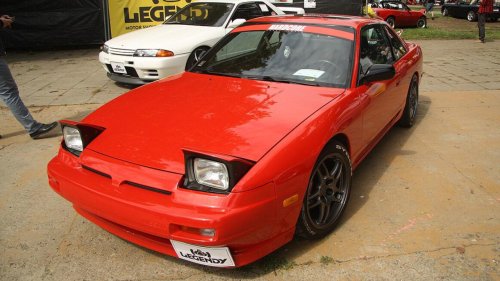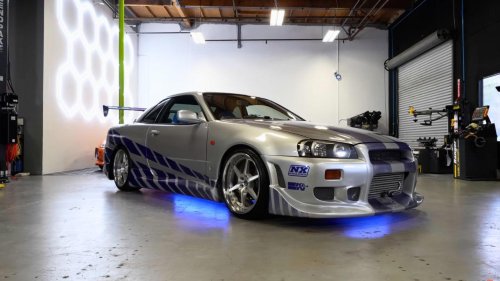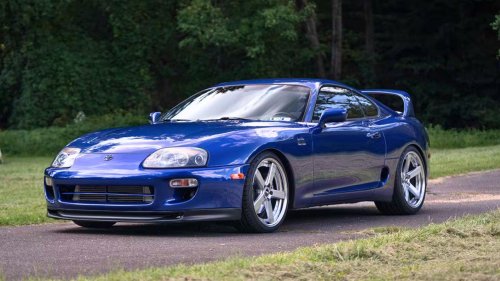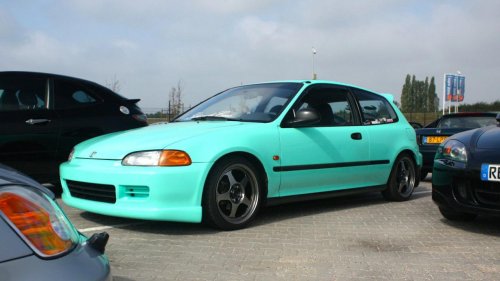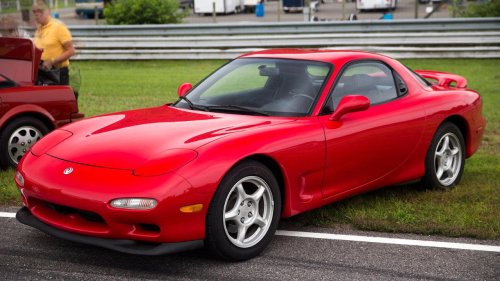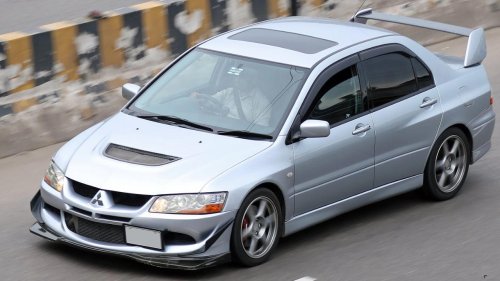






















There are a couple of eras in automotive history that are famous for their engineering. Thoughts of Germany in the 1980s with their incredible homologation racecars, or even the 1960s American muscle era come to mind. But there might be no era more influential in today's world than Japanese cars from the 1990s and 2000s. They introduced the mass-market adoption of technology like twin-sequential turbocharging, performance all-wheel-drive systems, rear-wheel steering, and electronically controlled suspension, among many other advancements.But the most consequential revelation of this era was the engines. People quickly realized the advertised outputs were humbly underrated and that these motors had the capability to handle unimaginable amounts of power. For this, we have compiled ten of the most legendary JDM tuner cars that can reach 1,000 horsepower without an engine swap and without a sweat.In researching this piece, HotCars has carefully examined a multitude of real-world examples, forums, and videos that have proven the merit of each car's ability to reach high horsepower figures on their factory engines. Additionally, any stock performance figures have been sourced directly from the manufacturers. Mitsubishi Lancer Evolution (VIII-IX) Engine: 4G63 Specs (Evo VIII) The Mitsubishi Lancer Evolution may have been discontinued in 2016 after its tenth generation, but enthusiasts never forgot just how special these cars are. They offered a much-needed alternative to the Subaru WRX STI in the all-wheel-drive, rally-proven sedan segment and gained a gigantic cult following when it finally came to the US for the eighth generation in 2003. But atop its list of merits was unquestionably the 4G63 turbocharged inline-four and its unrivaled tunability.It is a tall order for just four cylinders, but 1,000 HP builds have been done for years now. To get it done, you'll need forged aluminum pistons and extremely high-strength connecting rods that increase the compression ratio to run a higher-octane fuel. Additionally, a high-flow aftermarket cylinder head, race-grade camshafts, a forged crankshaft, 1000cc injectors at least with an upgraded fuel pump, and a larger turbocharger (e.g. Garrett GTX4508) would be essential to reach the 1,000 horsepower mark. And as is the case with all the following cars, there will be many additional parts needed to support all the base modifications, including beefier running gear, but what we've listed so far is the foundation for big power. Toyota Supra Turbo (A80) Engine: 2JZ-GTE Specs (Supra Turbo) The A80 or Mark IV Toyota Supra is an absolute rite of passage for a list like this. Its 2JZ-GTE inline-six is practically the most well-known Japanese engine of all time, and in recent years, pristine examples of factory twin-turbo Supras have sold at auction for well into six-figure territory. Part of that cultural importance is because the Mark IV is now completely synonymous with 1,000-horsepower builds – likely more than any other car. Toyota Chaser (JZX100) Engine: 1JZ-GTE Specs (Tourer V) Unlike the Supra and Lancer Evolution, the Toyota Chaser was never sold in America. A limited number of Chasers have been imported from Japan, but few people outside of the JDM scene know what these are. If you're just learning about this car, the main thing you need to know is the engine. The Chaser's Tourer V trim came with the 1JZ-GTE, a smaller, single-turbo inline-six that is a part of the same family as the famed 2JZ. It's nearly just as bulletproof and tunable as the 2J, which is why it lands a spot on this list.The 1JZ, though capable of around 1,000 horsepower, is smaller than the 2JZ. Thus, getting to that level takes some more building. Engine specs could include modifications like a stroked and bored block, high-lift camshafts, titanium springs and retainers, a much larger turbo and intercooler at 30+PSI, 1500cc injectors and upgraded pumps, a full high-performance exhaust system, and upgraded forged rods and pistons. Of course, these mods also apply to any car that came with the 1JZ. Nissan Skyline GT-R (R32/R33/R34) Engine: RB26DETT Specs If there was one car and engine combination that contends fairly with the 2JZ and its legendary status, it would have to be the Nissan Skyline GT-R and its marvelous RB26DETT inline-six. This 2.6-liter came in all three of the modern Skyline generations from 1989 to 2002 and ended up being just as much of an aftermarket king as Toyota's 2JZ. The Japanese gentlemen's agreement in the 1990s limited the GT-R's advertised output to 276 horsepower to avoid a 1960s muscle car-style power war, though in reality, the RB was making well over 300 horses.But if that's not enough, 1,000 horsepower is certainly in the cards. Huge horsepower builds typically start with a big single-turbo conversion instead of the factory twin setup. A common weak point is the connecting rod end bolts, so upgrading those are a must. After that, it boils down to upgraded fuel injectors and pumps, a programmable ECU, and other supporting mods. Again, these engines can make 1,000 hp with bolt-on mods, but rebuilding the RB26 with upgraded forged internals, cams, and a cylinder head will drastically improve reliability when making 1,000 horsepower. Nissan Silvia (S13/S14/S15) Engine: SR20DET Nissan Silvia S15 Aero Spec-R Specs (S15 Spec-R) The Nissan Silvia, known as the 240SX in America, was the entry-level sports coupe for the brand. The desirable engine in these cars is the SR20DET, a single-turbo inline-four that, for the most part, produced around 200 horsepower. Although for the S15 generation, the SR20DET made almost 250 horsepower in Spec-R trim. We never received the S15 generation in the U.S. or even the SR20DET for that matter, but many enthusiasts have sourced JDM-spec engines to swap into their American-market 240SXs. And while not super common with the 2.0-liter, 1,000 horsepower is achievable.With a four-digit target like that, the mod list is extensive. Most will go for a slightly larger aftermarket block and upgraded crank, though the one in the video above uses a stock crank and block to reach the 1,000 mark. Additionally, you'd benefit from at least a 76mm Precision turbo and upgraded intercooler running 40+ PSI, a ported cylinder head, a high-flow intake and exhaust manifold, a fuel system good enough to push a ton of E85, and a Haltech ECU or other engine management system to make it all work together. Once again, running gear like the rear end, driveshaft, and transmission will certainly have to be replaced with stronger components. Nissan 350Z Engine: VQ35DE Via Mecum Auctions Specs The 350Z was Nissan's triumphant revival of the Z family, and it was a massive hit. The front-mid engine layout, the symphonic V6, and neutral handling work together to create what was, and still is, one of the best entry-level sports cars you can buy on a budget. But as sweet as it is in stock form, the VQ35DE has serious potential for adding power.Going for high horsepower builds in a 350Z typically involves swapping in an LS or a 2JZ, but building the VQ can certainly be done. Here's what the owner of the car above did to reach 1,000 horsepower. It starts with Manley connecting rods and pistons, an aftermarket block, upgraded cylinder heads, performance 272 cams, race-spec valves and springs, a 76mm Precision turbocharger, and a Haltech 2500 Elite ECU, among other mods. 2021 Toyota GR Supra Engine: B58B3001 Toyota Specs (2021-2025) The MKV Supra may not be JDM, and it's not a legend (yet), but it's slowly proving to be a tuner favorite. When unveiled, the fifth-generation A90 Supra was initially received with contempt by diehard fans. The controversy ran wild when it came out that the new Supra would sit on the BMW Z4's platform. Not only that, but it wouldn't use a Toyota engine; instead, the B58 straight-six from BMW. Love it or hate it, there is one thing that the new-gen Supra shares with the legendary Mark IV – tunability. The B58 is world-renowned for taking massive amounts of extra power without needing much help, and of course, the 1,000 horsepower mark is not out of reach.The factory internals of the B58 are built for taking power, and there are so many fifth-gen Supras making insane outputs without opening the engine. In fact, the Supra in the video above has never had its engine opened, and on high boost, it makes around 1,000 horsepower. To hit their target, they installed a gigantic single 7170 turbo, a high-flow intake manifold, additional coolers, a port injection kit, and a beefed-up sequential gearbox. It sounds simple because it is. The B58 is truly a monster. Honda Civic Type R (7th-Gen) Engine: K20A Specs The Honda Civic is often made fun of for making a lot of noise, but not going very fast. The Civic Type R rebukes that notion. The seventh-generation Civic Type R, in particular, was a big step up as it introduced the K20A engine. It had VTEC, an 8000 RPM redline, and made around 200 horsepower in stock form. These engines became the go-to for street tuners because of their simplicity and bulletproof reliability. Plus, you can get 1,000 HP out of these things.Judging by how common these K-series engines are, it's no wonder many folks have hit the 1,000-horsepower threshold. So, what would you need to do it? Here's the main idea. You'll certainly need upgraded cylinder sleeves, rods, and pistons that are rated for 1,000+ horsepower. Additionally, ported cylinder heads, a high-RPM valve train, at least a 76mm Precision turbo, an upgraded intercooler, as well as a full high-power fuel system with around 2000cc injectors will suffice to make gigantic power. Nissan Stagea 260RS Engine: RB26DETT Bring A Trailer Specs With performance wagons being criminally underappreciated in North America, the Nissan Stagea 260RS provides a tasty bit of eye-candy for those who like some extra glass in the back. This wagon essentially combined the Stagea's wagon body with the mechanical bits from a Skyline GT-R – everything from the RB26 engine to the ATTESA E-TS all-wheel-drive system. The 260RS is not a common vehicle, though. Less than 1800 were built by Nissan's performance subsidiary, Autech, from 1997 to 2001.Because it has the GT-R's running gear, it's just as easy to make a 1,000-hp Stagea 260RS, like this one built in Japan. And like the GT-R we mentioned earlier, you can get there with simple bolt-ons, a fuel system, and a lot of boost. But forged internals would be a must if its goal is to last longer than a few dozen pulls. Nissan GT-R (R35) Engine: VR38DETT Via: Bring a Trailer Specs (2024) The Nissan GT-R has been embarrassing supercars worth three times as much for over 15 years. It came out as an underdog in its segment back in 2007, but has since followed in its predecessor's (R34 Skyline GT-R) footsteps of being one of the most diabolical tuner machines to ever exist. And the VR38DETT V6 is to blame. It's twin-turbocharged, sends power to all four wheels, and in its most recent base form, makes 565 horsepower.Among the entries on this list, it's the most powerful from the factory – a key reason why there are so many R35s running at or past 1,000 horsepower. Achieving it entails the usual suspects of modifications, including upgraded turbos, stronger rods and pistons, a high-flow fuel system, and 2000cc injectors, as well as performance cams, valve springs, and a strengthened transmission to make sure it doesn't explode under load.