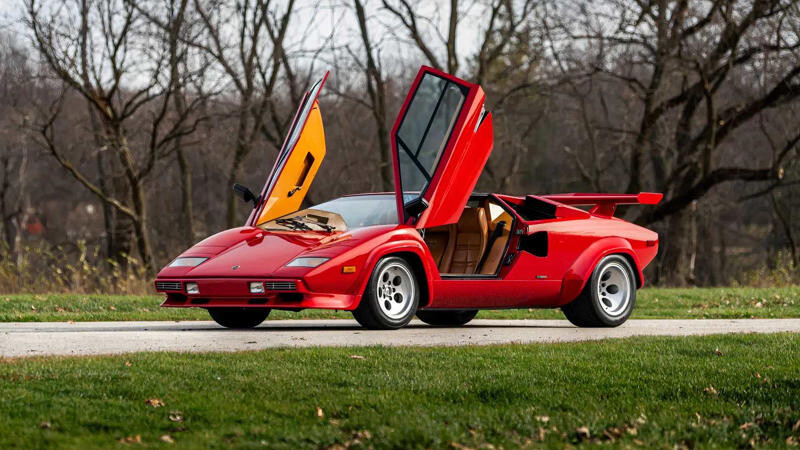
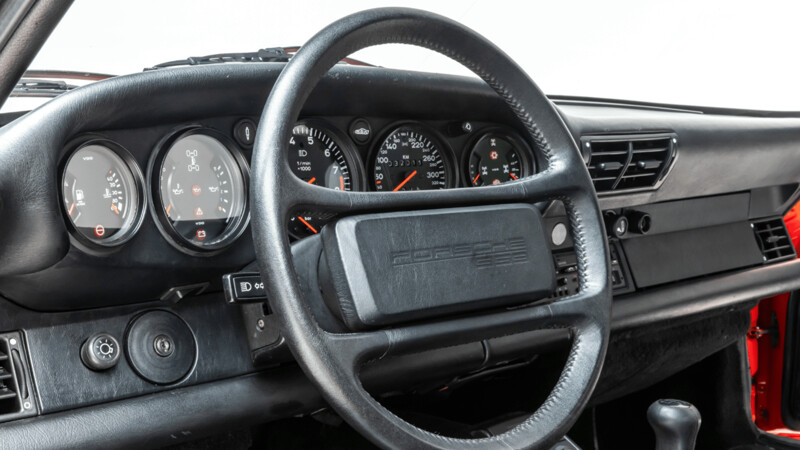
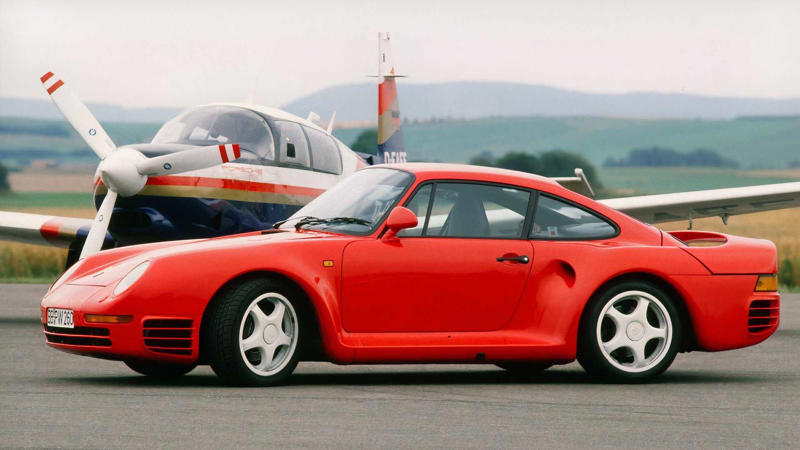
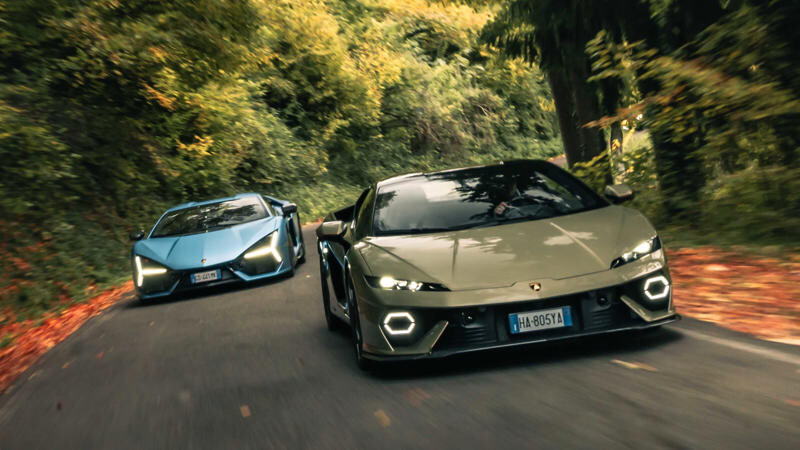
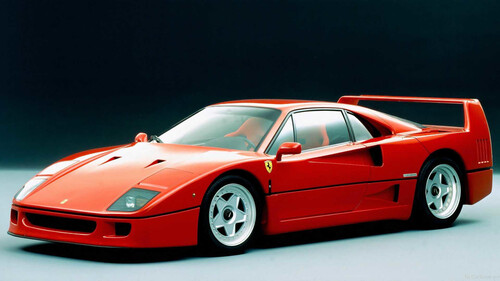
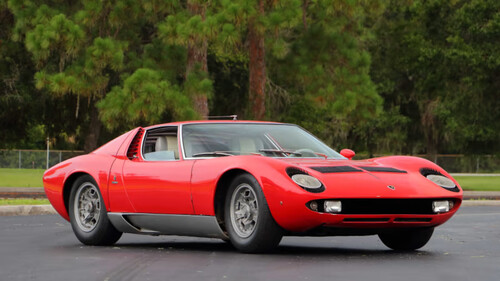
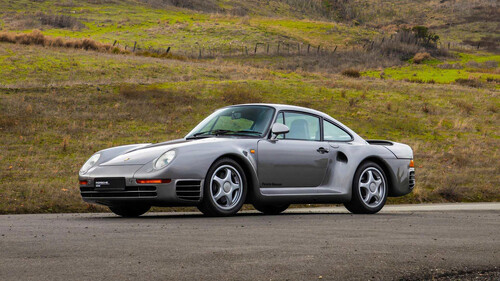
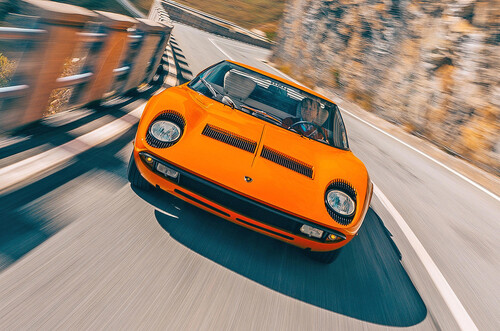
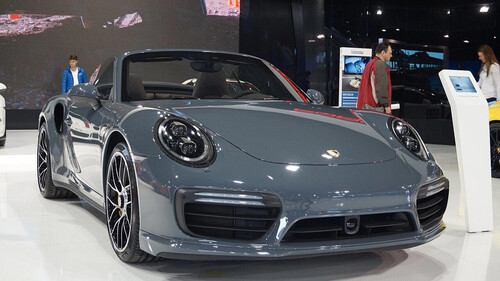
In the 1980s, supercars didn’t try to make life easy. They snarled, kicked, and asked a lot from the driver. The Lamborghini Countach, for example, had the visibility of a mailbox slot and controls that could turn a short drive into a gym session. The Ferrari F40 hit hard, moved fast, and punished lazy inputs like it took them personally. That wild edge was a big part of their appeal.Then, a Porsche showed up and changed the whole idea of what a supercar could be. It still had huge speed, the shape, the drama, and the sense of occasion. But it also brought something the segment barely understood at the time, control and precision. It used electronics, all-wheel drive logic, smart turbocharging, adjustable ride height, and even tire-pressure monitoring to make performance easier to use, not just easier to brag about. In The 1980s, Supercars Were Still Raw And Unforgiving Bring A Trailer The typical supercar formula in the 1980s leaned on theater first and forgiveness…never. A Countach looked like it came from a sci-fi sketchbook, but it also asked the driver to wrestle with a heavy clutch, stiff manual steering, and awkward visibility at low speed. Period tests describe the old Lambo as hard work in traffic and tight corners, even if it became more rewarding once it got moving. It felt special, but it made the driver earn every mile.Ferrari’s F40 played a different song, but it used the same approach. It cut weight, skipped aids, and gave the driver a giant turbo shove with very little digital babysitting. ABS wasn’t part of the deal, and the brakes weren’t power-assisted. To a large extent, it was an expert’s car, and the boost and grip made things happen very suddenly on the road.Bring a Trailer Enthusiasts still love that rawness, and they should. It gave those cars personality, but also clear limits. These were machines that felt alive because they always seemed half a step away from trouble. That tension created magic, but it also created an opening. A smarter supercar could keep the speed and drama while cutting some of the chaos.In that era, performance was rising fast. Turbocharging was spreading, top-speed wars were heating up, and tires, brakes, and chassis tuning improved. Most supercars still behaved like fast mechanical objects, not integrated systems. Then Porsche looked at that landscape and went in a different direction with its new halo car, which basically changed the entire supercar world. The Porsche 959 Came And Changed Everything Porsche That car was the Porsche 959, and it landed like a message from another decade. The road-going 959 debuted with a 197 mph top speed and a 0-62 mph time of 3.7 seconds, numbers that made it the world’s fastest production car when it launched. But the speed only told half the story. The bigger shock came from how it delivered that speed with stability, grip, and a level of polish that its rivals often treated like optional extras.The 959 started life in Porsche’s Group B thinking, and its early competition form proved the point in the desert. The pre-production car won the 1984 Paris-Dakar in earlier form, and the 959 platform then scored a one-two finish in the 1986 event. The road car that followed took rally-bred ideas and turned them into a road machine with 911 roots, a twin-turbo flat-six, and a new all-wheel-drive mindset. Series production totaled 292 cars from 1987 to 1988, which only adds to the myth now.Bring A TrailerPorsche charged about $225,000 for the 959 when new, and even that huge number didn’t cover the real cost. Word on the street is Porsche likely spent more than $450,000 to build each one, and that easily explains why the 959 feels so different from a normal halo car. It was a rolling engineering lab, built with the kind of budget logic that makes accountants reach for aspirin. Or maybe something stronger. The 959 Was Loaded With Pioneering Tech PorscheThen came the all-wheel-drive system, which may be the 959’s biggest gift to the future. The setup could move power between the axles depending on conditions and send as much as 80 percent rearward. It was a control-coupling system that distributed power according to the dynamic load on the tires. That sounds clinical, but the effect was simple. The 959 could use its performance more often and in more places.Porsche The chassis tech looked even stranger for the time. Porsche gave the car automatic ride-height adjustment with three-position shock absorbers and a tire-pressure-monitoring system. In addition, the hollow magnesium wheels formed a sealed chamber with the tire and worked with the built-in pressure-monitoring setup, which sounded like space-age tech at the time.Some of the best 959 details hide in plain sight. The odd six-speed manual transmission with a low “G” gear, short for Gelände, or terrain, for example, helped Porsche with pass-by noise rules. Another lesser-known quirk was on the body itself, in the form of mltiple filler flaps for fuel, oil, and hydraulic systems, plus a coolant fill for those water-cooled heads. Modern Supercars Prove The 959 Got Things Right In The 1980s Bring A Trailer Look at a modern supercar, and the 959’s fingerprints sit everywhere. Porsche’s current 911 Turbo S uses all-wheel drive, Porsche Active Suspension Management, tire-pressure monitoring, and active aerodynamics as part of the package. Those are normal checkboxes now, not moon-shot ideas. But back in the 959 era, they helped redraw the whole map.The rest of today’s supercar world tells the same story. Ferrari’s 296 GTB uses a hybrid powertrain and active rear aero. McLaren’s 750S uses adaptive dampers, Proactive Chassis Control III, and an active rear wing. Lamborghini’s Revuelto adds hybrid drive, all-wheel-drive capability, multiple drive modes, active aero, and magnetorheological damping. The hardware has changed, and the numbers have gone berserk, but the idea is familiar. The fastest cars now rely on smart systems that shape power, ride, grip, and aero in real time. The 959 sold that logic before the segment fully believed in it.That is why the 959 still feels modern. Not because it looks like a 2026 supercar. But because its mission sounds current. Make huge performance easy to access, not just hard to survive. Buying A 959 In 2026? You Need Deep Pockets Bring A Trailer As of March 2026, finding a Porsche 959 for sale still looks more like hunting than shopping. Hemmings lists a 1987 car from Canepa in Scotts Valley, California, showing 8,817 miles, Grand Prix White paint, and a price listed simply as “Inquire.” Mobile.de, meanwhile, shows three live European listings: a 1990 car at €1,850,000, a 1989 example at €2,268,478, and a Swedish 1987 car at €3,200,000. That’s a wide range, but it makes one thing clear right away. Entry is expensive, and low-mileage or special-spec cars can stretch that number hard.What about the most recent sales? Broad Arrow’s Air|Water sale in April 2024 saw a 1988 959 Komfort sell for $1,930,000. Gooding Christie’s sold another 1988 959 Komfort at Amelia Island 2025 for $2,205,000. RM Sotheby’s moved a 1987 959 Komfort at Monterey 2025 for $2,040,00.Bring A Trailer Then the Sport model blows the roof off. Broad Arrow’s Amelia 2026 sale recorded $5,505,000 for a 1988 Porsche 959 Sport, a record result for the model. Only 29 Sport versions were built, and those cars came lighter and more focused than the Komfort. Classic.com says the overall Porsche 959 average sale price sits at about $1,957,022, but that broad number hides a huge gap between standard cars, upgraded Canepa examples, and the very rare Sport cars.The purchase price is only the opening hit. Ownership demands specialist support, rare knowledge, and patience. Tire Rack still lists the Bridgestone RE71 N0 Denloc tires made specifically for real 959s, which says a lot about how specialized the car remains. On the upgrade side, Canepa says its 959SC process touches more than 3,500 parts and takes over 4,000 hours. Even a stock, well-kept 959 won’t ask for that every year, of course, but the message is all the same. This is not a “buy now, figure it out later” supercar. It’s a machine that bills like it remembers the 1980s interest rate. Porsche 959 Versus The Modern Supercar World Porsche A modern supercar in 2026 usually brings a very different kind of firepower. Let’s take a look at the examples from above. Ferrari’s 296 GTB makes 830 horsepower from a hybrid V6 setup, McLaren’s 750S brings 750 horsepower and active chassis tech, and Lamborghini’s Revuelto combines a V12 with three electric motors for 1,015 horsepower and layers that with multiple drive modes and active aero. Porsche’s latest 911 Turbo S now packs 701 horsepower with hybrid help, upgraded aerodynamics, and active suspension. On paper, the 959 cannot win that arms race. Not anymore.And yet the old Porsche still refuses to look slow. With a 0-60 mph (0-100 km/h) time of 3.7 seconds, the 959 still reads well. Sure, McLaren quotes 0-62 mph in 2.8 seconds for the 750S, while the Revuelto and 296 GTB live in a different power league altogether. So yes, modern supercars crush the 959 on output, traction tricks, launch speed, and aero sophistication. But the gap is smaller than it should be for a car whose engineering brief came together when cassette tapes were still a thing.Lamborghini / Andy Cassano The bigger difference lies in feel. The 959 still carries a manual gearbox, narrower tires, older ergonomics, and less outright grip than current supercars. But it also offers something many modern cars struggle to match: a sense of mechanical clarity. It doesn’t bury the experience under giant screens or endless mode menus, and the period test found it astonishingly easy to drive in normal use and praised its refinement, comfort, and high-speed stability.That is the real comparison to modern supercars, and it’s why the 959 still lands so well with enthusiasts. Today’s best supercars try to blend absurd speed with real confidence, all-weather traction, and a broad operating window. The 959 chased that exact formula before the segment had a name for it. It wasn’t the loudest, wildest, or most intimidating thing in the room in the 1980s. It won by being the smartest.Source: Porsche, Car and Driver, MotorTrend