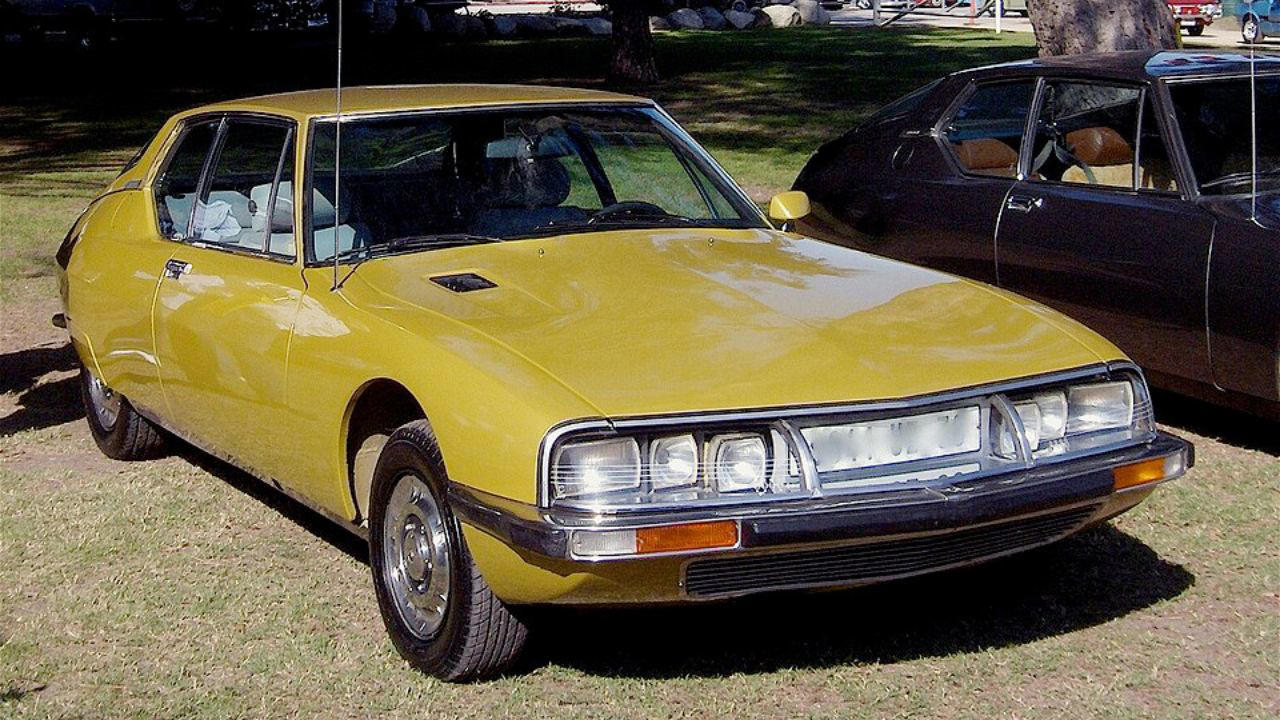


















The 1970 Citroën SM looks futuristic but ownership can feel like learning a new languageThe Citroën SM still looks like a visitor from another planet. Its low nose, covered headlights and tapering tail appear more concept car than production grand tourer, yet living with one can feel less like buying a classic and more like enrolling in an intensive language course in French engineering. The car invites devotion, but it also demands fluency in systems that operate very differently from anything built in Detroit, Stuttgart or even Modena. That tension between futuristic design and demanding ownership has defined the SM since its launch in 1970. It remains one of the most distinctive European GTs of its era, but its complexity, fragile reputation and the collapse of its maker turned it from a symbol of progress into a cautionary tale. The Concorde of the road When the SM arrived at Geneva in 1970, it stunned the motoring world. The long, low body cut through the air with a drag coefficient of 0.33, a figure that made contemporary rivals look blunt and gave the car a visual link to the jet age. Commentators quickly reached for aviation metaphors and began calling it the Concorde of the road, a nickname that captured both its speed and its sense of national pride. Citroën had already shown with the DS that it could fuse radical design with advanced engineering. With the SM, it pushed that idea further into the GT class, with a fastback profile, glassed-in nose and six headlights that turned with the steering to follow the road at night. The cabin mixed sculpted seats, a single-spoke steering wheel and oval instruments, a combination that still looks more like speculative fiction than early 1970s reality. By 1972, The Citroën SM had established itself as a symbol of innovation, aerodynamic design and long-distance comfort, and it quickly became one of the most distinctive European GTs of the 1970s. Owners and admirers saw it as a rolling manifesto for French engineering, confident enough to ignore convention and chase a different idea of luxury. A Maserati heart and a French brain The SM exists because Citroën bought Maserati and decided to pair its own chassis expertise with an Italian engine. The result was a front-mounted Maserati-built V6 driving the front wheels, supported by Citroën’s hydropneumatic suspension and high-pressure hydraulics. Period material celebrated how the Citroën SM launched in 1970 and combined a Maserati-built V6 engine with hydropneumatic suspension, power-assisted steering and inboard front disc brakes, all wrapped in a sleek, aerodynamic body that looked like it had come from the future. Its basic layout was unusual. Most grand tourers of the era used front-engine, rear-drive configurations with conventional steel springs. Citroën instead placed the compact V6 ahead of the cabin but behind the front axle line, then used its nitrogen-charged spheres to control ride height and body motion. The inboard front brakes reduced unsprung mass, and the car’s narrow V6 allowed a low bonnet line that accentuated the slippery shape. Inside, the technology kept coming. The steering system, known as DIRAVI, used hydraulics to provide variable assistance and a strong self-centering effect. At highway speeds the wheel felt weighty and stable, while in town it became finger-light. The high-pressure hydraulic system powered the steering, the brakes and the suspension, so a single pump and reservoir controlled much of the car’s behavior. To contemporary drivers, this felt like magic. To modern owners, it can feel more like learning a specialized dialect. The way the SM steers, stops and rides is not intuitive to anyone raised on conventional systems, and that is before considering the maintenance implications. Why it felt so advanced Even by the standards of European luxury cars, the SM’s specification read like a wish list. Enthusiasts who ask what made the Citroën SM so advanced often point to the combination of aerodynamic design, hydropneumatic suspension, self-leveling ride height, high-pressure brakes and speed-sensitive steering that could center itself even at a standstill. On the road, testers praised the way the car seemed to float over rough surfaces while still keeping tight control of body movement. The self-leveling system kept the car at a constant height regardless of load, which meant the SM could carry four adults and luggage without sagging or scraping. Drivers could also manually raise the suspension to clear obstacles, then drop it again for high-speed stability. The steering defined the experience. DIRAVI allowed very quick responses with only a small movement of the single-spoke wheel, and the strong centering effect meant the driver could release the wheel and watch it return to straight ahead on its own. The high-pressure brakes required only a gentle touch, with a floor-mounted mushroom pedal replacing a conventional hinged design. Combined with the compact Maserati V6 and front-wheel drive, these systems gave the SM a character that felt completely different from a Porsche 911 or a Jaguar E-type. Period road tests described cross-country journeys where the car devoured distance in calm, hushed comfort while the suspension quietly smoothed away broken surfaces that would have unsettled rivals. The driving experience that hooks believers Modern testers who sample well-sorted cars still come away impressed. One detailed drive report describes how the SM remains infamously complex yet pure delight to drive, with a ride quality that feels almost otherworldly and steering that, once mastered, allows precise placement on narrow roads. The combination of that 0.33 drag coefficient, the smooth V6 and tall gearing creates a relaxed cruising character that suits long European autoroutes and wide American interstates alike. Enthusiasts who have lived with the car for years talk about specific moments that cemented their loyalty. One owner writing about his Citroën SM explains how he used it for long-distance touring, experimented with towing a small car to shows and became deeply familiar with the quirks of the hydraulic system. Another calls the model sadomasochistic, a car whose pleasures and pains are tightly intertwined, with the hydropneumatic suspension delivering magic while the Maserati engine and complex systems demand constant attention. Video reviews echo that split personality. In one detailed feature, a presenter describes the SM as perhaps the most over-engineered car of the 1970s, then demonstrates how the suspension glides over broken pavement while the V6 winds up through the rev range. Another video drive shows the car on twisty roads, the driver narrating how the steering initially feels alien but soon becomes second nature, to the point where other cars start to feel crude. Learning the language of ownership For anyone tempted by the styling and the mythology, the first lesson is that the SM does not behave like a normal classic. One detailed profile of the model explains that driving Citroën’s complex GT can be pure delight, but it also warns that ownership requires an understanding of the car’s unique systems, especially the hydraulics and the Maserati V6. The same source outlines how the car’s reputation for fragility grew from early teething troubles, lack of dealer training and maintenance shortcuts by owners who did not grasp what the systems needed. On enthusiast forums, long-time specialists often list the same themes. Threads about Citroën SM new problems describe how the car had more than its fair share of issues from the start, including timing chain wear, corrosion in hydraulic lines and electrical gremlins. Contributors also stress that most of these problems have known fixes today, but only if the owner is prepared to work with a knowledgeable mechanic or learn the systems personally. Hydraulic maintenance sits near the top of every checklist. The high-pressure system depends on clean fluid, healthy spheres and leak-free lines. Neglect can lead to a sinking suspension, heavy steering or sudden loss of braking assistance. The Maserati V6 demands regular timing chain inspection and careful cooling system management, since overheating can cause expensive damage. Parts supply has improved compared with the immediate post-production years, but it still requires patience. Specialists reproduce many components, and some owners keep a small stock of spheres, seals and electrical parts. Labor costs can be significant, since even routine jobs may involve unfamiliar procedures or tight packaging around the inboard brakes and front drivetrain. Why the car of the future struggled in the present Period coverage hailed the SM as the car of the future, but the market response never matched the ambition. One detailed history of the model’s development explains how Citroën poured resources into the project, only for the oil crisis, economic pressure and reliability concerns to collide with the company’s finances. Another retrospective bluntly calls the Citroën SM the car that killed a company, arguing that the combination of high development costs, warranty claims and slow sales contributed to Citroën’s eventual rescue and restructuring. One social media feature about a long-time SM owner recalls how the car was hailed as the car of the future in the 1970s but was too complicated for the masses. That piece traces the story of David Hume, for whom the car defines his life’s journey, and notes how the model became a symbol of innovation and long-distance comfort even as mainstream buyers stayed away. The complexity that made the SM special also made it hard to service. Dealers without proper training struggled with the hydraulics and the unusual front-wheel-drive layout. In markets like the United States, where mechanics were more familiar with big V8s and simple suspension, the car’s needs could seem baffling. Stories spread of owners facing repeated breakdowns, long waits for parts and high bills, which damaged the car’s reputation far beyond the actual failure rate. Regulatory pressure added to the problems. U.S. safety rules forced Citroën to replace the elegant glass-covered nose and swiveling headlights with a fixed four-lamp arrangement, which dulled the styling and removed one of the car’s signature features. Emissions requirements also hurt performance, particularly in federalized versions of the Maserati V6. Community, folklore and hard-earned wisdom Today, the SM survives as a cult object supported by a tight-knit community. Owners gather in clubs and online groups to share technical documents, parts sources and stories of long-distance trips. One Facebook group dedicated to the Citroën SM hosts posts where members trade advice on suspension spheres, steering behavior and sourcing correct interior trim, while also celebrating the car’s presence at shows and on rallies. Specialist sites compile extensive histories of the model’s development, including the decision to use a Maserati V6, the aerodynamic work that achieved the 0.33 drag coefficient and the evolution of the hydraulic system from earlier Citroën models. These resources often link to original engineering documents and period test data, giving modern owners a deeper understanding of what the designers intended. Even general-interest platforms have become repositories of SM lore. A detailed answer on a popular question-and-answer site breaks down the specific technical features that made the car feel so far ahead of its time, from the self-leveling suspension to the speed-sensitive steering and inboard brakes. Enthusiasts share that link with prospective buyers as a primer on why the SM matters and why it demands respect. More from Fast Lane Only Unboxing the WWII Jeep in a Crate 15 rare Chevys collectors are quietly buying 10 underrated V8s still worth hunting down Police notice this before you even roll window down The post The 1970 Citroën SM looks futuristic but ownership can feel like learning a new language appeared first on FAST LANE ONLY.