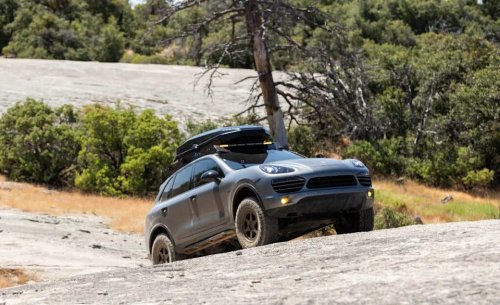
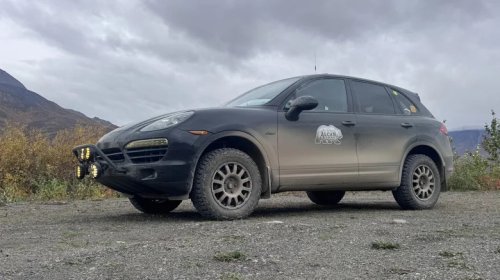
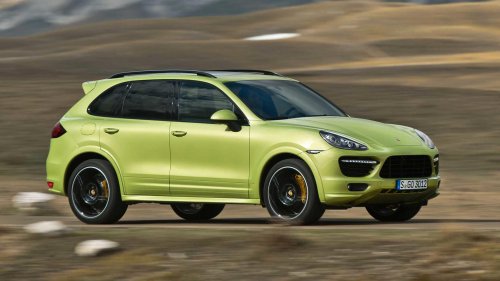
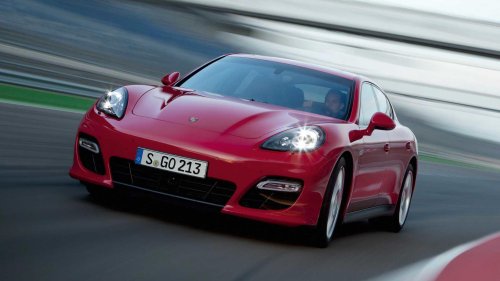
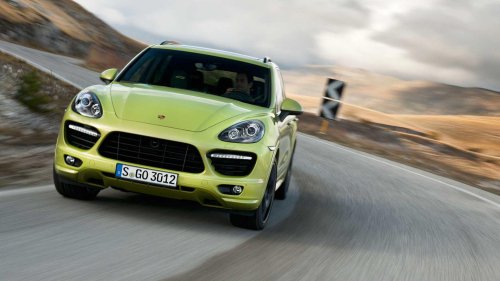
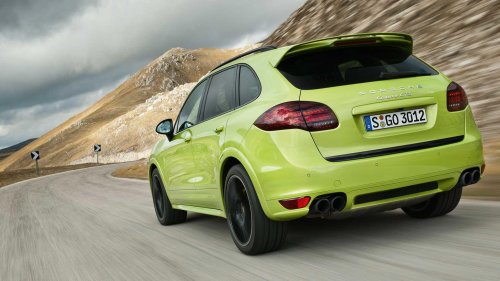
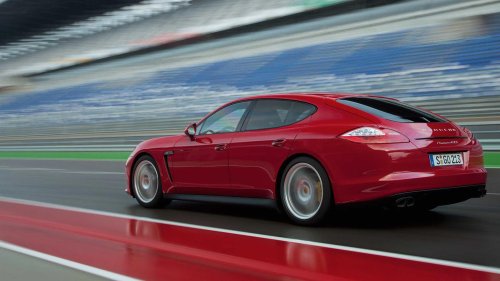
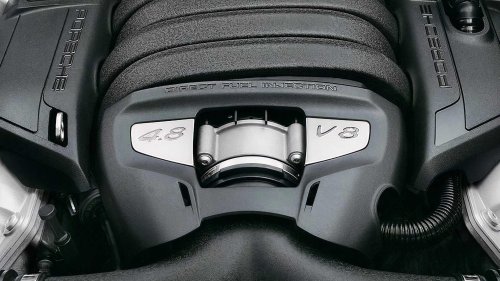
Porsche may be best known for its flat-six engines, most notably fitted to the long line of Porsche 911 sports cars, but the automaker from Stuttgart has also built some of the best V8 engines – and its last naturally aspirated V8 is an absolute gem. Free-revving, characterful, and blessed with a spine-tingling soundtrack, the engine delivered the kind of response and linear power that enthusiasts crave.Porsche still offers V8 engines today, but like most automakers, emissions regulations and cost pressures have pushed it toward turbocharging and shared development, this time with fellow Volkswagen Group brand Audi. The result is undeniably effective, but some of the old magic has been diluted. The upside? That last naturally aspirated V8 now powers a range of used Porsches that have quietly become serious performance bargains. Evolution Of Porsche's Last Naturally Aspirated V8 Porsche Technically, the last Porsche to roll off the production line with a naturally aspirated V8 was the Porsche 918 Spyder. It was powered by a unique 4.6-liter V8 known as the M18, developed specifically for the hypercar and its plug-in hybrid system. For mainstream models, however, Porsche’s last naturally aspirated V8 was the M48. Its final model year in the US was 2014, with the last applications being the Cayenne S, Cayenne GTS, and Panamera GTS.Porsche first ventured into V8s with the M28, which powered the 928, the car originally envisaged as the replacement for the 911 and whose production ran from 1977 all the way to 1995. It wouldn't be until the development of the first-generation Cayenne at the start of the millennium, driven largely by the demands of the US market, that Porsche would return to V8s in earnest, resulting in the M48.The M48 required an entirely different approach, as it wasn’t destined for a low-slung sports car but for a heavy off-roader tasked with towing, hauling, and tackling varied terrain. That meant prioritizing low-end torque, durability, and flexibility without sacrificing the performance edge expected of a Porsche. The engine would also find its way into the first-generation Panamera, launched for the 2010 model year in the US.From the outset, the M48 was offered in both naturally aspirated and twin-turbocharged forms, with the latter reserved for the range-topping Turbo models. The M48 originally displaced 4.5 liters, but with the 2008 facelift of the first Cayenne, Porsche enlarged it to 4.8 liters and introduced direct fuel injection. The turbocharged variants also received larger turbines. These updates sharpened throttle response, boosted output across the range, while improving efficiency, helping the Cayenne stay competitive as new rivals entered the picture.PorscheThe evolution didn’t stop there. When the first Panamera arrived, the M48 V8 was further refined with extensive use of lightweight alloys that helped reduce engine mass, along with improved cylinder coatings and upgraded cooling systems (including revised coolant pipes and water pumps) designed to enhance durability and long-term reliability.By the end of the engine’s run, the naturally aspirated version produced 400 horsepower in the Cayenne S, 420 hp in the Cayenne GTS, and 430 hp in the 2014 Panamera GTS – a significant jump from the 340 hp of the original naturally aspirated M48 that featured in the first Cayenne, and remarkably close to the 450 hp of the original twin-turbocharged version. The turbocharged M48 would continue to power the range-topping Cayennes through 2017, finally bowing out with a maximum 570 hp in Turbo S trim, after which it was replaced by a new breed of twin-turbocharged 4.0-liter V8s developed in partnership with Audi, known as the EA825 TT series - one of the longest running V8 engines still in production. The Undiluted Thrill Of A Pure V8 Porsche Naturally aspirated V8s are a dying breed, and the reasons are hard to ignore. Stricter emissions regulations, fuel prices skyrocketing, and the relentless push for electrification have forced automakers to either swap to smaller, force-fed V8s or drop the engine type entirely. There are still holdouts, such as General Motors and its new Gen 6 small-block family, the first member of which debuts in the 2027 Chevrolet Corvette Grand Sport, but the trend is clear.The naturally aspirated M48 embodies everything enthusiasts love about powerful, naturally aspirated engines. Its power delivery is beautifully linear, building smoothly as the revs climb rather than arriving in a sudden surge like a turbocharged unit. This is matched by a rich mechanical soundtrack that hardens into a proper V8 snarl at higher rpm, and in turbocharged versions of the engine, it is much more muted. The engine is also notably eager to rev for such a large displacement, and, combined with sharp throttle response, gives both the Cayenne and Panamera a surprisingly playful, responsive character.Another upside is long-term durability. With no turbochargers, intercoolers, or added heat stress to contend with, the naturally aspirated M48 is inherently less complex than the turbocharged version. Owner data from CarComplaints suggests that later examples of the Cayenne and Panamera with this engine tend to avoid some of the more serious issues that can affect higher-strung forced-induction variants. While no performance engine is immune to maintenance costs, the naturally aspirated setup generally translates to fewer high-cost failure points over time. Buying One Today Porsche Although Porsche fitted naturally aspirated versions of the M48 V8 to the Cayenne and Panamera lineups over several years, enthusiasts will want to hone in on the engine in its final iterations, given the updates mentioned earlier. The sweet spot is the first Cayenne GTS from the 2013 to 2014 model years, though the engine was also offered in the Cayenne S, which offers less performance than the GTS but comes with a lower price. The first Panamera GTS, which also packed the M48, was likewise offered for the 2013 to 2014 model years.For most buyers, the SUV body style of the Cayenne GTS will likely be preferred, and prices for a clean 2013 or 2014 example start at around $15,000. At that level, you’re typically looking at over 100,000 miles on the odometer, though sub-100,000-mile cars are within reach by stretching into the low-$20,000 range. A more affordable alternative is the Cayenne S, which can be found with under 100,000 miles for about $15,000.Fans of the Panamera GTS will need to pay a premium, as the car is significantly rarer. Used examples start closer to $20,000, while anything with less than 100,000 miles generally commands $25,000 or more.Porsche Both the Cayenne GTS and Panamera GTS remain genuinely rewarding to drive, but age is becoming a factor. While the M48 itself is relatively robust, RepairPal rates the Cayenne and Panamera poorly overall due to higher-than-average repair frequency and elevated running costs for the segment. Today’s Bargain, Tomorrow’s Rarity Porsche As naturally aspirated V8s continue their slow fade, especially in performance applications, engines like Porsche’s M48 in its non-turbo guise start to look like future classics. It blends old-school character with modern usability in a way that’s increasingly rare. Buy smart, and today’s bargain could easily become tomorrow’s collectible.



















 +34 others