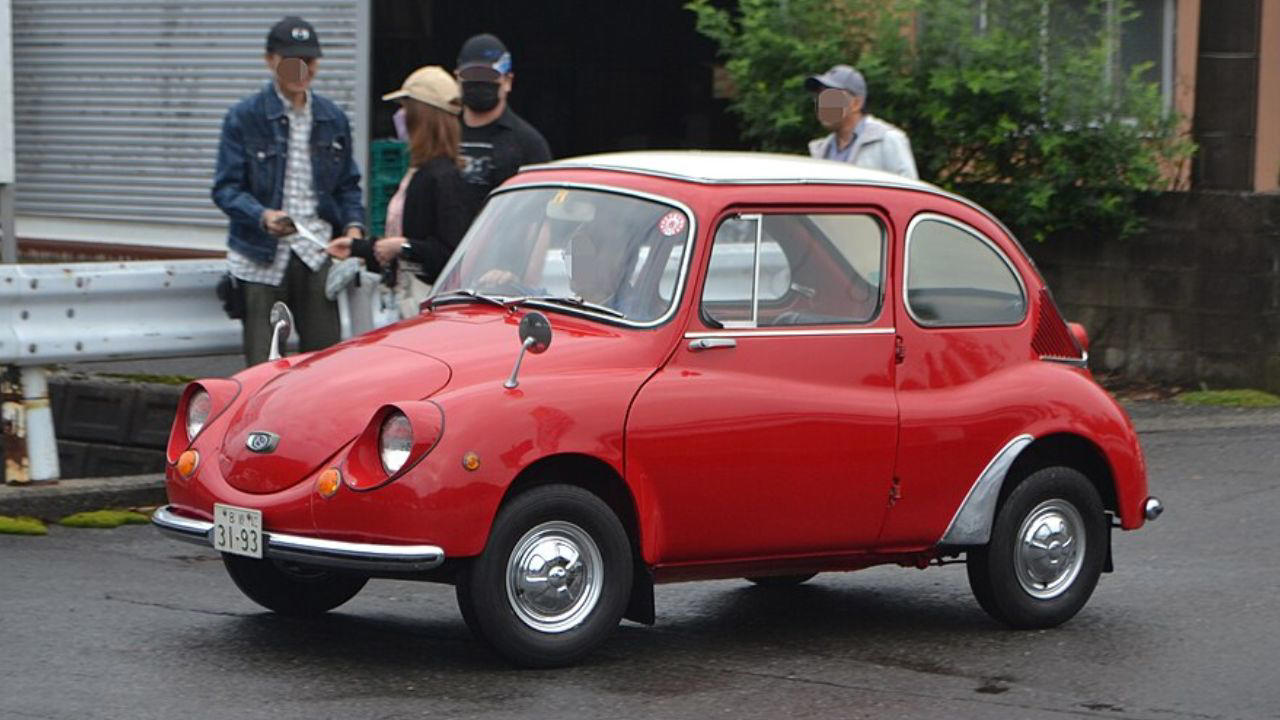
The 1968 Subaru 360 looks small until you realize what it representedThe 1968 Subaru 360 looks almost toy-like at first glance, with its tiny footprint and rounded bodywork. Spend a moment with it, though, and the little kei car starts to read as something much larger: a symbol of how Japan put a nation on wheels, how Subaru learned to build cars at scale, and how minimalism became a strategy rather than a compromise. By the late 1960s, the 360 was already a familiar sight in Japanese cities, yet it still felt radical in markets like the United States, where its size shocked drivers used to full-size sedans. That contrast is exactly what makes the 1968 model such a revealing lens on postwar car culture and on Subaru’s own transformation from industrial conglomerate to global automaker. The “ladybug” that taught Japan to drive The car that would become a national icon started as a corporate experiment. Subaru was a division of Fuji Heavy Industries, a company better known for aircraft and industrial products than for family transport. When the firm set out to build its first mass-produced automobile, it landed on a tiny, rear-engined city car called the Subaru 360, a name that nodded to its kei-class engine capacity and compact mission. Inside Japan’s emerging car market, the 360 was more than a product. It was a response to a government-backed kei car formula that capped engine size and dimensions so that ordinary households could afford a car and a parking space. The Subaru 360 fit that mold precisely, with a displacement of 356 cc and a footprint that kept it within the strict kei envelope. Officially, it was the first mass-produced automobile by Subaru, a division of Fuji Heavy Industries, and it quickly became a landmark in Japan’s postwar motorization, a story that later enthusiasts would revisit in detail through Subaru 360 history. At home, the car earned a nickname that stuck: “ladybug.” The rounded roofline, upright stance, and delicate fenders gave the 360 an insect-like charm that made it instantly recognizable. Period advertising leaned into that cuteness, but the shape was also practical. The tall roof and thin doors created a surprisingly airy cabin, while the short overhangs and rear-mounted engine freed up space for passengers and luggage. Contemporary accounts of The Ladybug describe it as Japan’s first mass-produced microcar that helped establish Subaru itself as a carmaker rather than just an industrial supplier. In that context, the 1968 Subaru 360 was not simply a small car. It was proof that a Japanese brand could design, engineer, and build a people’s car that matched the country’s economic realities. For buyers who had grown up on bicycles, trains, and scooters, the ladybug represented personal freedom at a scale that fit narrow streets and modest incomes. Dimensions that shocked the West, proportions that fit Japan For drivers raised on American full-size sedans or European family cars, the 360’s size could be hard to process. Period measurements put the car just under 10 feet long, a figure that made it shorter than many contemporary sports cars’ wheelbases. One enthusiast account of the 360’s launch notes that, when the first Subaru 360 was introduced on a March Monday, it arrived in a Japanese automobile market still dominated by larger domestic sedans and imports. That same retrospective describes the car as measuring “just shy of 10” feet in length and recalls how the 360 soon caught the attention of would-be importers abroad, a story that lives on in memories shared through Day Monday reflections. Numbers alone tell part of the story. Contemporary coverage of the 360’s American adventure describes a car that weighed in around 900 pounds, measured under 10 feet long, and carried a price of roughly $1,300 when it reached U.S. showrooms. In that setting, the 360 was lighter, smaller, and nearly $3,000 cheaper than some domestic competitors, which made it tempting for budget buyers and curiosity seekers alike. As one detailed feature on the Japanese microcar scene puts it, the 360 was marketed as an ultra-compact import that could slip into tight parking spots and sip fuel, a pitch that still resonates with enthusiasts who ask if the Weighing in around kei car is the Japanese microcar they have always needed. In Japan, those same dimensions felt less like a novelty and more like an answer to practical constraints. Narrow streets, limited parking, and high fuel prices made a compact footprint a feature rather than a flaw. The 360’s tiny turning circle and short overhangs made it ideal for dense neighborhoods, while the lightweight body and small engine kept running costs low. Owners could thread the car through alleys, park in slivers of space, and still carry a family of four, at least by the standards of the time. That contrast between domestic normalcy and foreign shock is part of what makes the 1968 model so interesting now. In an era when crossovers dominate, the 360’s dimensions read as almost abstract. Yet they were carefully calculated to satisfy kei regulations, which limited engine displacement to 360 cc and set strict caps on length and width. The Subaru 360’s compliance with those rules is documented in factory histories and enthusiast research that trace how the company engineered a rear-engined, two-door city car that fit within the kei template. Modern summaries of The Subaru 360 describe it as a rear-engined, two-door city car manufactured and marketed by Subaru from 1958 to 1971, with engine displacement limited to 356 cc to meet those regulations. For Japanese buyers, that compliance meant tax breaks and lower operating costs. For Subaru, it meant the 360 could sell in high volumes and become a familiar presence on city streets. For foreign observers, it meant the car looked almost impossibly small, a visual shorthand for a very different vision of what a car needed to be. Engineering a people’s car on a kei budget Under its rounded skin, the 1968 Subaru 360 reflected a series of engineering choices shaped by cost, regulation, and experience. Subaru’s background in aircraft manufacturing gave its engineers a deep understanding of lightweight structures and compact powertrains. Those skills translated into a microcar that used thin steel, minimal interior trim, and a small two-stroke engine to keep weight down and efficiency up. The rear-mounted engine layout was central to that strategy. By placing the powertrain behind the rear axle, Subaru freed up space in the front for passengers and simplified the drivetrain. The 356 cc two-stroke twin was air-cooled and relatively simple, which helped keep manufacturing costs low. In the 1960s, Japanese buyers were accustomed to maintaining scooters and small motorcycles, so the idea of a small, high-revving engine in a family car did not feel as foreign as it might have in other markets. Inside, the 360’s cabin was spartan but cleverly packaged. Thin seat backs, upright seating, and a near-vertical steering wheel created a surprisingly usable space. The tall roofline meant adults could sit without hunching, and the large windows provided visibility that modern drivers might envy. In higher trims, such as the Deluxe and Super Deluxe variants that appeared later in the production run, Subaru added extra chrome, improved upholstery, and more exterior brightwork, turning the once-basic microcar into something closer to a status symbol within the kei segment. Enthusiast groups that focus on the 360 often highlight specific model years and trim levels to show how the car evolved. One community post celebrating a 1969 Subaru 360 Deluxe sedan describes the car as a milestone in the development of compact vehicles and notes its place in the broader story of Japan’s first mass-produced automobile. That same discussion of the Subaru 360 Deluxe ties the model to the later, more sophisticated Subaru lineup that would follow in the 1970s and beyond. Another enthusiast perspective focuses on the 1969 Subaru 360 Super Deluxe, often described as a high point for the model line. Collectors point to surviving Super Deluxe cars as evidence that the 360 was not just a bare-bones commuter but could also be a desirable object in its own right. A detailed writeup of a 1969 Subaru 360 Super Deluxe highlights its role in promoting Subaru in New York and other export markets, presenting it as a showcase for what a Japanese microcar could be when fully equipped. Those accounts of the Super Deluxe frame the 360 as both a domestic workhorse and an export ambassador. The 1968 model sits at an interesting point in that evolution. By then, Subaru had several years of production experience, and the 360’s basic design had matured. Build quality improved, trim options expanded, and export efforts were ramping up. Yet the car still retained its original simplicity, with a basic dash layout, minimal sound insulation, and a driving experience that kept the driver close to the mechanicals. For many modern enthusiasts, that combination of refinement and rawness is part of the appeal. From Japanese streets to American curiosity Within Japan, the Subaru 360 quickly became part of the urban landscape. It was one of the first kei cars to achieve mass-market success, and its presence on city streets helped normalize the idea of microcars as family transport. Histories of Japan’s automotive boom often place the 360 alongside other early kei models as a key step in the country’s shift from bicycles and buses to private car ownership. Abroad, the story unfolded differently. In the United States, the 360 arrived as a curiosity, imported by entrepreneurs who saw an opportunity in its low price and tiny footprint. Advertisements leaned on its affordability and fuel efficiency, comparing it to larger domestic cars and promising savings at the pump and in the showroom. Yet the same traits that made the 360 ideal for Tokyo alleyways made it a tough sell on American highways, where size and power were equated with safety and status. Modern commentary on the 360’s American chapter often notes that the car registers only as a blip on most Americans’ radar, if it appears at all. A feature that profiles one particularly well-preserved example describes it as perhaps the finest ultra-compact Subaru 360 in the world and recounts how its narrow body is roughly as wide as a horse. That piece on The Finest Ultra compact Subaru 360 in the World underscores how exotic the car still seems in a country built around larger vehicles. In Japan, by contrast, the 360’s significance has been formally recognized. The Japan Society of Mechanical Engineers has certified the Subaru 360 as part of Japan’s mechanical heritage, citing its role in democratizing car ownership and shaping the country’s industrial development. Coverage of this recognition notes that the news designation places the 360 alongside other historically significant machines, from trains to industrial equipment, that helped define modern Japan. That official recognition mirrors the affection many Japanese enthusiasts still feel for the ladybug. One account of the 1966 Subaru 360, nicknamed the ladybug for its distinctive rounded shape, describes it as a fascinating piece of automotive history that combined a compact footprint with exceptional fuel efficiency. That description of the 1966 Subaru highlights how the car’s shape and economy are still central to its appeal. Another enthusiast perspective frames the Subaru 360 as the first massively successful car in the Japanese market, comparing its impact to that of the Volkswagen Beetle in Europe. That comparison, shared in a reflection on how The Subaru 360 gets a lot of praise, captures the way the car bridged the gap between basic transportation and cultural icon. Why the 1968 Subaru 360 still matters Viewed from a modern perspective, the 1968 Subaru 360 can seem like an artifact from another planet. It lacks the safety equipment, power, and refinement that drivers now take for granted. Yet its underlying logic feels surprisingly contemporary. In an era of congested cities, rising fuel costs, and renewed interest in small, efficient vehicles, the 360’s core idea looks less like a relic and more like an early draft of the urban cars that would follow. That relevance shows up in the way collectors and fans talk about the model today. Enthusiast groups that focus on Japanese classics often highlight the 360 as a “unique piece of Japanese automotive history,” emphasizing its small, two-door body, rounded shape, and status as Japan’s first mass-produced automobile. One such group describes the Subaru 360 as a car that was designed to be affordable and practical and that laid the groundwork for later, more sophisticated Subaru models. Subaru itself has embraced that legacy. Modern brand storytelling frequently references the 360 as Subaru’s first car, sometimes with affectionate nods to its ladybug nickname. One social media post that shares a 1969 Subaru 360 for auction refers to it as Subaru’s first car ever and notes that the most successful of these early kei cars helped establish the brand long before larger models appeared. That celebration of a Subaru’s first car shows how the 360 has become a touchstone for fans who trace the company’s lineage from microcars to modern crossovers. Broader recognition has followed. Commentators who focus on Subaru’s history often point out that the 360 was the brand’s first mass-produced minicar and that its compact design and practical layout earned it a high honor in Japan. One such analysis notes that the Ladybug has received special attention because it embodied the virtues of efficiency and smart packaging that would later define many Japanese cars. For historians, the 1968 Subaru 360 also provides a snapshot of a specific moment in industrial development. It was produced during a period when Japan was moving from postwar recovery to global economic power, and it reflects a philosophy of doing more with less. The car’s thin steel, compact engine, and minimalist interior were not just cost-cutting measures. They were expressions of a design culture that prioritized function, resource efficiency, and adaptability. That design culture can be traced through multiple languages and perspectives. Entries on the Subaru 360 in Catalan, German, Spanish, and Persian reference the same basic facts: the 360 name, the Subaru badge, and the car’s role as a mass-produced kei car that helped define an era. These Discovered research threads, along with similar pages in Wikipedia, Subaru 360 entries, and Wikipedia in Persian, show how the little car’s story has been translated and retold far beyond its original market. More from Fast Lane Only Unboxing the WWII Jeep in a Crate 15 rare Chevys collectors are quietly buying 10 underrated V8s still worth hunting down Police notice this before you even roll window down



















 +77 others