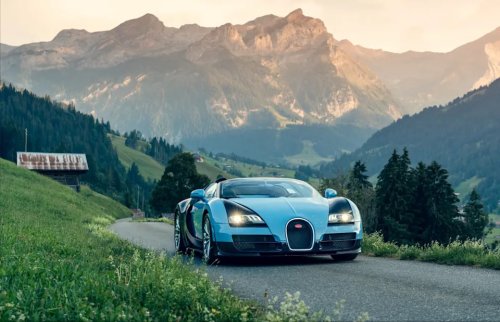
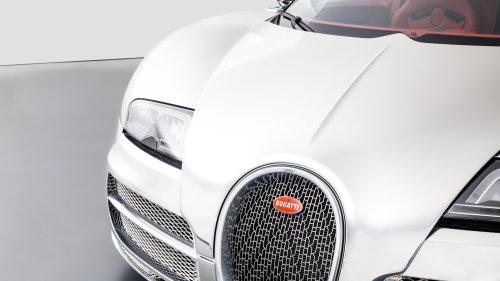
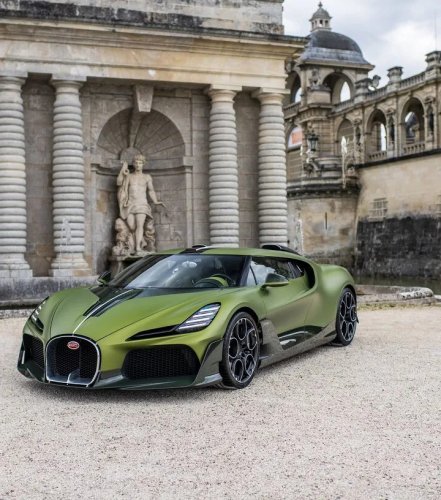
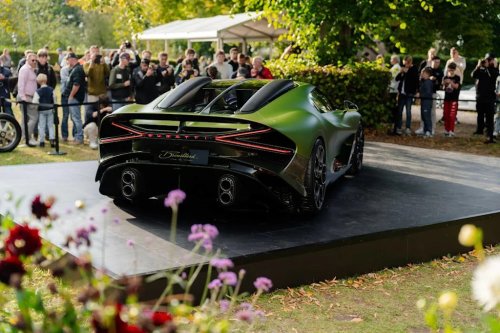
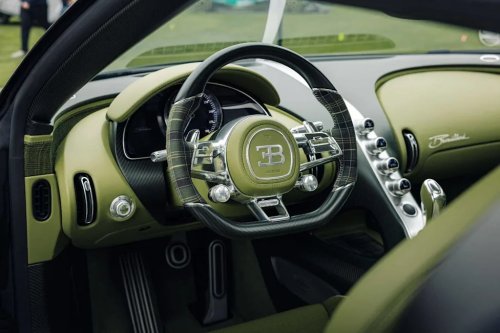
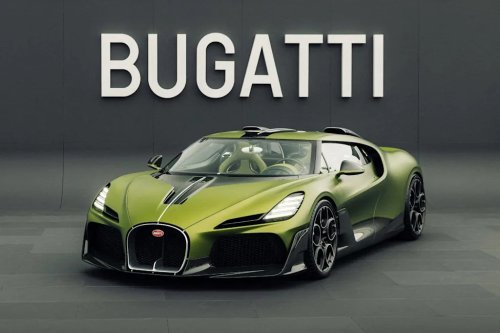
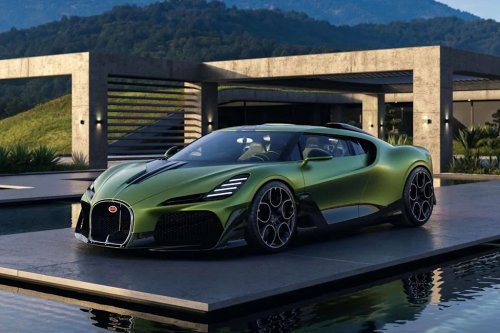
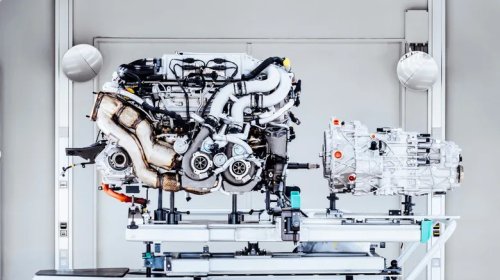
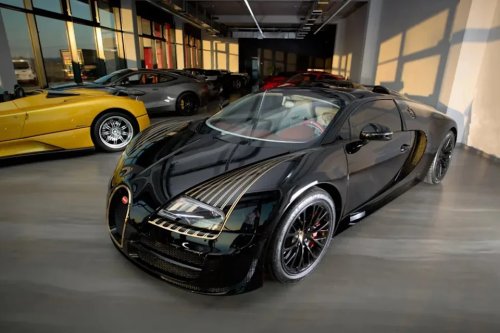
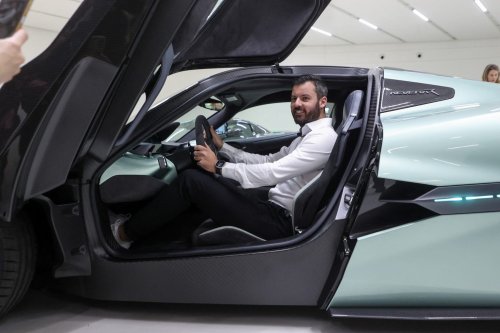
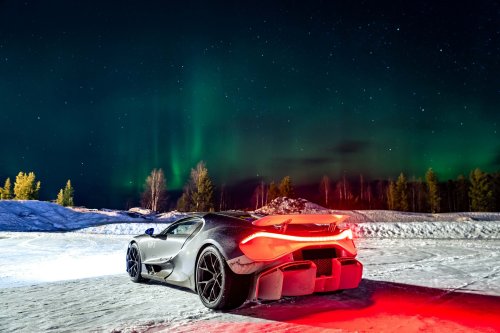
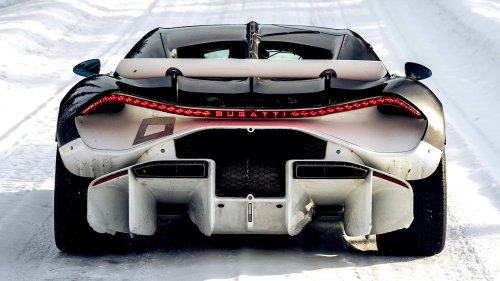
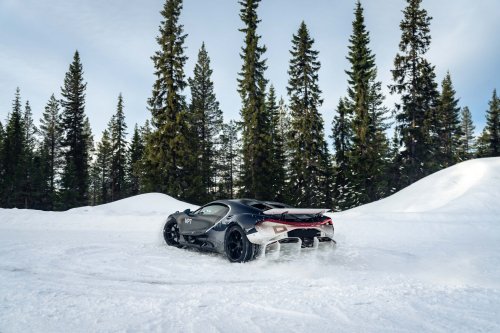
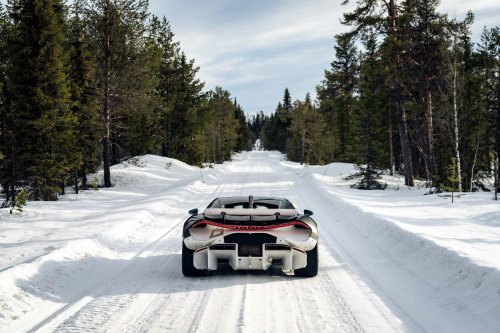
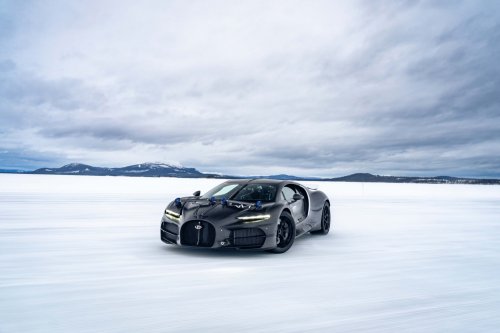
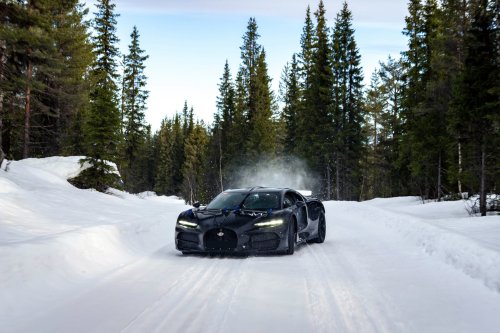
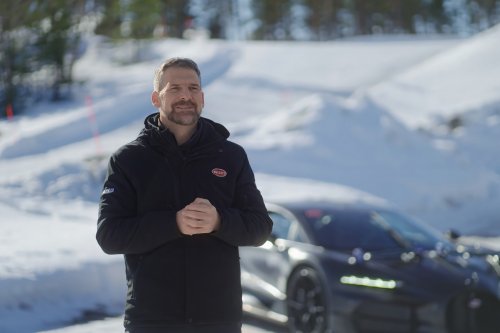
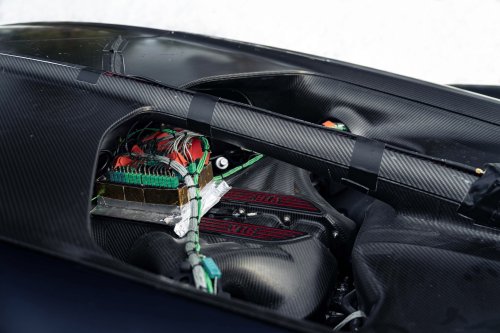
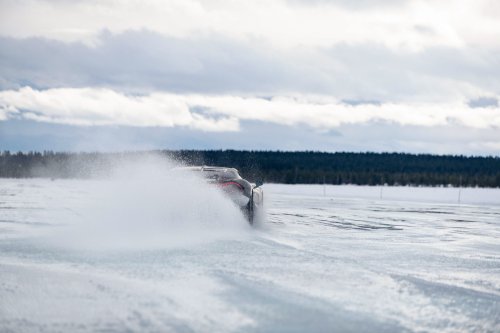
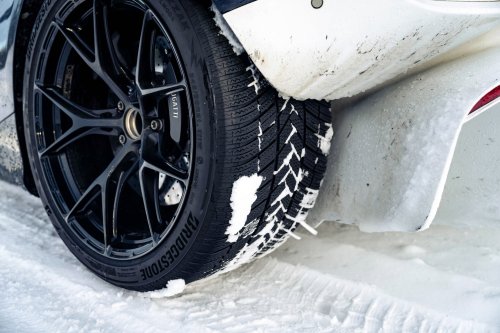
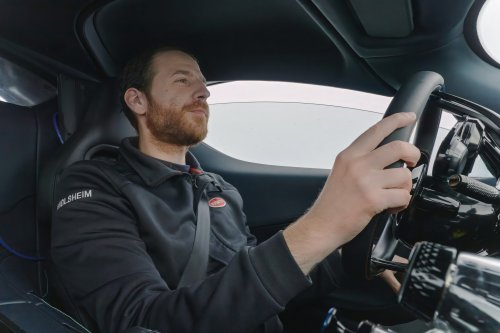
Customer deliveries of the Bugatti Tourbillon will start later this year. The car’s naturally-aspirated V16 and electric motors deliver 1,775 hp. Bugatti is working its magic on the Tourbillon’s three driving modes. It’s been almost two full years since the Bugatti Tourbillon was unveiled as the successor to the record-breaking Chiron, and the French marque recently completed winter testing of the car in Northern Europe. Seeing a hypercar sliding around in the snow isn’t something you witness every day. While very few, if any, future owners of the Tourbillon will ever drive their cars on the snow, testing at the Colmis Proving Ground in Arjeplog, Sweden, serves as an ideal place to test the car in harsh conditions and to fine-tune its handling dynamics across a wide range of different surfaces. Read: Bugatti’s $4.5M Hypercar Isn’t Even Out Yet, And It’s Already Trying On Aftermarket Wheels Bugatti’s team spent four weeks in the region putting a pair of Tourbillons through their paces with temperatures dropping as low as -30°C (-22°F). A key focus was on developing the car’s braking system, ensuring the regular friction brakes work in harmony with the regenerative braking through a complex brake-by-wire system. Not Even Ice Can Stop The Tourbillon Considerable time was also spent calibrating the ABS and ESC systems, with tests across polished ice, packed snow, slush, and asphalt, including areas where the car crosses multiple different surfaces within seconds. If braking starts on dry asphalt, and the car then hits polished ice, the onboard systems have to immediately respond to the different traction levels. Bugatti also used its winter testing program to further develop the Tourbillon’s Comfort, Sport, and Track driving modes. In Sport mode, the car adopts a neutral balance, while in Track mode, more torque comes from its rear axle, allowing for precise and sustained drifts controlled almost exclusively with the throttle and very little steering input. “Of course, hypercars are not really intended to be driven on snow and ice, but we do cover this quite extensively,” Bugatti Rimac chief development driver Miroslav Zrncevic said. “Simply because it’s of paramount importance, to both our customers and the teams developing the car, that the Tourbillon works extremely well in all weather conditions. After all, if its capabilities are comparable to other cars, it’s no longer a Bugatti.” Bugatti will build just 250 examples of the Tourbillon, and the first examples are expected to be delivered later this year.



















 +62 others