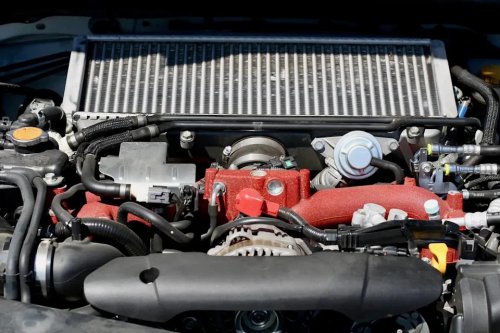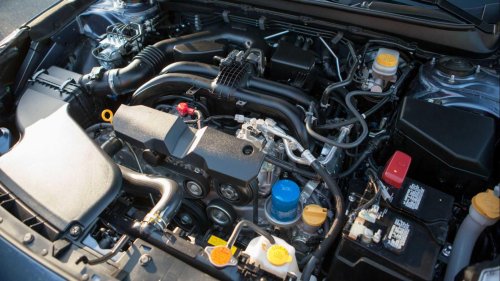

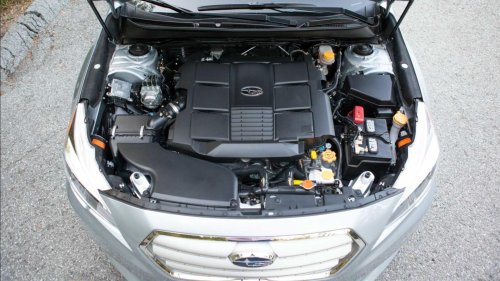




















Subaru's FB25 engine is a workhorse and is meant to be the dependable core of practical all-wheel drive cars like the Outback or Legacy. It seems capable of shrugging off all situations and job requirements and dealing with bad weather or big mileage requests in its stride. In fact, the FB25 has been a core part of the Legacy and Outback lineup for the longest time, including the revised 175-hp version that featured in the 2015 redesign or the later 182-hp direct injection version in the newer-gen Outback.But owners should only expect the FB25 to live up to that bulletproof name if they take reasonable care of it, and it's not going to reward neglect or lazy habits. There are some documented cases where owners learned the hard way about their obligations, where this otherwise solid engine turned into an expensive problem.However, for those who understand their obligations, the road ahead ought to be smooth and most maintenance requirements should certainly be cheaper than one major repair bill. The FB25 Really Can Be A Long-Life Engine SubaruSubaru set out with longevity in mind when it was designing its FB25. It would serve well in Outback and Legacy applications with decent fuel economy figures, a usable amount of torque, and the familiar low center of gravity that comes along with that boxer idea. In the 2015 Outback, Subaru championed the broad torque capability of this 2.5-liter engine and by the 2019 model year, the company had paired its powerhouse with CVT and standard all-wheel drive.From an engineering point of view, the FB25 had plenty of margin, which is always a good starting point if you're chasing long-term durability. Subaru knew that many of its owners would be doing school runs, winter commuting, road trips, and highway miles rather than racing around the lanes on a weekend, and it made sure that the engine would take that kind of activity in its stride. Even though Subaru upped the power with that later generation version, the FB25 was always going to be a practical, efficiency-minded engine and never an all-out performance motor. The Oil Rule Is The One You Cannot Ignore SubaruIf you do nothing else with your FB25, ensure to check the oil levels regularly. Subaru's documentation appears to be unusually direct here, advising owners to measure the levels weekly in its warranty and maintenance booklet or even to check the engine oil at each fuel stop. While that kind of activity at every gas-up visit may seem excessive, it was perhaps appropriate for those who were pulled into Subaru's oil-consumption class action settlement.Here, some 2013 Legacy and Outback models got into trouble with excessive oil consumption and seemed to burn their fluid at an alarming rate. Subaru eventually extended warranty coverage for qualifying repairs in affected cases, but that's a broader warning about oil in the engine family.If you have an early FB25 car, it's a good idea to check the oil often, keeping a note of how much fluid you add, and whether the level seems to be dropping faster than before. And even if you buy a used car with incomplete records, you might still be able to manage any oil-related risks, as long as you are consistent in your work. Conservative Servicing Beats Optimistic Servicing Subaru If you do intend to use your Outback or Legacy on very dusty roads or in environments that tend to be very cold in winter, you should pay even more attention than normal to oil and filter changes. A conservative service mindset would work far better than a stretched one, if your life is a mix of frequent short trips, off-road usage, and cold exposure. Subaru might classify that lifestyle as “severe”, so be very critical of your own maintenance pattern in those situations.Some people view over-maintenance as cheap insurance, and this is why many owners settle for the idea of a roughly 5,000-mile oil change as a sensible ceiling. Remember that harsh use will almost always shorten oil life and don't forget that this engine family did come across those oil consumption issues in earlier years. Overall, it just makes sense to have a realistic view on this subject. Ventilation And Deposits Seem To Be The Quiet Trouble Spots Subaru Subaru has suggested through its own service communications that the FB25's PCV system requires some extra attention. The company had a 2019 recall campaign (that also involved other FB family applications), which talked about a defective positive crankcase ventilation valve that might allow engine oil to get into the combustion chamber.In extreme circumstances, that could lead to loss of power or internal damage, and it’s a strong reminder that crankcase ventilation matters. Subaru doesn't necessarily recommend that technicians replace the PCV at any given interval, but it might be prudent to look into that, especially if the FB25 in question is aging or may have a spotty service history.Direct injection FB25 engines may also suffer from carbon build-up over the long term. Deposits could accumulate on injectors or internal engine components like intake valves, manifolds, or combustion chambers. It's important to look out for symptoms such as misfire, black smoke, lack of power, knocking, or a rough idle. The quality of the fuel used can also affect the situation and Subaru suggests a walnut blasting-based cleaning procedure in this scenario.Beyond these headline considerations, owners can also help an FB25 last as long as possible by cultivating some other habits. For example, they should be aware that cooling system conditions can matter in an aluminum engine like this because the design depends on stable temperatures. This means that it's never a good idea to overlook any overheating.The cleanliness of the air filter and intake could also be a consideration for those people who rack up heavier mileage or track down dusty roads. Owners should replace spark plugs on schedule rather than leave them until a misfire appears. It's also best to avoid heavy throttle use when your FB25 engine is cold and be proactive if you do encounter any drivability changes or hear some unusual noises. And while none of these points are necessarily dramatic on their own, collective attention to detail can help reward attentive owners. The Smart Move Is To Buy History, Not Mythology Subaru Don't automatically assume that, because a used Outback or Legacy has an FB25, that it will last forever. Take a close look at the documents for any used vehicle you come across and note that earlier FB25-era cars may have been involved in Subaru's oil consumption headache. Later examples probably had a more mature version of the design and, while that does not make earlier cars bad, it does make servicing records and oil care evidence more critical.Remember that the best used FB25 is not necessarily the cheapest one either. It's probably a vehicle with a sane owner, regular oil change documentation, no unexplained low oil history, and no general drivability issues.Many people who buy Legacies and Outbacks do so because they've got a good reputation and are likely to be around for the long haul, and the FB25 engine is part of that package. After all, this engine is something that’s modestly stressed in most situations and clearly capable of dealing with everyday demands without needing to offer any heroic output numbers.However, it's still important to keep up with maintenance and look at the previous service history of any candidate vehicle on the market. But if you follow the simple rules as a new owner, the FB25 can certainly be one of the most trustworthy parts of your Subaru Outback or Legacy.