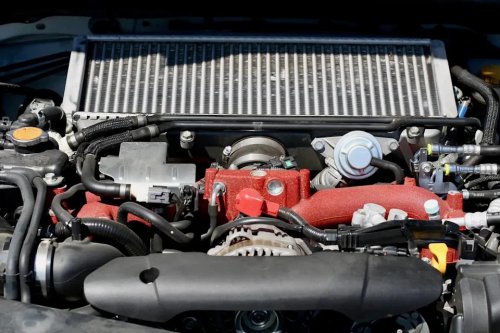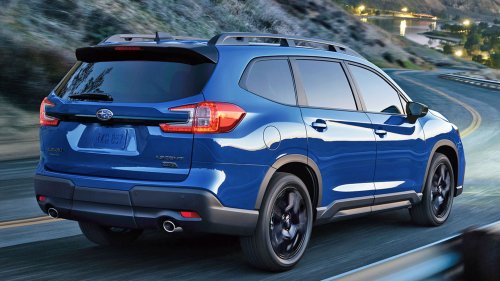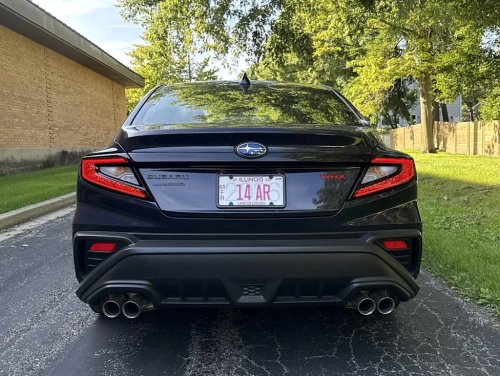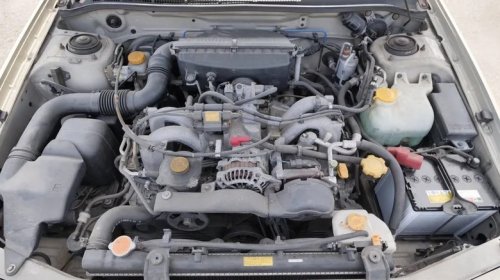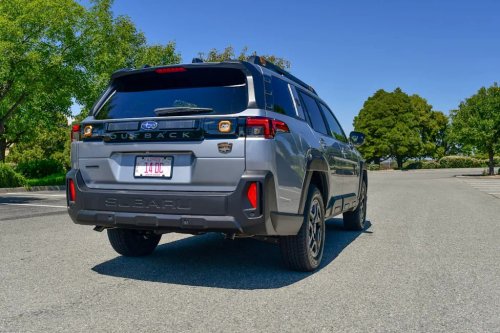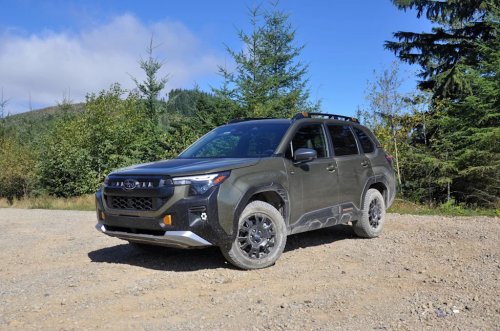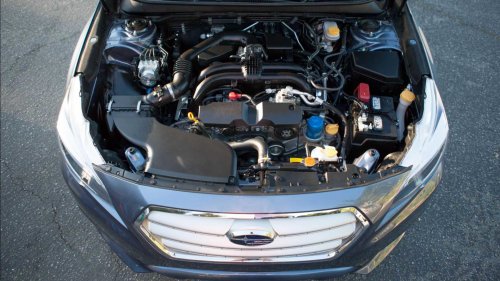

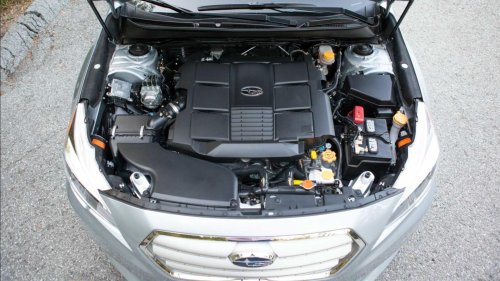
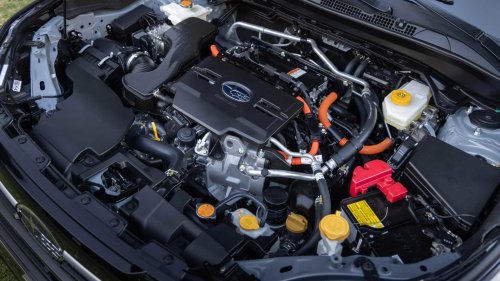
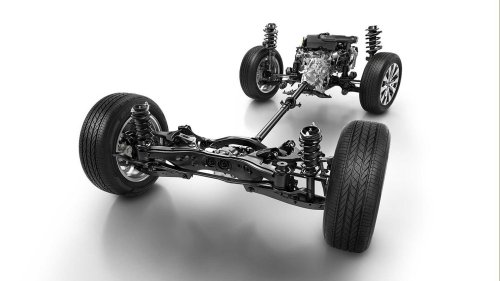
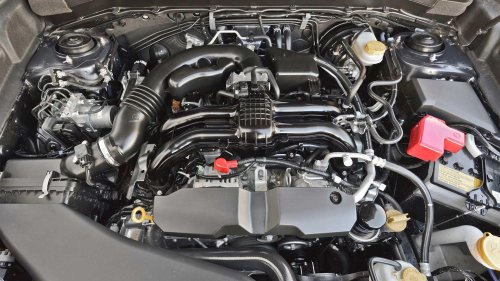
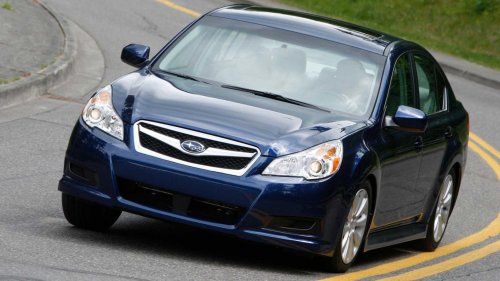



















Most automakers build engines in a few conventional layouts. When we say "conventional", we mean mills such as the inline-four, V6, or V8. These powerplants have been vastly more popular than any other sort created throughout automotive history. They're simple to build and well-understood, with decades of research and development into what works best.Subaru, however, made a decision long ago to stick like glue to the boxer engine. In essence, this engine layout consists of pairs of cylinders arranged opposite one another, turning a crankshaft in the center. As far as Subaru is concerned, the boxer is superior in a few key ways, and it also helps set Subaru models apart from the rest. The Japanese automaker has produced several iterations of the boxer over the years, but one stands out: the FB25. The FB25's Roots SubaruThe FB engine family debuted in 2010. At the time, Subaru was starting to feel a need to replace its aging EJ engine family, a grouping of mills that helped catapult the Subaru marque into super-stardom. The EJ had served the brand well since its inception in 1989. However, the FB wasn't slated to take the baton from the EJ immediately. The older mill was still expected to carry on, and it did until 2020. Technically, the FB engine is the third-gen iteration of the Subaru boxer engine.So far, three versions of the FB have been released: the 1.6-liter FB16, the 2.0-liter FB20, and our motor of interest, the 2.5-liter FB25. One of the main criteria given to Subaru powertrain engineers when the FB program commenced was to create an engine that was, on average, 10% more efficient than the older EJ engines. An all-new engine manufacturing facility, located in Oizumi, Gunma Prefecture, Japan, was also commissioned to handle the powerplant's production.Subaru The FB25 was first unveiled in 2011 under the hood of the Subaru Forester, carrying the code name "FB25B." Two years later, the mill found its way into the Legacy, then the Outback that same year. In 2019, a new variant of the FB25 hit the market, called "FB25D." It received some key updates over the FB25B to help it remain relevant in the fast-changing world of modern engine development. At press time, the Subaru FB engine is still in production. Here's How The FB25 Gets Its Work Done SubaruAlong with the FB25's mission to improve fuel economy, it was also tasked with producing more mid-range torque and reducing overall emissions. The mill is a clean-sheet design, consisting of an all-new aluminum block and new cylinder heads. The FB25 also features a dual-overhead-cam valvetrain with 16 total valves. Both the intake and exhaust valves use Subaru's Active Valve Control System (AVCS), the Japanese automaker's version of variable valve timing.All members of the FB engine family use a timing chain, replacing the timing belt used in previous mills, such as the EJ. According to Subaru, moving to a timing chain allowed the engine's valves to be placed at narrower angles to each other, which in turn meant the cylinder bores could be narrower. Because of these narrower bores, the mill gains efficiency by burning less unburned fuel at startup. The first-gen FB25B used port fuel injection, whereas the newer FB25D uses direct injection.Subaru In the pursuit of reducing emissions, Subaru engineers included lightweight components in the FB25's bottom end. For starters, it uses lighter connecting rods and pistons. The addition of roller rockers between the camshaft and valves helped reduce friction, and a coating applied to piston rings further reduces friction in the combustion chamber. Lighter 0W-20 oil, along with a simpler, more compact oil pump, also helps the cause.As of 2025, a hybrid version of the FB25D is in production. It's currently offered in the Subaru Forester and Crosstrek Hybrid models, and boasts a combined horsepower output of 194 horsepower. Why The FB25 Is So Reliable Subaru When it comes to reliability, some of Subaru's engines get a bad rep. However, the FB25 mill seems to contain quite a good bit of reliability. First, let's discuss just how reliable the FB25 really is.Its penchant for reliability begins in its guts. The all-aluminum block and cylinder heads come from a high-pressure die-casting process, which helps produce stronger-than-average components. In addition, the engine block has an open-deck design. While this doesn't bode well for block-top strength like a closed-deck block, it does help keep the engine cooler.Subaru At the top end, the FB25's use of low-friction materials allows it to achieve a higher reliability rate, too. Lower temperatures typically lead to a longer service life. So far, all FB25s have been naturally aspirated, which can improve dependability by being simpler and producing less heat than a turbocharged engine.To put the FB25's reliability in perspective, let's take a look at the 2015 Subaru Outback's average reliability ratings. According to RepairPal, the model earns a 3.5 out of five-star reliability rating and ranks 10th out of 26 total midsize SUVs, making it just above average. As far as we're concerned, the 2015 Outback scores rather well in reliability, earning a 9 out of 10.However, it's worth noting that there is one major drawback to the Subaru FB25B. It's well-known that earlier models suffered from oil consumption issues. The culprit is the low-tension piston rings, which allow too much oil into the actual combustion chamber. This issue was largely fixed for the FB25D that premiered in the 2019 Forester. Look Out, Turbo Fours SubaruNow, we can't sit back and say the Subaru FB25 is better than all turbocharged four-bangers, but it does boast a good bit of reliability, especially in its current "D"-spec form. On average, Subaru models equipped with an FB25 last roughly 200,000 miles, an adequate distance for today. Anecdotal evidence even points to some folks achieving 300,000 miles from their FB25.When it comes to the average turbocharged inline-four, some need extensive repairs well before the 200,000-mile mark. For example, take the Ford 2.0-liter EcoBoost four-cylinder. It can suffer from coolant intrusion into the cylinders, which, if left unchecked for too long, will necessitate replacing the entire engine. Honda's L-Series turbocharged engines are also known to be plagued by serious reliability issues, the most common being premature turbocharger failure due to seizing or wastegate problems.So, however you want to cut it, the Subaru FB25 seems to pack a great deal of reliability into a package that's typically seen as unreliable, that package being a boxer engine. Next time you're in the market for a car, and a Subaru sounds good to you, make sure to check out what sort of FB25-equipped model might work best for you.