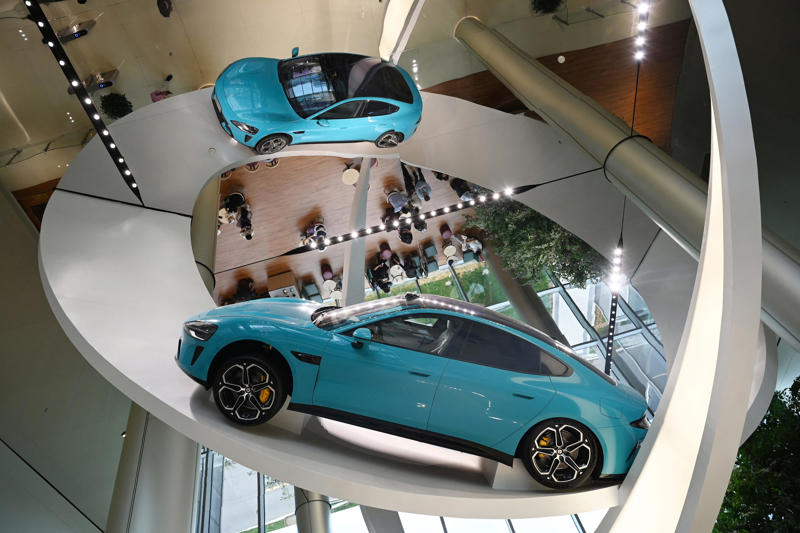
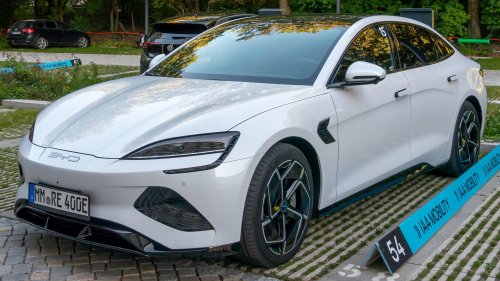
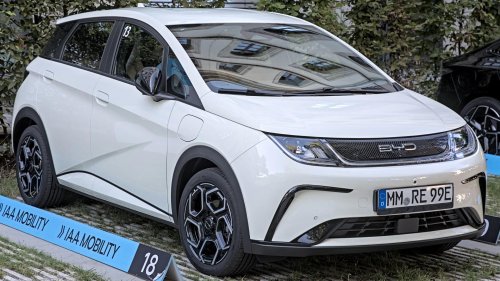
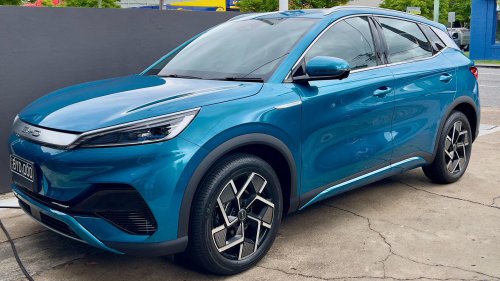
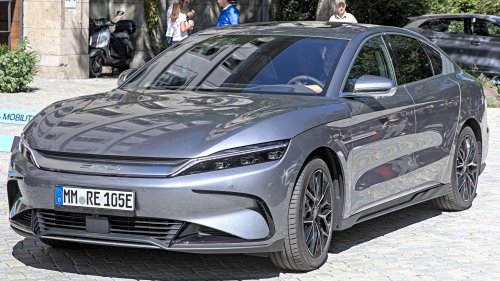
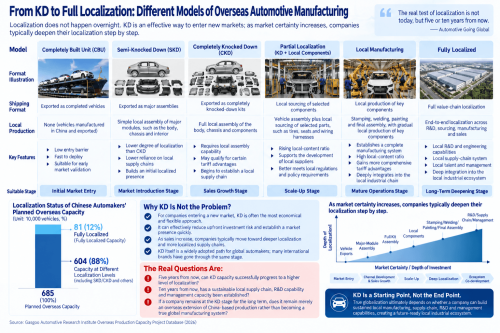
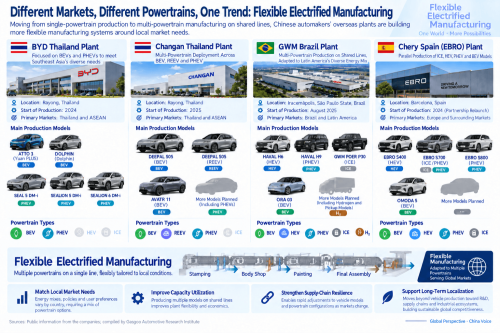
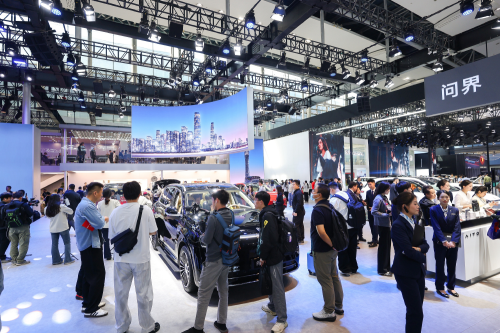
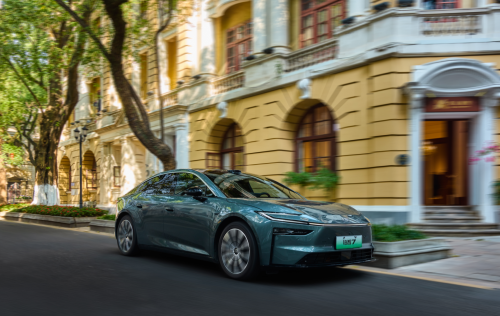
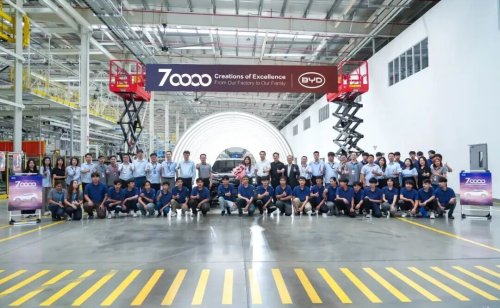
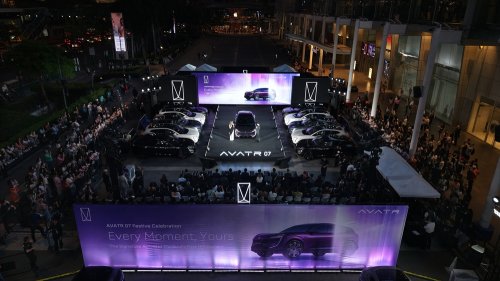
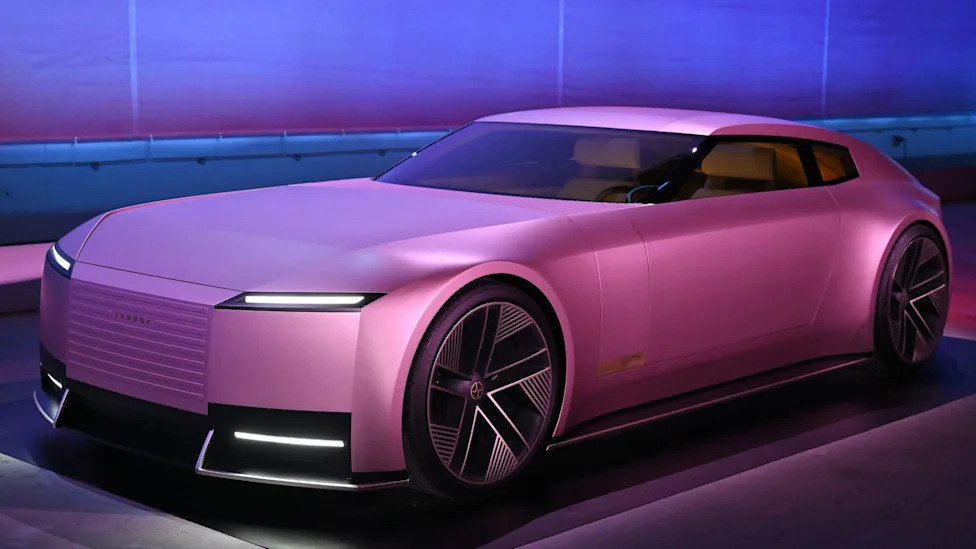
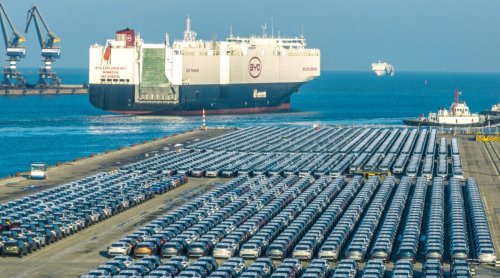
Michigan's automotive industry faces a potential future in crisis and to remain a global leader in technology, manufacturing and auto-related jobs, the industry must make changes to attract and retain top talent. It must also continue to innovate across all powertrains, including electric vehicles, said Glenn Stevens, executive director of MichAuto and chief automotive and innovation officer at the Detroit Regional Chamber. Stevens said the state's government can help the industry by providing better infrastructure, affordable housing and improved K-12 education with pathways to auto careers, as well. These steps are imperative, Stevens said, given that China's automakers are coming fast and furious to potentially dominate Michigan's main employment industry. "We still are very much in a leadership and strength position," Stevens said of Michigan's auto industry. "But we are at a critical point with the forces of change, that I would argue are unparalleled." Stevens spoke to the Detroit Free Press after sharing MichAuto's State of Mobility 2025 report on Dec. 10. It's a report MichAuto — the association that is dedicated to promoting and growing the auto industry in the state — does every 18 months to evaluate the health of Michigan's main industry. Stevens said the Chinese car industry did not exist that long ago, but it’s now expanding aggressively. Chinese cars, most of which are high-tech EVs at affordable prices, are not sold in the United States yet due to steep tariffs put in place under President Donald Trump in his first term and continued by former President Joe Biden and to date. But the Chinese automakers' global rise cannot be ignored. China produced 31 million vehicles for 2024, the report said, three times as many vehicles as the United States. China's car production accounts for 34% of the total vehicles made globally. "It’s not the scale of the industry, it’s the speed of execution and innovation, how fast they are moving and bringing new technology to market," Stevens said of Chinese automakers. "That’s the key. We are in the competition of our signature industry’s life so to speak." Stevens said the state's auto industry can meet the challenge, "as long as we know what we’re up against." Attracting youth to the industry Beyond the challenge of Chinese automakers, the industry faces a proliferation of automated intelligence in both the factories — with robots — and in vehicle software. That is creating a need for a worker who can work with digital equipment "because everything is moving toward digitalization," Stevens said. "Whether you work in the factory or on the connected vehicle, all jobs are requiring a higher degree of digital interface and skilled training," Stevens said. Yet the industry faces a perception crisis among youth, with many indicating they would not consider it for a career. Many cite a lack of awareness of jobs beyond engineering and manufacturing, unclear educational pathways, and misunderstood working conditions as the reasons for not considering a career in the auto industry, the report said. Stevens said the industry must change those perceptions. "We have to make sure that young people, when they look at the industry, it has to be viewed as a high-tech industry," Stevens said. "There are no more high-tech products on the earth than the vehicles our companies make, but we have to connect that fact to the younger workforce." And, some of the most in-demand auto-related jobs by 2032 will pay $22 to $63 an hour, the report stated. What the Michigan auto industry looks like Michigan's auto industry still has a lot of strengths. In 2024, there were 13 assembly plants that made 23 models, seven of which were EVs, in the state. Michigan remains the No. 1 state for new car production and the No. 1 exporter of vehicles. Last year, General Motors produced 618,843 new vehicles in Michigan across 13 models, the report showed. Ford Motor produced 570,107 new vehicles across six models, and Stellantis made 849,959 across five models in its Dodge, Jeep and Ram brands. Glenn Stevens, Jr. The automotive and mobility industry — which includes carmakers, auto factories, auto parts suppliers, research and development and electric vehicle companies — account for $348 billion in annual economic output and provides more than 1.2 million jobs, the report said. It makes up more than a quarter of the state's annual gross domestic product. Of the top 100 auto suppliers in North America, 95 of them are located in Michigan. And 25 automakers have facilities of some kind located in Michigan with 14 proving grounds. As for labor: Michigan's workforce is comprised of 98,000 engineers, making it the No. 1 state for concentration of engineers, the report said. In total, 20% of all jobs in Michigan are in the mobility industry with $83 billion in compensation paid out annually. There are more than 70 educational institutions in Michigan that offer engineering and computer science programs, the report stated. In the last five years, automakers and suppliers combined to invest $37 billion in Michigan, and three-fourths of those investments were for EVs and batteries. That was the biggest investment in the country, representing 13% of the total U.S. investments by the industry. The southern states of Georgia, North Carolina, Tennessee and Alabama collectively captured 54% of the total investments. 'The price of entry ... to be competitive' While Michigan remains the nation’s leader in building new cars and manufacturing jobs in the U.S. — for now, Kentucky and Alabama are seeing rapid growth in automotive manufacturing thanks to aggressive economic development and investment, the report stated. In 2004, 3.1 million vehicles were built in southern states, the report said. In 2024, that rose to 5 million. Whereas in the Midwest, which includes Michigan, production of new cars plummeted from 7.1 million built in 2004 to 5.2 million last year. The dip in Michigan's auto production over the past 20 years has been less pronounced going from 2.7 million cars built in 2004 to 2 million built last year. Then there is the intensifying global competition, particularly from China, that adds pressure on Michigan to stay ahead through innovation, workforce development, and continued investment in next-generation mobility. “Michigan has to step up its game and meet this challenge," Stevens said. "We’re going to have to look at … making sure our base-level education system performs far better than they do right now. We have challenges in that area." The report showed that Michigan ranks 44th out of 50 states in terms of students reading at a fourth-grade level and 31st in eight-grade math skills. Fewer than 60% of high school students enroll in post-high school education. Beyond fixing the schools, Stevens said Michigan also needs improved infrastructure — that includes broadband and digital infrastructure. Finally, to attract and retain top talent, Michigan needs strong communities and affordable housing. “That’s the price of entry for Michigan to be competitive, for companies to grow here and want to come here," Stevens said. "In the auto industry specifically, we have to meet the challenges of more automation in both factories and in our vehicles and we have to have the talent that can supply that and maintain that.” The future sees in-demand jobs The job openings in the auto field will be plentiful in the near future, Stevens said. The need will be strong for a "middle skilled workforce — the skilled trades," he said noting a need for welders and electricians in particular. "The factory will become more automated and someone has to design, maintain and repair the robots and those are good jobs," Stevens said. "We also need more software developers as AI enters the supply chain." In the report, it lists the following jobs, openings and estimated compensation for Michigan auto jobs in 2032: Software developers: 3,360 projected annual openings, requiring a bachelor's degree, paying $39-$63 an hour. Industrial machinery mechanics: 2,000 projected annual openings, requiring long-term on-the-job training, paying $24 to $34 an hour.Industrial engineers: 1,785 projected annual openings, requiring a bachelor's degree or license, paying $38 to $53 an hour.Mechanical engineers: 2,075 projected annual openings, requiring a bachelor's degree or license, paying $38 to $58 an hour.Heavy and tractor-trailer truck drivers: 6,420 projected annual openings, requiring post-secondary non-degree license or other training, paying $22 to $29 an hour. Giving students a path in The companies that are in Michigan or considering coming here are going to come for the talent, Stevens said. "So we’re in a competition for that technical talent at all levels with everyone," Stevens said. An area in the high schools that needs attention is with providing counselors to show young people the way into an autos job, that's especially important given that the current autos workforce, especially in the factories, are aging out. "We are not doing a good job at providing pathways," Stevens said. "The national recommendation in our schools is there be a ratio of 1 counselor for every 250 students." He said the national average is closer to 450 to 1 and Michigan is ranked 49th in the country with a counselor-to-student ratio of nearly 600 to 1. “That’s a major place where we can help people find pathways to those certification jobs or four year degrees," Steven said. The auto industry is committed to fixing that problem, Steven said, noting he had a meeting with the Detroit public schools and some auto executives recently to discuss the issue. Michigan's 'call to action' The report also showed there is deep concern among Michigan's population of falling short of Chinese EVs. Michigan ranked as the 24th state in EV sales per capita, the report states. According to the study, a Detroit Regional Chamber poll of Michigan voters showed that 58% of voters think the state should aggressively compete to be an EV leader and 65% say Michigan's economy would be hurt if China becomes the world's EV leader. A Xiaomi SU7 Max car is displayed at the entrance to the Xiaomi EV Factory, where all Xiaomi EV cars are made, in Beijing on July 1, 2025. In fact, the study said if the United States and Michigan fail to compete on this front, they risk losing an economic and innovative edge to global competitors, especially in China, which produced 70% of the worlds EVs in 2024, according to the Alliance for Automotive Innovation. "We have to be forward thinking in regards to the industry itself, for example, EVs cannot be politicized," Stevens said. "Electric vehicles are growing around the world and they are going to grow here too. We have to have a business climate that enables companies to grow here and be able to foster more innovation in the start-up economy in Michigan. This is our call to action.” Jamie L. LaReau is the senior autos writer for USA Today Co. who covers Ford Motor Co. for the Detroit Free Press. Contact Jamie at jlareau@freepress.com. Follow her on Twitter @jlareauan. To sign up for our autos newsletter. Become a subscriber.