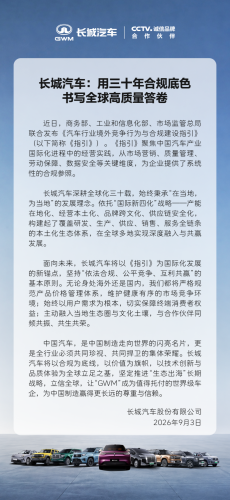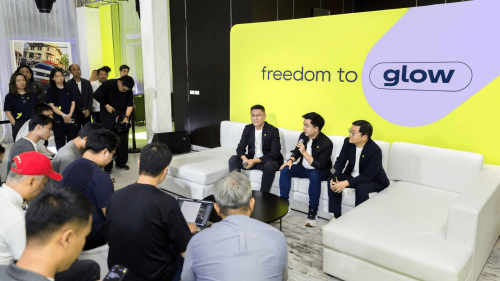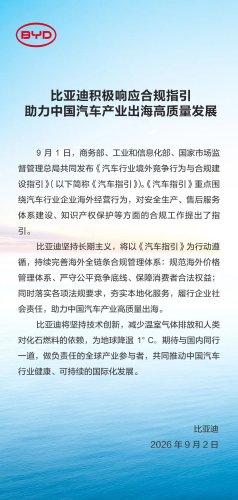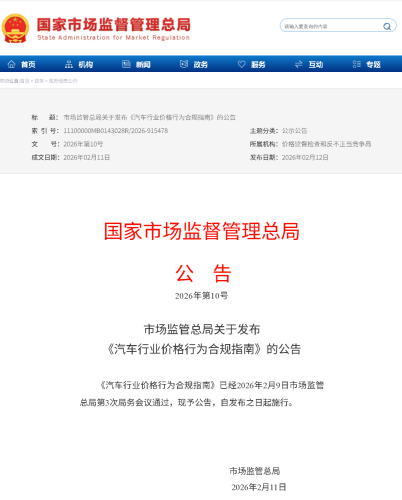
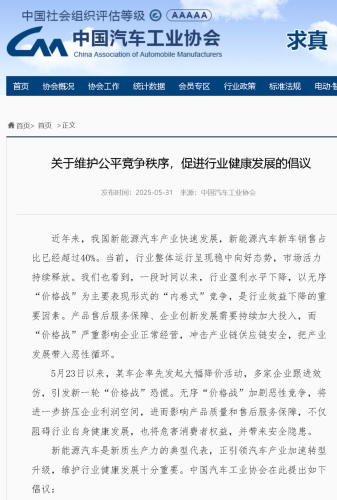
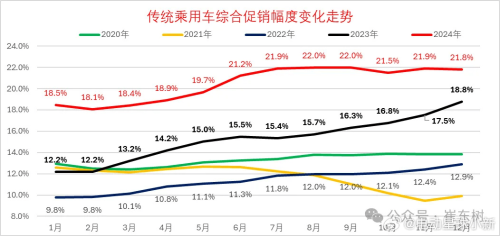
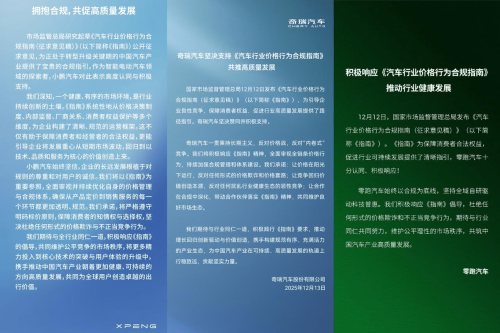
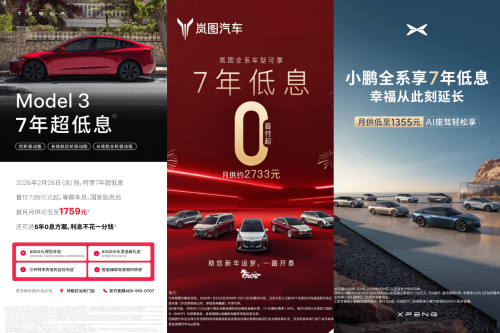



















With the official release of the Guidelines, the competitive logic of China’s auto industry is set to undergo a fundamental shift. China’s State Administration for Market Regulation (SAMR) issued an announcement today, stating that the Guidelines on Compliance for Pricing Practices in the Automotive Industry were approved at the executive meeting on February 9 and took effect from the date of issuance. SAMR Announcement A look back at the policy’s journey from proposal to implementation. As competition in the automotive industry intensifies, China’s auto market has entered a phase of disorderly competition characterized by “volume at the expense of price.” According to data from the China Passenger Car Association, 173 car models saw official price cuts in the first 11 months of 2025, with industry profit margins dropping to 4.3% — below the average level of downstream industrial sectors. In order to regulate pricing practices across the entire automotive chain, the industry repeatedly called for anti-involution initiatives. On December 12, 2025, SAMR released the draft version of the Guidelines on Compliance for Pricing Practices in the Automotive Industry for public comment, marking the first systematic delineation of compliance boundaries for pricing behavior throughout the entire automotive production and sales chain. One month later, on January 14, 2026, three government bodies — the Ministry of Industry and Information Technology, the National Development and Reform Commission, and SAMR — jointly held a symposium with new energy vehicle companies, explicitly calling for “resolute opposition to disorderly price wars and the promotion of a fair competition market order featuring superior quality and fair pricing.” On the same day, executives from 17 leading automakers attended the meeting, signaling the formation of a policy consensus between regulators and industry players. CAAM Issues Initiative on Fair Competition Order The official release of the Guidelines marks a fundamental shift in the competitive logic of China’s automotive industry. According to the Guidelines, the most closely watched core requirement is the explicit prohibition of sales below cost. Article 10 of the document stipulates that, except for clearance of overstocked products at reduced prices in accordance with the law, automakers that undercut production costs through nine specified methods — including discounts, subsidies, debt-for-asset swaps, over-shipment with under-invoicing — for the purpose of excluding competitors or monopolizing the market, will face “significant legal risks.” This means that the “selling at a loss” strategy widely adopted by automakers over the past three years to gain market share has now entered the regulatory red zone. Trend in China’s Passenger Vehicle Promotional Intensity In addition, the Guidelines clearly define “production cost” for the first time — including manufacturing costs and period expenses such as administrative, financial, and selling expenses — providing a clear benchmark for corporate compliance self-assessments. On the sales side, Article 20 of the Guidelines explicitly prohibits auto dealers from selling at prices below purchase costs with the intent of excluding competitors. This indicates that the entire chain of “price war” transmission, from manufacturers to dealers, has been brought under regulatory scrutiny. Multiple Automakers Respond to Pricing Compliance Guidelines Regarding the controversial “paid unlocking” features in recent years, the Guidelines clarify: if a feature is offered with a free trial period, the duration of the free period and subsequent charges must be disclosed; differentiated value-added functions may not be charged without clear prior notification. In terms of promotions and price fraud, the Guidelines dedicate substantial space to listing seven categories of behavior with “considerable legal risks,” including deceptive pricing language, false labeling of “limited-time discounts,” failure to honor pricing commitments, and advertising low-priced products that are actually unavailable. These provisions directly address the marketing malpractices that have drawn the most consumer complaints. Several Carmakers Roll Out 7-Year Zero/Low-Interest Policies Against the backdrop of tighter regulation, several automakers — including Tesla, Xiaomi, and Xpeng — launched “seven-year ultra-low interest” promotional plans early in 2026, quietly ushering in a “financial war” marked by ultra-long terms and ultra-low interest rates. Industry insiders point out that financial promotions represent a new path automakers are exploring to break through the constraints imposed on traditional price wars by regulatory pressures.