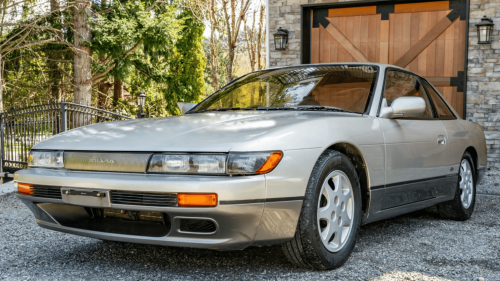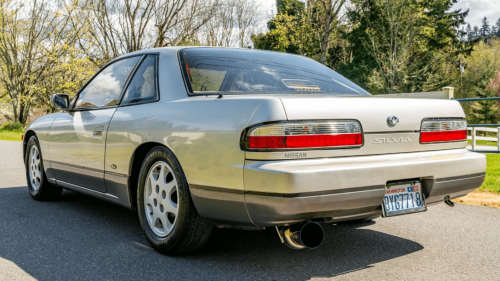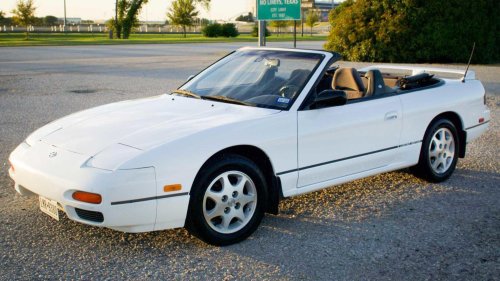
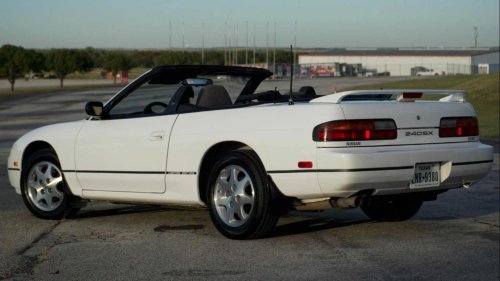
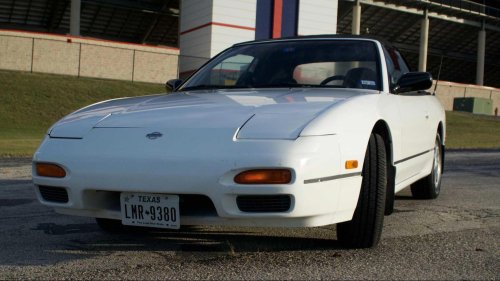
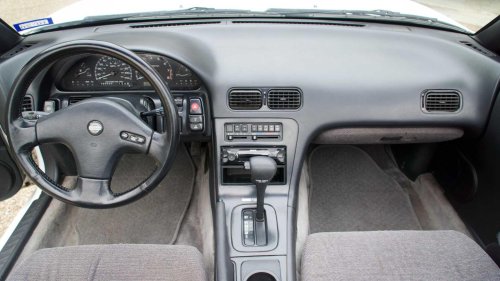
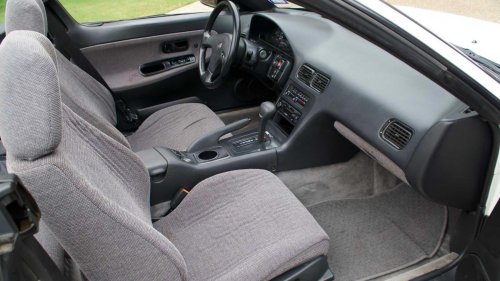
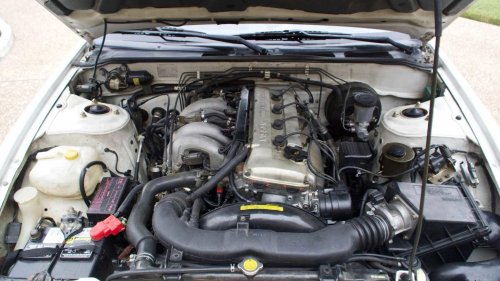
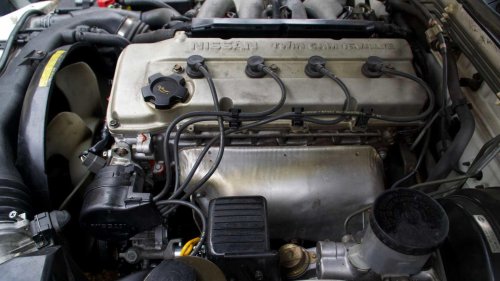
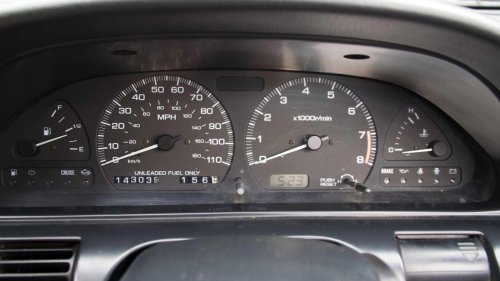
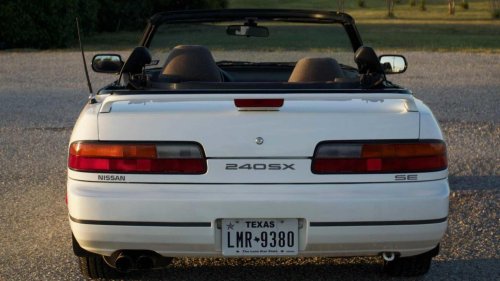
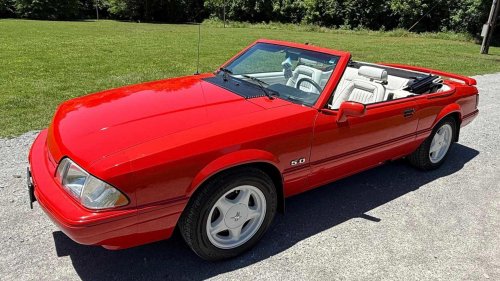
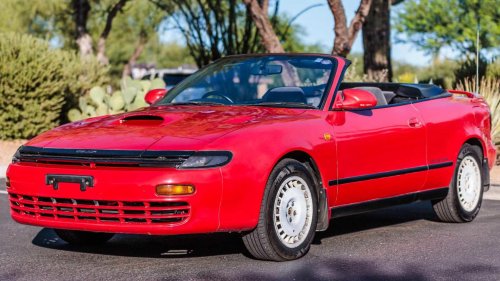


















During the late 1980s and 1990s, tuner car culture was alive and well here in the US. Following the Japanese car boom that began mid-way through the 1970s, sports cars produced by the country began to flood American streets. A combination of well-balanced chassis', competitive pricing, and styling that was much more "with it" than most of their American competitors positioned these early tuners, in some cases, miles ahead of the domestic competition.Along with the explosion in popularity regarding tuner cars, a drifting subculture began to develop. Many of you know that front-engined, rear-wheel drive is the best recipe for good drifts, and Nissan's 240SX fit the bill perfectly. What's more, the 240SX was offered as a convertible for just two years during its first generation. These droptops were only available for the US market, and these days, they're rather hard to come by, especially ones equipped with a manual transmission. A Drift Machine With A Sawn-Off Roof Cars & BidsBeginning in 1989, the Nissan 240SX stormed into the American market, ready to battle it out with competitors like the Ford Mustang LX and the Toyota Celica. It wouldn't be until 1993 that the famous drift machine would offer a convertible roof, though, just one year before the first-gen's discontinuation. However, the droptop 240SX wasn't exactly a factory-built option. Instead of having the conversion done with Nissan, it was sent off elsewhere for the transformation to be completed.The "elsewhere" in question was the American Sunroof Corporation (ASC). The company was based in California, and was responsible for numerous conversions, and they weren't all coupe-to-convertible jobs. However, in the 240SX's case, it was. The way it worked for the Nissan sports car was, a select number of models were sent overseas from Nissan's Kanda Fukuoka plant in Japan to ASC in Rancho Dominguez, California.Cars & Bids From there, the models would be converted by having their roofs sawn off, and a ragtop installed in its stead. Once the conversion was complete, the finished droptop 240SXs were shipped to Nissan dealers throughout the country. The convertible version carried a large premium, as its original MSRP was, reportedly, around $22,695, or about $50,883 in today's money. On the contrary, the base coupe sold for approximately $15,105, or roughly $33,645 today. All told, most sources point to roughly 8,000 convertible examples being produced for both the 1993 and 1994 model years. A Closer Look Cars & BidsIt can't be ignored that one of the best parts of the 240SX, convertible or not, are its pop-up headlights. Apart from those, the convertible models came standard with about what you'd expect from an early-90s Japanese sports car. Nearly all convertible first-gen models that offered the soft top were of the "SE" grade.Cars & BidsCars & Bids Those with a bit more jingle in their pockets could spring for some optional features. These included things like leather-trimmed seats, an automatic transmission, and four-wheel anti-lock brakes (ABS). A limited-slip differential was also optional. Nissan offered something called the "Power Convenience Group", which boasted things like a head-up display (HUD), an impressive piece of digital engineering back in the early 1990s. A digital speedometer also came with the Power Convenience Group package. Under The Hood Cars & BidsNestled beneath the convertible 240SX's hood is one of Nissan's most famous engines. It's a 2.4-liter four-pot belonging to Nissan's KA engine family, and carries the codename "KA24DE." The mill itself sports a dual-overhead camshaft valvetrain, along with a four-valves-per-cylinder configuration. Direct fuel injection is also featured, along with piston oil squirters, which are essential for motors destined for routine hard driving. Unfortunately for the first-gen 240SX as a whole, the KA24DE was considered underpowered for the model, with some automotive publications lamenting the lack of a turbocharged model.Cars & Bids Handling the KA24DE's power was a Nissan-bred five-speed manual transmission as standard. Optionally, buyers could go for a four-speed automatic, although auto-equipped 240s are much less desirable in the current market. Its suspension system is made up of MacPherson struts up front, and a multi-link configuration at the rear. The 240SX was praised for its agility and penchant for handling when it was new, with its well-balanced suspension being credited for the bulk of the model's fun-to-drive attitude.Cars & Bids However, convertible models were just a bit kneecapped in the performance department. Because it lacked a rigid roof, ASC needed to beef up the model's chassis, which meant weight needed to be added. The reason behind the chassis strengthening was, when you take the roof off a car, it loses an integral portion of its body, meaning a good bit of rigidity is lost. Without added strength to help balance this loss of a roof out, convertible models would be substantially more "wobbly" than their hardtop counterparts. How It Compared To Some Period-Correct Competitors Cars & BidsIn the early 1990s, convertible sports cars were all-the-rage. Folks really loved the ability to open the top up and go for a blast down some twisty road, and who wouldn't like that from time to time? Because of this, several automakers were busy producing their own convertible, sporty models alongside Nissan's 240SX. Below, we'll take two of the model's competitors and try and figure out how they stack up to our Nissan. 1992 Ford Mustang LX Cars & BidsFirst up, we'll take a look at the 1992 Ford Mustang LX, another droptop sports car positioned as a Nissan 240SX competitor. Right out of the gate, the 'Stang wins in the engine department, as it boasts a 5.0-liter V8 as standard. With the larger engines comes a larger power output, measuring roughly 50 extra ponies. It was much quicker, as well. However, the Mustang was heavier, measuring in at just under 3,000 pounds. The Mustang was also much cheaper, carrying a base price of $16,899. 1991 Toyota Celica Convertible Cars & BidsNext up comes from another Japanese brand. The Toyota Celica holds a storied place in Toyota's history as one of its most famous rally cars. It also happened to occupy the small convertible sports car segment at the same time as the 240SX. The Celica came standard with a 2.2-liter naturally-aspirated inline-four. In 1991, the Celica convertible carried a base price of around $19,228, roughly $3,000 cheaper than the Nissan. However, it lacked the rear-wheel drive drivetrain enjoyed by the 240SX, an integral part of the model's penchant for drifting.While there were few competitors occupying the small, four-seater convertible sports car segment in the early 1990s, the Nissan 240SX shined as one of the better options out there. However, its steep price and slightly underpowered nature did hinder it a bit, especially when compared to the Mustang.