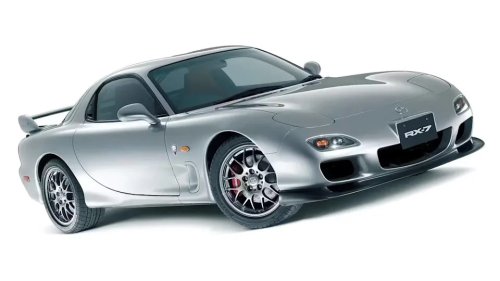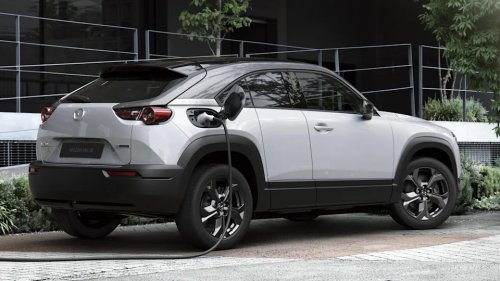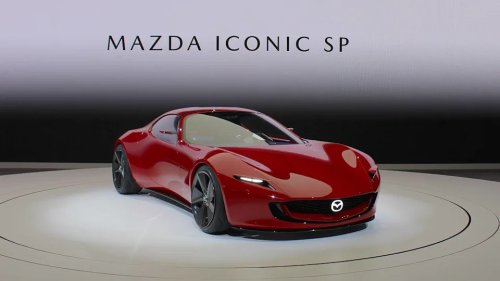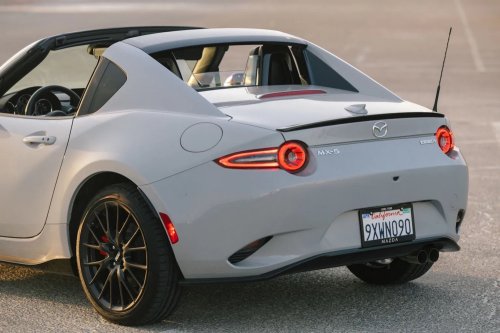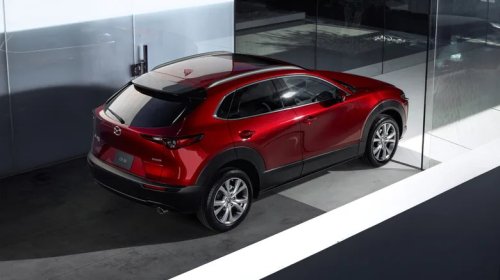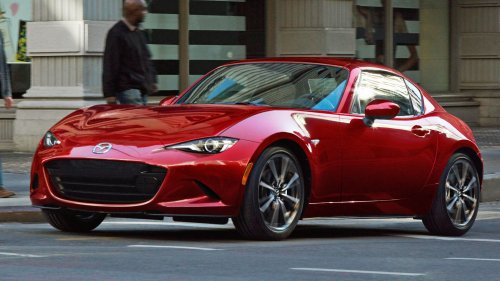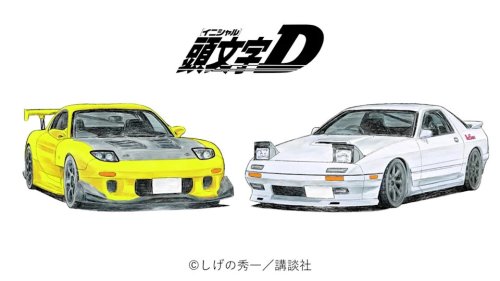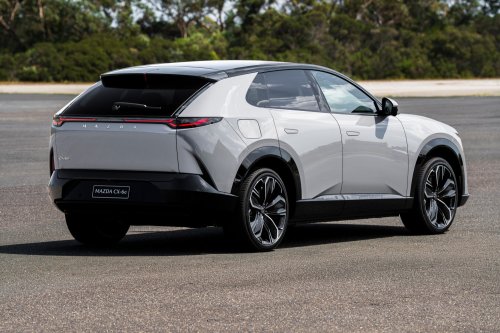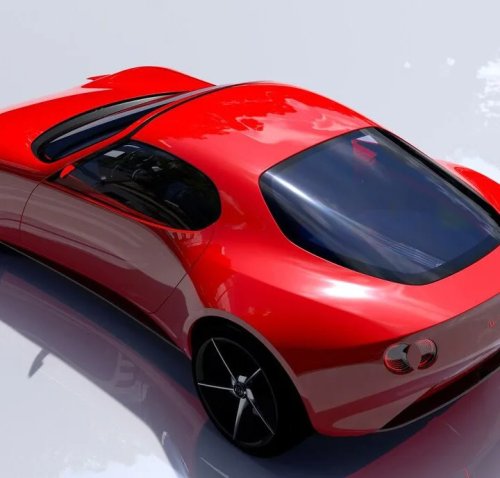



















Mazda Patented a Fix for the Rotary Engine's Dirtiest Secret. The RX-7 Crowd Should Pump the BrakesEvery time Mazda files a patent with the word "rotary" anywhere near it, the same ritual plays out. Enthusiast outlets dust off renders of the Iconic SP concept. Comment sections start drafting eulogies for whatever eventually replaces the RX-7. Someone, somewhere, declares "it's happening" with far more certainty than the paperwork supports.This week's patent is getting the same treatment. And the excitement is aimed at the wrong thing.What Mazda actually filed with the U.S. Patent and Trademark Office earlier this year isn't a sports car. It's a plumbing diagram. As CarExpert first reported after reviewing the filing, it describes a compact exhaust gas recirculation system for turbocharged Wankel engines, a way to bleed a small stream of hot exhaust back into the intake to cool combustion and suppress oxides of nitrogen, without the oversized cooling hardware that job normally demands.AdvertisementAdvertisementThat sounds like a footnote. It isn't. It's Mazda trying to fix the exact flaw that ended the rotary's career as a car you could actually buy.Here's the part most casual readers skip past: rotary engines have always struggled to keep their exhaust clean, and the reason has nothing to do with tuning or bad luck. The Wankel's combustion chamber isn't a neat cylindrical dome like a piston engine's. It's a long, thin, crescent-shaped pocket that travels around the housing as the rotor spins. That shape drags out the burn and cools the flame front against a comparatively huge surface area, leaving unburned fuel in the exhaust that a piston engine would have finished combusting. Layer on the fact that rotary engines intentionally meter a small amount of oil into the combustion chamber to lubricate the apex seals, and you get a design that has been fighting its own emissions certification since the first RX-7 arrived in America in the 1970s.That fight eventually became unwinnable. The Mazda RX-8 was pulled from European showrooms in 2010 because its naturally aspirated Renesis engine couldn't meet Euro 5 emissions rules, and the car was discontinued worldwide by 2012. Mazda never engineered a direct replacement. Every "next RX" concept since, the Iconic SP in 2023 and the Vision X-Coupe in 2025, has been a styling exercise wrapped around an engine problem nobody had actually solved. If you want a sense of how much patience rotary ownership already demands even without a new model, this modified RX-7 that recently hit auction is a good place to start.Here's a detail almost nobody remembers, and it says everything about how marginal the rotary's emissions performance really was. Mazda backed the RX-8's engine core with an unusual eight-year, 100,000-mile warranty, a policy some of its dealers still list today, layered on top of the catalytic converter's federally mandated emissions coverage. Rotary apex seals wear against the housing and depend on metered oil injection to survive, and that oil eventually works its way into the exhaust stream. Federal law requires catalytic converters to be warrantied for eight years or 80,000 miles on any car sold in America. Mazda backing the whole rotary engine for that long, at that mileage, wasn't generosity. It was an acknowledgment that this particular engine wore out its own emissions equipment faster than a normal one would.AdvertisementAdvertisementThat's the regulatory environment this new patent is trying to operate in. An EGR system is the standard tool for controlling NOx in modern turbocharged engines, piston or otherwise, and any rotary hoping to drive wheels again in a country with real emissions oversight needs one that actually works inside the packaging constraints of a Wankel. The clever part of Mazda's design, per the patent description, is routing only the smaller, cooler exhaust stream from the engine's peripheral port through the EGR cooler, while the larger, hotter stream from the side port goes straight to a turbocharger. That keeps the cooling hardware small enough to fit around an engine that already has notoriously little room to spare.It's a genuinely elegant piece of engineering. It is also not, by itself, a green light.Here's the part Mazda isn't saying out loud, and the part that matters more than any sports car speculation: solving the nitrogen oxide problem does nothing to solve the rotary's other, harder regulatory problem, which is fuel economy. The same combustion chamber geometry that makes NOx and unburned hydrocarbons hard to control also makes the rotary thermally inefficient compared to a piston engine, which is a technical way of saying it burns more fuel to make the same power. That flows straight into a company's fleet fuel economy obligations under CAFE in the United States and CO2 targets in Europe, and neither of those rules cares how good your EGR packaging is. A patent that quietly fixes emissions plumbing without touching combustion efficiency is solving one exam question while leaving the harder one blank.That mismatch is exactly why the rotary's only production job right now is the small one. The Mazda MX-30 R-EV, sold mainly in Europe and Japan before it was discontinued this year, used an 830cc single-rotor engine purely as a generator to recharge the SUV's battery, never to turn the wheels directly. That's a far easier assignment for a Wankel. A generator engine can be tuned to run at one, or a handful, of optimized operating points instead of chasing a driver's throttle across an entire rev range, which sidesteps a lot of the rotary's dirtiest, least efficient operating conditions.AdvertisementAdvertisementThe turbocharger in this new patent points somewhere else, though. CarExpert's read of the filing, and it's a reasonable one, is that a turbo only makes sense if the rotary is meant to drive the wheels directly again, the way it did in the RX-7 and RX-8. If that's the goal, Mazda has chosen the harder path on purpose.Concept cars are cheap. Mazda can roll one out every couple of years, collect the applause, and never write a check for tooling or crash certification. We've seen the same pattern play out with battery patents out of China, where a flurry of filings generates headlines long before anything reaches a factory floor. A patent addressing a specific, decades-old certification failure is a different kind of signal. It doesn't guarantee a production car. But it's the first real evidence that someone inside Mazda is doing the unglamorous engineering work instead of just commissioning another render.Remember this the next time a rotary patent goes viral: the filing that should actually excite enthusiasts isn't the one with a turbocharger in it. It's the one that touches compression ratios, rotor housing materials, or fuel injection strategy, because that's the patent aimed at the exam question Mazda still hasn't answered.Join our Newsletter, follow our Instagram page, and connect with us on Facebook.