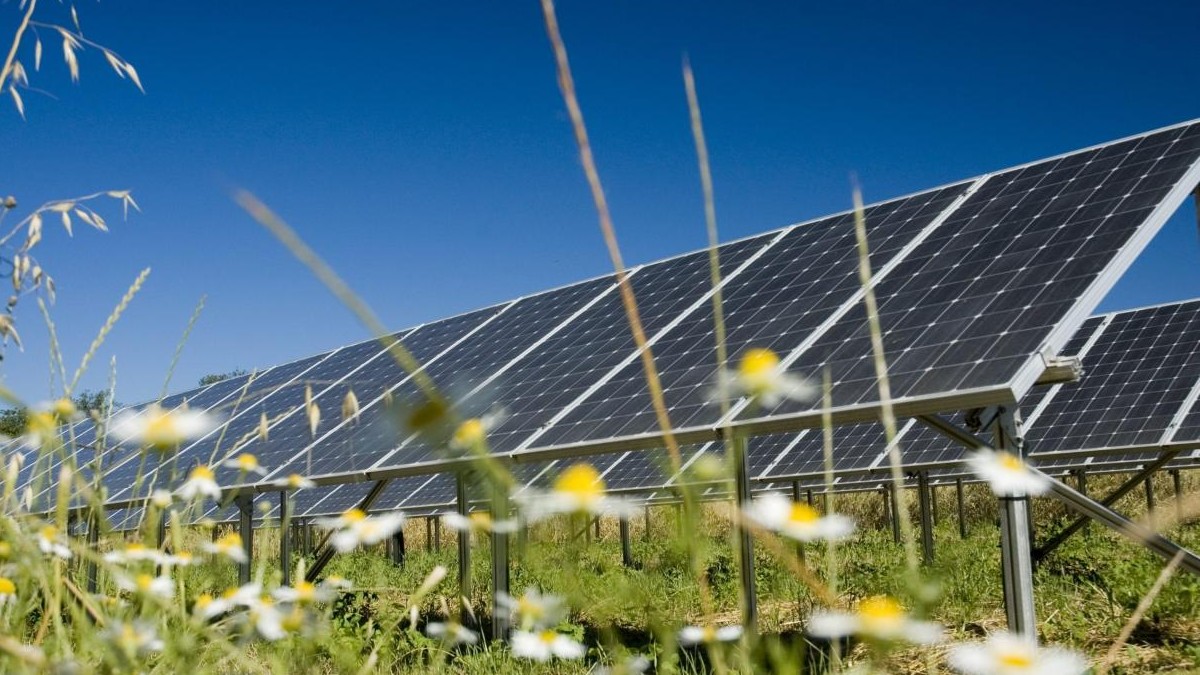


























Image: Springwell Solar Farm Global energy demand growth slowed in 2025 – but electricity use is still surging, and solar just hit a major milestone, according to the International Energy Agency (IEA). According to the IEA’s newly released 2026 Global Energy Review, overall energy demand rose 1.3% last year. That’s slightly below the previous decade’s average and well down from 2024. The slowdown was caused by weaker economic growth, milder weather in some regions, and more efficient technologies. But zoom in on electricity, and it’s a very different story. Global electricity demand jumped around 3% in 2025 – more than twice as fast as overall energy demand. Even though that growth cooled slightly from 2024 (thanks in part to less extreme heat in places like India and Southeast Asia), it’s still running ahead of the long-term average. Advertisement - scroll for more content What’s driving it is a number of factors: more electrification in buildings and industry, rising EV adoption, and growing power demand from data centers. Solar leads global energy growth for the first time Solar was the single biggest contributor to global energy supply growth in 2025. It accounted for more than 25% of the increase – the first time a modern renewable has led global primary energy growth. Natural gas came next at 17%, reflecting its continued role in electricity generation. Overall, renewables and nuclear together met nearly 60% of the growth in energy demand. In fact, power generation from those sources exceeded total growth in electricity demand, meaning clean electricity more than covered the increase. EVs keep oil demand in check Global oil demand still grew, but only by 0.7%, right in line with IEA expectations. One big reason: EVs. Electric car sales jumped by more than 20% in 2025 to over 20 million vehicles, accounting for roughly 1 in 4 new car sales worldwide. That’s starting to put real pressure on demand for gasoline and diesel. Coal trends were mixed. In China, strong renewables growth cut coal use in power generation. But in the US, higher natural gas prices led to more coal use as utilities switched fuels. Overall, coal demand growth slowed. The big picture: Electrification is accelerating IEA Executive Director Fatih Birol summed it up: “Electricity consumption is growing much faster than overall energy demand – and one energy source [solar] is growing much faster than any other.” And that shift is happening against a messy global backdrop – economic uncertainty, geopolitical tensions, and volatile energy markets. Under the surface, regional trends are diverging. The US saw one of its strongest years of energy demand growth this century (excluding rebound years after recessions), driven by data centers, industrial activity, and a colder winter. China still accounted for the largest share of global demand growth, but its growth slowed sharply to 1.7% as renewables scaled and efficiency improved. Emissions growth slows, but not everywhere Global energy-related CO2 emissions rose by about 0.4% in 2025, a slower increase than in previous years. China’s emissions actually declined, thanks to rapid growth in renewables and other low-emissions tech. India’s emissions were flat for the first time since the 1970s (excluding the pandemic), helped in part by a strong monsoon season. But in advanced economies, a cold winter pushed up fossil fuel use and emissions. As a result, emissions in advanced economies grew faster (+0.5%) than in emerging and developing economies (+0.3%) for the first time since the 1990s. Solar, battery storage, and nuclear all ramp up The electricity sector saw some standout milestones in 2025. Solar added about 600 terawatt-hours of generation globally – the largest increase ever recorded in a single year for any power technology. That helped push overall coal-fired electricity generation down. Battery storage was the fastest-growing power technology, with around 110 gigawatts (GW) of new capacity added – more than any year of natural gas capacity additions on record. And nuclear is making a comeback: More than 12 GW of new reactors began construction in 2025 in several regions. Clean tech is denting fossil fuel demand Since 2019, the rollout of low-emissions technologies has reached a scale where it’s meaningfully cutting into fossil fuel use. The IEA says these technologies now avoid annual fossil fuel consumption equal to the entire energy demand of Latin America. And collectively, solar, wind, heat pumps, and other clean tech are displacing natural gas demand equivalent to about half of global LNG exports. Electrek’s Take The big takeaway from the IEA’s latest report isn’t just that solar had a record year – it’s that the system is starting to shift in a measurable way. Electricity demand is rising fast, and clean power is increasingly meeting that demand. Solar alone leading global energy supply growth would’ve sounded optimistic a decade ago. Now it’s reality. At the same time, the report shows how uneven the transition still is. Coal is falling in some places and rising in others. Emissions are flattening globally, but not consistently across regions. Still, the direction of travel is clear: More electrification, more clean power, and more pressure on fossil fuels – especially in road transport. And if EV growth keeps up at anywhere near this pace, oil demand will continue to weaken. The US-Iran conflict isn’t exactly endearing the oil industry to global consumers. Read more: EV prices drop again as the gap with gas cars hits a record low If you’ve ever considered going solar, make it easy by finding a trusted, reliable solar installer near you that offers competitive pricing by checking out EnergySage. It has hundreds of pre-vetted solar installers competing for your business, ensuring you get high-quality solutions and save 20-30% compared to going it alone. Plus, it’s free to use, and you won’t get sales calls until you select an installer and share your phone number with them. Your personalized solar quotes are easy to compare online, and you’ll get access to unbiased Energy Advisors to help you every step of the way. Get started here. Stay up to date with the latest content by subscribing to Electrek on Google News. You’re reading Electrek— experts who break news about Tesla, electric vehicles, and green energy, day after day. Be sure to check out our homepage for all the latest news, and follow Electrek on Twitter, Facebook, and LinkedIn to stay in the loop. Don’t know where to start? Check out our YouTube channel for the latest reviews.