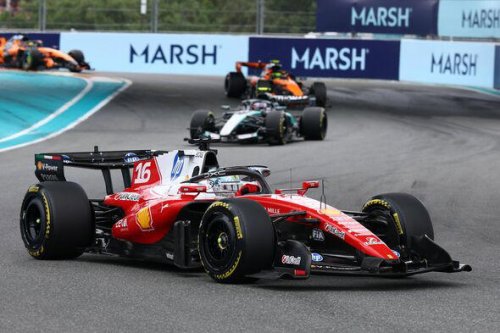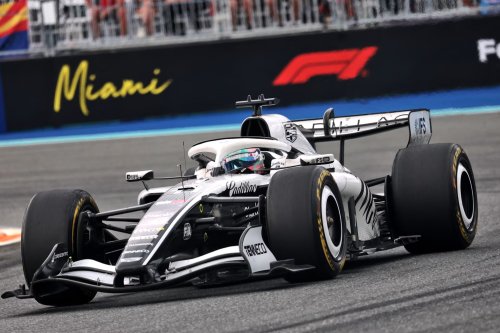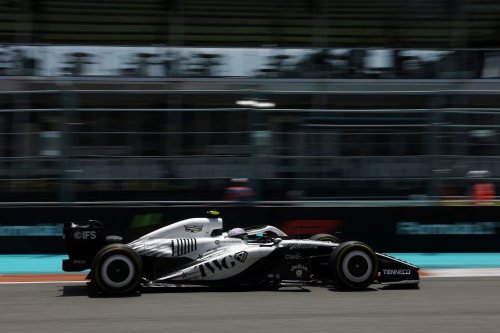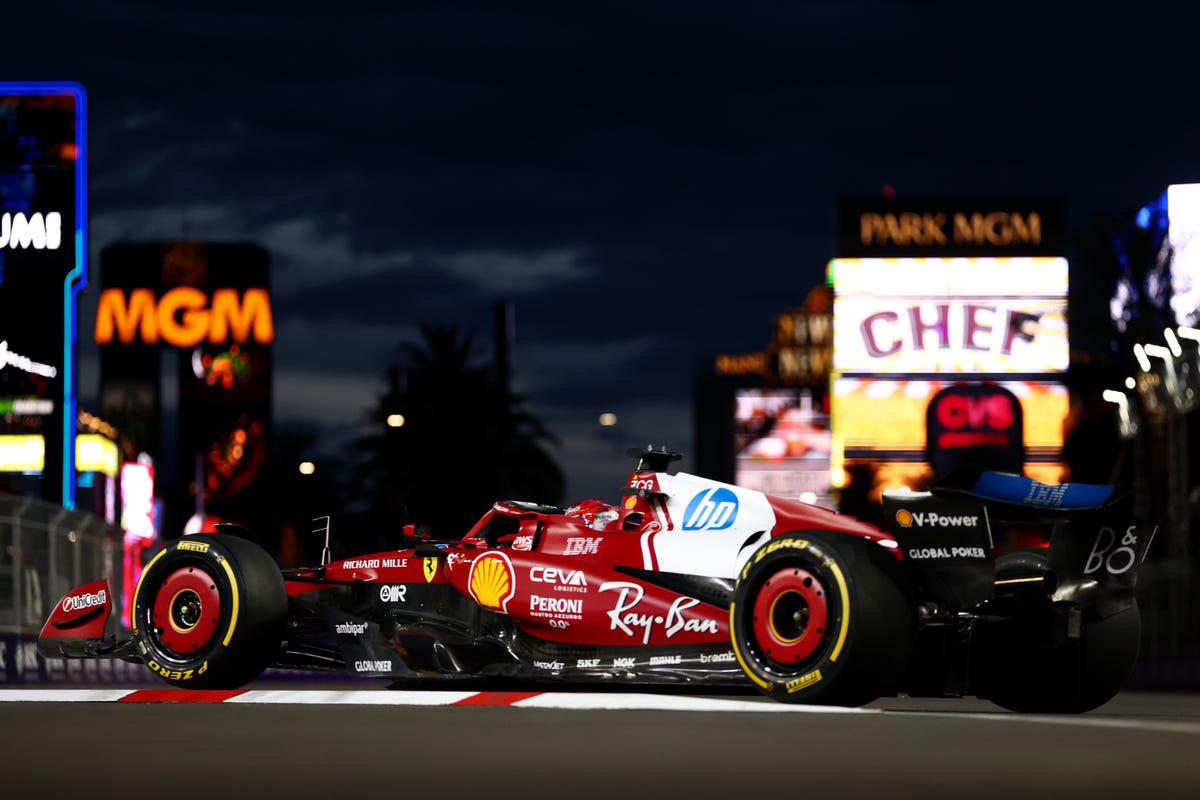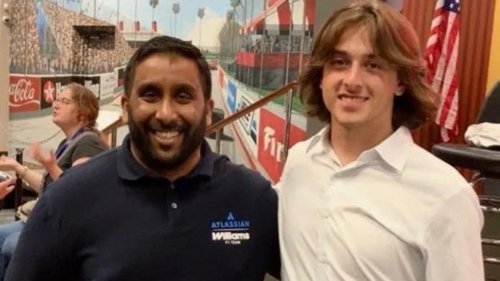
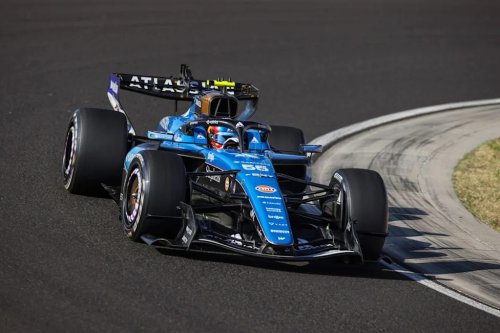
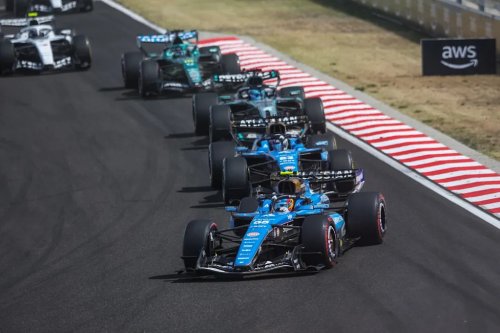
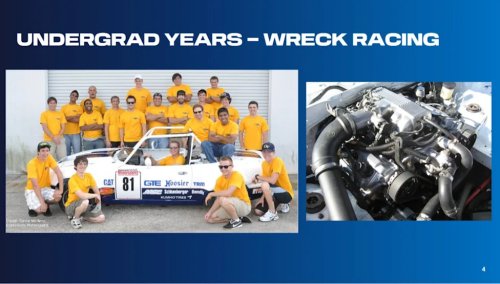
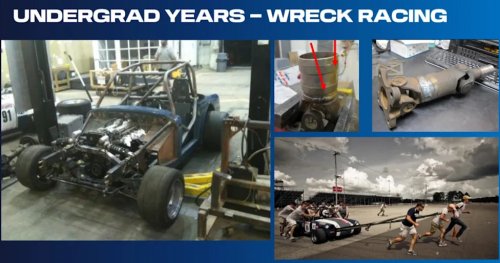
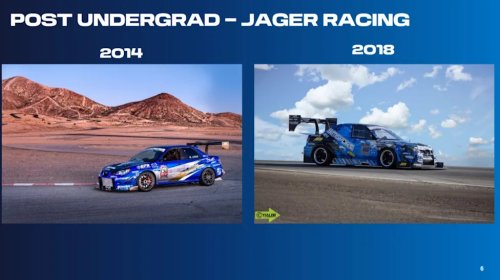
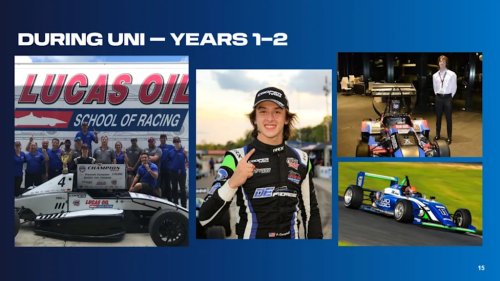
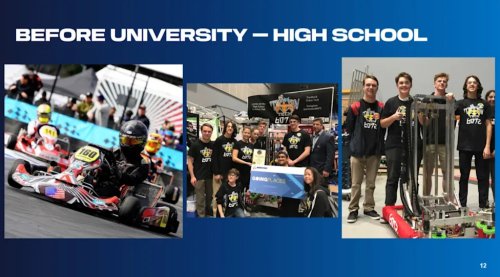
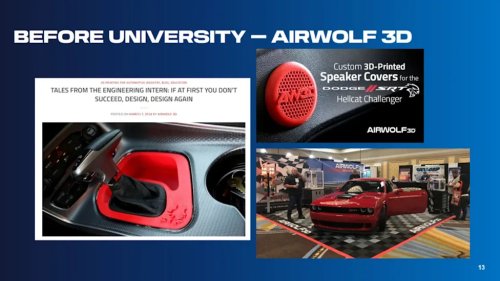
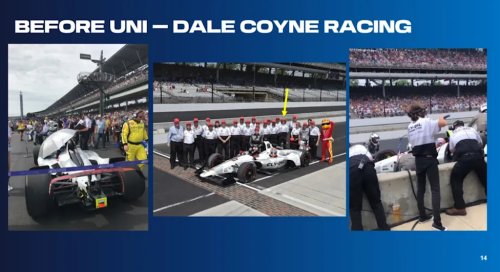
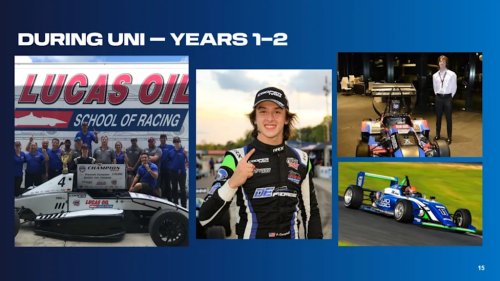
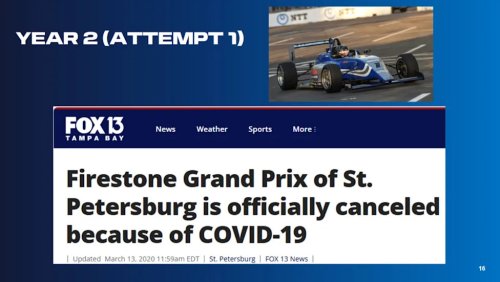
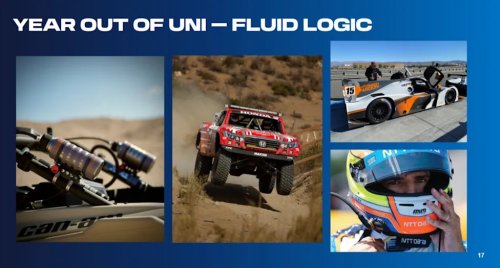
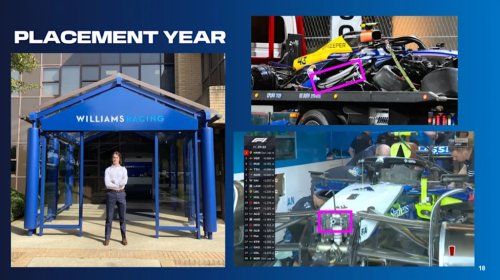
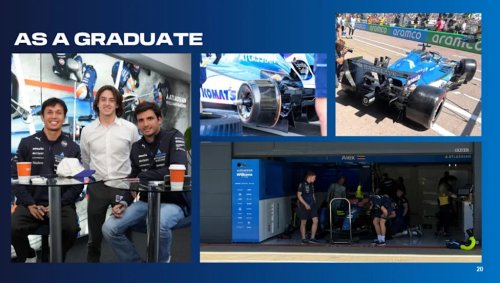








How Two SoCal Engineers Made Their Way to F1Michele SpencerIf you don't have the dream to begin with, you'll never achieve it.Prescott Campbell and Rami Edirisinghe both grew up in Southern California—the birthplace of hot rodding, custom cars, lowriding, drag racing, desert racing, and there were even some Indy cars and Grand Prix cars built there—but it could easily seem a million miles away from the high-tech carbon-fiber glamour and Euro-sophistication of Formula 1.That didn't stop either one of them from pursuing their dreams of working in the most sophisticated form of racing outside of NASA.AdvertisementAdvertisementFormula 1 takes just about the whole month of August off—July 27 to August 23. So during that time both of them came home to Southern California. SAE's Dean Case knew about them—he knows about everyone in motorsports—so he asked if they'd address the monthly SAE SoCal meeting, held at the extensive collection of the Lions Automobilia Foundation in Rancho Dominguez."They graciously accepted," Case said.Williams driver Carlos Sainz at the Hungaroring July 31.NurPhoto - Getty ImagesIndeed, despite having among the coolest jobs in all of engineering, they were polite and friendly to all during their visit to Lions. Here's what we learned.Rami Edirisinghe is Systems Simulation Engineer focusing on powertrain cooling and mechanical systems. He got his bachelor's from Georgia Tech where he was on the Georgia Tech "Wreck Racing" team competing in the Grassroots Motorsports $2,000 Challenge.AdvertisementAdvertisementPrescott Campbell's title at Williams is Graduate Structural Engineer. He got a bachelor's in motorsport engineering from Oxford Brookes University, where he was a Formula Student EV team lead (Formula Student is the European version of Formula SAE). He's also the 2019 Lucas Oil Formula Car champion and a former USF2000 driver.SoCal SAE secretary Emily Sharp introduced Edirisinghe first."His path to F1 is a great example of how careers in motorsport aren't always linear," she said, using a very engineering term.After studying at Georgia Tech, working as an R&D engineer at Advanced Clutch Technology, and volunteering with Grassroots Racing programs, Rami earned his master's degree at Cal State Fullerton, where he specialized in thermal fluids.AdvertisementAdvertisement"Go Titans," Sharp said.Both the Williams cars you see here have work by Prescott and Edirisinghe.NurPhoto - Getty ImagesBut he started his presentation, not with the surface tension research he's done for the F1 car, but with the 1975 BMW 2002 he's had since he was 16."I've decided to do a very sacrilegious thing and replace the BMW engine with a Honda K24, very polarizing."You have to think outside the box if you want to get to F1.He didn't do Formula SAE at Georgia Tech, instead concentrating on something called "Wreck Racing.""Wreck Racing is part of the Grassroots Motorsports $2,000 Challenge. You can do practically anything you want within some safety guidelines, but the $2,000 limit is a hard cap."AdvertisementAdvertisementThe team chose a Mazda Miata and swapped in a Lexus 1UZ-FE, a 4.0-liter, 32-valve, quad-cam all-aluminum V8 that offered forged internals and extreme reliability.Along the way there was innovation involved.Rami Edirisinghe"We wanted a manual transmission. We couldn't afford it, so we thought, what could we do? We ended up building a microcontroller that basically shifted the automatic transmission, because the grassroots race is only an autocross, and you only use second and third gear, followed by a drag race. This worked for us."Further innovation came the next year when the team dropped a 2JZ into an MG Midget.AdvertisementAdvertisement"As you can see, (the car) is quite small because, after you put (the straight six 2JZ) and then the GM transmission and the Ford 8.8 (rear end), there's actually not a lot of room in between them. But the biggest issue we ran into was, at this point, I think we had $50 left in the budget, and we had to somehow shorten a drive shaft and balance it."They realized that the forward side of the driveshaft was 2.75 inches in diameter, and they came up with the idea of building concentric rings, using that to center the piece, and then welding it."So that actually managed for us. But this is the thing: a good engineer knows how to look at problems, and it's not necessarily always about what simulation tools you know and what kind of problems you're looking at. Rather, it's more about how you look at your problems and how you approach your problems and how you go back to your fundamentals. And this is one thing I really learned a lot."Rami Edirisinghe"But the other heartbreaking thing you learn is that motorsports is quite cruel. So as you can see at the end, we spent all this time building this amazing car. We have half the team out there at the competition, and then the rear axle mount decides to fail, taking the transmission out with it. So that's motorsports. Get used to it."So, he says, they wound up switching power plants. By that he means the team attached straps to the car and pulled it through the slalom and drag strip.AdvertisementAdvertisement"So effectively we did not DNF. We were the slowest team, but we won the spirit of the event award. I think that's another great thing about motorsports. You can work really hard. You can have the best ideas, but sometimes you will not win. But you keep on trying."When he was working at ACT clutches, he signed on at Jager Racing. He sent Mark Jager an email."Hey, I'm just looking to volunteer for some more sports opportunities. I work at ACT. I work close by. I have experience in these different areas, and I also am interested in aerodynamics. And for some reason, all he saw was 'aerodynamics,' and then I became the aero guy."The Jager Racing STiJager RacingHe started doing pressure measurements on the hood, moved to computational fluid dynamics, then he arranged a deal with AEM to do data logging, then invented a rolling road to test aerodynamics on the car, including a vacuum that sucked the belt of the rolling road to the "ground" because it kept getting sucked up by the aerodynamics.AdvertisementAdvertisementAnd from there he graduated and applied to Williams as an aerodynamicist."And to my surprise, the the HR department comes back to me and says, 'You know, Rami, you're not really qualified for this aero role, but we see you have all this heat transfer experience.' And I was like, 'Yes.' And they were saying, 'Well, we're actually looking for a heat transfer person.' I didn't even know you could do heat transfer in F1. I mean, it's probably obvious, but I just was so hard focused on aero that I never thought that heat transfer could be a thing. So that's how I got into F1."And what has he learned so far?Prescott Campbell started out racing open wheel winged cars.Prescott Campbell"When you build a race car, you often have tradeoffs. You can make the best cooling system ever, so you can reject the most amount of heat; you can best make the best aero possible, the most downforce, least drag; you make the lightest car possible; but if you optimize for just each one of those things, you won't get the fastest car. The fastest car is from the team that knows which trade is the best to make, and that sometimes varies from track to track. So that's what our group is about."AdvertisementAdvertisementPrescott Campbell, meanwhile, had all the engineering learning curves and added a start of a career as an open-wheel driver."I was very fortunate at a young age to know exactly where I wanted to end up in my career. I had a dream, I had a goal."And he was genetically predisposed to be a race engineer."Both my parents were engineers, so I was naturally interested in it from them, and I loved motorsport thanks to my dad. So I knew I wanted to get to Formula 1 as an engineer of some kind, and because of that, I could think very early on from when I was about 14 years old, 'How do I start right now to get some advantage over all the other candidates?"He started in karting then advanced to engineering through robotics.Prescott CampbellRacers are competitive, after all. His high school, Corona del Mar High, had a robotics team, so he joined that.AdvertisementAdvertisement"Our team's first year I became the CAD lead because I was the one willing to learn how to use SolidWorks. At the same time I was racing go karts and really doing it because I enjoyed it and I was learning a lot and it was challenging and I loved competitive sport."He wrangled an internship at a local company called AirWolf 3D while still in high school.Prescott Campbell"They had a plan to take a Dodge Hellcat to SEMA and CES. And what better way to appeal to small automotive businesses that are too scared to dip their foot into 3D printing than to show them that a 16-year-old can make parts for a real car that goes on display?"So he spent his summer and junior year designing and producing 3D-printed parts for the Dodge Hellcat."Everything I was learning as a 16-year-old, getting to grips with engineering, and then at SEMA in 2017, getting to present and speak to all these business owners to prove to them that 3D printing is a rapid iterative prototyping process that they can all benefit from, and it's something that's really accessible."Confident kid!When it came time to choose a college, he had heard a story about a student from Northern California named Trevor Green Smith who had gone to a university called Oxford Brookes University in the United Kingdom. That kid managed to come back and work as a performance engineer at Dale Coyne Racing. So he called him."I really just wanted help deciding: Is going all the way to the UK for something like this really worth it? Is that going to give me the best chance?"Prescott CampbellFrom that call came an unpaid internship for the two weeks leading to the Indy 500 at Dale Coyne Racing working on Santino Ferrucci's car.First thing he did was build a 3D-printed driver cooling fan system to keep the drivers cool in the grid and in the pits when they're giving feedback. He almost got the job as the guy who hands the tires over the wall during pit stops, but wound up as the "dead man" on the fueling system."You can all think about why it might be called that."It was a great experience."But the main thing that I benefited over those two weeks was speaking to all the engineers in the paddock, just walking up to all the different teams and speaking to the different engineers there and asking them their opinion of what university they thought was best for me to study in was so valuable. It convinced me that Brookes was the place to go. There are people that I met that were in different teams that had studied there, people that wished they had studied there, and they're all telling me that I should go there."So he went. At the time, the Formula Student program at Brookes was making the transition from internal combustion to electric cars, which meant everyone was starting on the same level playing field."The university didn't have an electrical engineering program, and so none of us knew what we were getting into."Prescott CampbellWhile all that was going on, a driving opportunity arose when Cooper Tires hosted a scholarship shootout in the middle of his senior year."I went there not really having any expectations for myself, and ended up winning the thing."That gave him a full season in open-wheel cars at the end of his senior year. He was also racing the professional level of shifter karting in the US. But that year, in 2019, he had a bad accident, flew out of a go kart, broke his femur, and missed a few races. Devastating to some, not to Campbell. As soon as his leg healed, he got back in the race car."I podiumed (in the first race back) and won every single race that I could finish for the rest of the year. I managed to win the championship by a few points in the last race, so that was awesome, very rewarding experience, really good lesson in never giving up."Sometimes I question whether breaking my leg was really what allowed me to win that championship that year. And if I had never done it, never had that additional challenge to overcome, would I have ever been able to become the driver I did by the end of that year."It created a conundrum.Prescott Campbell"So that was a great experience, but it also meant I was expecting to go to university and focus on an engineering path, and all of a sudden I had the scholarship to race cars in the United States, so I did the natural thing and decided to commute between the UK and the US every two weeks."He was all ready to go to school and race full time in USF2000 when Covid hit. He was actually strapped into the car for the season-opener at St. Pete and they canceled the whole series.At the same time he was set to continue his studies at Brookes, but the highly sought-after internships weren't going to work out that year."So I withdrew from university for the year and ended up racing for those two seasons in the USF2000. And I also found an engineering job here in Southern California in El Segundo at a company called Fluid Logic."He was back to designing and making parts at a company called Fluid Logic. They provide driver hydration systems to IndyCar teams, endurance teams, IMSA teams, and Baja teams.Campbell's design is on the right.Prescott Campbell"I started trying to use the 3D printer that I had onsite to prove to them that I could start making something that was useful to the company, and ended up prototyping the insulated canisters and the lid technology to allow that to feed into their system, and all of a sudden they could sell a complete package from the housing of the water, the pump, and then the driver's button. But it also meant that this company had a product that didn't have to have a silicon chip in it, and which they could sell for profit during the time of the silicon shortage during the COVID years."So that was really rewarding."Prescott CampbellWhen Covid sort of dried up, he went back to school and was able to apply for a coveted "placement," what we might call an internship."Williams was the first one to open after Covid. I applied. They were the first ones to interview. I interviewed for three positions: composite design, design of the wind tunnel model, and then structural engineering. I was given a choice of which one I was most interested in and structure stood out because it mixes between all the different members of the team. One season you could be responsible for something composite. The other season you could be responsible for something metallic. One season you could be responsible for the suspension component. The next, an aero component, or a cooling component. And I thought, 'This is the best way to get a well-rounded experience of an entire race vehicle as fast as possible as a young engineer.'"His first assignment was to design the rear uprights."It was a very daunting thing because—I love suspension—and it was the bucket list responsibility I had that I wanted to have by the end of my career. Here I am walking in on the first day, and I get assigned something like that."His current assignment is the rear wing.Rami and Campbell achieved their dreams through tenacity and a willingness to roll with the career punches as they came. Being very smart helped, but success can come to anyone who is willing to keep at it. The main thing seems to be, keep after your dreams, no matter where they take you.Hey, who are those two guys at left with Campbell?Prescott Campbell(You can watch the complete presentation on the SAE SoCal YouTube channel. If you're in Southern California, the public is welcome to the September 15th SAE SoCal meeting where they will discuss "Mid-Air Barrel Rolls: Solving Bespoke Engineering Challenges Helped with Vehicle Dynamics Simulations." If you saw The Man with the Golden Gun and Casino Royale, you saw a barrel roll.)