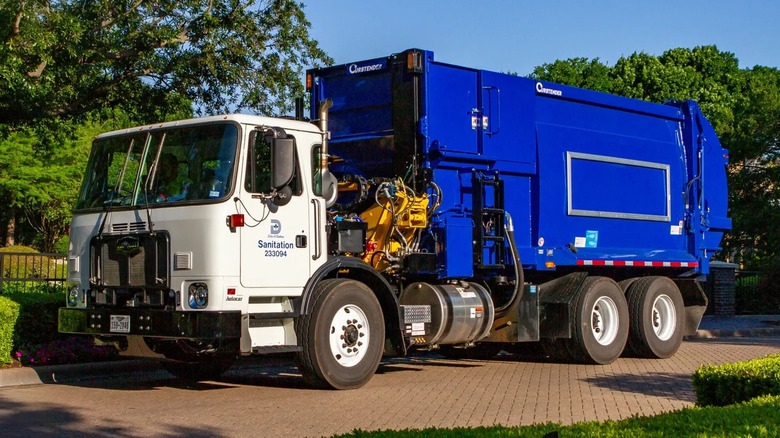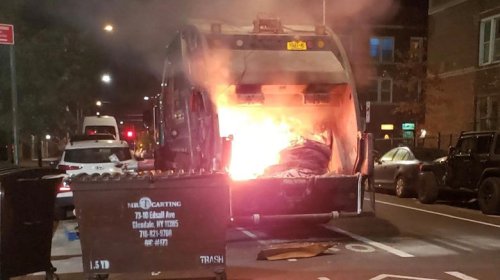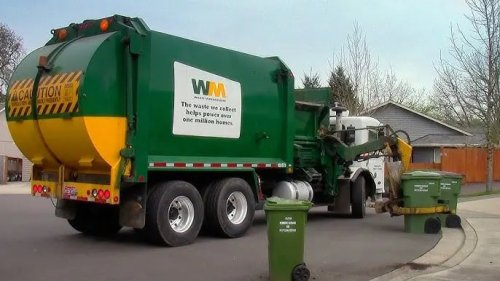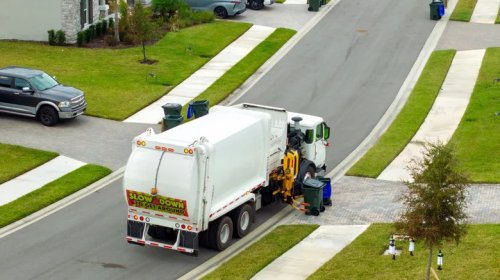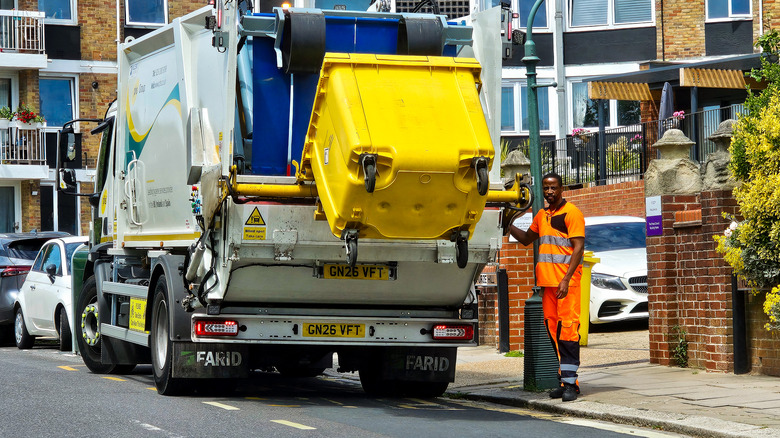



















Coldsnowstorm/Getty Images Some garbage trucks can run on natural gas, such as renewable natural gas (RNG) made from captured landfill methane (natural gas and gasoline are not the same thing, FYI). However, fueling heavy vehicles — even ones with robot arms, like they now use in New York City – isn't mostly what landfill methane is being used for. This article isn't just about cities, and it isn't just about fueling heavy equipment like trash trucks. It's more broadly about what to do with off-gassing landfill methane, and what makes sense in terms of diverting that CH₄ (methane's chemical label on the periodic table). Not only is landfill methane not a good thing, but what to do about it gets about as messy as a landfill's slop. Just to set the smelly scene, the American Biogas Council, a trade group, says there are 598 landfill gas capture systems nationwide, which provide about three-quarters of captured biogas in the U.S. and create 64% of the nation's RNG (renewable natural gas). Biogas is primarily CH₄ and carbon dioxide (CO₂). However, that's kind of a bummer. According to the EPA's 2020 inventory of methane production, landfills only come in third place in terms of sources of methane. The biggie? Animal burps and farts, which eclipse landfill emissions by about 60%. And far less of this CH₄ gets captured compared to landfills. Still, capturing CH₄ from landfills is better than letting it escape, and we can capture it more efficiently before food ever reaches landfills. How Food Waste Can Become RNG Ryanjlane/Getty Images Food waste comprises the biggest chunk of material sent into landfills, and food that never gets to a landfill makes better fuel. Ultimately, food that avoids landfills reduces time spent off-gassing methane at the sites, where methane is short-lived and isn't necessarily captured since food biodegrades somewhat rapidly. For example, in San Bernardino, California, at the Rialto Bioenergy Facility, food scraps, along with poop from wastewater treatment plants, are being converted into RNG rather than ever getting to a landfill. SoCalGas, which operates the facility, says that the site's annual production of RNG, which reduces greenhouse gas emissions, is the equivalent of pulling 47,500 gasoline-powered cars off the road each year. Speaking of vehicles, SoCalGas's system treats the methane and converts it to RNG, where it's usable for trucks and buses that can run on natural gas rather than diesel, along with heating and cooking. Why RNG From Waste Isn't More Common for Vehicles YouTube/zerowasteenergy747 Even though, according to the EPA, natural-gas vehicles running on RNG can cut greenhouse gas emissions by up to 75% versus gasoline or diesel vehicles (such as trucks and buses), that's not the main way municipalities and service providers have operated. Sure, there's an RNG system for buses in San Antonio, and one in South San Francisco that diverts food scraps and runs its own trucks on the fuel it makes. The issue is that converting food waste into fuel is expensive and complicated. Beyond just the food waste picture, making RNG at all is still a scant part of the landfill methane formula, and the EPA says 63% of methane capture isn't converted into fuel for homes or trash trucks, but straight into electricity. The EPA has strict guidelines for methane management at landfills, but that doesn't require making the investment to convert the gas into RNG. Additionally, the EPA's estimate that 75% of methane is being captured appears to be inflated, according to a 2024 study by the Harvard School of Engineering. The study suggests methane collection from landfills was closer to 50%. If there's a solution that's clearly better, it's not having the food-scraps-to-landfill path happen at all. Instead, it's making the direct conversion to renewable natural gas.