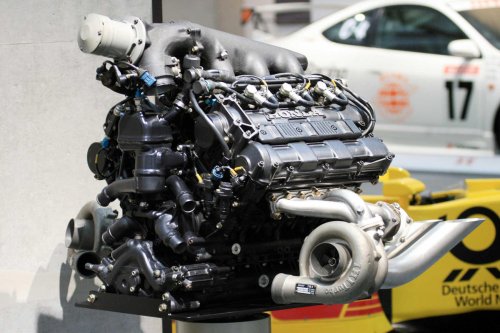
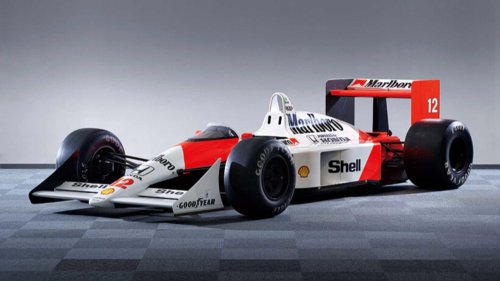
When life gives you lemons, you squeeze out every single drop of juice that you can. So, why not do the same with engines? This is something that Honda is known for doing on an impressive scale. For example, it managed to produce 1,500 horsepower from 1.5 liters, leading to an impressive engineering feat.This legendary engine was designed to fill the need for speed and is widely considered to be the most powerful small displacement engine in motorsports history. A few clever engineers figured out how to help it skirt around increasing restrictions and rules that were being implemented by the Federation Internationale de l'Automobile (FIA).While other teams scrambled, Honda was getting wins left and right. It helped race cars and passenger cars evolve into the reliable, potent options that they are today. With its rich heritage and rebellious racing attitude, the original engine still lives on as a collector's item that racing enthusiasts don’t hesitate to jump on. New F1 Regulations Were Killing Turbo Engines HondaFormula One had a turbocharged era for about a decade that lasted from 1977 to 1989 when the turbo engines were banned. The Renault RS01 was the first F1 car with a turbo engine, but it’s known for being incredibly unreliable. The engine failed to win a single race during its first year, but won the French Grand Prix two seasons later.Despite being fragile, competitors rushed to implement their own designs. But the turbo engines were known for having higher pressures, temperatures, and increased strain. They also had turbo lag as the turbos failed to spin fast enough to provide instant boost. There was insufficient exhaust energy to accelerate the turbines to the required boost pressure.As a result, there was a poor throttle response in corners with a rapid or brutal increase in power and acceleration on straights that was dangerous. Renault and Ferrari regularly found themselves going up in flames. By 1894, all but one team moved to turbo engines while using special blends of rocket fuel to maximize power.In an effort to control escalating power and dangerous speeds, the FIA implemented restrictions on fuel-tank capacity and boost levels from 1985 to 1988. Then turbos were completely banned in F1 until they made a return in 2014. The Honda RA168E V6 Turbo Drifted Around The RulesMorioIn 1998, the FIA implemented a new fuel limit at 150 liters, which was decreased from 195. Also, boost caps were set at 2.5 bar instead of 4.0. As a result, racing engineers had a strict puzzle to solve with the Honda RA168E V6 Turbo to win what was essentially considered to be a fuel-economy race.This was achieved with radical thermodynamic efficiency. This V6 turbo engine has a phenomenal low brake-specific fuel consumption thanks to a carefully tuned air-to-fuel ratio and combustion chambers, allowing them to run incredibly lean mixtures during cruising portions of races. Honda’s custom cocktail includes 84% toluene, a high-octane hydrocarbon, and heptane to extract more chemical energy without risking engine damage.Honda implemented a less extreme over square geometry than its predecessors, with a 79mm bore and 50.9 mm stroke to provide an extremely reliable engine block. Also, it features ductile cast iron instead of aluminum for the ability to endure more stress. It was worth the extra weight, and it rings in at 321.875 lbs.The 1.5-liter V6 twin-turbo Formula 1 engine has an 80-degree V6 that’s water-cooled with a 1,494 cc displacement. It features aluminum alloy cylinder heads and magnesium alloy cam covers. Also, the twin IHI turbochargers have ceramic turbine blades, and the electronic fuel injection system has two injectors per cylinder.With the help of McLaren and John Barnard’s focus on aerodynamics, the RA168E was tightly packaged into the MP4/4’s low, sleek chassis. They created an optimal engine and car combination with less straight-line drag and enhanced cornering speeds to offset horsepower deficits. This Tiny But Mighty Engine Is A Proven WinnerHondaThe Honda RA168E V6 Turbo powered the 1988 McLaren MP4/4 with 685 hp (over 1,350 hp in qualifying trim) and 317 lb-ft of torque. It delivers a remarkably flat curve while maintaining about 295 lb-ft of torque consistently between 8,000 and 12,000 RPM. This engine launched the MP4/4 from 0 to 60 mph in 1.8 seconds and races from 0 to 124 mph in roughly 4.9 seconds.It won 15 out of 16 races in 1988 with Ayrton Senna and Alain Prost behind the wheel. The team’s only loss during the 1988 season occurred at the Italian Grand Prix, where the MP4/4 failed to finish. This engine still holds the highest percentage of laps led in a season at an incredible 97.3%. Also, it led Honda to the Constructors' Championship.The McLaren MP4/4 is still considered to be the most dominant Formula One car in the history of the sport. It got two consecutive drivers’ titles for Honda and three consecutive constructors’ titles. Senna and Prost became incredibly famous as the car segmented its history as the greatest Formula One car of all time.Collectors jump at the chance to snag this piece of motorsports history as it represents the pinnacle of the turbocharged era. But only a few dozen of these hand-built engines were ever produced, making them extremely rare. They are almost never traded publicly. How The Honda RA168E V6 Turbo Influenced Modern EnginesHondaThe Honda RA168E V6 Turbo may have only been in production for one year, but its legacy lives on in modern F1 and passenger cars decades later. It started a bit of a revolution by proving that engines can be both powerful and efficient. This engine has a 9.34:1 compression ratio, and the high-compression philosophy is now universal in modern cars.Plus, Honda changed the game with narrow 32-degree valve angles to create a high compression chamber to maximize energy production. It pioneered the use of ceramic turbine blades to reduce turbo inertia, which is actually just now entering consumer production to make turbochargers spool faster.Honda engines in the Red Bull cars routinely achieve over 50% thermal efficiency. This is because Honda proved that perfecting air-fuel mixtures, combustion chambers, and electronic fuel injection could provide significant amounts of power despite facing strict fuel limits in the 1980s.Last but not least, the RaA168E and other turbo V6s showed they could be utilized as rigid stressed members of the chassis. As a result, the sport has settled on the V6 layout for the current era. Turbo engines returned to F1 in 2014 to align the sport with modern automotive trends and to focus on fuel efficiency with hybrid tech.Source: Raceteq, Audrain Automobile Museum



















 +40 others