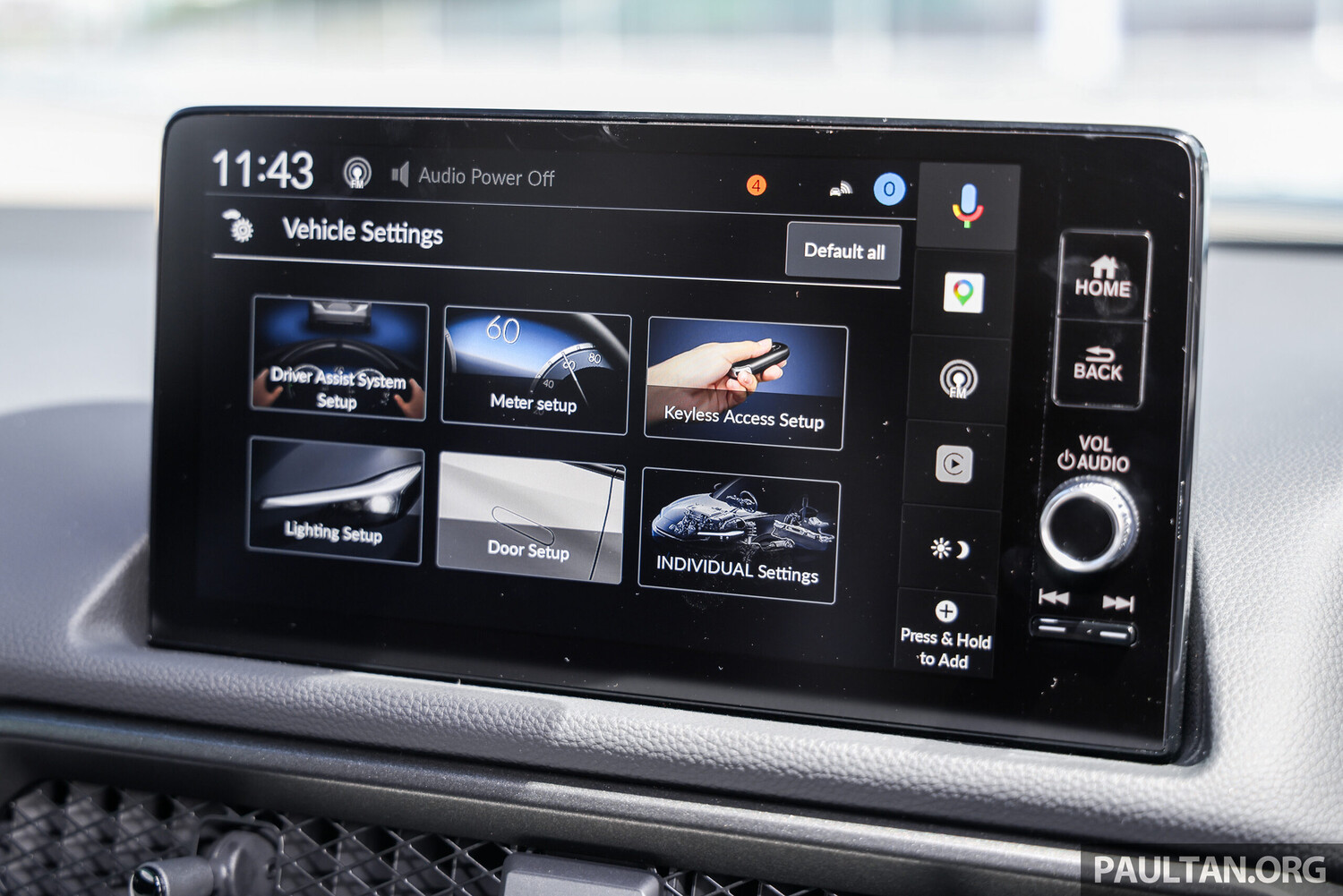
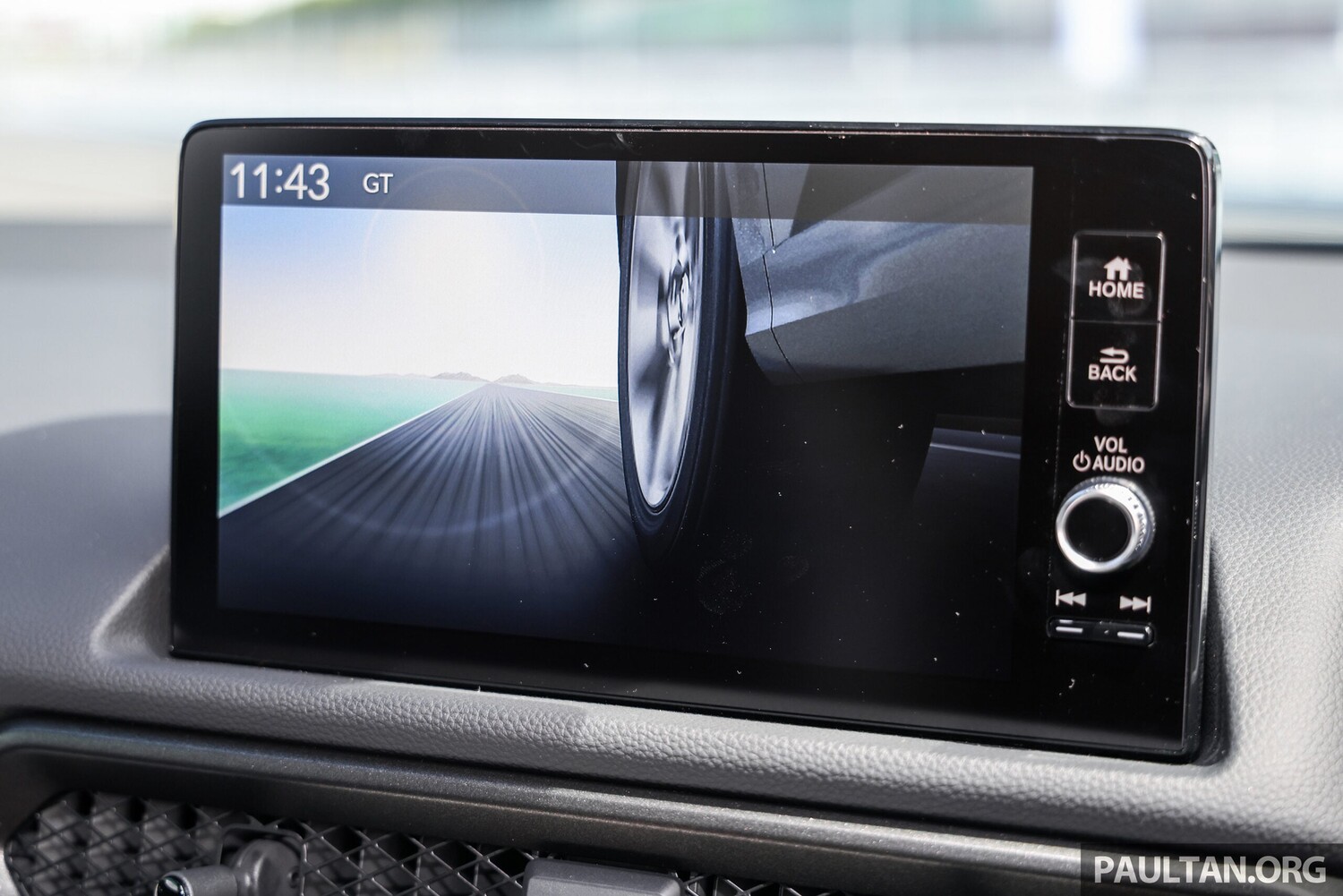
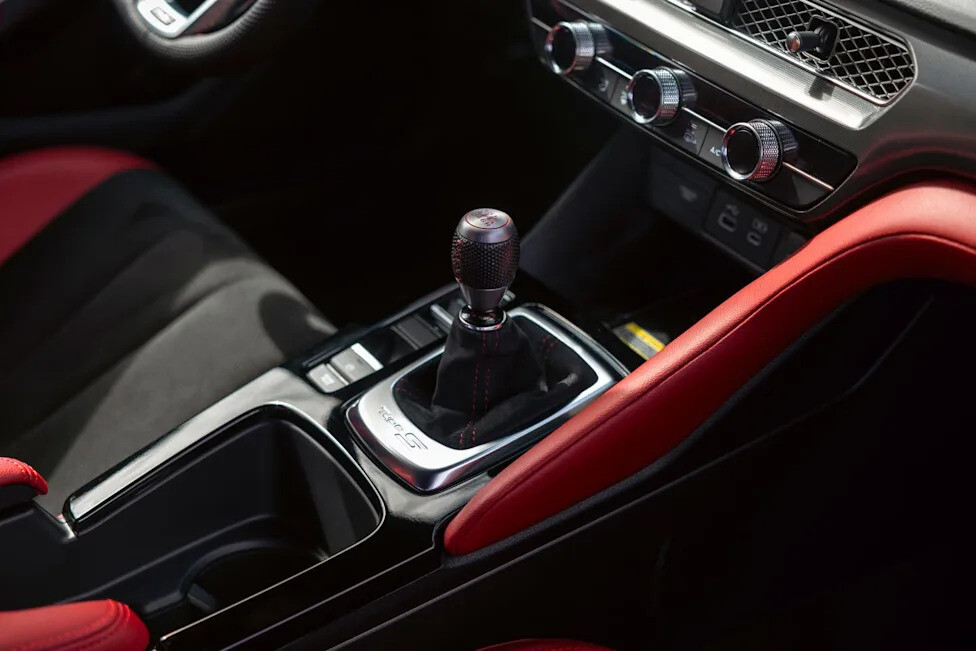
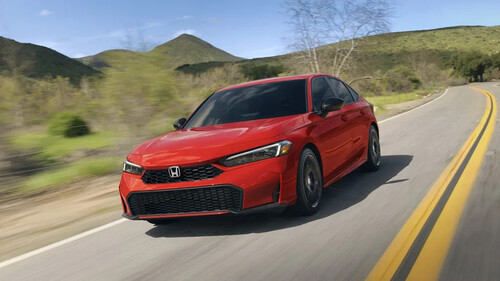
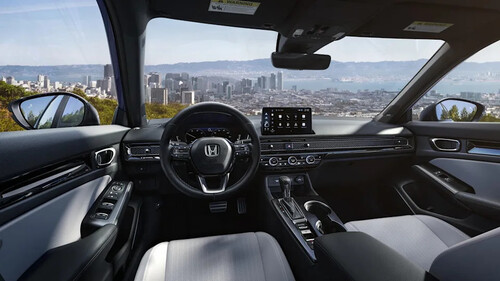
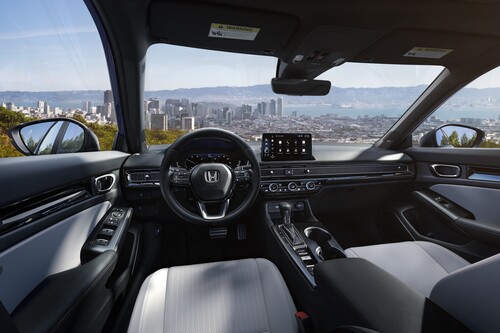
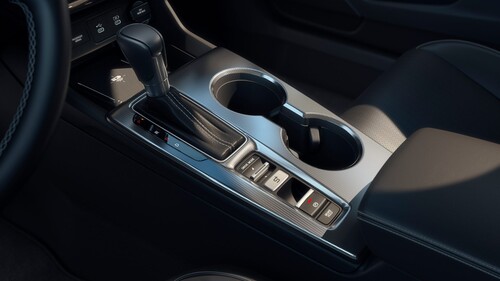
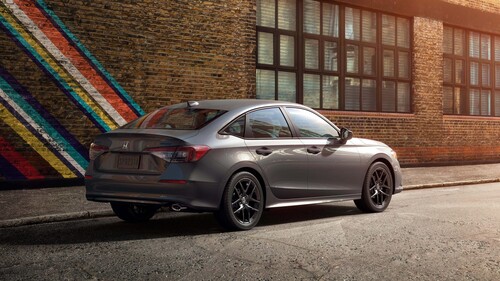
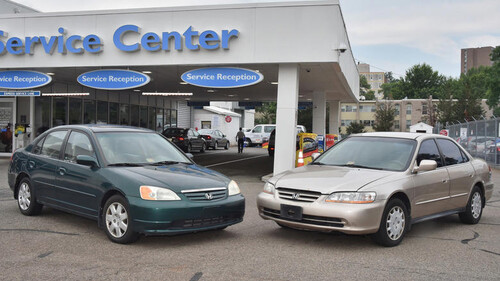
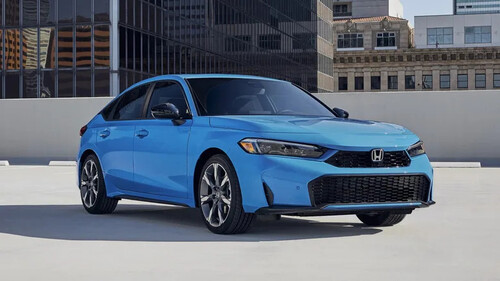
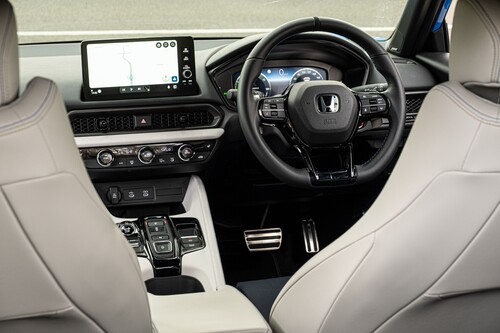
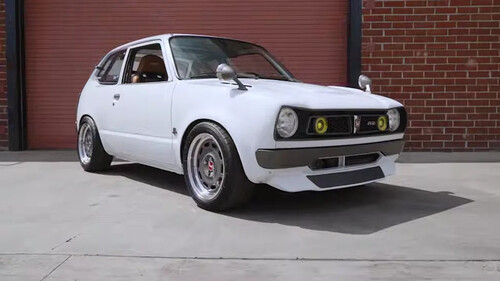
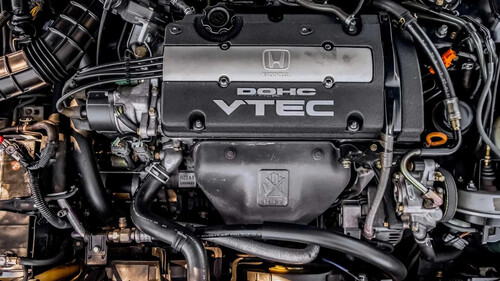
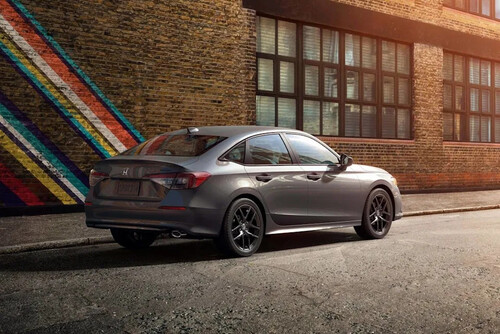
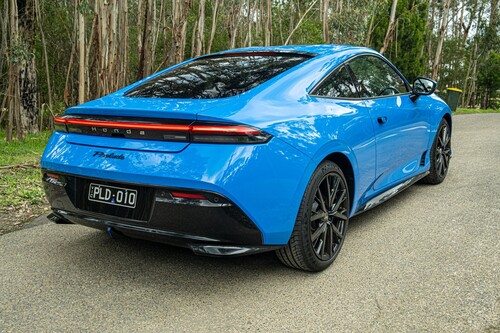
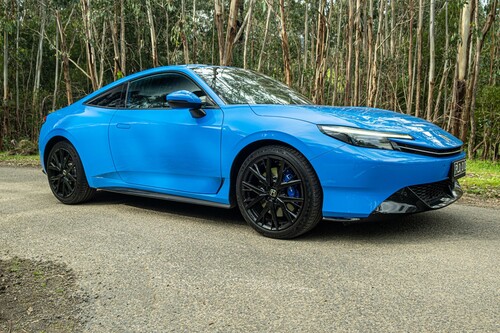
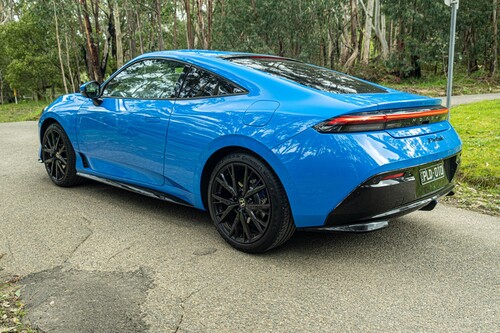
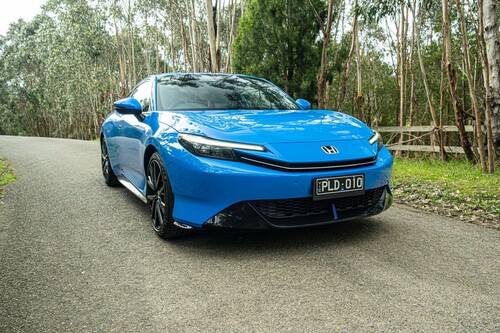
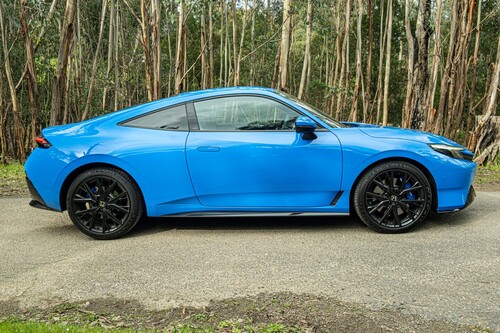
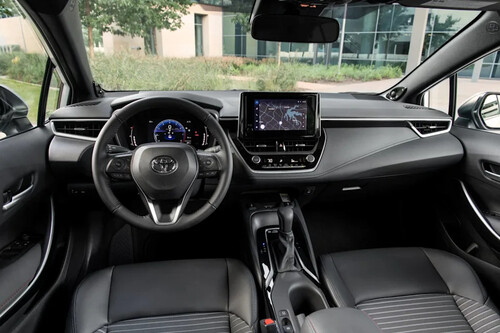
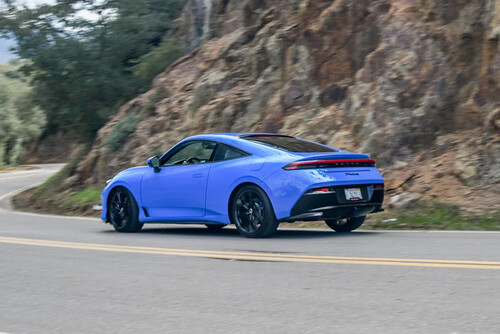
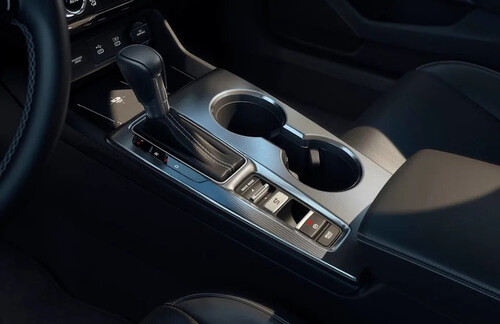
Such is the age in which we live in that any two-door coupe appearing on the scene these days has to be a fire-breather, or at least have some cojones worth shouting about. The new Honda Prelude is not the first, but it does clatter a pair, although not quite how you’d imagine it. Or, in the case of those obsessed with straight line speed, would appreciate. Context to the application is important. Part of the problem is the resurrection of a legacy name, which is a tricky affair, especially when it’s left by the side for a lengthy period, because there is no continuity to thread things. However, understanding what was before is a good way to comprehend the direction chosen. If the idea of keeping the latest iteration true to the ethos of the past is the intent, then the Prelude hits the nail on the head. Stay with me for a moment on this. Across 23 years and five generations, having driven all but the final one, the Prelude was never about pure speed, but rather about agility and drivability. Granted, late examples had quite a bit of power, but by that time the car itself had also turned into bloatware. Somewhere in between, sat the third-gen, the apex descriptor for the entire first series of outings. For those old enough to remember, that one was fondly known as a playboy’s car. It was also very much the elevated choice for the procuring crowd. The pimps’ pick, so to speak, almost always in white. I knew someone whose brother was in the trade, and his example did cut the fine figure in that shade, although truthfully there was less intent to admire the car than the swarm of talent housed in it the couple of times the flashy transporter swung by my friend’s house to drop off packed meals (dutiful lad, he). Jagged mental images aside, that pretty much encapsulated what the car was all about, not speed, even if it could manage decent pace once you got going, but style, although maybe not exactly in the sense the designers intended. Whatever the case, more cruiser than bruiser best sums that – and its ilk – up. Just as this one is. And that’s no bad thing, for the target market at least. Would the view of it be softer if the present one was called a Civic coupe? To car enthusiasts, very much so, but the automaker is gambling on the association with heritage appealing to a niche audience living in nostalgia and with the dosh to obtain one. That audience is primarily in their late-40s and 50s, folk who were in the formative years when the first set came out, and for which the modern Prelude is a means to partake in the realm (by that, not as a talent transporter). What’s in store for them then? Before we get to how the BF1 shapes up as a performer, as sampled during a preview session at Sepang, a recap of the bits that make it up. Measuring in at 4,522 mm long, 1,880 mm wide and 1,355 mm tall, with a 2,605 mm wheelbase, the Prelude is quite the looker in the metal. The cab forward profile is unmistakably Civic from the nose to the A-pillar, but the subsequent lines have good flow through, enough to provide the car with its own organic character. Colours do determine the pitch on this one – the Crystal Black Pearl hides the textures of the profile, while Rallye Red lends it good visual palpability. The pick of the trio of exterior shades available here however is Winter Frost Pearl, which lends the car a more complete visual presence. Wheels are twin five-spoke 19-inch alloy units, wrapped with 235/40 profile tyres, and only available in black. Inside, the cabin has a distinct Civic ring to it, although the dashboard configuration has been altered with the use of hexagonal air vents minus the full-width mesh, and there’s also a unique flat-bottomed three-spoke steering wheel with a 12 o’clock marker. You’ll also find a reworked centre console, which is home to a push-button gear selector instead of a gear lever, and this is flanked by a switch for the electronic parking brake as well as the drive mode selector (Comfort, GT, Sport and Individual) and a large S+ Shift button on the left. The Prelude also gets unique front seats, which feature distinctive high shoulders and plenty of bolstering support, and more importantly, dedicated ergonomics and profiling specific to driver and front passenger. Ingress and egress aspects are good and comfort levels are high, suggesting that long runs in them won’t be a tiring affair. The same can’t be said about the rear bench, which although not attempted look like they are meant for kids or adults without legs. Getting in to the rear also looks an absolute pinch, and that roofline probably won’t help matters. Interestingly, you’ll find Easter egg elements if you look hard enough. Tomoyuki Yamagami, the large project leader (or chief engineer) of the Prelude project points them out. The first is a nod to the past, a series of numbers found on the inside of the seatbelt guide/retainer of the driver’s seat, uncovered when you unbutton the unit. It lists the date when the first-gen Prelude went on sale in Japan. The other pays homage to the music-themed nature of the nameplate, embedded as part of the windscreen markings. Accompanying a silhouette of the car is a sequence of dots arranged on top – these represent the backdrop cadence in Ravel’s Bolero. Away from those playful subtleties, the rest of the car is straight-laced. It shares much of the FL5 Civic Type R’s underpinnings and chassis components, such as the dual-axis strut front suspension and adaptive dampers, but the turbo petrol and manual gearbox route has been ditched for a hybrid system similar to the one found in the Civic e:HEV and CR-V e:HEV, in this case an Intelligent Multi-Mode Drive (i-MMD) powertrain. The system combines the workings of an electric motor and petrol engine, with the latter being a LFC-H4 2.0 litre naturally-aspirated inline-four petrol engine running on an Atkinson cycle. Output from the mill is identical to the unit on the Civic e:HEV, which is 141 PS (139 hp or 104 kW) at 6,000 rpm and 182 Nm of torque at 4,500 rpm. The mill acts primarily as a generator for a 72-cell, 1.05 kWh capacity unit battery, which provides juice for a front traction motor offering 184 PS (181 hp or 135 kW) and 315 Nm. When needed, the engine can be clutched in to directly drive the wheels, bringing the total system output to 203 PS (200 hp or 149 kW). The party piece is the brand’s new S+ Shift, which simulates gear shifts of an eight-speed transmission unit and integrates with Active Sound Control to offer an elevated aural experience. At Sepang, this was demonstrated first by an acceleration test, meant to highlight the difference in feel with and without S+ Shift engaged. While it probably didn’t show off the Prelude in its best light, with the official 8.2 seconds 0-100 km/h sprint time feeling just about that, the test suitably demonstrated the workings of the system, the experience mirroring that provided by the first sampling of it on both the Prelude and the automaker’s next-gen mid-sized platform at Tochigi last year. While artificially induced due to the absence of a gearbox, shifts notch in progression up the speed register, and downshifts are manipulated in the same vein, accompanied by throttle blips and rev-matching. Granted, it doesn’t make the car faster, but it does make it feel more engaging. The slalom test leaned more into the car’s strengths, which had first been uncovered over a short, tight test track at Tochigi. There, the Prelude covered a series of rapid switchbacks at pace impeccably, the car placing cleanly to input with precision. At Sepang, it made short work of the slalom. While the rack does feel somewhat lifeless, there’s no doubting its speed and accuracy in steering the car about. Actual track work highlighted both the car’s forte and limitations. The chassis it sits on is proven, and that solidity was again evident during the few laps on the half track run. There’s that bit more body roll, but the softer suspension setting still feels firm enough to manage wrangling without fuss. The absence of any real power – and over-capacity braking – did however make things less seamless in threading an even, consistent pace across the circuit, but it’s worth remembering that such terrain is not the Prelude’s primary playground. Out on more casual drives on winding B-roads, it should really come into its element. The argument is that, like its predecessors, this is a tourer, and should really be viewed as that. The thing is, there was never any intention to make the Prelude any sportier, or faster, than what it is now. That no manual transmission was considered tells most of the story. Are 203 metric horses enough? For the targeted buying crowd, it likely will be. Likewise, the ease of use with its drivetrain. As for the idea of underpinning what is essentially a Civic Type R platform, complete with its braking system and elements of its suspension, with a mill from a civilian Civic – and CR-V – sounding like a disconnect of sorts, given that pairing does inescapably feel the odd couple especially under full whack, there is likely a larger future canvas being mapped here, with a latent suggestion that it really is a muted test bed of sorts for the next CTR, which will be a hybrid. The Prelude is an intriguing car for this era we are in, where everything is predominantly about numbers, speed or show. Many will undoubtedly disparage it on the first two counts, but as Yamagami points out, performance in this case was never meant to be defined by numbers alone. Those willing to look beyond that will find a car that handles adeptly and drives proper, with a high level of poise and refinement at that. As to how many will adopt one, that will be answered by its price, which at first shout indicated a higher price threshold than a CTR, based on its domestic pricing. Subsequent North American pricing, where it is cheaper than its performance sibling, allayed some of those reservations, and the positive bit is that word through the grapevine implies it will likely not be as expensive as initially thought, with the ask for one reasonably cheaper than a CTR, expected to slip well under the RM300k mark. As to exactly how much, we’ll find out very soon. Verdict Prelude ★★★★★★★★★★4 / 5 The legacy nameplate returns, arriving in its sixth-generation form as a 2.0 litre hybrid. It’s a very good steer, but probably not for those looking purely at output numbers and straight-line speed. Looking to sell your car? Sell it with Carro.