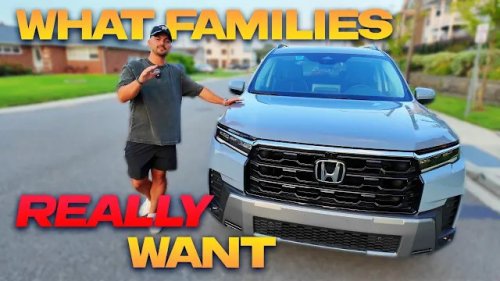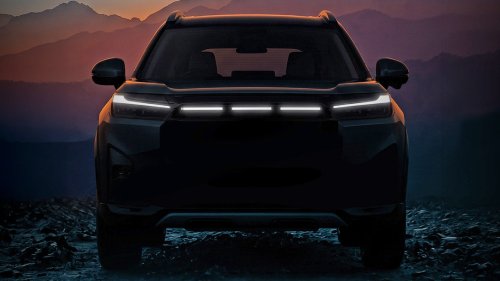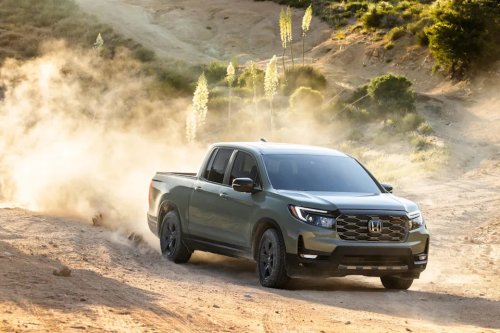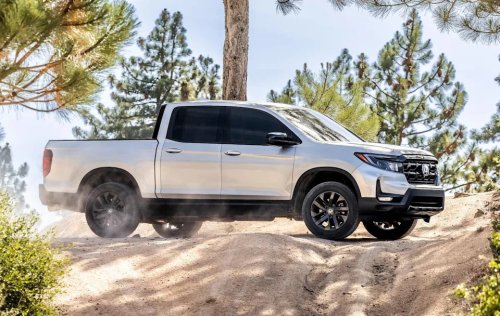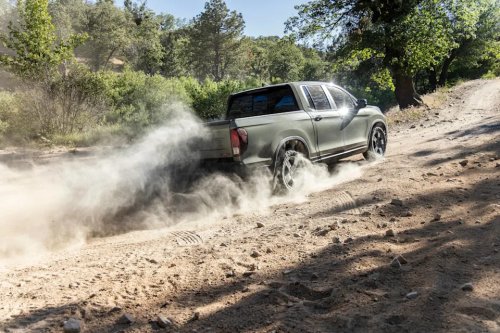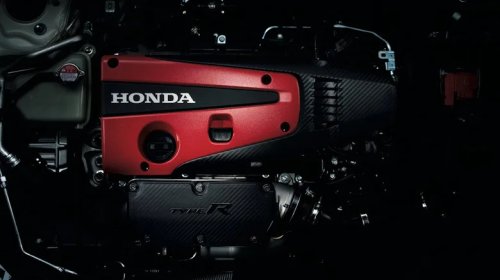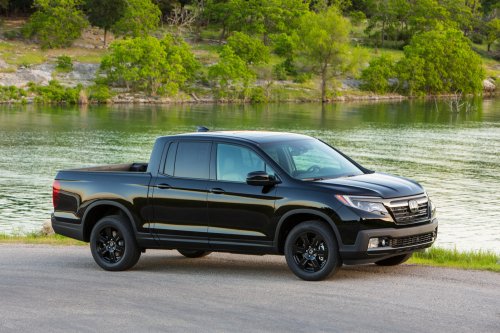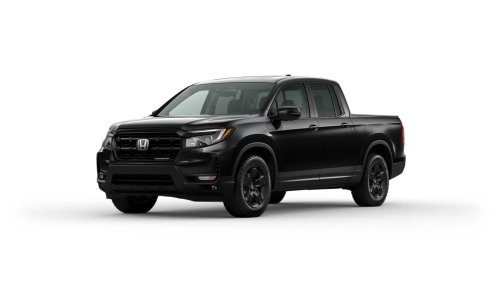
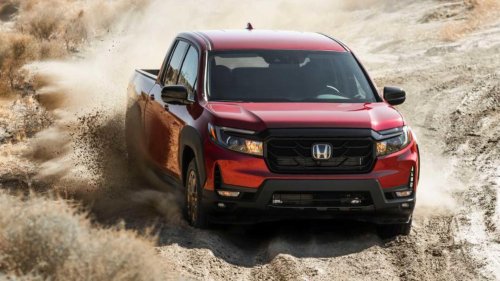
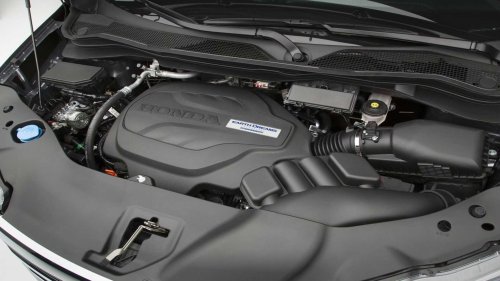
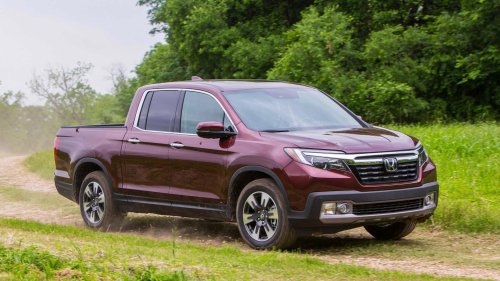
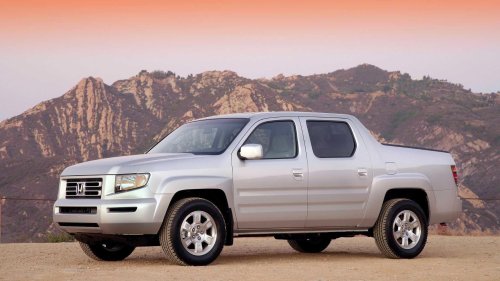
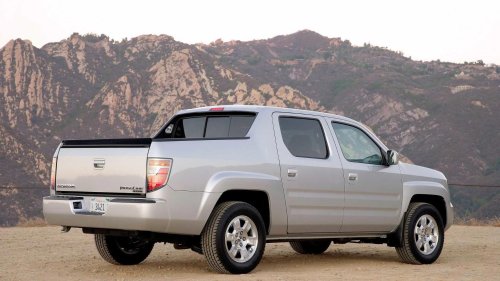
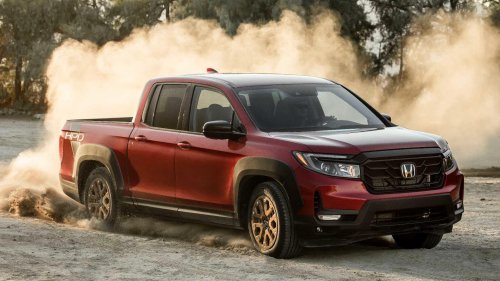
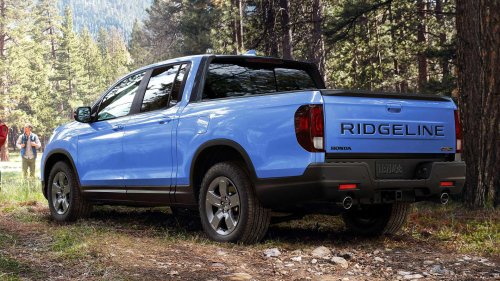
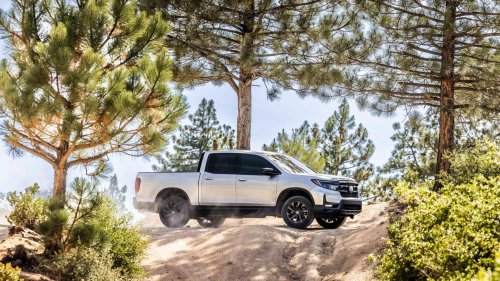


















When it comes to pickup truck manufacturing, Honda takes a more wallflower-like position when compared to others. For example, when you think of Ford or Chevrolet as a whole, images of the F-150 and the Silverado 1500, respectively, come to mind. On the other hand, when you think of Honda, its pickup truck, the Ridgeline, does not. Honda is much more known for building reliable family cars like the Civic and the Accord, or small, venerable sports models like the S2000 and Prelude.However, the Honda Ridgeline, while forgotten by some, is still a worthy pickup truck. It first hit the market in the mid-2000s and went on hiatus for a few years before being resurrected again near the end of the 2010s. Since then, it's been in continuous production. That's about to change, though, as Honda recently announced, via unofficial channels, that it was canning the Ridgeline for a year in order to get its proverbial ducks in a row. The Ridgeline is slated to change in a big way, and Honda wants to do it right. The Ridgeline's Departure Is The Tip Of The Iceberg HondaRecently, Honda unofficially broke the news of the Ridgeline's eventual departure. At present, it still remains in production, but it's slated to end at some point during the fourth quarter of 2026. Once the Ridgeline's production is officially halted, Honda will begin gearing up to produce a heavily refreshed Ridgeline that is slated to enter production at some point during the third quarter of 2028. An all-new generation is still pegged for production, but at a later date, post-2030. Losing Bets Honda Behind the decision to temporarily axe the Ridgeline are a few issues, and only one of them specifically pertains to the truck itself. First and foremost is Honda's previous dedication to electric vehicles. A few years ago, Honda declared that it would solely produce EVs by 2040, a move that was echoed by numerous other automakers throughout the world. At the time, around 2023, the call for electrification was quite loud, but consumers weren't interested.Now, Honda has rolled back that 2040 promise, and has instead decided to focus more on hybrid vehicles. However, a huge investment into EVs, including Honda's now-canceled "0" lineup, was expensive. In total, the endeavor is expected to cost Honda roughly $15.8 billion, all of which will have been lost to the program. To help ease some of the hurt, the Japanese automaker has decided to extend the generational lives of some of its models, such as the Odyssey, which isn't slated for a major refresh until 2030.Putting the Ridgeline into temporary hiatus allows Honda some much-needed time to work out what its next move is, most likely a larger shift over to hybrid tech for gasoline-powered models. At the same time, the delay also benefits the Ridgeline, as its 3.5-liter V6 engine will be replaced in favor of an all-new powertrain, most likely of the hybrid flavor. Unfortunately, a slew of incoming emissions regulations, passed in 2024 and going into effect next year, will render the existing V6 mill, effectively, illegal.At the same time, automakers are required to reduce particulate and nitrogen oxide outputs from ICE engines by 99 percent. While the government has voted to repeal emissions regulations and bring things back to pre-2012 levels, the 2027 rules are still slated to go into effect. Honda has no interest in updating the engine further to fit the new set of rules. The Ridgeline's Outgoing Powerplant Those of you in the know regarding Honda's engine families will know about the J-Series V6, which the Ridgeline utilizes. The engine traces its roots all the way back to 1996, and is still in production in select markets. However, it's soon to be a thing of the past. The Ridgeline's specific version of the J-Series, coined the "J35Y6", is also utilized by the Honda Odyssey, and was previously used by others like the Honda Passport, Pilot, and the Acura TLX.Underneath the surface, the J35Y6 is a troubled engine. The J-Series as a whole has been the subject of an ongoing class action lawsuit pertaining to crankshaft and connecting rod failures. The suit was brought forth in 2023. However, many folks regard the engine as extremely reliable, as it takes advantage of things like a forged crankshaft. Both the engine block and cylinder heads are made from aluminum.Honda The Ridgeline's Lineage 2019 Honda Ridgeline (9)The very first Honda Ridgeline to hit the market did so back in 2005, just in time for the 2006 model year. At the time, Honda was keen to enter into the American pickup truck market, an incredibly competitive and, if done right, lucrative, market. However, Honda wasn't interested in creating a typical pickup truck. Instead, it decided to create something that was a cross between an SUV and a pickup truck. Think of models like the Chevrolet Avalanche and the Ford Explorer Sport Trac. First Generation (2006–2014) Honda In essence, Honda's main concern with the Ridgeline was figuring out a way to target buyers who may have needed a pickup truck of sorts, but didn't want to give up the comfort or convenience of a minivan or SUV. Because of this, Honda based the first-gen Ridgeline on its global light-truck platform, which it shared with the Pilot SUV and the Odyssey minivan. Its tiny cargo bed measured just five feet in length, but it did feature a compartment buried beneath the cargo bed's floor that was lockable, waterproof, and even drainable.Honda supplied the first-gen Ridgeline with just one engine choice, that being the J35Y9 3.5-liter V6, which is closely-related to the J35Y6 found in the second-gen model. With it, the truck could produce 247 horsepower, which was later bumped up to 250 ponies following a 2009 refresh. Its five-foot bed was capable of hauling up to 1,102 pounds of cargo, and it could tow a maximum of 5,000 pounds when properly equipped.Honda All-wheel drive came standard, as well as a five-speed automatic transmission. A fully-independent suspension setup kept its ride quality superior over most other competitors. The first-gen Ridgeline was axed following the 2014 model year due to poor sales.Second Generation (2017–Present)HondaFollowing a three-year hiatus, Honda decided to resurrect the Ridgeline namesake. Much like the first generation, the second-gen was based on a modified, global light truck platform shared with, you guessed it, the Honda Pilot and Odyssey. The Honda Passport also shares the architecture. Learning from its past mistakes, Honda designed the second iteration of the Ridgeline to look decidedly more like a pickup truck, as the first-generation's boxy and SUV-like appearance alienated much of the American truck-buying market.Come 2021, the second-gen Ridgeline received a major facelift. Its front fascia was altered, along with a new set of front fenders and side skirts. A more robust front skid plate was introduced, as well, which helped to better protect the forward portion of its underbody. Interestingly, its track width — or the distance between the left and right wheels — was increased slightly. This was done to improve stability when off-roading or towing. Much like the first-gen, the second-gen Ridgeline offered all-wheel drive as standard kit.Honda For the current 2026 model year, Honda introduced a couple of new paint colors, along with a $450 price increase across all trim levels: the Sport, RTL, TrailSport, and Black Edition. Goodbye... For Now HondaLet's be honest. The Honda Ridgeline might very well be the least consequential pickup truck in the American market, but that doesn't mean it's no good. Its V6 engine, while troubled for some, has proven to be fairly reliable for loads of owners, and its car-like build means it's one of the more comfortable trucks on the market. However, thanks to the introduction of new, stricter emissions standards, along with Honda's slightly dire financial situation, the Ridgeline has to go on vacation for a while.