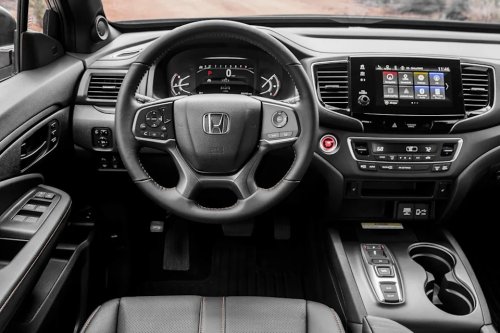
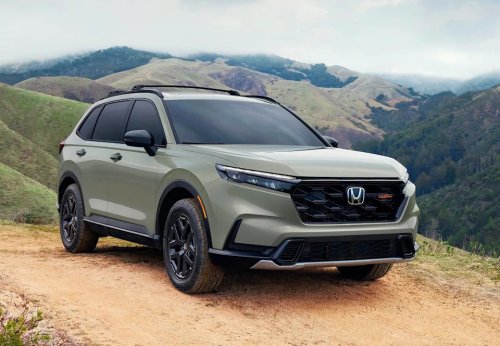
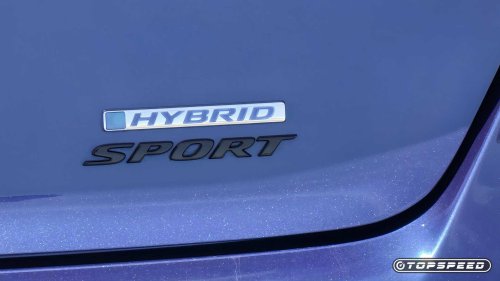
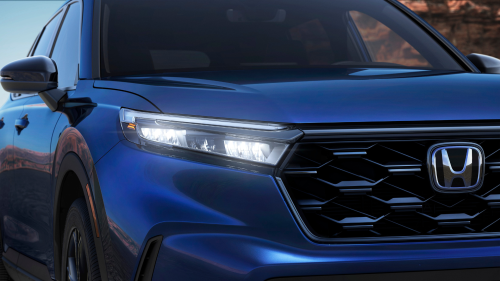
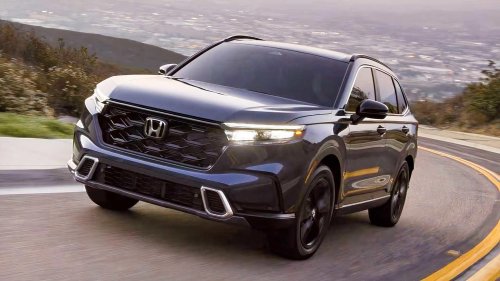
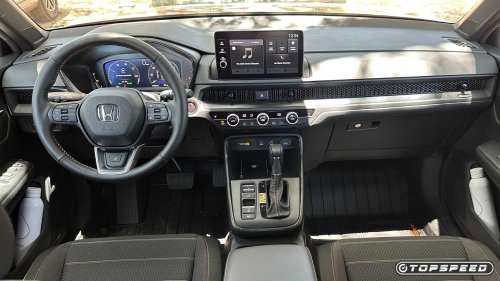
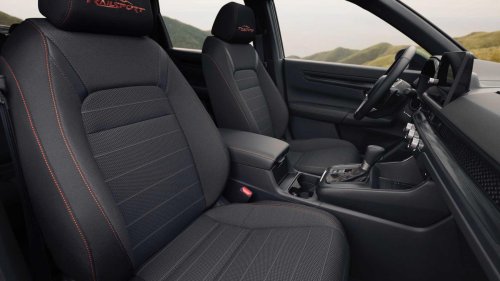
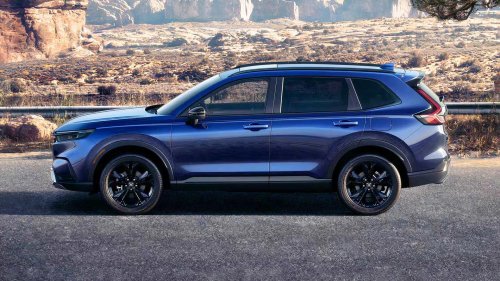
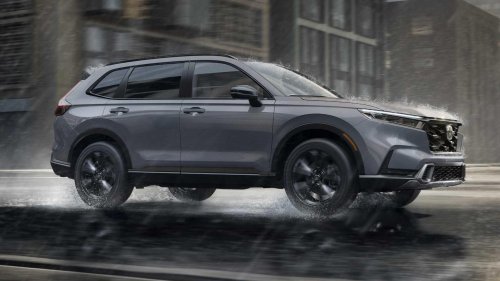
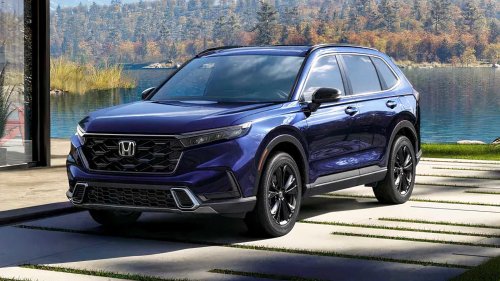
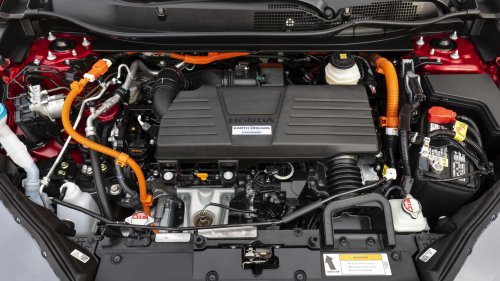
Hybrid cars are steadily growing in popularity in the U.S. market. Gas prices have risen significantly over the past year, prompting consumers to opt for more efficient vehicles. Modern hybrids benefit from advanced electrification technologies, resulting in a better balance of performance and efficiency. These cars are now a more viable option compared to their purely ICE counterparts.Many new-car buyers are demanding luxury, resulting in conventional mass-market brands investing more time and resources to make previously mundane sedans and SUVs feel more special and upmarket. For 2026, one Japanese hybrid SUV benefits from a well-rounded specification that focuses on premium features without an expensive price tag. The State Of Hybrid SUVs In The U.S. In 2026 Lyndon Conrad Bell | Top Speed Hybrid vehicles in the U.S. have transitioned from a niche efficiency play into a major force in the automotive market. Sales now significantly outpace those of fully electric vehicles as consumers seek a balance between range security and lower emissions. As of 2026, hybrid registrations account for around 16 percent of the market, driven by a sharp surge in popularity over the past five years.This shift has been accompanied by a dramatic elevation in cabin quality, as the latest hybrid SUV models from leading mainstream brands move away from the utilitarian plastics of the past in favor of truly premium environments. Modern interiors now frequently feature sustainable luxury textiles, expansive digital displays, and advanced comfort technologies that were once reserved for high-end flagship sedans. Honda's Resilient Approach To Gasoline-Hybrid Efficiency Honda Honda’s journey into hybrid technology began in 1999 with the original Insight. This was a groundbreaking two-seater that served as the first mass-production hybrid available in North America, earning acclaim for its ultra-lightweight aluminum construction and record-setting fuel efficiency. Over the last 25 years, the brand evolved its approach from the early Integrated Motor Assist system to its sophisticated, current-generation two-motor hybrid powertrain.Today, this technology is a cornerstone of Honda’s U.S. lineup, powering popular models across its compact and midsize catalog. The commercial success of these models has been significant. Honda's electrified variants now represent over a quarter of its total brand sales in the U.S., with these models frequently topping sales charts as the best-selling hybrids. This widespread adoption marks a successful transition from niche innovation to a core volume driver for the company, helping Honda achieve record electrified sales volumes in recent years. The CR-V Is Honda's Most Sensible Hybrid Honda The Honda CR-V Hybrid is the brand's most sensible gasoline-electric model available today. Starting at under $36,000, this is a competent SUV that offers many practical features at an affordable price. The hybrid powertrain is also a proven technology that is estimated to run for years with minimal maintenance while saving you thousands in fuel costs.The 2026 model year CR-V Hybrid range starts at $35,630 for the base Sport derivative in front-wheel drive guise. The $38,800 TrailSport is essentially a more robust extension of the base model. Positioned right below it is the Sport-L, starting at $38,725. This acts as a more premium extension of the base model, both inside and out. It's cheaper than the TrailSport, because it doesn't come standard with all-wheel drive. The Sport Touring sits at the very top of the range with a $42,550 starting price before options. These prices exclude Honda's $1,450 destination fee. Balanced Trims With Comprehensive Standard Features Nicole Wakelin | TopSpeed The base Sport model comes standard with 18-inch gloss black alloy wheels, roof rails, full LED headlights, and dual exhaust finishers. Within the cabin, you'll find cloth upholstery with orange stitching for the seats, front seat heating, electronic adjustments for the driver's seat, a one-touch electronic sunroof, and dual-zone climate control.For 2026, all hybrid trims now benefit from a standard nine-inch touchscreen infotainment system with wireless Apple CarPlay and Android Auto, connected to a 240-watt six-speaker audio system. The TrailSport adds all-weather floor mats, all-terrain tires, a power tailgate, a 10.2-inch digital instrument cluster, a heated steering wheel, and unique 18-inch Shark Gray alloy wheels, while maintaining the same rugged cloth upholstery with orange stitching.Honda The Sport-L adds leather seat upholstery with orange accents, memory functions for the driver's seat, an eight-speaker 320-watt audio system, and a wireless smartphone charger. The Sport Touring includes a hands-free function for the tailgate, a Google-based operating system, and a five-mode drive system that adds an Individual mode to the standard Sport, Normal, ECON, and Snow settings. You also get 19-inch gloss black alloy wheels, a Bose premium audio system, and satellite navigation. Standard color options include Canyon River Blue Metallic, Crystal Black Pearl, Meteorite Gray Metallic, and Solar Silver Metallic. For $455, you can specify Platinum White Pearl, Radiant Red Metallic, or Urban Gray Pearl. Appealing Long-Term Running Costs Honda The Honda CR-V maintains a strong reputation in the U.S. market thanks to its longstanding and consistent performance as a cost-effective and dependable family SUV that suits both urban and active lifestyles. As a result, the CR-V benefits from impressive value retention, making it a viable investment for those needing a dependable vehicle for the long haul.Overall, Edmunds predicts that the front-wheel-drive Sport Hybrid will carry a True Cost to Own of roughly $36,443 over the first five years of ownership, which factors in insurance, maintenance, taxes, financing, depreciation, and fuel. The base Honda CR-V Sport Hybrid loses around $11,837 of its value to depreciation over the course of five years, which is an impressive value retention rate by compact SUV standards. Additional five-year operating expenses include spending $5,580 on maintenance, $601 on repairs, and $5,992 on fuel.Honda Using its own distinct tracking metrics, CarEdge indicates that a typical Honda CR-V loses 30 percent of its value after five years, resulting in a strong residual value profile. The site estimates five-year insurance premiums to total around $9,795, alongside highly competitive long-term maintenance cost of $2,425, which sits well below the average for a compact crossover. Exceptional Value Retention Rates HondaiSeeCars holds a similar sentiment with the CR-V Hybrid, highlighting that it will lose 33.7 percent or $12,001 of its value after five years, resulting in the Japanese HEV SUV earning an 8.0/10 retained value score. J.D. Power gives the same model an 85/100 score for resale. It also scores 83/100 for driving experience, 84/100 for quality and reliability, and 81/100 for dealership experience, bringing its overall consumer-verified rating up to 83/100. Efficient And Capable Drivetrains HondaHonda offers the CR-V Hybrid with a choice of front-wheel or all-wheel drivetrains, both of which produce a combined 204 horsepower and 247 pound-feet of torque. This power is managed by an advanced two-motor hybrid system that functions without a conventional transmission, utilizing direct-drive gearing instead of a traditional eCVT. Honda limits both configurations to a 115 MPH top speed.Unlike many competitors that use a separate electric motor to power the rear axle, Honda opts for a mechanical driveshaft linking the front-mounted hybrid system to a conventional rear differential for its all-wheel-drive setup. This traditional mechanical link explains why the model's total system output remains the same regardless of whether you choose the front-wheel-drive or all-wheel-drive configuration. In terms of utility, the hybrid variant is rated for light-duty tasks, with a maximum towing capacity limited to 1,000 pounds. Honda's Efficient Drivetrain System Honda The 2026 Honda CR-V's hybrid system employs a supplementary 1.1-kWh lithium-ion battery pack, resulting in a pretty impressive 43/36/40 MPG EPA consumption estimate on the city/highway/combined cycle for the front-wheel drive option. The all-wheel drive model returns a slightly worse 40/34/37 MPG result.The 14-gallon gasoline tank gets you 560 miles of range in front-wheel drive guise, which the all-wheel drive system lowers to 518 miles. Honda's hybrid system is a series-parallel variation, which means it allows the operation of the electric motor independently. The eCVT runs on a gearless clutch-based system, allowing the motor to act as a generator for auxiliary functions, including the starter and climate control. Practical Interior Dimensions Honda The 2026 Honda CR-V Hybrid offers a spacious interior design that lets you make the most of its passenger and cargo utility. Occupants in the front enjoy 41.3 inches of legroom and 38.2 inches of headroom, as all hybrid trims come standard with a sunroof. You also get 55.6 inches of hip room and 57.9 inches of shoulder space.TopSpeed | Michael Frank Rear passengers benefit from 41.0 inches of legroom, 38.2 inches of headroom, 52.6 inches of hip room, and 55.9 inches of shoulder room. For storage, the hybrid configurations feature 36.3 cubic feet of trunk space, which is slightly less than the purely gas-powered models due to battery placement. This space expands to 76.5 cubic feet with the rear seats folded flat.






















 +16 others