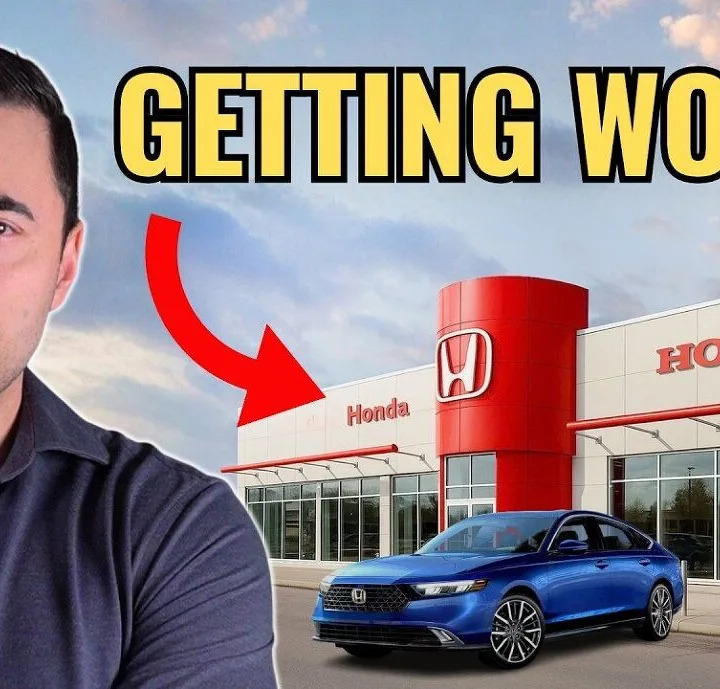
honda has a huge problem and it s getting worseHonda has a huge problem.We interviewed a Honda master tech to explain the problem with the 1.5L turbo engine. Honda's head gasket failure is a major problem, and the automaker has released an extended warranty for the engine as a result. This problem affects the Honda 1.5L turbo engine, but also the 2.0L engine on some models.If you want to avoid massive engine problems and reliability issues with your Honda vehicle, watch this video:Honda 1.5L Turbo Head Gasket Failures: Master Tech Q&AHead gasket failures on Honda's 1.5L turbocharged engine have become one of the most widely discussed reliability issues in the brand's recent history. Below is a transcript cleanup of an interview with Steven Vonik, a 15-year Honda/Acura Platinum Master Technician, breaking down the root causes, affected models, real-world failure rates, and practical advice for owners.1. Which Models and Engines Are Affected?While the issue is most prevalent on the high-volume 1.5L turbocharged engine, head gasket failures occur across several powertrains in Honda's current and past lineup:1.5L Turbocharged Inline-4 (Highest Volume): Found in non-hybrid configurations of the Honda Civic, Accord, CR-V, and Acura Integra/ADX.2.0L Turbocharged Inline-4: Found in the previous-generation Honda Accord and Acura RDX.2.0L Hybrid Powertrains: Found in recent hybrid configurations of the Accord, CR-V, and Civic.Because the 1.5L Turbo accounts for the largest overall production volume across Honda's vehicle lineup, it represents the vast majority of real-world repair cases seen at dealerships.2. What Is the Root Cause of the Failure?Interviews with dealership technicians yield various theories-ranging from gasket thickness and cylinder block deck flex to head bolt stretch and fuel quality. However, practical repair trends suggest a specific mechanical cause:Inadequate Factory Head Bolt Torque: When technicians repair a failed head gasket on a 1.5L engine under warranty, they clean the surfaces, install a standard factory OEM replacement head gasket, reuse the original head bolts, and torque them strictly to Honda factory specifications.Zero Recurrence Rate: Vehicles repaired in this manner routinely log over 200,000 miles post-repair without a second head gasket failure. This strongly points to improper or insufficient head bolt torque applied during original factory assembly rather than a fundamental design flaw in the cylinder block or head gasket material itself.3. What Are the Real-World Failure Rates?It is important to evaluate the issue within the context of total production numbers. Honda has manufactured tens of millions of these engines globally, meaning even a small failure percentage results in a large absolute number of affected vehicles.Estimated Failure Percentages by Engine Type1.5L Turbocharged Engines: Technicians estimate an overall failure rate between 10% and 20%, typically occurring between 60,000 and 120,000 miles.2.0L Turbo and Hybrid Engines: Failure rates are drastically lower, estimated in the 2% to 3% range, with many early-mileage occurrences linked to rare factory assembly defects rather than long-term wear.4. Why Do Failure Rates Vary by Region?Head gasket complaints are heavily concentrated in specific geographic regions, particularly in warm, humid climates like the southern United States.Environmental Factors: Differences in ambient temperature, humidity, and altitude alter metal thermal expansion rates and structural stress on engine mating surfaces.Regional Manufacturing: Vehicles produced for different global markets (e.g., North America vs. Europe vs. Australia) may utilize engine assemblies sourced from different manufacturing plants, leading to variations in factory assembly calibration.5. Ranking Honda's 4-Cylinder Engines by ReliabilityFor prospective buyers evaluating modern used or new Honda models, Honda's four-cylinder engines can be ranked from most reliable (lowest head gasket risk) to least reliable:2.0L Naturally Aspirated Inline-4 (K20C2): Found in the base Honda HR-V and Civic. Uses port injection, simple naturally aspirated intake routing, and an exceptionally durable architecture.2.0L Atkinson-Cycle Hybrid System: Highly reliable eCVT dual-motor setup with an extremely low failure rate over a decade of production.2.0L Turbocharged Inline-4: Moderately reliable with occasional head gasket occurrences, but vastly superior to the 1.5T.1.5L Turbocharged Inline-4: Highest head gasket failure rate; requires careful vetting on the used market.6. Practical Advice for Current Owners and BuyersIs Driving a 1.5T Honda a Major Risk? No. Statistically, the vast majority of 1.5T engines run past 150,000 miles without issue. Honda remains among the top manufacturers for long-term overall vehicle durability.Can You Prevent the Failure? No specialized maintenance prevents head gasket degradation. High-octane fuel, frequent oil changes, or aftermarket additives do not alter the integrity of the cylinder head mating surface. Continue servicing the car according to the standard factory schedule.Pre-Warranty Inspection: If you own an affected vehicle approaching the end of its factory or extended powertrain warranty, take it to a qualified technician for a full cooling system pressure test and cylinder inspection to catch minor coolant leaks before out-of-pocket coverage expires.Become an AutoGuide insider. Get the latest from the automotive world first by subscribing to our newsletter.



















 +39 others