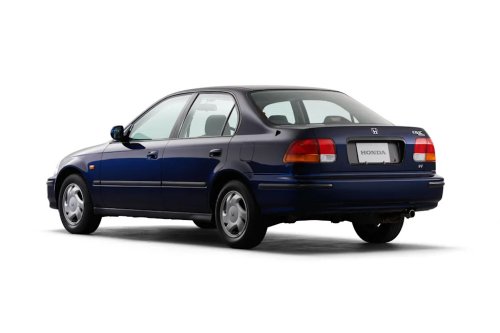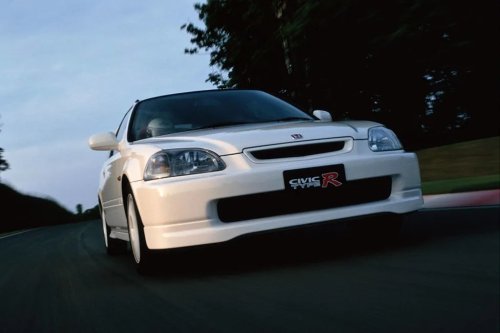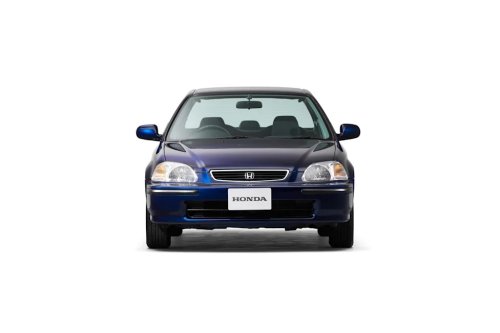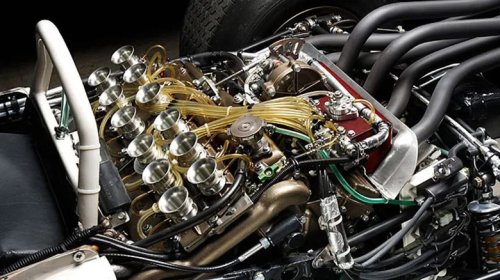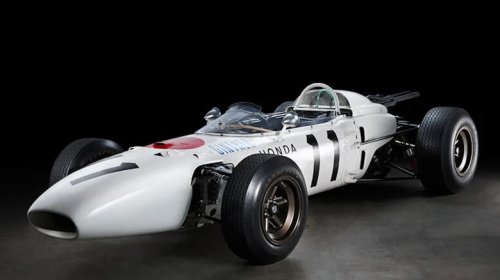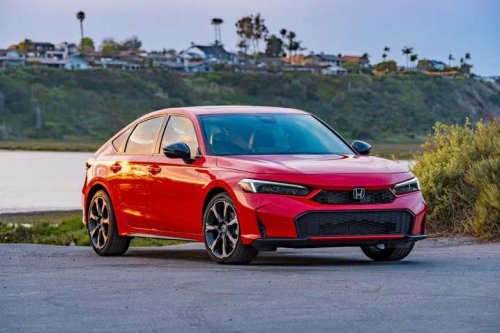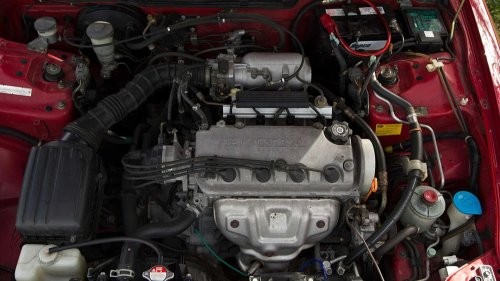
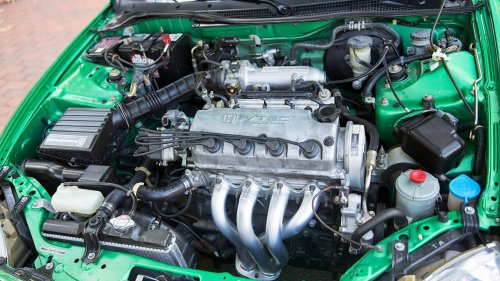
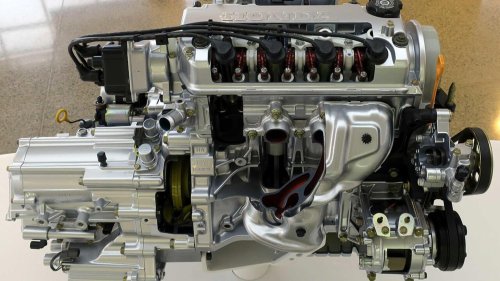
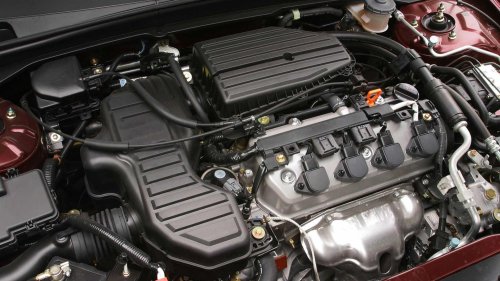
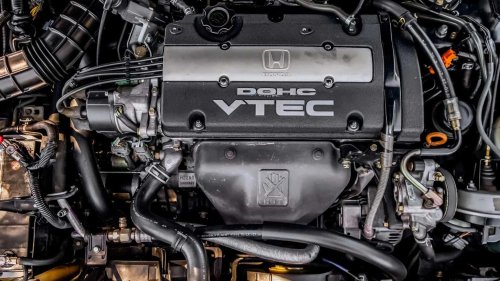
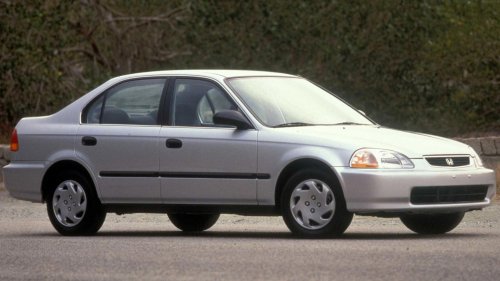
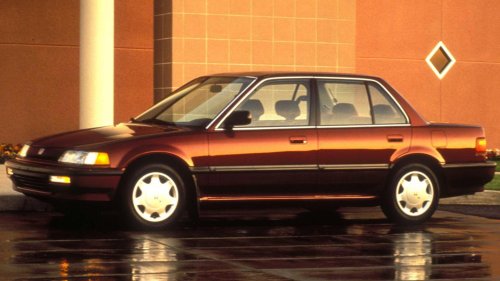
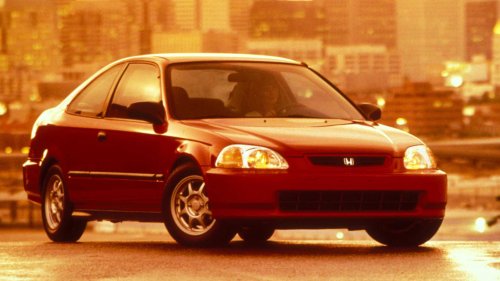


















Honda's reputation when it comes to four-cylinder engines is next to peerless. Even the most casual of gearheads will have heard of iconic Honda mills like the K-Series and B-Series engine families. The former happens to be one of the most famous motors for engine swaps due to the fact that it easily accepts mods of all types, it's reliable, and the actual act of installing it into a different car is easy, especially when working with one of the many kits available on the market.However, there's another Honda four-banger that's, arguably, just as reliable and almost as deserving of fame as the other mills we mentioned a moment ago. It's the Honda D-Series, an engine that quietly powered dozens of small Honda models for decades without making much of a fuss. In the world of mass-market engines, not making a fuss can be thought of as a good thing. After all, who doesn't want to be the silent hero? A Quiet Life Wikimedia Commons: Stug.stugJust as the world entered the 1980s, Honda was looking to shake things up a bit. When it came to its engine lineup, the older E engine series was beginning to show its age. It had been introduced in 1971 and, after surviving the emissions onslaught that wracked the American automotive market, it had finally started to look quite inferior. Rather than continuing to update the E Series, Honda embarked on an all-new development.The result, the D Series, first saw the light of day in 1984. It debuted alongside, and within, Honda's then-new model, the CRX. It was a lightweight, economical, and slightly sporty little car based on the Honda Civic that needed an equally light and economical engine. This first iteration was coined the "D15", a 1.5-liter, naturally aspirated and carbureted four-cylinder mill. From then on, Honda's use of the D15 and its sub-variants became widespread, and encompassed models like the Civic/Ballade, the Concerto, and later, the Honda City.Wikimedia Commons: Mr.choppers Quickly following the release of the D15 came a handful of other variations, ranging from 1.2 to 1.6 liters. As you can imagine, their names were D12, D13, and so-on. By 1988, the D Series engine was found all over the world in numerous small Honda models, most notably the Civic. A couple of performance-oriented versions of the mill were released around the early 1990s, those being the VTEC-equipped D15B and the Three-Stage VTEC D15B. While they both share the same engine code, the latter mill boasted unique upgrades to its VTEC system, allowing it to produce more power and rev a bit higher.The final member of the D Series engine family to hit the market was the 1.7-liter D17. It was introduced alongside the seventh-gen Civic in the US, which fell in 2001. However, the mill as a whole got its start in 2000. It served faithfully, again, as the Honda Civic's go-to engine, for the remainder of the seventh-gen Civic's lifespan. Finally, in 2005, Honda halted production of the D Series permanently, and it was spiritually replaced by the Honda L and K Series engines. The D Series' Guts Wikimedia Commons:Both the engine block and cylinder head are constructed of aluminum in an effort to keep the D Series' weight as low as possible, which, in turn, helps with increasing fuel economy. The top of the engine block itself, where the cylinder head actually mounts, boasts something called an "open deck". Open-decked engines typically aren't as strong as closed-deck mills, but they are lighter, easier to produce, and are more capable of effective cooling.Most D Series engines utilize a single overhead cam-type valvetrain with either eight or 16 valves, the latter number being most common. Some members of the family also boast dual-overhead cams, such as the performance-oriented DOHC ZC (a JDM-only D Series engine produced between 1984 and 1995). In addition, some also sported Honda's VTEC variable valve timing system.Honda The D Series, as a whole, is well-known as a low-stress engine. None of the family's entrants were particularly powerful, despite some sporting VTEC capability. There was also not a single D Series to sport any sort of forced induction, further helping to keep the D Series as reliable as possible. Not to mention, Honda is famous for meticulous attention to detail, both in its designs and in the production process itself. D15B Three-Stage VTEC One D Series engine in particular came equipped with a unique type of VTEC boasting three individual stages of operation. The mill, called the D15B Three-Stage VTEC, was built for the European and Japanese-market Honda Civic Ferio Vi, Vi-RS, and JDM VTEC grades. In total, it was produced for 10 years between 1995 and 2005. As for how the system worked, the first of the three stages is dedicated to engine efficiency. During low/light engine load, the mill operates with just 12 of its 16 total valves, with one set of intake valves remaining closed. Engineering the mill to run this way allowed it to achieve slightly higher fuel efficiency.The second stage kicked in once the engine achieved a rotational speed of approximately 2,500 rpm. At this point, all 16 valves are called to action. Other than kicking the last of the four intake valves into action, though, stage two isn't meant for performance, as it allows the engine to simply operate with the same sort of performance seen on non-VTEC D Series engines.Bring A Trailer However, stage three is where things finally start to get interesting. At around 5,200 rpm, the mill's performance-oriented VTEC system is engaged. For context, VTEC-capable engines utilize a special camshaft with two points of contact for one valve. As for the three-stage VTEC engine, this second, high-lift cam lobe springs into action via a separate rocker arm that's activated once the engine reaches 5,200 rpm. The higher lift improves airflow by opening the valves a bit further, increasing power.The three-stage system is unique in that all other VTEC engines only utilize two-stage VTEC, wherein the engine is either running at standard and performance states, or in the case of VTEC-E-capable engines, economy and standard states. Three-stage, on the other hand, allows for economy, standard, and performance-oriented operation. How The D Series Helped The Civic Thrive HondaIf you wanted to sum up the entirety of the Honda D Series engine family with one word, it would be "workhorse". Between the mid 1980s and the mid 2000s, millions of Honda Civics were produced. It was also during this time that the Civic's popularity would explode, both within the US and abroad. While, for the most part, the humble little car wasn't particularly known for its performance, looks, or presence, it was known well for one main thing, among many.Honda That thing would be reliability, and reliability begins and ends with what's under the hood. And, what was under the hood? A D Series engine. On top of its esteemed reliability, owing to its Honda-bred engineering and aforementioned meticulous attention to detail, the Civic is also well-known for its fuel efficiency, which is extremely important for anyone looking for a car that gets you from Point A to B without a fuss, and the Civic is perfect for that sort of work. A Well-Sorted Pushing-Off Point HondaBack when the D Series first hit the market, the Civic itself had only been around for roughly a decade, and it still had some work to do to prove its worth. Americans, while squeezed by two gas crises, were still very partial to American autos. As time went on, and the Civic continued to sport extremely reliable D Series engines, more and more folks warmed up to the idea of owning a Civic. Fast-forward to today, and over 12.3 million have been sold in the US since its introduction, beating out a vast majority of other models.In reality, the D Series engine was just as important as the Civic name itself. Sadly though, few remember it, despite all the work it did for Honda, and its popular compact car.