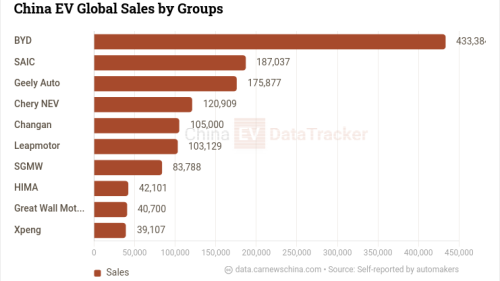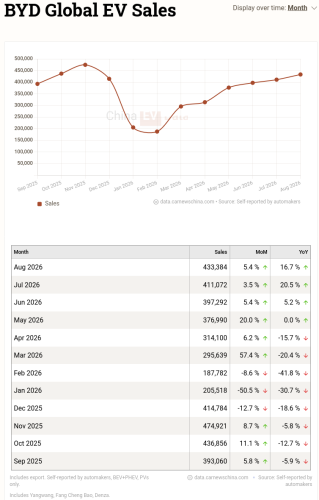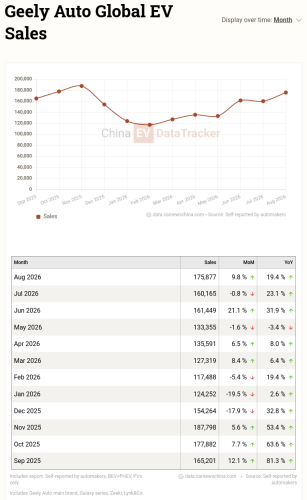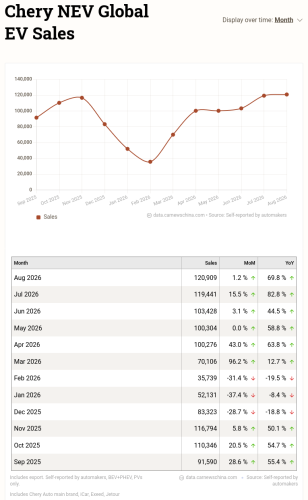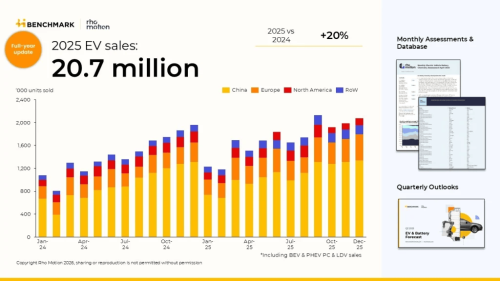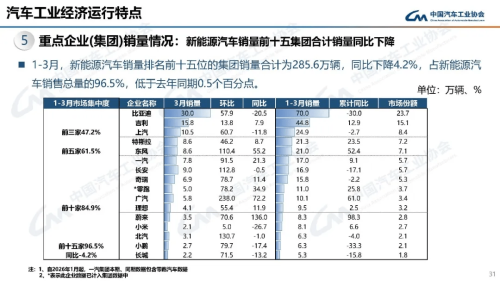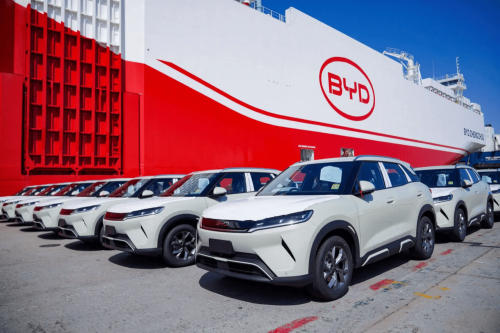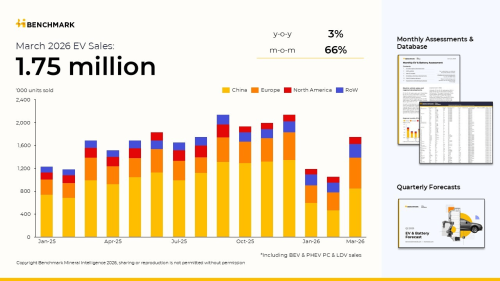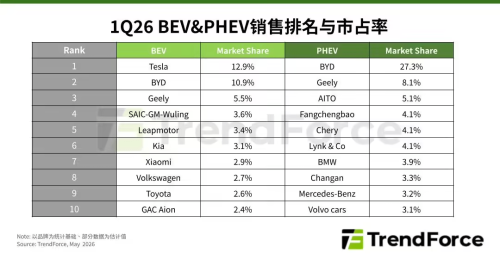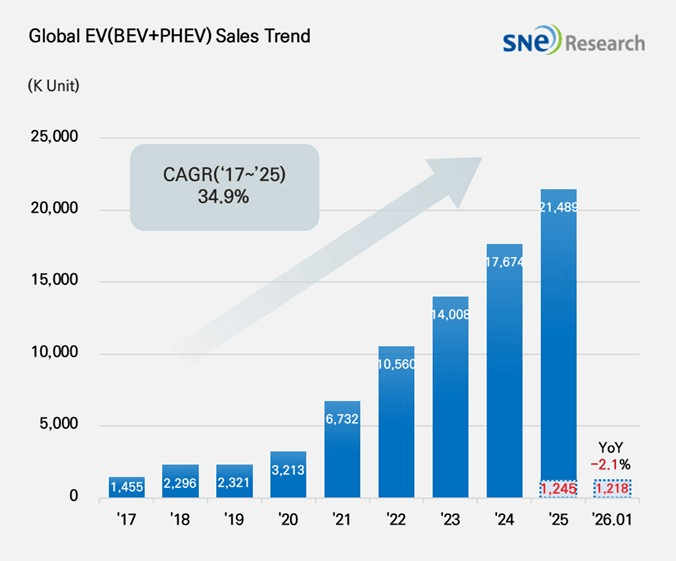
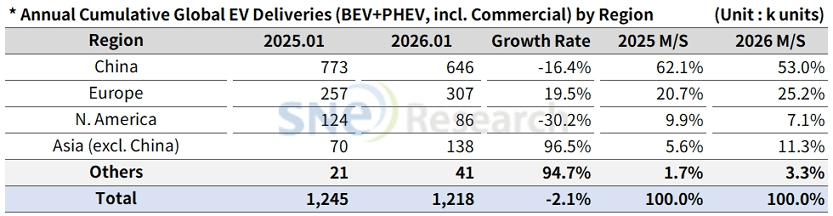
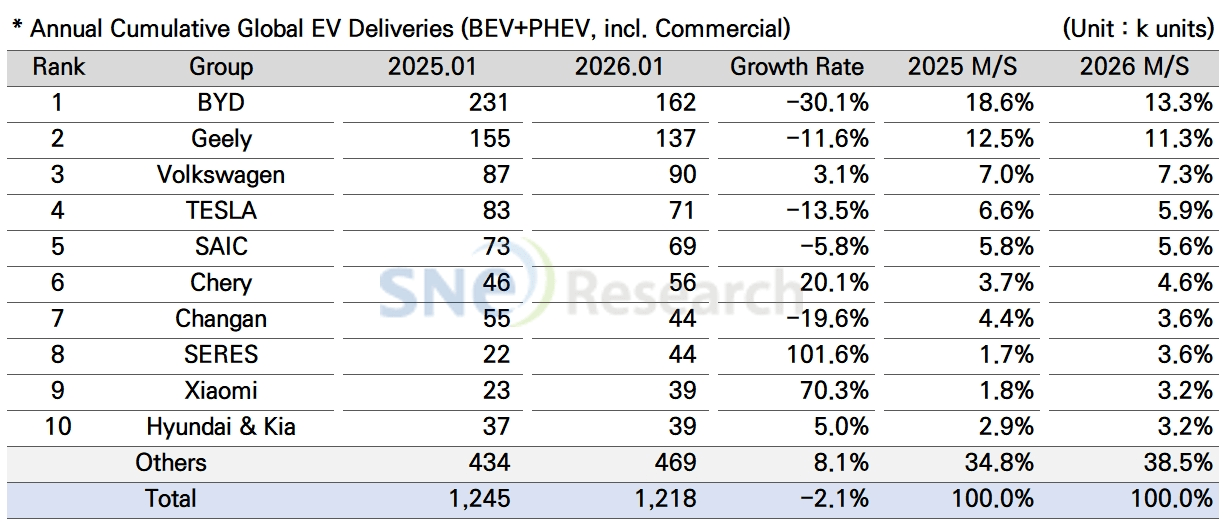



















China remained the largest EV market with 646,000 units sold in Jan, accounting for 53% of global demand. According to the latest data from SNE Research, global electric vehicle deliveries, including BEVs and PHEV models, reached about 1.218 million units in January 2026, representing a year-on-year decline of 2.1%. Global EV sales trend This marks a rare contraction at the start of the year for the global new energy vehicle market in recent years, mainly due to weakening demand in China and North America. From a regional perspective, China remained the world’s largest electric vehicle market. EV sales in China reached 646,000 units in January, down 16.4% year-on-year and accounting for 53% of global sales. Despite the noticeable decline, the Chinese market still contributed more than half of global demand. Europe ranked second, with EV sales reaching 307,000 units in January, representing year-on-year growth of 19.5% and accounting for 25.2% of the global market. In contrast, the North American market recorded a more significant decline. EV sales totaled 86,000 units during the month, down 30.2% year-on-year and representing 7.1% of the global total. Global EV deliveries by regions for Jan 2025 and Jan 2026 In terms of automaker rankings, Chinese brands continued to dominate. Seven of the top ten automakers by global EV sales were Chinese companies: BYD, Geely, SAIC Motor, Chery, Changan, Seres and Xiaomi. Together, these seven companies accounted for 45.2% of the global market, close to half of total sales. At the company level, BYD remained the global leader. In January 2026, the company sold 162,000 electric vehicles, down 30.1% year-on-year, with a market share of 13.3%. Geely Group ranked second with EV sales of 137,000 units, down 11.6% year-on-year and holding an 11.3% market share. Global EV deliveries by automakers for Jan 2025 and Jan 2026 SAIC Motor ranked third with sales of 69,000 units, representing a slight year-on-year decline of 5.8%, supported largely by continued overseas growth of the MG brand. Some Chinese automakers maintained strong growth momentum. Chery sold 56,000 electric vehicles, up 20.1% year-on-year, while Changan recorded EV sales of 44,000 units, down 19.6%. Emerging EV players Seres and Xiaomi posted the fastest growth among the companies on the list, with sales reaching 44,000 units and 39,000 units respectively, representing year-on-year increases of 101.6% and 71.3%. Among emerging EV brands, Seres and Xiaomi recorded particularly strong growth. Seres sold 44,000 vehicles during the month, up 101.6% year-on-year, while Xiaomi delivered 39,000 electric vehicles, representing year-on-year growth of 71.3%. Notably, Xiaomi’s YU7 recorded monthly sales of 37,869 units, accounting for more than 90% of the company’s total sales and becoming the best-selling new energy vehicle model in China for the month. In February, YU7 sales reached 20,196 units, still ranking among the top three passenger vehicles in the national market. Overall, the global new energy vehicle market experienced a temporary slowdown at the start of the year, with clear regional divergence. Demand continued to grow in Europe, China’s market saw short-term fluctuations, and Chinese automakers continued to expand their share in global EV sales rankings.