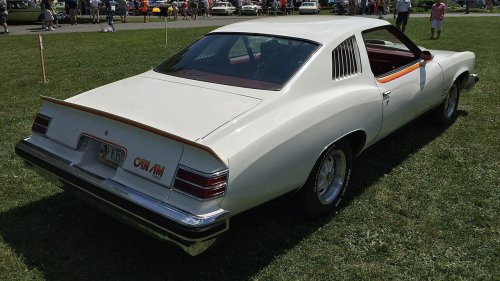
From Overlooked to Overnight Sensation: How Forgotten Classics Become Must-HavesAsk any seasoned collector about the one that got away, and you will get a story. It is almost never about a Hemi Cuda or a split-window Corvette, the cars everyone always knew were special. It is about something humbler. The early Bronco a buddy sold for grocery money. The square-body pickup left to rot behind a barn. The Firebird traded for a set of wheels. These are the vehicles that spent years being invisible and then, in what felt like a single season, became the thing everyone suddenly had to own.Calling it overnight is generous. What looks like a sudden explosion is really the release of pressure that had been building quietly for years. A vehicle sits undervalued, the forces that will eventually reprice it accumulate out of sight, and then some trigger flips the switch and turns private interest into public, bidding-war demand. The collectors who profit are not the ones who react to the headline. They are the ones who saw the pressure building and bought before the rest of the world noticed.What Actually Moves a Whole Segment at OnceAdvertisementAdvertisementThe crucial detail is that these moves happen to entire categories, not single cars. The best examples of any model always commanded strong money. What changes during a revaluation is that the floor and the ceiling rise together, dragging the rough project and the trophy-winner up at once. When that happens, the market has stopped pricing the individual car and started pricing the idea it represents.Four forces tend to line up first. The first is demographic. Nostalgia runs on a thirty-year clock, and buyers reach for the cars of their youth right as they hit their peak earning years. The audience is the market, and when the audience changes, the market follows. The second is cultural permission, the moment a vehicle stops being a punchline and starts showing up in design magazines and the right driveways. The third is scarcity, because the trucks and 4x4s that were used hard and thrown away leave very few clean survivors behind. The fourth is the trigger, the auction result or reissued nameplate that finally converts all that latent demand into a stampede.The Bronco Wrote the PlaybookNo vehicle demonstrates the pattern better than the first-generation Ford Bronco. For most of its post-production life it was a cheap, rust-prone trail toy that people bought to use, not to admire. Within a handful of years it became one of the most coveted shapes in the hobby, spawning an entire industry of six-figure restorations and getting a fresh shot of adrenaline when Ford revived the name. It checked every box at once: the nostalgia clock had turned, the cultural reframing from utility rig to coastal status symbol was complete, clean survivors were thin on the ground, and the trigger landed right on cue. The lesson every collector took away was simple. By the time a revaluation is making headlines, the easy money has already left the building.AdvertisementAdvertisementC10s and Square-Bodies: Where the Smart Money FollowedIf the Bronco wrote the playbook, the classic Chevrolet pickup ran it to perfection. The C10 and its square-body relatives traced the same arc almost exactly, rewarding anyone who spotted the resemblance early. A truck that spent decades as a work tool, then a beater, then a bargain project is now a blue-chip canvas for the most ambitious builds in the country.You can read the whole story in a single dealer's current inventory. RK Motors today lists a 1964 Chevrolet C10 restomod at $99,900, with a modern 5.3L LT V8, six-speed automatic, RideTech suspension and air conditioning, a turnkey entry point that would have been unthinkable money a decade ago. At the other end of the same showroom sits a 1967 Chevrolet C10 built by Scott's Hotrods 'n Customs at $395,900, a six-year, ground-up build with a 525-horsepower LS3 and a binder documenting more than $710,000 in receipts before the truck itself. That fourfold spread between two trucks of the same basic shape is the entire argument in miniature.The appetite reaches well beyond Chevrolet, too. The same inventory includes a frame-off 1955 Chevrolet 3100 with EFI at $105,900 and a Roadster Shop-built 1953 Ford F100 with a supercharged 509ci V8 and a five-speed at $189,900, proof that elevated vintage trucks now sell across brands, eras and build philosophies.AdvertisementAdvertisementFirst-Gen Blazers and the Utility HaloThe first-generation K5 Blazer is the clearest case of a vehicle riding a halo created by its neighbors. As the early Bronco priced itself out of reach, buyers who loved the formula went looking for the next thing that delivered the same feeling for sensible money, and the K5 was waiting. Its rise was less a discovery than a spillover. RK Motors' current 1972 K5 Blazer at $189,900 shows how far the thinking has traveled: instead of the predictable lifted 4x4, it is a frame-off, lowered, two-wheel-drive street machine in Mercedes-Benz silver, with a 6.0L LS2 and C4 Corvette suspension at both ends. Builders only pour that kind of engineering into a platform the market has already blessed.The halo keeps spreading. The same showroom now carries a frame-off 1972 Chevrolet Suburban at $149,900 and a restored 1993 Land Rover Defender 130 at $199,900, two vehicles you could barely give away in restored condition a generation ago. When the wagons and long-wheelbase haulers start drawing six figures, it is no longer a fad. It is a permanent reordering of what counts as collectible.Firebirds and the Side Door of Relative ValueAdvertisementAdvertisementThe Pontiac Firebird spent years in the shadow of the Camaro and the Mustang, dismissed as the muscle car you bought when you could not afford the headline names. That perception has been quietly eroding. As the most desirable first-generation Camaros climbed out of reach, attention swung to the F-body's other half, and collectors started appreciating the Firebird on its own terms. It is a reminder that revaluation often comes through the side door of relative value: when the obvious choice gets expensive, the market hunts for the next-best thing and rehabilitates an overlooked nameplate in the process. RK's renewed Pontiac interest is visible in cars like its frame-off 1971 GTO Judge with the 455 HO V8 at $189,900, the same wave of enthusiasm that lifts the Firebird in its wake.Lincoln Continentals and the Rediscovery of DesignThe suicide-door Lincoln Continental of the 1960s works a little differently. It was always one of the most elegant American cars ever drawn, but it was also notoriously ruinous to own, its complex hydraulics scaring off all but the bravest. For years, genuinely beautiful examples sold for a fraction of their cultural worth. What rescued the Continental was a renewed love of clean mid-century design paired with the restomod movement's ability to cure the mechanical sins while keeping the grace. The lesson is that a car held back by its reputation for difficulty, rather than any lack of beauty, is often the most mispriced of all. That instinct, honoring the shape while modernizing everything beneath it, runs through RK's holdings, from Art Morrison-chassis Bel Airs to a twin-turbo pro-touring 1957 Bel Air at $399,900.Reading the Signals Before Everyone ElseAdvertisementAdvertisementIf you want to catch the next one early, the case studies point to a few practical tells. Look for a segment where the thirty-year nostalgia clock is just starting to chime for buyers in their prime earning years. Watch for cultural permission, the shift from punchline to taste object. Favor categories that were used hard and saved rarely, because scarcity of quality is the real engine of appreciation. And watch the builders, because the best restomod shops vote with their labor and do not pour thousands of hours into platforms they expect the market to ignore.The single most reliable tell, though, is price dispersion. When one category can support both a sensible six-figure entry car and a flagship pushing toward half a million dollars, the revaluation has gone from speculation to fact. The early money is made in the gap between cultural acceptance and full dispersion, after the builders have committed but before the spread has opened all the way.None of it is guaranteed, and the hobby rewards passion long before it rewards profit. But the pattern is real and it repeats, from Broncos to square-bodies to Blazers to Firebirds. The cars that changed their reputation overnight never really did. They changed slowly, in plain sight, and paid off the handful of people who were watching. The opportunity is to study the inventory in front of you with that history in mind, and to recognize the next quiet revaluation while it is still quiet.See the first version of this post on RK Motors Blog here: https://blog.rkmotors.com/the-cars-that-changed-their-reputation-overnight/