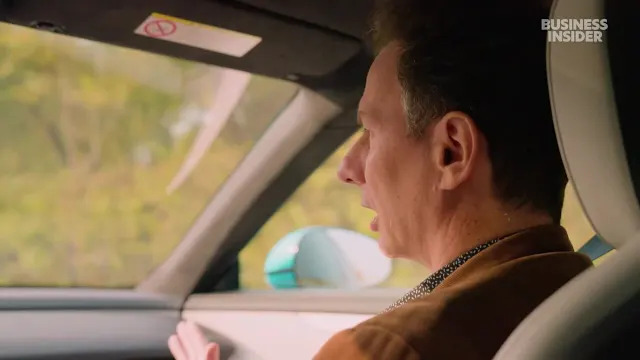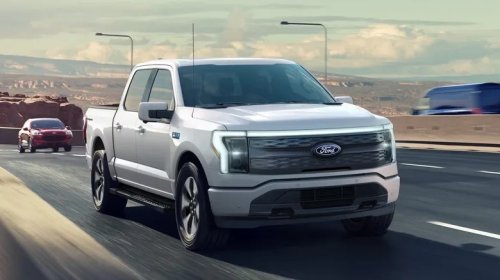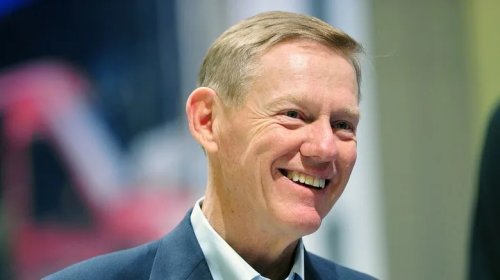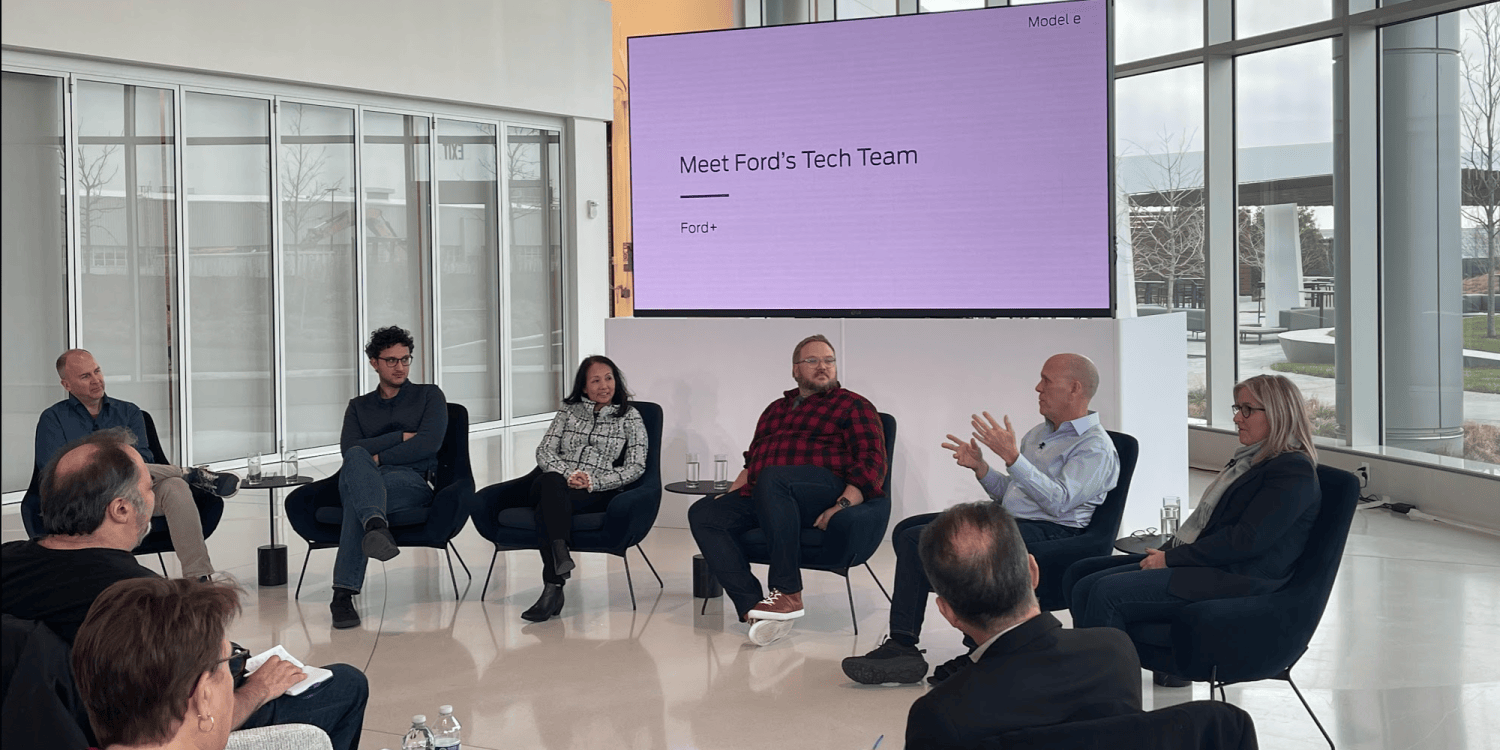



















Ford is dissolving its standalone electric vehicle division — and losing the executive who built it. The automaker said today that Doug Field, its chief EV, digital, and design officer, will leave the company next month after nearly five years leading Ford’s push into software-defined EVs. In his place, Ford isn’t bringing in another Silicon Valley hire. It’s folding the EV, digital, and design group into its global manufacturing operations under COO Kumar Galhotra, in a new unit called Product Creation and Industrialization. The end of the Model e era Field joined Ford in 2021 from Apple, where he ran the company’s secretive car program. Before that, he was senior VP of engineering at Tesla, where he led development of the Model 3. His hiring was the centerpiece of CEO Jim Farley’s bet that Ford needed to import Silicon Valley DNA to compete with Tesla and Chinese automakers. In 2022, Farley split Ford into “Model e” for EVs and “Ford Blue” for gas vehicles. Field was the face of Model e. On his watch, Ford developed the Universal EV Platform — the low-cost architecture underpinning a family of sub-$40,000 EVs — and the first vehicle built on it, a $30,000 midsize electric pickup due out of Louisville Assembly in 2027. Advertisement - scroll for more content At CES 2026, Field announced Ford’s BlueCruise system would offer Level 3 eyes-off driving starting in 2028, debuting on the same Universal EV pickup. He claimed Ford’s in-house High Performance Compute Center delivered “significantly more capability at a 30% lower cost” than outsourced equivalents. The new structure Ford’s reorganization combines “Electric Vehicle, Digital and Design” with its “global Industrial System” — manufacturing, supply chain, and industrialization. Galhotra, Ford’s COO and a longtime manufacturing executive, runs the combined unit. Alan Clarke, who leads the California-based Advanced Electric Vehicle Development team that actually engineered the Universal EV Platform, was promoted to vice president, Advanced Development Projects. The California skunkworks survives — it just reports up differently now. Separately, Kieran Cahill, VP of Manufacturing for Europe and IMG, is retiring May 1 after 37 years at Ford. The financial frame Ford tied the restructuring to a target of 8% adjusted EBIT margin by 2029, up from a trailing gross margin of roughly 5.8% today. The company also committed to: Refresh 80% of its North American lineup and 70% of its global lineup by volume through 2029 Put 90% of vehicles on updated electrical architectures with over-the-air capability by 2030 Offer electrified powertrains on roughly 90% of global nameplates by 2030 A pattern of EV retrenchment Field’s departure fits a clear pattern. Over the past year, Farley has systematically unwound the bets that defined Ford’s early EV strategy. The company killed the original F-150 Lightning EV and replaced it with a Lightning EREV — a range-extender hybrid. It scrapped its planned three-row electric SUV. It cut Model e workforce at the Rouge plant. And now it has dissolved the standalone EV unit entirely and pushed out its leader. What survives is the Universal EV Platform and the Louisville pickup, which Ford claims has 15% better aerodynamics than any other pickup on the market, uses LFP batteries and unicastings, and can be assembled 40% faster than a Ford Escape. Electrek’s Take The Doug Field era at Ford is over, and with it goes the last credible “Tesla-imitation” posture in Detroit. Farley hired Field at the peak of the moment when every legacy automaker was terrified of Tesla and convinced a Silicon Valley cultural infusion was the only path forward. Five years later, Ford has killed its flagship EV, scrapped its three-row EV SUV, pivoted its full-size trucks to range-extender hybrids, and now wound down the standalone EV division entirely. What’s left is still meaningful. The Louisville midsize pickup is a genuinely interesting truck — $30,000, LFP, unicastings, industry-leading aerodynamics, and 40% faster assembly than Ford’s existing platforms. Alan Clarke’s California team is intact. The L3 eyes-off program is still on the roadmap for 2028. Ford is not walking away from affordable EVs; it’s walking away from the idea that you need a separate organization to build them. But putting the EV effort under a manufacturing COO, tied to an 8% margin target, sends a clear signal about what Farley now thinks the problem is. It’s not product vision — Field delivered that. It’s industrialization, cost, and margin. That’s a defensible call. It’s also a quiet admission that the “startup inside Ford” model didn’t work. Field, meanwhile, is one of the most coveted executives in the industry. Tesla, Apple, Ford — he’s tried it three times. Wherever he lands next will matter. His track record in actually shipping vehicles is now considerably better than the industry average, and there’s no shortage of EV startups and legacy automakers that could use him. Stay up to date with the latest content by subscribing to Electrek on Google News. You’re reading Electrek— experts who break news about Tesla, electric vehicles, and green energy, day after day. Be sure to check out our homepage for all the latest news, and follow Electrek on Twitter, Facebook, and LinkedIn to stay in the loop. Don’t know where to start? Check out our YouTube channel for the latest reviews.