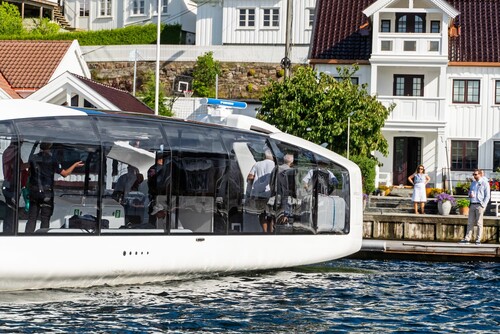
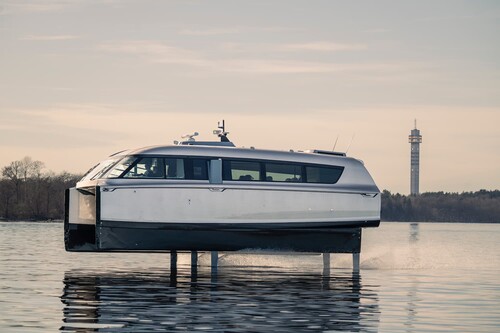
Vancouver’s recent support for an electric passenger hydrofoil to Bowen Island and Gibsons is an appealing hook because it compresses three different Canadian transportation stories into one image. It promises decarbonization, speed, and coastal reconnection in a single sleek vessel. It also invites a harder question. Is the future of Canadian ferry electrification really a 34-knot foilborne craft lifting out of the water on its way to Gibsons in 70 minutes, or is that image mostly the glossy edge of a much broader and more practical transition already underway in Canadian waters? According to the Vancouver Park Board material and public reporting around the CIRQL proposal, the promise is a passenger-only electric service from downtown Vancouver to Bowen in roughly 35 to 40 minutes and to Gibsons, setting for the iconic Canadian show The Beachcombers, in about 70 minutes, with the operator carrying the capital cost of the dock changes, charging equipment, and vessels. That is serious enough to deserve analysis, but not enough to count as inevitability. Status Ferry / Project Route(s) Propulsion Operating Marilyn Bell Billy Bishop airport shuttle, Toronto (also the shortest ferry route in the world) Fully electric lithium-ion Operating Island Class fleet (6 vessels in service) Multiple minor coastal BC routes Battery-equipped diesel-hybrid, designed for future full-electric operation Operating Arrow Park III Arrow Park cable ferry All-electric cable ferry Operating Amherst Islander II Millhaven–Stella Hybrid-electric, intended to become fully electric Operating MV Peter-Fraser Île-Verte Diesel-electric hybrid Operating Ecolos cable ferry Clarence Island–Thurso Battery-electric / zero-emission Operating Quyon Ferry Quyon–Fitzroy Harbour Battery-powered electric propulsion with backup generator / hybrid mode Operating Commercial freight ferry fleet Lower Mainland–Vancouver Island LNG-battery hybrid Temporarily out of service Wolfe Islander IV Kingston–Wolfe Island Hybrid-electric, intended to become fully electric Under construction 2 new Toronto Island ferries Toronto mainland–Toronto Islands Fully electric Under construction 4 more Island Class ferries Nanaimo Harbour–Gabriola; Campbell River–Quadra Battery-electric hybrid, designed for 100% electric operation Contract awarded / in execution 4 New Major Vessels Major Lower Mainland–Vancouver Island corridors Diesel-battery hybrid, all-electric-ready Under construction Kootenay Lake replacement vessel Balfour–Kootenay Bay Electric-ready, with later diesel-to-electric conversion planned Design / pre-build Holiday Island and Madeleine replacement ferries Wood Islands–Caribou; Îles-de-la-Madeleine–Souris Diesel-electric hybrid with onboard energy storage Procurement / planning 3 new ferries for Sorel-Tracy and L’Isle-aux-Coudres Sorel-Tracy–Saint-Ignace-de-Loyola; L’Isle-aux-Coudres–Saint-Joseph-de-la-Rive Rechargeable hybrid-electric Funded / procurement not yet awarded Mill Cove route electric ferries Halifax–Mill Cove High-speed zero-emission electric ferries Proposed only Vancouver–Bowen–Gibsons passenger ferry Vancouver–Bowen–Gibsons All-electric passenger ferry Total represented At least 31 vessels/projects Table of electrified or electrifying ferries in Canada, by author. (Note: Table may not show well on some mobile devices.) The broader Canadian context matters because the country is not waiting for hydrofoils to begin electrifying ferries. Canada already has a small but growing set of electric and hybrid-electric ferries in operation or under construction, and the pattern is revealing. Billy Bishop’s Marilyn Bell ferry in Toronto is already 100% electric. Toronto’s two new island ferries are under construction now, with delivery windows in late 2026 and spring 2027. BC Ferries has six Island Class battery-hybrid ferries in service and four more under construction. BC Ferries is also moving ahead with four much larger diesel-battery hybrid, all-electric-ready major vessels for delivery starting in 2029. On the public-policy side, Transport Canada reports 68 registered ferries operating nationally in 2023, while the Canadian Ferry Association says Canada has over 180 ferry routes. The electrification story is not hypothetical. It is route-by-route fleet renewal, and it is already underway. That practical pattern is not accidental. Ferries are often good electrification targets because their duty cycles are repetitive, their terminals are fixed, and many routes are short enough that charging can be integrated into ordinary operations. The technical problem is easier than long-haul trucking, aviation, or ocean shipping because the vessel returns to the same dock again and again, often multiple times per day, and shore power can do part of the heavy lifting. The Toronto island ferries are a clean example. The vessels are only half the system. The City is simultaneously building mooring changes, power upgrades, and charging infrastructure so that vessel and terminal arrive as one package. BC Ferries is doing the same thing on a larger scale with Island Class vessels and future terminal electrification. In other words, electrification succeeds where the whole operating system is engineered around batteries, not where batteries are treated as a drop-in swap for diesel. Hydrofoils sit inside that electrification story, but not at its center. Their appeal is old and rational. A hydrofoil lifts most of the hull clear of the water once it reaches takeoff speed, cutting wave-making drag and improving ride comfort. Those are real benefits, and the commercial record is not imaginary. Transportation Research Board work from 1990 noted that hydrofoils, catamarans, and hovercraft were in regular passenger service in 52 countries. The Hong Kong to Macau jetfoil market just marked 50 years of operation. Liberty Lines still runs a fleet of more than 30 fast craft in the central Mediterranean, including hydrofoils. Sado Kisen still offers jetfoil service to Sado Island. Hydrofoils have not disappeared because they never worked. They have persisted where the route, water conditions, and business model fit. The reason hydrofoils never became dominant is that their niche is narrow. The same Transportation Research Board case study pointed out that hydrofoils are uneconomical below design speed and that foil vulnerability becomes a significant problem where floating or subsurface debris is present. That is the recurring theme over decades. The value proposition depends on staying foilborne at high speed for a meaningful share of the trip. If a route is too short, too shallow, too busy, too debris-heavy, too exposed, or too constrained near terminals, the hydrofoil gives back much of what makes it attractive. That logic still applies to the new electric generation. Artemis advertises the EF-24 passenger hydrofoil at 150 passengers, 34-knot cruise speed, 36-knot top speed, and 70 nautical miles of foiling range. Candela’s P-12 is smaller at 30 passengers, 25-knot service speed, and about 40 nautical miles of range. Both are interesting. Neither changes the fact that hydrofoils are highly route-specific assets rather than general-purpose ferry replacements. That route specificity is where the Vancouver to Gibsons proposal starts to look fragile. The service is being sold on time savings and downtown convenience. Time savings are real only if the boat spends much of the route foilborne at high speed. Downtown convenience is real only if the route can keep a dependable schedule and avoid frequent de-rating because of local conditions. The public benchmark that hovers in the background is Hullo, which carried more than 400,000 passengers in its first year between downtown Vancouver and downtown Nanaimo, or a bit over 1,095 passengers per day on average. That is impressive, but Nanaimo is a much bigger market than Bowen or Gibsons. The CIRQL pitch reported publicly has centered on about 1,000 passengers per day. That is not absurd, but it is an optimistic outcome for a smaller destination base and a new operating model that still has to prove itself. A service with 150 seats per sailing needs roughly 6.7 fully loaded departures to move 1,000 daily passengers. At a more realistic 65% average load factor, it needs about 10 departures carrying 98 passengers each. That is a demanding service pattern for a startup, especially once weather, maintenance, debris slowdowns, and seasonal demand swings are added back in. The local environment is the real problem, not the elegance of the concept. BC coastal waters are not clean urban canals. Canadian Sailing Directions for the Pacific Coast describe floating logs as a pervasive danger along the BC coast because of extensive logging activity. The same guidance warns of deadheads, nearly submerged logs that can be hard to detect and that may only reveal themselves by a slight break on the surface. It also notes that entire trees can be encountered during freshet periods and that tidal swirls and eddies can concentrate drift. That matters because the hazard is not merely theoretical or occasional. It is built into the operating environment, something I’m aware of because I worked on a machine-learning escaped log identification system proposal a few years ago, grounded in BC, but scoped against global markets like the mouth of the Amazon. A hydrofoil has submerged lifting surfaces moving at high speed through exactly the water column where these hazards sit. That does not make hydrofoils impossible in BC. It does mean that a route depending on routine high-speed foilborne operation is entering one of the less forgiving hydrofoil environments in the developed world. Wildlife adds another layer of friction that matters more in practice than in renderings. Fisheries and Oceans Canada’s 2026 measures require a 1,000 m standoff from Southern Resident killer whales until May 31, 2027. Transport Canada’s 2025 safety bulletin also imposed a 400 m approach prohibition for killer whales in southern BC waters, together with speed-restricted zones in key habitat. Those are conservation measures, not design details, but they shape operations just the same. A fast ferry that cannot reliably distinguish, predict, or avoid whale interactions in a corridor that crosses the Salish Sea inherits schedule uncertainty and operating constraints. And even where killer whales are not directly in the vessel’s path, the need for active monitoring, conservative routing, and compliance erodes the simplicity of the original trip-time claim. The problem is not only whales. Sea lions, porpoises, and other marine mammals are part of the coastal operating environment. But killer whale protection rules are the clearest expression of the larger truth that the Salish Sea is not an unconstrained highway for fast marine transit. Accident history strengthens that caution. There is no clean global actuarial database for hydrofoil failure rates expressed as accidents per million vessel-km, but the investigation record is enough to show the pattern. In 2016 the Japan Transport Safety Board reported that JR Kyushu’s BEETLE collided with a marine creature at about 40 knots, seriously injuring three passengers and causing minor injuries to others. In 2019 a Sado Kisen jetfoil collision with a floating object or marine life injured more than 80 people according to broad public reporting. The striking point is not that hydrofoils always fail catastrophically. It is that when foilborne vessels hit something at speed, even a survivable event can create abrupt deceleration and a cabin full of injured passengers. The vessel may limp home in hullborne mode, but the business still absorbs injury claims, inspections, repairs, schedule disruption, and operating caution afterward. Modern designers know this. A recent Federal Transit Administration foil ferry design report for the Seattle to Bremerton corridor explicitly called collisions with logs and deadheads a primary concern and incorporated a collision absorption system as part of the design response. That is encouraging engineering. It is also an admission that the risk is fundamental. All of that points to a straightforward conclusion about Gibsons. The route is unlikely to hit water in the form currently imagined because too many things have to go right at once. The operator is a startup. The vessels being discussed are promising but early in commercial rollout. The service depends on dock work, electrical servicing, charging barges, city agreements, regulatory approvals, and continued Indigenous engagement. The ridership target is ambitious relative to destination size. Most important, the local operating environment works against the central business proposition, which is dependable high-speed foilborne service. If the boat has to slow often, de-foil often, or operate conservatively for debris and wildlife, the difference between a 70-minute marketing crossing and a competitive real-world trip narrows. This is where many attractive transportation concepts become marginal businesses. Small changes in average speed and utilization can do a lot of damage. A vessel cruising at 34 knots but averaging 24 knots over the trip because of speed restrictions, maneuvering, and operational caution takes about 42% longer over the same distance than the cruise-speed image implies. That is the difference between a flagship service and a niche premium shuttle. That does not make hydrofoils irrelevant to Canada. It means they are likely to find a smaller role than their advocates suggest. They may fit protected urban waters, short passenger-only routes with low debris risk, and corridors where wake reduction is valuable and wildlife constraints are manageable. Table of estimated number of ferries in different provinces, by author. The scale of the challenge is easy to miss in abstract discussions of ferry electrification. Canada does not have a handful of ferries to replace. It has a large and varied fleet spread across coastal, inland, northern, urban, rural, cable, and long-distance routes. Even using conservative public estimates, the country appears to have roughly 155 to 159+ operating ferry vessels across the provinces, with British Columbia alone at 50+ and Newfoundland and Labrador at about 22. Against that backdrop, the number of ferries that are fully electric or even hybrid-electric remains small. Canada’s ferry electrification story is real, but it is still in its early stages. Most vessels remain conventional, many routes have difficult operating conditions, and full turnover will take years of vessel replacement, terminal upgrades, charging infrastructure, and route-specific engineering decisions. Canada’s real ferry electrification story is moving elsewhere. It is in short crossings, fixed terminals, hybrid vessels shifting more energy from diesel to batteries, and full-electric ferries on routes where charging can be built into daily operations. Billy Bishop’s 121 m crossing is an extreme short-hop case, but it is real and operating. Toronto’s larger electric ferries are under construction. BC Ferries is not waiting for hydrofoils. It is scaling from six battery-hybrid Island Class vessels to ten, while planning four large all-electric-ready hybrids for the core network. That is not cinematic. It is how decarbonization usually works in transport. It advances through repeated, route-fit choices rather than one dramatic leap. The useful lesson in the Vancouver hydrofoil proposal is not that Canada should stop being ambitious. It is that electrification is most durable when the romance and the arithmetic point in the same direction. Canada has over 180 ferry routes and only 68 registered ferries in the narrower national statistic that Transport Canada highlights, which tells you how varied the system is and how many different operational niches it contains. Some of those routes will be good candidates for full battery-electric service. Some will remain hybrids for years. A few may prove suitable for hydrofoils. But the shape of success is already visible. It is not a single gleaming ferry skipping to Gibsons as if BC waters were a test basin. It is a national shift in which vessel design, charging infrastructure, route geometry, and local conditions are matched with more care than glamour usually allows. As I said to a CBC reporter who interviewed me for a story about ferry electrification in Canada, it’s inevitable. The strong return on investment figures like the roughly 8 years for the China Zorilla that will be servicing the Uruguay to Argentina route later this year, along with the local air pollution reduction, passenger comfort and emissions reductions mean that all ferries will electrify. It’s worth it for multiple reasons.